Showing posts with label imagination. Show all posts

Monday, March 24, 2025

A scholar of the Imaginal Realm


I am a great admirer of the work of Henry Corbin. A lifelong student of the medieval Sufi philosophers - especially Suhrawardi and Ibn 'Arabi - and of Shi'ite mysticism, Corbin brought the term mundus imaginalis, or Imaginal Realm, into currency in the West. In Arabic, the term is Alam al-Mithal and it refers to the true realm of imagination, an order of reality that is at least as real as the physical world, with cities and schools and palaces where human travelers can interact with master teachers.
   Corbin’s great work Creative Imagination in the Sufism of Ibn ‘Arabi is a marvelous essay in visionary spirituality that embodies his driving purpose of helping to free the religious imagination from all types of fundamentalism. I remember being seized with excitement when I first read his Avicenna and the Visionary Recital with its account of soul travel to real places beyond this world.
    Corbin is not an easy read; he assumes that his readers will be polymaths fluent in at least half a dozen languages, ancient and modern. But his work is indispensable.
    There is a fine biographical study by Tom Cheetham, The World Turned Inside Out: Henry Corbin and Islamic Mysticism. (Woodstock, CT: Spring Journal Books, 2003). Here we can read about the incident that generated his life’s work. His professor at the Ecole Practiques des Hautes Etudes, Louis Massignon, had returned from Teheran with a lithograph copy of the major work of Suhrawardi, Hikmat al’Ishraq When Corbin mentioned that he had seen some scattered references to Suhrawardi, Massignon immediately handed his only copy of the Arabic text to him, saying “I think there is in this book something for you.” Corbin later said, “This something was the company of the young Shaykh al-Ishraq [Teacher of Light], who has not left me my whole life.” He eventually translated Suhrawardi's master work as The Oriental Theosophy.
    Corbin regarded study as a quest. At age 70, looking back on his scholarly journey, he wrote that “to be a philosopher is to take to the road, never settling down in some place of satisfaction with a theory of the world…The adventure is…a voyage which progresses towards the Light" (The Voyage and the Messenger).
    In approaching the Sufis, he came armed with his early study of Protestant mystics, from whom he borrowed the idea that there is a primary distinction in religion between the Revealed God and the Hidden God, and that we can only come to know the God behind God through what in us is God-like - "the presence in us of those characteristics by which we know God."
      Corbin spent World War II in Istanbul as the only French scholar in residence at the French Institute of Archaeology. He went to Teheran at the end of the war, and spent at least part of every year in Iran for the rest of his life. His love of Persia is reflected in his description of it as “the country the color of heaven”. He died on October 7, 1978, and was spared the spectacle of seeing the land of the mystic poets in the grip of violent Islamist fanatics.
     Cheetham evokes the core of Corbin's presence in the world of ideas – his “simple, passionate refusal to accept the understanding of ourselves and our world that dominates modern secular consciousness”. Manifest history, for Corbin, is possible only because of a hidden order of events, a "divine history" unfolding behind the curtain of the world. "There is a historicity more original, more primordial than the history of external events, history in the ordinary sense of the term." In my attempt to write part of that history, in my Secret History of Dreaming, Corbin was one of my guiding lights.
 
    If you are coming to Henry Corbin for the first time - or seeking to distill from all you have learned from him - I recommend his book The Man of Light in Iranian Sufism. There you will find Suhrawardi's hymn to Perfect Nature. Freely adapted, it contains the following beautiful invocation of the Guide:

You, my lord and prince, my most perfect angel, my precious spiritual being
You are the Spirit who gave birth to me and you are the child who is born of my spirit
You are clothed in the most brilliant of divine lights
May you manifest yourself to me in the highest of epiphanies
Show me the light of your dazzling face
Be my mediator [between the worlds]
Lift the veils of darkness from my heart.

    I have used these magnificent words in guiding meditation and imaginal journeys in my circles of active dreamers, to open the heart and facilitate direct contact with the "soul of the soul," the Guide on a higher level. There is a two-way movement. We make a journey of ascension, rising from the heart center to the place of the Guide. Then we return, with heart, to carry the radiance of the Higher Self into embodied life.


Illustration: RM + AI

Tuesday, March 4, 2025

You know when he tells you it's a redingote


I am often asked, of scenes that develop in lucid dreams and visions, "How do I know I'm not making it up?" Well of course I am in favor of making things up, of engaging in reality creation with the aid of imagination, that great faculty of soul. Nonetheless, I recognize that the skeptic in the cognitive brain needs to be appeased. Sometimes a bit of information unfamiliar to the dreamer that can later be verified serves that purpose, providing a sense of objectivity.

Early yesterday morning, in a half-dream state between sleep and awake, I found myself observing a fascinating series of events. I saw what at first looked like a giant golf ball rolling over sea mist towards the shore, where I stood on a sandy beach with dense jungle behind me.  As the ball got nearer, I saw it was a very small moon, with people singing as they rode it towards a reunion in the jungle. Intensely curious, I ran through the jungle, trying to get to the place where the moon riders would come down.

I came up behind a strapping man with a curling red beard, with a cane topped by a crystal ball, a top hat, and what I labeled in my journal a "frock coat". I knew he was a magus and that the meeting he was headed for was of huge importance. Soon he and his servant - who had a blue parrot on his shoulder - were whizzing over the undergrowth on their own magical transportation. I managed to get close enough to the magus to start picking up his thoughts. I stayed lucid and entirely resent to this adventure - while also aware of my body in bed - until the cats pulled me out by demanding breakfast yowls and thumps. 

Very early today, lying on my back in bed, I decided to reenter the scene, and seek the identity of the man in the frock coat, and see whether I could look in on the meeting with moon riders. I learned many things, including his name. At the point where I might have asked, "Am I making this up?" the word "redingote" came to me, in a clipped accent. Redingote? I wasn’t certain till I looked it up.


A redingote and a frock coat are both long coats worn by men in the nineteenth century, but differ in style, cut, and purpose. The word "redingote" derives from the English "riding coat." Fitted at the waist with a long, flared skirt, it could be double-breasted or single-breasted. It was worn for both riding or formal occasions. The frock coat, the mainstay of Victorian men's formal wear, usually double breasted and worn with a vest, was shorter (knee-length) also fitted but less waited and flared.

So, he wants me to know he is wearing a redingote, like a frock coat but not the same. Exquisite detail to which I do not normally have access soothes the skeptic in me, though it does not silence him. He hisses, “You must have read that word in Thackeray when you were a student”. Perhaps. But it was long gone from memory if so, and I am pretty sure that the voice that gave it to me was not speaking from the bargain basement of my personal subconscious. After identifying and speaking with some of them, I am certain that the people in that moon-assisted gathering are not part of me at all except in the sense of the old Latin tag attributed to Terence: 
Homo sum, humani nihil a me alienum puto, "I am a human being, nothing human is alien to me"

Thursday, November 28, 2024

Tea Rose Gate


There’s a garden among the stars

where flowers are gates to other worlds.

Try the pink rosebud that opens shyly.

plunge through its smooth and fragrant folds

into the Victorian garden where tea is laid

and sweet girls play and show a blushing priest

a bunnyhole that leads to Wonderland

and a ginger cat issues opaque directions.


Take the dare of the “Drink Me” bottle

and you’ll become inconceivably small

even faster than Alice, so fast you won’t see

a grass blade rear into a royal palm

and ants turn into six-legged horses.


You’ll grow, by diminishing, into a world

vaster than the one you knew before,

you’ll swim among stars no telescope has seen,

you’ll find light-ships among the galaxies,

immensity held in the iota of a speck

that eludes the electron microscope

but not the home-drawn voyager.


This poem is in the collection Here Everything Is Dreaming: Poems and Stories by Robert Moss. Published by Exclesior Editions, State University of New York Press. 

Friday, November 15, 2024

Book of Shadows


Between you and the world
falls a screen
that holds the fingerprints of possibility.
Study them like a detective
and you find clues to the future
you can use to change it
or embrace it.

Look carefully and you may find
the screen is smudged 
by old habits and regrets
and must be cleansed
before you can trust the patterns.

On some days, in many lives,
you don't see that the screen is there.
That's when movies start playing
that you confuse with the world.
You can get stuck in a Book of Shadows
not knowing how to turn the page.
You may be caught in the threads
of an ancient tapestry
of a sleeping king and a red boar.

The trick is to touch
the friable ridges of fate
tenderly and harvest fine powder
to make inks and paints
to create your own designs for life.
Since the screen between you and the world
becomes your world
use it to make your own reality.
The time is Now.


- Robert Moss


Tuesday, June 11, 2024

Tolkien, Ents and Imagination


Tolkien's Tree of Amelion

“I had very little particular, conscious, intellectual intention in mind at any point,” J.R.R. Tolkien wrote to W.H. Auden about his inspiration for The Lord of the Rings. [1]

Take the Ents, for example, I did not consciously invent them at all. The chapter called ‘Treebeard’ from Treebeard’s first remark [chapter 4 in The Two Towers] was written off more or less as it stands, with an effect on myself (apart from labor pains) almost like reading someone else’s work. And I like Ents now because they do not seem to have anything to do with me. I dare say something had been going on in the ‘unconscious’ for some time and that accounts for my feeling throughout, especially when stuck, that I was not inventing but reporting (imperfectly) and had at time to wait till ‘what really happened’ came through. [2]

He goes on to say that his passion for philology no doubt played a role. the Ents "owe their name to the eald enta geweorc of Anglo-Saxon, and their connection with stone", in reference to a line meaning "the old creations of giants" from the Anglo-Saxon poem “The Wanderer”. And that his dislike of the depiction of Great Birnham wood in Macbeth may have fueled a subliminal desire to produce a more robust picture of trees going to war in a just cause.

As time passed, Tolkien reviewed how things arose from his “unconscious”. He allowed that his Ents may have had subliminal progenitors in the animate trees in the Fairy Land George MacDonald created in Phantastes, the book that Tolkien’s friend C.S. Lewis said had ignited his imagination. Tolkien scholar Verlyn Flieger, following Tolkien’s son Christopher, has traced how Treebeard evolved in Tolkien’s sketches and drafts from a stumbling giant who sided with the evil Sauron through a kind of Green Man to an Ent. [3]

Some sources were very much above ground. Those who knew them both were well aware that Treebeard’s booming voice was inspired by the way C.S. Lewis spoke. [4]

Tolkien presents trees and tree-beings as complex living subjects. There are many woods.

Lothlórien is beautiful because there the trees are loved; elsewhere forests are represented as awakening to consciousness of themselves. The Old Forest was hostile to two-legged creatures because of the memory of many injuries. Fangorn Forest was old and beautiful, but at the time of the story tense with hostility because it was threatened by a machine loving enemy. Mirkwood had fallen under the dominion of a Power that hated all living things but was restored to beauty and became Greenwood the Great before the end of the story. [5] 

Tolkien drew and painted many scenes that he wrote up as stories. He does not seem to have drawn an Ent, though he created vivid word pictures. As he appears in The Lord of the Rings, Treebeard, the oldest of thes shepjherds of trees, is “man-like, almost Troll-like…at least fourteen feet high…with a tall head and hardly any neck. He wears “stuff like green and grey bark. " His is lower face "covered with a sweeping grey beard, bushy, almost twiggy at the roots, thin and mossy at the ends," and having "large, knob-knuckled" hands.  He is "bound by use and love to trees." And his role is that of “shepherd of trees" [6]


Tolkien's Willow Man

He did draw other trees, including Old Willow Man. This tree being is emphatically not an Ent. The predatory, rotten Willow Man is the first hostile character the Hobbits encounter after they leave the Shire and enter the sinister Old Forest where forces draw them in a dircetion they do not wish to take.  Willow Man drugs and cages Merry and Pippin inside its trunk and tries to drown Frodo. Their situation is relieved by Sam, who stays awake, and then they are all saved by the mysterious Tom Bombadil.

Why Tolkien had it in for the willow is a mystery. In his early manuscripts, a huge willow becomes host to an evil spirit that is bound to it: “that grey thirsty earth-bound spirit had become imprisoned in the greatest Willow of the Forest.” [7]How and why Tolkien seemed unable to explain. In later drafts, tree and spirit are fused, and the creeping malevolence is of the willow itself. As he talks about it to the hobbits, Tom Bombadil sows the thought that trees might have reason to hate humans and humanoids:

Tom's words laid bare the hearts of trees and their thoughts, which were often dark and strange, and filled with a hatred of things that go free upon the earth... None were more dangerous than the Great Willow: his heart was rotten, but his strength was green, and … his song and thought ran through the woods on both sides of the river. His grey thirsty spirit drew power out of the earth and spread like fine root-threads in the ground, and invisible twig fingers in the air, till it had under its dominion nearly all the trees of the Forest. [8] 

Readers might recall at this point that Hobbits cut down hundreds of trees and made a big bonfire in the woods when they were planting their Hedge.

Tolkien’s son John thought he had modeled his sketch of Willow Man on one of the few pollarded willows that survived by the Cherwell river in Oxford.  Did Tolkien sense something off during one of his walks there?

In general Tolkien loved trees and wished to be a speaker for them against the constant assault of machines and human greed. He was often photographed sitting or standing with a tree. The last photo taken of Tolkien shows him standing companionably next to one of his favorite trees, a black pine, with a hand pressed flat against its gnarly skin.

Over many years Tolkien drew multiple versions of a tree which bore a variety of flowers and leaves. He called it the Tree of Amalion. It was his Tree of Tales. Each leaf and flower represented a story or poem that was growing in his mind, more than he could ever bring to fruition and deliver to the world. .

 Shifting the arboreal metaphor just a little, Tolkien described how a story or a whole legendarium  “grows like a seed in the dark  out of the leaf mold of the mind: out of all that has been seen or thought or read, that has long ago been forgotten, descending into the deeps”. [9]


References

1. Tolkien, J.R.R.,(2006)  Letters  ed. Humphrey Carpenter  with Christopher Tolkien. (London: HarperCollins, 2006) 211

2. ibid 211-2 n.]

3. Verlyn  Flieger, "How Trees Behave-Or Do They?," Mythlore: A Journal of J.R.R. Tolkien, C.S. Lewis, Charles Williams, and Mythopoeic Literature Vol. 32: No. 1 (2013)  25-6

4. Humphrey Carpenter, J.R.R. Tolkien: A Biography (New York: William Morrow, 2000) 258

5. Tolkien, Letters: 419–20

6. J.R.R. Tolkien, The Lord of the Rings 2nd edition. (Boston: Houghton Mifflin, 2004) vol. III The Return of the King, 463.

7. J.R.R. Tolkien, The Return of the Shadow: The History of the Lord of the Ring s, Pa rt One. The History of MiReferencesddle-earth, vol.6. Ed. Christopher Tolkien. (Boston: Houghton Mifflin, 1988) 120-1 

8. Lord of the Rings vol. 1 The Two Towers. 130

9. Carpenter, Tolkien. 126.


Saturday, June 8, 2024

Tolkien: Faery is Necessary for Your Health


"Smith became acquainted with Faery, and some regions of it he knew as well as any mortal can." Through the adventures of Smith (a village smith, as his name suggests, but with a fairy star on his brow) we visit what Tolkien called the "perilous realm" of Faerie. The story Smith of Wooton Major (1967) is the last thing Tolkien published in his lifetime. The shadows hang less heavy than in Tolkien's major work, but we feel terror as well as beauty, as when a fierce angry wind tries to kill Smith but he is preserved by a young birch that stands firm at a terrible price. We feel the pain and longing of the loss of Faery, when the doors are closed to one who has often gone between the worlds. 

In an unpublished essay about Smith of Wooton Major, Tolkien wrote "Faery represents at its weakest a breaking out (at least in mind) from the iron ring of the familiar, still more from the adamantine ring of belief...a constant awareness of the world beyond these rings. More strongly it represents love that is a love and respect for all things, 'inanimate' and 'animate', an unpossessive love of them as 'other'....Things seen in its light will be respected and they will also appear delightful, beautiful, wonderful even glorious. 

"Faery might indeed be said to represent Imagination...This compound of awareness of a limitless world outside our domestic parish, a love (in truth and imagination) for the things in it and a desire for wonder, marvels both perceived and conceived - this Faery is as necessary for the health and complete functioning of the human as is sunlight for physical life."

Source: There is a long excerpt from Tolkien's essay on Smith of Wooton Major in Verlyn Flieger, A Question of Time: J.R.R.Tolkien's Road to Faerie. Kent OH: Kent State University Press, 2001.


Art: "The Shores of Faery" by J.R.TR. Tolkien

Wednesday, April 3, 2024

A universe inside a stone


I am intrigued by tales in which we find a universe inside a very small space, such as the space between subatomic particles. These give us a window into what physics is telling us about the nature of hidden dimensions, and they provide a context of understanding for dreams and visions in which we experience these realities directly.

In the vast Yogavasistha the sage Vasistha entertains and instructs the despondent Rama with a series of tales that include his first-hand account of his travel to and from a world of beauty and magic that he created in subatomic space.

At a certain time in his life, the sage recalled, he wished to leave the “busy world” behind and live in a quiet place “free from all imaginings, where I would be invisible to everyone.” Through “yoga and imagination” he created a little hut in a “far-distant corner of the space of emptiness” and lived there unmoving, in the lotus posture, meditating. A century passed in a flash.

In my meditation I saw the thousands of universes that are nested one within another, even inside the smallest atom of a stone.

He surfaced from meditation and heard the beautiful voice of a woman. He searched for her. “I went into the space of my mind and saw countless worlds, all unable to see one another.” After many years, he heard the sound of a lute, and followed to a beautiful young woman singing sweetly. She was a celestial magician [vidyadhari]. Vasistha wanted to know how she came to be here.

She told him her home was inside a tiny atom of a stone in a peak of the mountain called Lokaloka (World-Not-World) “which encircles the disks of the worlds on the outer rim of the universe”. She was the wife of an ascetic scholar who created her from his imagination but never consummated their marriage, because he was wholly given to his studies and meditation. As “the most beautiful woman in the world” she was frustrated. She flew to the sage to seek release for both of them.

She invited Vasistha to visit her world, and by magic, made it possible for him to fly with her to it. At the border of her realm, the sage could at first see nothing. She told him this was because he had become too remote from the worlds of manifestation. In order to see her “illusory” world of forms, he must recall his life experiences from before the time when he achieved full enlightenment. Vasistha went into trance and saw “as in a dream, a great stone and a whole universe inside it.”

In the world inside the stone, Vasistha met its creator. The creator opened his eyes and told him: “As you are to me, so I am to you; this is a mutual story. For a man who is dreaming becomes a man in another man’s dream.” The beautiful woman created an illusory world out of her own desires; now it would end. He withdrew his mind from external images, and the world collapsed in fire and flood, into stillness.

Vasistha looked at the stone again, “like a country boy standing at the door of a palace”:

Everywhere I looked, in every single atom of it, I saw a whole universe. Each of these worlds was different from the other; some had a few resemblances, some more, some no resemblance at all. Some were made entirely of rock, some of water, some of air. In one of them I saw Rama killing Ravana, and in another I saw Rama being defeated by Ravana. Then I understood that all of these worlds were the ideas of various people. Each person imagines his own world, and that becomes his world.

He went back to meditation in his hut in the corner of emptiness. His body was gone. In its place was a magician [siddha] seated in meditation.

Vasistha decided to stop imagining this place. As his mind fell “from the sky to the earth” the magician dropped from the hut that had ceased to exist, still in meditation, falling like a stone. Vasistha roused him with some difficulty, using rain and thunder and hail. They swapped life stories, become friends, and agreed to live together in a world of the magicians where each eventually found a congenial home.

Much to dream and reflect on here! We see how worlds are made by imagination and how what is conceived in the imagination takes on its own life. Vasistha creates a beautiful woman in a trance, and then she comes to him when he has emerged from his trance.

It seems that others can live in our self-created worlds. While some mental worlds ceased to exist when we cease to imagine them, others continue. The people we dream are dreaming about us. We have interesting doubles in the multiverse.

The incredibly large can be found within the incredibly small.

Parallel worlds coexist at every level of the cosmos.

Source: Yogavasistha 6.2.56-94. There is an elegant summary in Wendy Doniger O’Flaherty's Dreams, Illusion and Other Realities.

Tuesday, January 23, 2024

The Stronger the Imagination, the Less Imaginary the Results


The greatest crisis of our lives is a crisis of imagination. We come to a dead stop because there is a barrier in front of us and we can’t imagine a way to get around or over it. Our work space feels like it is walled with cement blocks that are closing in tighter every day, but we can’t imagine where we would go if we quit. We can’t breathe in an airless relationship but can’t imagine how to take off.  We look in the mirror, when we dare, and see the age lines, the skin blemishes, maybe the thinning hair, not the beauty that we may carry inside.   

We go on repeating to ourselves the tired old stories, strapped on to us by family or past histories of defeat and disappointment. Or we cling to past memories of brighter days, or that win on the high school sports field, or that sweet summer romance, or that medal for valor or that early success that was never repeated. Either way, by nursing grief or guilt or nostalgia, we manage to go through life looking in the rear vision mirror, stuck in the past, never fully available to the present moment.

Or we miss the moment by carrying anxiety about the future, playing scenarios for what could go wrong. We give ourselves a hundred reasons not to take the risk of doing something new, something that would take us beyond the gated communities of the mind into the wilds of creative adventure.

Conscious of it or not, we go around playing our negative mantras. I’m too old. I’m not pretty enough. I don’t have the money. People always let you down. People don’t change. I’m so tired. You don’t think you do this? Pause for a moment. Take off the headphones. Listen to what’s playing on your inner soundtrack. It may be a song. Am I blue?

I confess there are days, especially between snowstorms in a Northeastern winter, when my mood can slump and go the color of the dirty grey ramparts of ice on the curb in my small gritty city. And more days like these in the shut-up times of pandemic I don’t want to get out of bed even to walk the dog, who is waiting for me patiently. I may be stirred back to life by a dream or a cheering message from a loved one or a plan for an ocean beach vacation or a foreign adventure. But when I find it is still hard to rise above a low, lethargic mood and dump those negative mantras – My legs hurt, I’m played out, I can’t walk on the ice – I call in one of the greatest life coaches I know.

I know him from his most famous book. Maybe you do too. His book is titled Man’s Search for Meaning. His name is Viktor Frankl. He was an Existentialist – which is to say, someone who believes that we must be authors of meaning for our own lives – and a successful psychiatrist in Vienna before Nazi Germany swallowed Austria in 1938. He was a Jew and a free-thinking intellectual, two reasons for the Nazis to send him to a concentration camp. For several years he was in Auschwitz, the most notorious of the Nazi death camps.
      In the camp, every vestige of humanity was taken from him, except what he could sustain in his mind and his heart. He was in constant pain, reduced to a near-skeleton with a tattooed number on his arm, liable to be beaten or killed at any moment on the whim of a guard. He was there to be worked to death. He watched those around him shot or beaten or carted off to the gas chambers every day.
     He made an astonishing choice. He decided that, utterly deprived of freedom in the nightmare world around him, he would tend one precious candle of light within. He would exercise the freedom to choose his attitude. It sounds preposterous, if you don’t know the story of what unfolded. When people tell us we have a bad attitude in ordinary circumstances, we are usually not grateful. The suggestion that we can choose our attitude when the world around us seems cold and bleak, or we have suffered a major setback, even heartbreak, sounds cruel, and maybe preposterous. But let’s stay with Viktor Frankl.
     When the light went out in his world, he managed to light that inner candle of vision. Despite the pain in his body and the screams and groans around him, he made an inner movie, a film of a possible life in a world where the Nazis had been defeated and Hitler was a memory. It was an impossible vision of course, an escapist fantasy. There was no way he was going to survive Auschwitz.
     But he kept working on his inner movie, night after night, as director, scriptwriter, and star. He produced a scene in which he was giving a lecture in a well-filled auditorium.. His body had filled out, and he was wearing a good suit. The people in the audience were intelligent and enthusiastic. The theme of his lecture was “The Psychology of the Concentration Camps.” In his movie, not only were the death camps a thing of the past; he had retained the sanity and academic objectivity to speak about what went on during the Holocaust from a professional psychiatric perspective.
    This exercise in inner vision, conducted under almost unimaginably difficult circumstances, got Viktor Frankl through. One year after the war, in a good suit, he gave that lecture as he had seen himself doing in his inner movies.
     What do we take away from this?
     First, that however tough our situation may seem to be, we always have the freedom to choose our attitude, and this can change everything.  Let’s allow William James to chime in: “The greatest weapon against stress is our ability to choose one thought over another.”
     Second, that our problems, however bad, are unlikely to be quite as bad as the situation of someone who has been sent to a Nazi death camp. That thought may help us to gain perspective, and to stand back from a welter of grief and self-pity and rise to a place where we can start to dream up something better.
     Third, we can make inner movies, and if they are good enough it is possible that they will play in the theater of the world.
     Would you like to make your own life movies, in which you enjoy the satisfaction of your deepest desires? Are you willing to grow a vision of bright possibility so rich and alive that it wants to take root in the world?
      Here are some secrets of the imagination that will get you on your way.


Dreams Show You the Secret Wishes of Your Soul

Every night, if you make the effort to catch some of what is going on, you will find that your dreams take you beyond what you already know. You already have a personal film production company, behind the curtain of the world, that is making dreams exclusively for you. That comedy or horror flick, that romance or action adventure, may be screened in the night to help you see where you are and how you are, or to give you a glimpse of other life possibilities. In other dreams, you get out and about, you socialize, you make visits and receive visitations.
      Dreaming, you travel without leaving home and can be as social as you like. You are also a time traveler. You travel to past times, parallel times and into the possible future. You scout out challenges and opportunities that lie ahead. Beyond seeing the future, it is possible that, dreaming, the observer effect noted in physics comes into play and you take part in the selection of events that will manifest from a quantum soup of possibilities.
     There is even more going on in your nights. Indigenous wisdom teaches that through dreams we learn the secret wishes of the soul.. There is even a word for this in the Huron/Iroquois language: ondinnonk. We are called to follow our heart’s desires, as opposed to the calculations of the ego and other people’s agendas and expectations. We are recalled to our deeper life purpose, and given sources and resources in a deeper reality that will help us to follow our path with heart.


Your Great Imagineer Is Your Magical Child

Don’t doubt for a moment that you have the imagination required to grow a vision of manifesting your heart’s desires that can carry you beyond the stuck places and the dark dreary times. Your inner child is a master of dreams and imagination. She knows the magic of making things up. She engages effortlessly in the deep play that generates creative ideas without regard for consequences. Maybe you lost contact with her as you started to grow up and the adult world trod on her dreams. Maybe there was a time when her world seemed so cold and cruel that she wanted to run away, and may actually have succeeded in running away, so a safe space in Granma’s house or a garden behind the Moon. Maybe this is why you have been in a dream drought for so long; when she went away, you lost the beautiful bright dreamer in you. In chapter 2, you are going to learn how to reclaim that Magical Child, how to convince her that you are safe and you are fun so that you can bring her energy and joy and imagination into your current life.


What Is in Your Way May Be Your Way


The philosopher emperor Marcus Aurelius came to accept, as a rule for his own life, that the obstacle may be the way. When you find yourself blocked or challenged on your life road, that may be a prompt for you to look for a better way, or develop needed skill or the pluck and perseverance to see something through. you’ll want to look again at what you feel is blocking or opposing you on your life road. Sometimes a block is a pause button, indicating, Not right now. Try later. You may discover that a block has been placed in your way to induce you to find a better way. For every door that won’t open or slams shut in your face, look for one that maybe opening. For every setback, search for opportunity. Look for a gift in every wound or challenge though this can be hard and may require hindsight from some distance away. 


Your Big story is hunting you

Australian Aborigines say that the Big stories are hunting the right people to tell them, like predators stalking in the bush. The trick is to put ourselves in a place where the Big stories can find us. We do that when we attend to our dreams and the dreamlike play of symbols and synchronicity in the world around us. We want to learn to step out of the tired old stories we have inherited from family, from other people telling us who we are, from personal histories of failure and defeat. When we are seized by the Big story, we step beyond limiting definitions and beliefs. Great healing becomes available because we can now draw on the immense energy that is generated by the sense of serving a larger purpose and living a mythic life. The muse, or creative genius, and the intelligences of the world-behind-the-world come to support our life projects, because we are following a deeper call.

Your world is as rich or poor, as alluring or dull, as you can imagine. Listen to your dreams, let your inner child out to play, put yourself in a place where you bigger story can grab you. When you move in the energy field of a big dream of life, the world responds to you, because you are magnetic. You generate events and encounters that open new doors, and your days sparkle with a champagne fizz of magic. Your dreams speak louder and brighter and the extraordinary comes to meet you on any street corner.

On days when you feel down and defeated, remember Viktor Frankl, dreaming his way out of the nightmare of the death camps. On any day, you have the freedom to choose your attitude, and this is an exercise in creative imagination that can change everything.


Adapted from Growing Big Dreams: Manifesting Your Heart’s Desires through Twelve Secrets of the Imagination by Robert Moss. Published by New World Library.


Photo (c) Robert Moss


Saturday, December 16, 2023

Punch a Hole in the World: Listening to Children’s Dreams


Young children know how to go to Magic Kingdoms without paying for tickets, because they are at home in the imagination and live close to their dreams. When she was very young, my daughter Sophie had adventures in a special place called Teddy Bear Land, where she met a special friend. I loved hearing about these travels, and encouraged her to make drawings and spin further stories from them. 

One day Sophie sat down beside me and asked with great earnestness, "Daddy, would you like to know how I get to Teddy Bear Land?"

 "I'd love to."

 "Sometimes I take the Sun Gate. Sometimes I take the Moon Gate. Sometimes I take the Tree Gate. Sometimes I take the Rainbow Bridge. And sometimes I just punch a hole in the world." 

I've never heard anyone say it better. To live the larger life. we need to punch a hole in the world. This is what dreaming - sleeping or waking or hyper-awake - is really all about. On our roads to adulthood, we sometimes forget how to do it, just as older children in the Chronicles of Narnia cease to be able to see Aslan as they approach adolescence and become more and more burdened by the reality definitions of the grown-ups around them. 

When we listen, truly listen, to very young children, we start to remember that the distance between us and the Magic Kingdoms is no wider than the edge of a sleep mask. True listening requires us to pay attention; to attend, in its root meaning in the Latin, is to stretch ourselves, which requires us to expand our vocabulary of understanding. We owe nothing less to the young children in our lives. When we do this, we discover that they can be our very best teachers on how to dream and what dreaming can be. 

Here's what we need to know about listening to children's dreams and supporting their imaginations: 

1. Listen up! When a child wants to tell a dream, make room for that. Make some daily space for dream sharing. Listen to the stories and cherish them for their own sake. 

2. Invite good dreams Pick the right bedtime reading or better still, tell stories. Help your child to weave a web of good dream intentions for the night - for example, by asking "What would you most like to do tonight?" Encourage children to sleep with a favorite stuffed animal (whether teddy bear or T-Rex) and make this a dream guardian. 

3. Provide immediate help with the scary stuff If your child was scared by something in the night, recognize you are the ally the child needs right now. Do something right away to move out that negative energy. Get a frightened child to spit it out (literally) or draw a picture of what scared her and tear it up as violently as possible. 

4. Ask good questions. When the child has told her story, ask good questions. Ask about feelings, about the color of the sky, and about exactly what T-Rex was doing. See if there's something about the future. Say what you would think about this if this were your dream. Always come up with something fun or helpful to do with this story. Open up the crayon box, call grandma, etc. 

5. Help the child to keep a dream journal. Get this started as early as possible. With a very young child, you can help with the words while they do the pictures. When your child reaches the point where she closes the journal and says, "This is my secret book and you can't read it any more" do not peek. Give her privacy, and let her choose when she'll let you look in that magic book. 

6. Provide tools for creative expression. Encourage the child to bring dreams come alive through art, dance, theater and games, and to draw or paint dreams. Gather friends and family for dream-inspired games and performance. Puppets and stuffed animals can be great for acting out dreams. This can also be dress-up time. It's such a release for kids to portray mom or dad or other grown-ups in their lives - be ready to be shocked! 

7. Help construct effective action plans Dreams can show us things that require further action - for example, to avoid an unhappy future event that was previewed in the dream, or to put something right in a family situation. A child will probably need adult help with such things, starting with your help. may require adult help, starting with yours. This will eventually require you to learn more about dreaming and dreamwork (hint: you can start with my books).

 8. Let your own inner child out to play As you listen to children's dreams, let the wonderful child dreamer inside you come out and join in the play. 

9. Keep it fun! When you get the hang of this, you'll find it's about the best home entertainment you can enjoy. 

Notice two things that are not on this list, but would be at the very top of a list of what not to do with your children's dreams: 

1. NEVER say to a child "It's only a dream". Children know that dreams are for real and that scary stuff that comes out in dreams needs to be resolved, not dismissed.

2. DON'T INTERPRET a child's dreams. You are not the expert here; the child is.


Text adapted from Active Dreaming by Robert Moss


Photo by RM


Thursday, November 2, 2023

The practice of imagination


 When have you said to yourself, “It’s only my imagination?” I’ve said it at a moment of strong intuition — intuition that subsequently proved to be correct — that lacked supporting evidence in the moment. I’ve also said it when I’ve had a glimpse of a wonderful future — and then betrayed that vision by diverting my energy to listing all the reasons it cannot be. 

When we dismiss imagination, we exile the part of ourselves that knows things that matter in an extraordinary way and has the power to re-vision and re-create our world. Imagination is the faculty of mind and soul that thinks and acts through images, which, as the English poet Samuel Taylor Coleridge said, are “facts of the mind.” 

They borrow from our life memories and our sensory experiences, but they are more than copies; they can reshape and transform the raw materials into something new. And they can take on energy from a deeper source. 

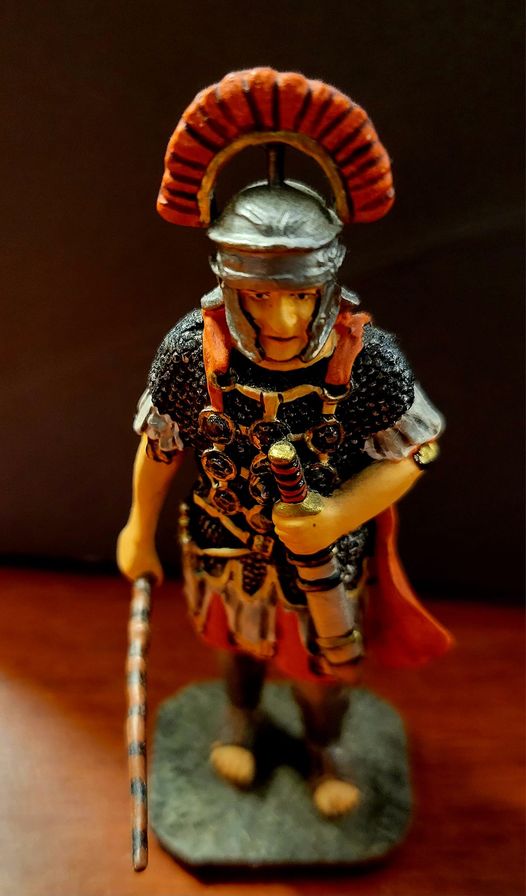
The family of a young girl, Sally, who was suffering night terrors asked for my help. I gave Sally a toy soldier from my childhood — a Roman centurion — and told her that henceforth this would be her night guardian and would keep terrible things out of her space. I ran into the girl three years later, when she was about ten. “Lex is great,” she told me. “Who is Lex?” I inquired.. Sally was scandalized that I had completely forgotten the incident. “He’s the Roman soldier you gave me!” She stamped her foot. “He’s now ten feet tall, and whenever there’s anything yucky around at night, he’s right on it. I never have nightmares now.” 

This is an example of how an image borrowed from one level of reality can become a container for energy from several sources. I could simply have given Sally the idea of a night guardian, but it seemed appropriate, with a young child, to give her an object that embodied that idea. Through the power of  imagination, that object took on a larger and autonomous life. A miniature figure became ten feet tall, and it appeared spontaneously, with the strength to send off psychic intruders. It became a storehouse for protective energy. This was partly the result of wishful thinking (nothing wrong with wishing), but I believe it was also the result of a transpersonal energy — and energy from a realm beyond worldly forms — coming to take up residence in the container that had been made available. 

There is nothing imaginary (in the sense of unreal) about an image that comes alive in our mind. As the English philosopher H. H. Price puts it: “Paradoxical as it may sound there is nothing imaginary about a mental image. It is an actual entity, as real as anything can be.” We experience mental images, and “they are no more imaginary than sensations.” The confusion comes in because we put down the imagination, wrongly believing that to “imagine” is to entertain false ideas or wander off into empty daydreams. 

Since “imaginary” is so often equated with “unreal,” we may save some time and clarity by substituting the adjective “imaginal.” This has a longish pedigree in the English language; it first appears (according to the OED) in 1647 in the context: “That inward life’s the impresse imaginall of Nature’s Art.” The term “imaginal” has begun to acquire currency in recent times among both scholars and healing practitioners due to the influence of Henry Corbin’s work on the realm of images in Sufi and medieval Persian philosophy.  

The realm of images is a real world, as well as a creative state of consciousness. It is the region of mind where meaning takes on form and where objects take on meaning. True poets, in all ages, have understood that the realm of imagination is the fundamental ground of knowledge. 

Honoring our imaginations is of the most urgent and practical importance, because as the philosopher-emperor Marcus Aurelius said, “A man’s life is dyed in the colors of his imagination.” 

We live by images. They control everything we think and do, from brushing our teeth to making love to speaking or not speaking in an office meeting. Images generate and constitute our experience of reality. 

We tell ourselves that reality is out there, but we do not experience that reality directly. “What we experience directly,” says physicist David Deutsch, “is a virtual-reality rendering, conveniently generated for us by our unconscious minds from sensory data plus complex inborn and acquired theories (i.e. programs) about how to interpret them.… Every last scrap of our external experience is of virtual reality.… Biologically speaking, the virtual-reality rendering of their environment is the characteristic means by which human beings survive.” 

Our lives are more or less authentic according to whether we are aware of the role of images and of our own ability to choose and discard or transform the imagery that rules our interactions with everything. Hermann Hesse put this very precisely: There’s no reality except the one contained within us. That’s why so many people live an unreal life. They take images outside them for reality and never allow the world within them to assert itself.” 

The greatest crisis in our lives is a crisis of imagination. We get stuck, and we bind ourselves to the wheel of repetition, because we refuse to reimagine our situation. We live with a set of negative or confining images and pronounce them “reality.” We do this because we let ourselves get trapped in a particular version of the past or in a consensual hallucination. We do it to cling to the familiar, not daring to give up what we are or have been for what we are meant to become. 

To address our challenges, we need to draw on extraordinary sources of information and invest our energy and attention in a form of active imagination that dares to re-vision everything. 

To be citizens of the world (to quote Marcus Aurelius again) we must cultivate sympathetic imagination, which is what allows us to understand the feelings and motivations of people different from us. The ability to imagine one's self in another person's place is vital to healthy social relations and understanding. A sociopath signally lacks this ability. 

To bring peace and balance to our world, we require historical imagination, by which I mean both the ability to claim what is helpful from the past and the faculty for spotting alternatives to a particular event track— past, present, or future.  

Whether the issues are in our world or our personal life, the practice of imagination requires claiming a creative relationship with the past. There is an image from Ghana that springs to mind. It shows a strange bird looking over its shoulder. This symbolic bird is called Sankofa, and its role is to remind us to bring from the past what can heal and empower us — and dump the rest. 

One thing we want to reclaim from the past is the wisdom of the child-mind. The practice of imagination begins with making room in our lives for the child who knows it’s okay to “make things up” and knows this is fun. 

When asked why he was the one to develop the theory of relativity, Einstein said: “A normal adult never stops to think about problems of space and time. These are things which he has thought about as a child. But my intellectual development was retarded, as a result of which I began to wonder about space and time only when I grew up.” 

Mark Twain insisted, “No child should be permitted to grow up without exercise for imagination. It enriches life for him. It makes things wonderful and beautiful.”  

Whatever age we have reached, we all need a daily workout, and a place to go, in the real world of imagination. Keep working out, and you’ll remember that, as poet Kathleen Raine wrote beautifully, “Imaginative knowledge is immediate knowledge, like a tree, or a rose, or a waterfall or sun or stars.” 

Build your home in the imagination strong enough, and you may find it is the place of creative birthing we all long for, the state of mind Mozart evoked when he said: “I can see the whole of it in my mind at a single glance.… All the inventing and making goes on in me as in a beautiful strong dream.”


Text adapted from The Three “Only” Things by Robert Moss. Published by New World Library.


Art: Robert Moss, "Wrapped in Butterflies"


Saturday, October 14, 2023

Maxims of the Hidden Poet


 You have a poet hidden inside you. In dreams, your poet makes worlds. Your poet is not hiding from you, but you may have been hiding from him or her. Let your inner poet walk with you in your world, and your world will change. You will smell colors. You will hear voices in stones. You will find a universe in a flower. You will meet a goddess at a traffic light.

Here is some of what I hear when I attend to my hidden poet.


Maxims of the Hidden Poet

Did you really say that your dreams have nothing to do with reality? Your real problems begin when your reality has nothing to do with dreams.                               

Dreaming, you can travel without leaving home.

You can meet your loved ones at any distance, including beyond the apparent barrier of death.

Dreaming, you are a time traveler. You visit past, future and parallel times

Your consciousness is never confined to your body and brain, except by your failures of courage and imagination.

Instead of trying to interpret dreams according to everyday assumptions, use dreams to interpret the confused messages of everyday life.

Coming events cast a shadow before them. You have felt this some mornings as you emerge from a dream you may or may not remember. The shadow of a mass event can fall like a mountain over many. Most days the shadow is softer and more intimate. As you rub sleep from your eyes, the shadow that falls over you may be cast by your roving dream self, returning to your time with a sun at its back that has not yet risen in your world.

Dreams can be the revenge of the imagination. In ordinary life your imagination may be bound to old stories and crushed by your efforts to fulfill schedules and fit in with other people’s expectations. You may have lost the power to visualize anything beyond the surface world and to find the extraordinary in the ordinary. You may have so lost contact with your great imagineer, your inner child, that you reject the magic of making things up.

Dreams can blow a hole in the hard carapace of your self-limiting assumptions through which the moreness of life comes shining through. That opening can be the portal to realms of true imagination where creators, shamans, and mystics have always wanted to go.

Everything is waiting for you to wake up. You thought you were dreaming in your sleep, but while your body slept your soul was awake. Right now, as you go about your day, your soul is dozing. Wake up and dream.

 ~

In the world you now inhabit, you need to chop wood, carry water, as dreamers do in their daily practice. Write in your journal every day. Wait like a trout fisherman in those waters between sleep and awake for the fish to arise. Light beacon fires by letting others know, at any distance, that you have dreams to share. Make a safe space to share your dreams with a friend or a circle. Help each other discern what your dreams reveal about the secret wishes of the soul, how they may show you ways to survive in the dark times and bring treasures back from darkness, and what action your dreams require of you. Let the beacon fires spread and lift up the dark.

You can heal your body and your life by dreaming a better story. Why not dream a better world? How about now?


Text adapted from Growing Big Dreams: Manifesting Your Heart’s Desires through Twelve Secrets of the Imagination by Robert Moss. Published by New World Library.


Photo: Writing desk in Yeats' tower, Thoor Ballylee, County Galway by RM


Thursday, March 9, 2023

True Imagination and the Ten Foot Tall Toy Soldier


When have you said to yourself, “It’s only my imagination?” I’ve said it at a moment of strong intuition — intuition that subsequently proved to be correct — that lacked supporting evidence in the moment. I’ve also said it when I’ve had a glimpse of a wonderful future — and then betrayed that vision by diverting my energy to listing all the reasons it cannot be. 

When we dismiss imagination, we exile the part of ourselves that knows things that matter in an extraordinary way and has the power to re-vision and re-create our world. Imagination is the faculty of mind and soul that thinks and acts through images, which, as the English poet Samuel Taylor Coleridge said, are “facts of the mind.” 

They borrow from our life memories and our sensory experiences, but they are more than copies; they can reshape and transform the raw materials into something new. And they can take on energy from a deeper source.

 The family of a young girl, Sally, who was suffering night terrors asked for my help. I gave Sally a toy soldier from my childhood — a Roman centurion — and told her that henceforth this would be her night guardian and would keep terrible things out of her space. I ran into the girl three years later, when she was about ten. “Lex is great,” she told me. “Who is Lex?” I inquired.. Sally was scandalized that I had completely forgotten the incident. “He’s the Roman soldier you gave me!” She stamped her foot. “He’s now ten feet tall, and whenever there’s anything yucky around at night, he’s right on it. I never have nightmares now.” 

This is an example of how an image borrowed from one level of reality can become a container for energy from several sources. I could simply have given Sally the idea of a night guardian, but it seemed appropriate, with a young child, to give her an object that embodied that idea. Through the power of  imagination, that object took on a larger and autonomous life. A miniature figure became ten feet tall, and it appeared spontaneously, with the strength to send off psychic intruders. It became a storehouse for protective energy. This was partly the result of wishful thinking (nothing wrong with wishing), but I believe it was also the result of a transpersonal energy — and energy from a realm beyond worldly forms — coming to take up residence in the container that had been made available. 

There is nothing imaginary (in the sense of unreal) about an image that comes alive in our mind. As the English philosopher H. H. Price puts it: “Paradoxical as it may sound there is nothing imaginary about a mental image. It is an actual entity, as real as anything can be.” We experience mental images, and “they are no more imaginary than sensations.” The confusion comes in because we put down the imagination, wrongly believing that to “imagine” is to entertain false ideas or wander off into empty daydreams. 

Since “imaginary” is so often equated with “unreal,” we may save some time and clarity by substituting the adjective “imaginal.” This has a longish pedigree in the English language; it first appears (according to the OED) in 1647 in the context: “That inward life’s the impresse imaginall of Nature’s Art.” The term “imaginal” has begun to acquire currency in recent times among both scholars and healing practitioners due to the influence of Henry Corbin’s work on the realm of images in Sufi and medieval Persian philosophy.  

The realm of images is a real world, as well as a creative state of consciousness. It is the region of mind where meaning takes on form and where objects take on meaning. True poets, in all ages, have understood that the realm of imagination is the fundamental ground of knowledge.

 Honoring our imaginations is of the most urgent and practical importance, because as the philosopher-emperor Marcus Aurelius said, “A man’s life is dyed in the colors of his imagination.” 

We live by images. They control everything we think and do, from brushing our teeth to making love to speaking or not speaking in an office meeting. Images generate and constitute our experience of reality. 

We tell ourselves that reality is out there, but we do not experience that reality directly. “What we experience directly,” says physicist David Deutsch, “is a virtual-reality rendering, conveniently generated for us by our unconscious minds from sensory data plus complex inborn and acquired theories (i.e. programs) about how to interpret them.… Every last scrap of our external experience is of virtual reality.… Biologically speaking, the virtual-reality rendering of their environment is the characteristic means by which human beings survive.”

 Our lives are more or less authentic according to whether we are aware of the role of images and of our own ability to choose and discard or transform the imagery that rules our interactions with everything. Hermann Hesse put this very precisely: There’s no reality except the one contained within us. That’s why so many people live an unreal life. They take images outside them for reality and never allow the world within them to assert itself.” 

The greatest crisis in our lives is a crisis of imagination. We get stuck, and we bind ourselves to the wheel of repetition, because we refuse to reimagine our situation. We live with a set of negative or confining images and pronounce them “reality.” We do this because we let ourselves get trapped in a particular version of the past or in a consensual hallucination. We do it to cling to the familiar, not daring to give up what we are or have been for what we are meant to become. 

The crisis of imagination is pandemic. The 9/11 Commission rightly pronounced that the horror of the worst terrorist attack in American history was “a failure of imagination.” With only a few exceptions, those responsible for security could not imagine a terrorist group executing a plan as bold and horrendous as attacking major targets on American soil with hijacked American planes. Yet the plan had been “in the air” for years, and it was certainly dreamed by many people who had no other access to information about it. In the fall of 1998, a New York woman shared with me a terrifying dream she could not understand, in which American planes were attacking targets on American soil, in Washington, DC, and elsewhere.

 To address our challenges, we need to draw on extraordinary sources of information and invest our energy and attention in a form of active imagination that dares to re-vision everything. 

To be citizens of the world (to quote Marcus Aurelius again) we must cultivate sympathetic imagination, which is what allows us to understand the feelings and motivations of people different from us. The ability to imagine one's self in another person's place is vital to healthy social relations and understanding. A sociopath signally lacks this ability. 

To bring peace and balance to our world, we require historical imagination, by which I mean both the ability to claim what is helpful from the past and the faculty for spotting alternatives to a particular event track— past, present, or future.  

Whether the issues are in our world or our personal life, the practice of imagination requires claiming a creative relationship with the past. There is an image from Ghana that springs to mind. It shows a strange bird looking over its shoulder. This symbolic bird is called Sankofa, and its role is to remind us to bring from the past what can heal and empower us — and dump the rest.

 One thing we want to reclaim from the past is the wisdom of the child-mind. The practice of imagination begins with making room in our lives for the child who knows it’s okay to “make things up” and knows this is fun. 

When asked why he was the one to develop the theory of relativity, Einstein said: “A normal adult never stops to think about problems of space and time. These are things which he has thought about as a child. But my intellectual development was retarded, as a result of which I began to wonder about space and time only when I grew up.” 

Mark Twain insisted, “No child should be permitted to grow up without exercise for imagination. It enriches life for him. It makes things wonderful and beautiful.”  

Whatever age we have reached, we all need a daily workout, and a place to go, in the real world of imagination. Keep working out, and you’ll remember that, as poet Kathleen Raine wrote beautifully, “Imaginative knowledge is immediate knowledge, like a tree, or a rose, or a waterfall or sun or stars.”

Build your home in the imagination strong enough, and you may find it is the place of creative birthing we all long for, the state of mind Mozart evoked when he said: “I can see the whole of it in my mind at a single glance.… All the inventing and making goes on in me as in a beautiful strong dream.”

We should never confuse the power of making things up with idle fantasy. The stronger the imagination, the less imaginary the results. And we should recall that in many religious and philosophical traditions what comes into manifestation in the physical world is emanated from a sphere of creative imagination beyond and superior to the physical. 


Text adapted from The Three “Only” Things by Robert Moss. Published by New World Library.