Showing posts with label Henry Corbin. Show all posts

Monday, March 24, 2025

A scholar of the Imaginal Realm


I am a great admirer of the work of Henry Corbin. A lifelong student of the medieval Sufi philosophers - especially Suhrawardi and Ibn 'Arabi - and of Shi'ite mysticism, Corbin brought the term mundus imaginalis, or Imaginal Realm, into currency in the West. In Arabic, the term is Alam al-Mithal and it refers to the true realm of imagination, an order of reality that is at least as real as the physical world, with cities and schools and palaces where human travelers can interact with master teachers.
   Corbin’s great work Creative Imagination in the Sufism of Ibn ‘Arabi is a marvelous essay in visionary spirituality that embodies his driving purpose of helping to free the religious imagination from all types of fundamentalism. I remember being seized with excitement when I first read his Avicenna and the Visionary Recital with its account of soul travel to real places beyond this world.
    Corbin is not an easy read; he assumes that his readers will be polymaths fluent in at least half a dozen languages, ancient and modern. But his work is indispensable.
    There is a fine biographical study by Tom Cheetham, The World Turned Inside Out: Henry Corbin and Islamic Mysticism. (Woodstock, CT: Spring Journal Books, 2003). Here we can read about the incident that generated his life’s work. His professor at the Ecole Practiques des Hautes Etudes, Louis Massignon, had returned from Teheran with a lithograph copy of the major work of Suhrawardi, Hikmat al’Ishraq When Corbin mentioned that he had seen some scattered references to Suhrawardi, Massignon immediately handed his only copy of the Arabic text to him, saying “I think there is in this book something for you.” Corbin later said, “This something was the company of the young Shaykh al-Ishraq [Teacher of Light], who has not left me my whole life.” He eventually translated Suhrawardi's master work as The Oriental Theosophy.
    Corbin regarded study as a quest. At age 70, looking back on his scholarly journey, he wrote that “to be a philosopher is to take to the road, never settling down in some place of satisfaction with a theory of the world…The adventure is…a voyage which progresses towards the Light" (The Voyage and the Messenger).
    In approaching the Sufis, he came armed with his early study of Protestant mystics, from whom he borrowed the idea that there is a primary distinction in religion between the Revealed God and the Hidden God, and that we can only come to know the God behind God through what in us is God-like - "the presence in us of those characteristics by which we know God."
      Corbin spent World War II in Istanbul as the only French scholar in residence at the French Institute of Archaeology. He went to Teheran at the end of the war, and spent at least part of every year in Iran for the rest of his life. His love of Persia is reflected in his description of it as “the country the color of heaven”. He died on October 7, 1978, and was spared the spectacle of seeing the land of the mystic poets in the grip of violent Islamist fanatics.
     Cheetham evokes the core of Corbin's presence in the world of ideas – his “simple, passionate refusal to accept the understanding of ourselves and our world that dominates modern secular consciousness”. Manifest history, for Corbin, is possible only because of a hidden order of events, a "divine history" unfolding behind the curtain of the world. "There is a historicity more original, more primordial than the history of external events, history in the ordinary sense of the term." In my attempt to write part of that history, in my Secret History of Dreaming, Corbin was one of my guiding lights.
 
    If you are coming to Henry Corbin for the first time - or seeking to distill from all you have learned from him - I recommend his book The Man of Light in Iranian Sufism. There you will find Suhrawardi's hymn to Perfect Nature. Freely adapted, it contains the following beautiful invocation of the Guide:

You, my lord and prince, my most perfect angel, my precious spiritual being
You are the Spirit who gave birth to me and you are the child who is born of my spirit
You are clothed in the most brilliant of divine lights
May you manifest yourself to me in the highest of epiphanies
Show me the light of your dazzling face
Be my mediator [between the worlds]
Lift the veils of darkness from my heart.

    I have used these magnificent words in guiding meditation and imaginal journeys in my circles of active dreamers, to open the heart and facilitate direct contact with the "soul of the soul," the Guide on a higher level. There is a two-way movement. We make a journey of ascension, rising from the heart center to the place of the Guide. Then we return, with heart, to carry the radiance of the Higher Self into embodied life.


Illustration: RM + AI

Thursday, March 9, 2023

True Imagination and the Ten Foot Tall Toy Soldier


When have you said to yourself, “It’s only my imagination?” I’ve said it at a moment of strong intuition — intuition that subsequently proved to be correct — that lacked supporting evidence in the moment. I’ve also said it when I’ve had a glimpse of a wonderful future — and then betrayed that vision by diverting my energy to listing all the reasons it cannot be. 

When we dismiss imagination, we exile the part of ourselves that knows things that matter in an extraordinary way and has the power to re-vision and re-create our world. Imagination is the faculty of mind and soul that thinks and acts through images, which, as the English poet Samuel Taylor Coleridge said, are “facts of the mind.” 

They borrow from our life memories and our sensory experiences, but they are more than copies; they can reshape and transform the raw materials into something new. And they can take on energy from a deeper source.

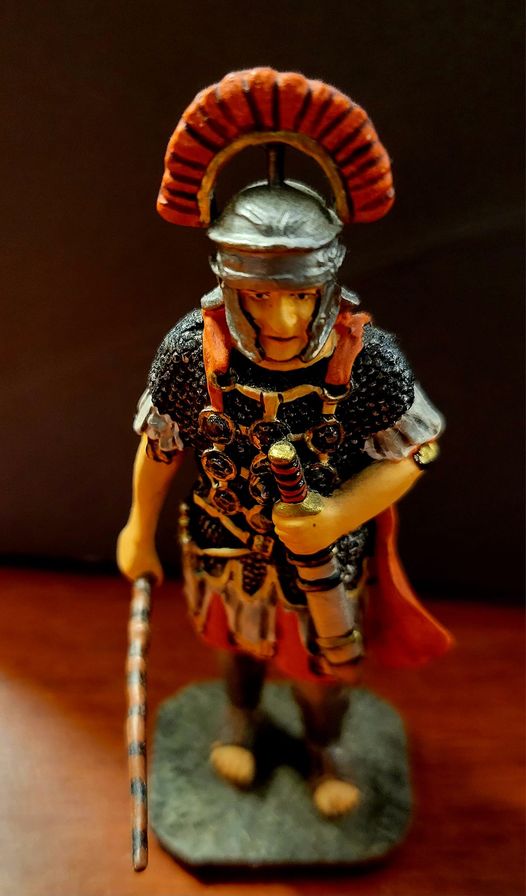
 The family of a young girl, Sally, who was suffering night terrors asked for my help. I gave Sally a toy soldier from my childhood — a Roman centurion — and told her that henceforth this would be her night guardian and would keep terrible things out of her space. I ran into the girl three years later, when she was about ten. “Lex is great,” she told me. “Who is Lex?” I inquired.. Sally was scandalized that I had completely forgotten the incident. “He’s the Roman soldier you gave me!” She stamped her foot. “He’s now ten feet tall, and whenever there’s anything yucky around at night, he’s right on it. I never have nightmares now.” 

This is an example of how an image borrowed from one level of reality can become a container for energy from several sources. I could simply have given Sally the idea of a night guardian, but it seemed appropriate, with a young child, to give her an object that embodied that idea. Through the power of  imagination, that object took on a larger and autonomous life. A miniature figure became ten feet tall, and it appeared spontaneously, with the strength to send off psychic intruders. It became a storehouse for protective energy. This was partly the result of wishful thinking (nothing wrong with wishing), but I believe it was also the result of a transpersonal energy — and energy from a realm beyond worldly forms — coming to take up residence in the container that had been made available. 

There is nothing imaginary (in the sense of unreal) about an image that comes alive in our mind. As the English philosopher H. H. Price puts it: “Paradoxical as it may sound there is nothing imaginary about a mental image. It is an actual entity, as real as anything can be.” We experience mental images, and “they are no more imaginary than sensations.” The confusion comes in because we put down the imagination, wrongly believing that to “imagine” is to entertain false ideas or wander off into empty daydreams. 

Since “imaginary” is so often equated with “unreal,” we may save some time and clarity by substituting the adjective “imaginal.” This has a longish pedigree in the English language; it first appears (according to the OED) in 1647 in the context: “That inward life’s the impresse imaginall of Nature’s Art.” The term “imaginal” has begun to acquire currency in recent times among both scholars and healing practitioners due to the influence of Henry Corbin’s work on the realm of images in Sufi and medieval Persian philosophy.  

The realm of images is a real world, as well as a creative state of consciousness. It is the region of mind where meaning takes on form and where objects take on meaning. True poets, in all ages, have understood that the realm of imagination is the fundamental ground of knowledge.

 Honoring our imaginations is of the most urgent and practical importance, because as the philosopher-emperor Marcus Aurelius said, “A man’s life is dyed in the colors of his imagination.” 

We live by images. They control everything we think and do, from brushing our teeth to making love to speaking or not speaking in an office meeting. Images generate and constitute our experience of reality. 

We tell ourselves that reality is out there, but we do not experience that reality directly. “What we experience directly,” says physicist David Deutsch, “is a virtual-reality rendering, conveniently generated for us by our unconscious minds from sensory data plus complex inborn and acquired theories (i.e. programs) about how to interpret them.… Every last scrap of our external experience is of virtual reality.… Biologically speaking, the virtual-reality rendering of their environment is the characteristic means by which human beings survive.”

 Our lives are more or less authentic according to whether we are aware of the role of images and of our own ability to choose and discard or transform the imagery that rules our interactions with everything. Hermann Hesse put this very precisely: There’s no reality except the one contained within us. That’s why so many people live an unreal life. They take images outside them for reality and never allow the world within them to assert itself.” 

The greatest crisis in our lives is a crisis of imagination. We get stuck, and we bind ourselves to the wheel of repetition, because we refuse to reimagine our situation. We live with a set of negative or confining images and pronounce them “reality.” We do this because we let ourselves get trapped in a particular version of the past or in a consensual hallucination. We do it to cling to the familiar, not daring to give up what we are or have been for what we are meant to become. 

The crisis of imagination is pandemic. The 9/11 Commission rightly pronounced that the horror of the worst terrorist attack in American history was “a failure of imagination.” With only a few exceptions, those responsible for security could not imagine a terrorist group executing a plan as bold and horrendous as attacking major targets on American soil with hijacked American planes. Yet the plan had been “in the air” for years, and it was certainly dreamed by many people who had no other access to information about it. In the fall of 1998, a New York woman shared with me a terrifying dream she could not understand, in which American planes were attacking targets on American soil, in Washington, DC, and elsewhere.

 To address our challenges, we need to draw on extraordinary sources of information and invest our energy and attention in a form of active imagination that dares to re-vision everything. 

To be citizens of the world (to quote Marcus Aurelius again) we must cultivate sympathetic imagination, which is what allows us to understand the feelings and motivations of people different from us. The ability to imagine one's self in another person's place is vital to healthy social relations and understanding. A sociopath signally lacks this ability. 

To bring peace and balance to our world, we require historical imagination, by which I mean both the ability to claim what is helpful from the past and the faculty for spotting alternatives to a particular event track— past, present, or future.  

Whether the issues are in our world or our personal life, the practice of imagination requires claiming a creative relationship with the past. There is an image from Ghana that springs to mind. It shows a strange bird looking over its shoulder. This symbolic bird is called Sankofa, and its role is to remind us to bring from the past what can heal and empower us — and dump the rest.

 One thing we want to reclaim from the past is the wisdom of the child-mind. The practice of imagination begins with making room in our lives for the child who knows it’s okay to “make things up” and knows this is fun. 

When asked why he was the one to develop the theory of relativity, Einstein said: “A normal adult never stops to think about problems of space and time. These are things which he has thought about as a child. But my intellectual development was retarded, as a result of which I began to wonder about space and time only when I grew up.” 

Mark Twain insisted, “No child should be permitted to grow up without exercise for imagination. It enriches life for him. It makes things wonderful and beautiful.”  

Whatever age we have reached, we all need a daily workout, and a place to go, in the real world of imagination. Keep working out, and you’ll remember that, as poet Kathleen Raine wrote beautifully, “Imaginative knowledge is immediate knowledge, like a tree, or a rose, or a waterfall or sun or stars.”

Build your home in the imagination strong enough, and you may find it is the place of creative birthing we all long for, the state of mind Mozart evoked when he said: “I can see the whole of it in my mind at a single glance.… All the inventing and making goes on in me as in a beautiful strong dream.”

We should never confuse the power of making things up with idle fantasy. The stronger the imagination, the less imaginary the results. And we should recall that in many religious and philosophical traditions what comes into manifestation in the physical world is emanated from a sphere of creative imagination beyond and superior to the physical. 


Text adapted from The Three “Only” Things by Robert Moss. Published by New World Library.


Thursday, March 4, 2021

Ten Books That Gave Roadside Assistance on My Soul Journey


Books have been faithful and essential friends all my life. I had a difficult and lonely boyhood, an only child who suffered double pneumonia twelve times between the ages of three and eleven. Books were my portals to realms of imagination and wonder as I lay in the half light of sick rooms. I thrived on good historical novels and on scifi and fantasy.

I like to own paper copies of all the books I read so I can sniff them and caress them and interact with a pencil. I live with an extended book family of around 14,000 volumes. My best finds are often mediated by dreams and by lively shelf elves of the kind that make books materialize and dematerialize in magical ways. My cat Lucy has recently asserted herself as a shelf elf or more - a supervising librarian- on four paws 

Like my favorite writer, Jorge Luis Borges, I sometimes picture paradise as an Infinite library. Like another of my favorite writers, Mircea Eliade, I also know that the most important book I will ever write - and one of the most important I will ever read - is my own journal. Recording dreams, observations and reading reports in my journal is essential daily practice for me.

I was recently invited to identify ten books that have provided guidance and inspiration in my spiritual odyssey and share what was happening in my life when they came to me. My journal was there to remind me what restored my inner compass and put gas in my tank in the critical passages.


1

The Odyssey 

Since I was boy, the Odyssey has been my favorite vision of life as a mythic journey. Beyond the thrill of sea monsters and angry gods and one-eyed monsters, the tale of Odysseus, the “man of many ways” is the story of a wounded warrior who is healed in the realm of the Divine Feminine. This is why Robert Graves thought it was created by a woman, and I believe he is right. In the Odyssey we see what it means to travel consciously in the presence of a guiding spirit, in this case the goddess Athena. We see that dreams are a field of interaction between gods and humans and transit lounge between the Otherworld and the physical world. Has it been made clearer anywhere else that the hardest part of the heroic quest is the homecoming? A large part of the epic is devoted to the struggles of the returning traveler to find their feet on home ground. I have used many translations over the years, not least for occasional bibliomancy; my favorite now is the most recent; the clean, spare poetic version by Emily Wilson.


2

W.B.Yeats, Collected Poems 

I knew many of Yeats’ poems by heart before I was presented with my first copy of his collected poems at my graduation from Canberra Grammar School as a prize for writing verse.  In his “Song of Wandering Aengus” I thrilled to the bardic voice of one who lived close to the Otherworld, who knew the secrets of shapeshifting and understood soul loss and soul recoveryI learned much more from Yeats’ other writings, especially Mythologies and A Vision and from walking in his footsteps in Ireland, where it is easy to understand his statement that “the visible is the skin of the invisible”. He appeared to me during a shamanic journey, saying “What better guide to the Other Side than a poet?” and I was enchanted to let him play that role in my inner life as I wrote The Dreamer’s Book of the Dead. I learned the truth of his conviction that kindred spirits reach to each other across time and may generate a “mingling of minds”. I shared his experience of a creative daimon that is forever driving us to attempt the things that are most difficult, short of the impossible.


3

Dion Fortune, Secrets of Dr Taverner 

She was a true priestess of the Wester Way. I came to her first through her important book Psychic Self-Defence, which is not for the faint-hearted. I proceeded to read, over the years, everything that I could find by her. I was excited to discover that she regarded her fiction as her most important writing on the practice of real magic A character in her novel The Goat-Foot God says that "writers will put things into a novel that they daren't put in sober prose." Dion Fortune herself said "the novels give the practice." While I love The Sea Priestess and her other novels, it is the stories collected in The Secrets of Dr Taverner that I return to again and again. The central character is a soul doctor in tweeds who deals with such complains as reincarnational dramas, astral repercussion, psychic attack, soul theft and energy vampirism. The Taverner stories are both entertaining and a valuable source of practical guidance on psychic protection and spiritual cleansing. In its fictional wrapping, The Secrets of Dr Taverner is a practitioner's casebook and perhaps the most accessible of all Dion Fortune's works for the contemporary reader.


4

Jesuit Relations and Allied Documents *

When I moved in the 1980s to a farm on the edge of traditional Mohawk country in upstate New York, because of a hawk and a white oak, I started dreaming in a language I did not know, which proved to be an archaic version of the Mohawk language. The speaker was an ancient arendiwanen, or “woman of power”. Our encounters recalled me to ancient ways of dreaming and healing and gave me immense research assignments. In the way of synchronicity, a used book dealer turned up at my door with all 73 volumes of the Jesuit Relations in the back of his truck. These are the reports of blackrobe missionaries from Indian country in the 17th century. Read carefully, drawing aside the veils of religious prejudice and fear, we have here an extraordinary source on the spiritual practices of Native Americans in Northeast America at the time of first contact. The Iroquois taught their children that dreams are the single most important source of both practical and spiritual guidance. They believed that dreams show us “the secret wishes of the soul.” In a time of war and imported disease, they recognized dreaming as a key survival tool and sent their dream shamans to scout the future. You’ll find the essential things I learned from the Jesuit reports -and the direct teachings of the Mother of the Wolf Clan who led me to use them – in my book Dreamways of the Iroquois: Honoring the SecretWishes of the Soul.


5

C.G. Jung, Memories, Dreams, Reflections 

I discovered Jung in high school and devoured many volumes of his Collected Works when I was an undergraduate. In the midst of my own psychic storms in 1987–1988, I turned to Jung again, to see how he made sense of his own “confrontation with the unconscious.” My main source was Memories, Dreams, Reflections, his life story as recorded and edited by Aniela JaffĂ©. We did not yet have the Red Book, and the memoir is in any event a more accessible account of what was essentially the Underworld ordeal and initiation of a shaman-scholar of the West. Central to Jung’s ability to restore his inner compass was his daily recording of dreams. “Dreams are the facts from which we must proceed” is one of the most helpful statements that has ever been made about dreams and dreamwork, and confirmation for me of the method I was obliged to improvise in my own time of testing. He confirmed for me that engaging with images in your inner life – including the terrifying ones – is a path to healing and self-empowerment. I felt the deep truth of his ringing assertion that “anyone who takes the sure road is as good as dead.” I write about Jung as “The Dream Shaman of Switzerland” in my book Dreaming the Soul Back Home.


6

Jane Roberts, Seth Speaks 

When I was going through a crisis of spiritual emergence at midlife, a friend prevailed on me to read Seth Speaks, a book channeled by Jane Roberts from an intelligence who describes himself as “ an energy personality essence, no longer focused in physical matter”. Previously somewhat resistant to channeled material, I found myself gifted with the clearest model of multidimensional reality and the multidimensional self that I had encountered. The book was a life ring for me in my efforts to understand and navigate “past life” and parallel life connections. Seth confirmed for me that we may live many existences at one time. We are connected to personalities living in the past and the future and in parallel realities, ane it is all happening Now.  Reincarnation is for real, but only one of many after-death options, and we mustn't get trapped in linear conceptions of karma and in past-life "passion plays" because any past or future is a probable reality that can be accessed and changed Now.


7

Joan Grant, Winged Pharaoh 

Winged Pharaoh thrilled me with its vivid depiction of the practices of a dream school in ancient Egypt operating in the precinct of Anubis. Joan Grant published it as a novel, but revealed later that it is actually a book of “far memory” of a life in early dynastic Egypt. We follow Grant’s alter ego, Sekeeta, as she learns to go scouting in dreams to find lost objects, look into the future, observe things happening at a distance, and discover what is going on behind the scenes. As a child, she sleeps with a wax tablet beside her bed, and her first task each morning is to record her dreams. She takes her reports to the priest of Anubis, her dream teacher. Some days she must carry out assignments he gave her inside a dream – for example to bring him a certain flower, or bird feather, or colored bead. She learns to travel in dreaming beyond time and space, to scout the possible future, and to communicate with the deceased. She encounters people who have died and are confused about their condition and moves into the role of psychopomp. In the language of ancient Egypt, a dream (rswt) is literally an “awakening”. Winged Pharaoh reawakened me to what it means to dream like an Egyptian and I have used it as a handbook in guiding others.  


8

Henry Corbin, The Man of Light in Iranian Sufism 

A lifelong student of the medieval Sufi philosophers, French scholar Henry Corbin brought the term Imaginal Realm into currency in the West. In Arabic, the term is Alam al-Mithal and it refers to the realm of true imagination, an order of reality that is at least as real as the physical world, with cities and schools and palaces where human travelers can interact with master teachers. Corbin’s great work Creative Imagination in the Sufism of Ibn ‘Arabi is a marvelous essay in visionary spirituality that embodies his driving purpose of helping to free the religious imagination from all types of fundamentalism. Corbin regarded study as a quest. In The Voyage and the Messenger looking back on his scholarly journey, he wrote that “to be a philosopher is to take to the road, never settling down in some place of satisfaction with a theory of the world…The adventure is…a voyage which progresses towards the Light". His books were with me, to anchor and orient, through the incandescent nights when I found myself in dialogue with Persian philosopher mystics and riding with the heaven bird of Persian mythology, the Simurgh. The Man of Light is Corbin’s most accessible work and one to which I return again and again. The subtitle of my book Mysterious Realities is Tales of a Dream Traveler from the Imaginal Realm.


9

W.T. Stead, The Blue Island 

I love the Victorian ghost hunters, especially F.W.H. Myers, W.T. Stead and William James. They were passionately dedicated to producing evidence of the survival of consciousness after physical death that would meet the scientific standards of their day. They promised that after their deaths they would continue their work by trying to communicate in exact detail from the Other Side. Among all the channeled books that resulted, my favorite is The Blue Island,in which Stead (who went down with the Titanic) recounts his early after death experiences to male mediums sitting in the presence of his daughter. As a former journalist, Stead is especially interested in how news is transmitted in the transition zone where he finds himself. He describes a communications center, “an amazingly well organized and businesslike place” constantly filled with ex-physicals. “Those who had on earth believed and those who had not, came to try and wire a message home.” The ones who feel a “heart call” always get priority. They have a system of “travelers”, who can reach receptive minds on Earth. Stead describes how the living can reach to the departed in a similar way. You concentrate on an individual in the spirit world, and if you put enough energy into that thought, the individual you have in mind will feel you and you may be able to open a communications channel. This beautiful little book is one of the essential Western books of the dead.


10

Viktor Frankl, Man’s Search for Meaning 

I reread this extraordinary book every few years. A successful Jewish psychiatrist in Vienna, Viktor Frankl was carried off to Auschwitz and reduced to a walking skeleton with a tattoo on his arm. In one of the darkest nightmares of history, he applied his imagination. He grew an impossible dream: of a scene in the future when the Nazis were a memory and he was standing in front of a well-fed audience in a good suit giving a lecture on “The psychology of the Concentration Camps”. In his vision the Nazi evil was so thoroughly destroyed – and he so thoroughly restored – that he could lecture about it from an objective perspective. Frankl not only survived the Holocaust. His dream played out a year after the war, in every detail. I have derived three life-orienting lessons from this. First, that however tough our situation may seem to be, we always have the freedom to choose our attitude, and this can change everything. Second, that our problems, however bad, are unlikely to be quite as bad as the situation of someone who has been sent to a Nazi death camp. That thought may help us to gain perspective, and to stand back from a welter of grief and self-pity and rise to a place where we can start to dream up something better.Third, we can make inner movies, and if they are good enough it is possible that they will play in the theater of the world.


 I look over this list and wonder why it does not include so many other books and authors that have affected me deeply: Albert Camus, Rilke, Herman Hesse, the Upanishads, Dostoyevsky, Christopher Brennan, The Tibetan Book of the Dead, Hilda Ellis Davidson, Ursula Le Guin, Mary Oliver, AE (George Russell), the (for me) inescapable Borges and Eliade. Again, my journal shaped my selections, reminding me how certain books converged with critical passages of spiritual emergence in my life, when I needed confirmation even more than inspiration.


*I'm not expecting anyone to read the 73 volumes of the Jesuit Relations that are on my shelves although today you can no doubt find them onlne. I was looking over the books that gave me anchors and life rings in decisive passages in my journey.In this case, I needed confirmation of what I was learning from the Mother of the Wolf Clan I call "Island Woman"in my books. In another book that was very important to me, The Journal of Major John Norton, a half-Cherokee British officer in the war of 1812, I confirmed the historical identity of Island Woman as the grandmother of Molly and Joseph Brant, born Huron (Wendat) and adopted into the Mohawk natoion after she was captured by a Mohawk raiding party aged about five.


Wednesday, April 1, 2015

Riding Winged Books to the Imaginal Realm


"Robert, this is direct knowledge. Suhrawardi is the key to your understanding of the dream cosmos. Use his geographies - of Hurqalya, Jabarsa and Jabalqa.
    "Hurqalya: roofed with shining convexities, plane within plane, like crystals that interpenetrate and turn into each other. It contains the Hall of the Masters, where they project themselves into shimmering stability of form."


I rose from the liminal state between sleep and waking to record these lines in my journal, on March 13, 1998. Though the words are very foreign in English, I recognized them as locations in the Imaginal Realm, as described by the medieval Persian Sufi philosopher Suhrawardi, whose work was known to me primarily through that of Henry Corbin. 
    I did not feel the need to identify the exact source of the communication. My feelings told me it came from a source I could trust. It drove me to deepen my researches.*
    Four months later, after reading deep into the night in the pages of Henry Corbin's works on the Suhrawardi and Ibn 'Arabi, I lay in bed after 4:00 am and felt I was floating between the worlds. I had strong impressions of fabric patterns, predominantly rust-reds, mauves and yellow-browns. I thought of Gabriel, of Khidr, of Suhrawardi's Perfect Nature, of my occasional perceptions of a celestial Self, of my heavenly Twin.
    A sense of presence grew, but without the flash of light that usually accompanies one of the high ones. The suggestion came: Rise from your body, and I will descend to you.
    I loosened physical focus, without separating from the body. I had the impression of a handsome young-seeming man of "Persian" appearance, wearing modern clothes, a suit and a shirt with banded collar. He carried something of the essence of Suhrawardi's teachings. He told me his name was "Shams". He suggested I should begin my journey to the realm of Hurqalya at Mount Qaf.
    I rose from bed and went back to the books. In the old Thackston translation of "The Red Intellect", one of Suhrawardi's visionary stories, Mount Qaf is described as follows:

Mount Qaf surrounds the world and consists of eleven mountains. When you are delivered of your bondage you will go there, for you have been brought from there, and eventually everything that exists returns to its initial forms.

The way through these mountains is fantastically difficult, but a traveler who has been there and returned counsels that "if you become Khidr you can easily cross Mount Qaf." Khidr is the guide of those who have no earthly guide.
    These words gave me shivers. Towards dawn, I drifted into sleep and dreamed:

WINGS OF SOUND

I am in a palace that is open to the winds, a place of soaring arches. It does not seem to stand on earth, but among the stars. It is roofless, open to the night sky, which is dark yet light at the same time, shimmering in every particle. There are twelve spacious rooms in the palace. Each contains marvelous musical instruments, shaped like butterfly wings. Some have multiple wings or leaves. They resembled stringed harps, yet the "strings" are so fine as to be invisible. Cosmic winds blow celestial harmonies through these wings of sound. I marvel at the beauty of these harmonies.


In a second dream:

THE PARS

I take a spiritual text and use it as the portico to two meditations, borrowing from more obscure sources. One of these is an invitation to the soul journey to higher realms. The other brings the power of meditation and concentration into everyday life.

I rose from these dreams buoyant, charged with energy, eager to return to my researches. I reopened Henry Corbin's Man of Light in Iranian Sufism and found Suhrawardi's hymn to Perfect Nature. Freely adapted, it contains this magnificent invocation of the Guide:

You, my lord and prince, my most perfect angel,
my precious spiritual being
You are the Spirit who gave birth to me
and you are the child who is born of my spirit
You are clothed in the most brilliant of divine lights
May you manifest yourself to me in the highest epiphany
Be my bridge-builder between the worlds
Lift the veils of darkness from my heart

Show me the radiance of your dazzling face

I have used these magnificent words, in guiding meditation and imaginal journeys in my circles of active dreamers, to open the heart and facilitate direct contact with the "soul of the soul," the Guide on a higher level. As in my dream, there is a two-way movement. We make a journey of ascension, rising from the heart center to the place of the Guide. Then we return, with heart, to carry the radiance of the Higher Self into embodied life.


*Suhrawardi is known as the Shaykh al-Ishraq, the Master of Illumination. He insisted that understanding reality requires "the knowledge of presence" - direct experience of realms beyond the physical. He wrote many works of visionary philosophy in Arabic, and spiritual tales including "The Red Intellect" in Farsi. He brought together the high traditions of the Greek neo-Platonists and ancient Persia with mystical Islam.  He is also known as "the murdered philosopher" because he was put to death in Aleppo in 1191 on the orders of the famous Saladin, who disapproved of Suhrawardi's influence over his son, who was governor of the city. According to Saladin's enforcer, Suhrawardi was crucified. 

Note: Suhrawardi has surfaced again in my life, and I am moved to re-post this narrative I first made public five years ago, based on my journals from 1998. A good story keeps coming back.
   
Book with Wings - Anselm Kiefer. The Modern Art Museum Ft Worth Texas. Photo by Timothy Boss.