Showing posts with label Marcus Aurelius. Show all posts

Friday, June 7, 2024

When a door is closed, look for one that is opening


In a difficult passage in my life, I was hell-bent on pursuing a certain project that I calculated would pay my bills and give me some room for creative expression. But every time I tried to push forward, I found myself blocked. Something inside me resisted my ambitions, and the world seemed to rebuff me at every turning.

Despondent, I sat down and tried to make sense of my situation.
    Suddenly, I had a clear vision of myself from a witness perspective.
    I saw myself beating on a heavy wooden door, studded with metal, banging my fists until my knuckles were raw and bloody. I saw myself pausing to take a few rasping breaths, seemingly exhausted, before pounding again on the door that would not open.
    Okay, that's how it is. Like many night dreams, my spontaneous vision was holding up a magic mirror to my actions and attitudes. Was that all?
    I felt a prickling sensation at the back of my neck. I found myself drawn from my observer position into the scene, which was more alive to me now than the family room where I was sitting. My second self was still beating his fists uselessly on the unyielding door. But the prickling sensation was guiding me to turn around and look at something invisible to him. I turned to my right, and saw an elegant, mysterious figure beckoning me with a crooked finger. There was a Trickster quality about him. He was standing in a beautiful archway. Behind him a winding path led up a slope among flowering trees into a landscape of beauty and abundance. I felt that everything I was seeking in life was through that arch.
    The Gatekeeper waited for me to grasp what he was showing me.
    My vision and understanding were still far from complete.
    If all this bright promise was waiting for me, through an open door, what was I doing beating myself bloody at the door that would not yield?


I turned to study again the situation of the Robert who was beating on the door. I discovered two things. While with one hand the Gatekeeper was beckoning me through the open gate of possibility, with his other hand he was holding that heavy, metal-studded door shut. The real shocker was that I could now see what was behind the door I had been desperate to open. The space behind it looked like a jail cell. I had been exhausting myself in an effort to put myself in a place of confinement.
    This powerful vision led me to make some radical life choices. I abandoned the project on which I had been working for months. Little by little, I found myself on the path between the flowering trees, in a world of ever-burgeoning creative possibility.
    The vision helped me to gain clarity on some rules for conscious living that work for me:


1. When one door closes, or won't open, look for the door that opens onto better things.

2. Before you push too hard, check whether you are at the right door.

3. Recognize that there is a Gatekeeper in life who opens and closes doors, and be ready to honor him (or her) and pay the price of entry, which may simply be a clear eye and an open heart.

Oh, there are a couple more. 

4. As long as you stand in your own way, you will find the world stands in your way.

5. The obstacle is the way.


#4 is borrowed from Henry David Thoreau: "As long as man stands in his own way, everything seems to be in his way."
#5 is borrowed from the Stoic emperor Marcus Aurelius


Drawing: "The Door That Won't Open" by Robert Moss


Tuesday, January 23, 2024

The Stronger the Imagination, the Less Imaginary the Results


The greatest crisis of our lives is a crisis of imagination. We come to a dead stop because there is a barrier in front of us and we can’t imagine a way to get around or over it. Our work space feels like it is walled with cement blocks that are closing in tighter every day, but we can’t imagine where we would go if we quit. We can’t breathe in an airless relationship but can’t imagine how to take off.  We look in the mirror, when we dare, and see the age lines, the skin blemishes, maybe the thinning hair, not the beauty that we may carry inside.   

We go on repeating to ourselves the tired old stories, strapped on to us by family or past histories of defeat and disappointment. Or we cling to past memories of brighter days, or that win on the high school sports field, or that sweet summer romance, or that medal for valor or that early success that was never repeated. Either way, by nursing grief or guilt or nostalgia, we manage to go through life looking in the rear vision mirror, stuck in the past, never fully available to the present moment.

Or we miss the moment by carrying anxiety about the future, playing scenarios for what could go wrong. We give ourselves a hundred reasons not to take the risk of doing something new, something that would take us beyond the gated communities of the mind into the wilds of creative adventure.

Conscious of it or not, we go around playing our negative mantras. I’m too old. I’m not pretty enough. I don’t have the money. People always let you down. People don’t change. I’m so tired. You don’t think you do this? Pause for a moment. Take off the headphones. Listen to what’s playing on your inner soundtrack. It may be a song. Am I blue?

I confess there are days, especially between snowstorms in a Northeastern winter, when my mood can slump and go the color of the dirty grey ramparts of ice on the curb in my small gritty city. And more days like these in the shut-up times of pandemic I don’t want to get out of bed even to walk the dog, who is waiting for me patiently. I may be stirred back to life by a dream or a cheering message from a loved one or a plan for an ocean beach vacation or a foreign adventure. But when I find it is still hard to rise above a low, lethargic mood and dump those negative mantras – My legs hurt, I’m played out, I can’t walk on the ice – I call in one of the greatest life coaches I know.

I know him from his most famous book. Maybe you do too. His book is titled Man’s Search for Meaning. His name is Viktor Frankl. He was an Existentialist – which is to say, someone who believes that we must be authors of meaning for our own lives – and a successful psychiatrist in Vienna before Nazi Germany swallowed Austria in 1938. He was a Jew and a free-thinking intellectual, two reasons for the Nazis to send him to a concentration camp. For several years he was in Auschwitz, the most notorious of the Nazi death camps.
      In the camp, every vestige of humanity was taken from him, except what he could sustain in his mind and his heart. He was in constant pain, reduced to a near-skeleton with a tattooed number on his arm, liable to be beaten or killed at any moment on the whim of a guard. He was there to be worked to death. He watched those around him shot or beaten or carted off to the gas chambers every day.
     He made an astonishing choice. He decided that, utterly deprived of freedom in the nightmare world around him, he would tend one precious candle of light within. He would exercise the freedom to choose his attitude. It sounds preposterous, if you don’t know the story of what unfolded. When people tell us we have a bad attitude in ordinary circumstances, we are usually not grateful. The suggestion that we can choose our attitude when the world around us seems cold and bleak, or we have suffered a major setback, even heartbreak, sounds cruel, and maybe preposterous. But let’s stay with Viktor Frankl.
     When the light went out in his world, he managed to light that inner candle of vision. Despite the pain in his body and the screams and groans around him, he made an inner movie, a film of a possible life in a world where the Nazis had been defeated and Hitler was a memory. It was an impossible vision of course, an escapist fantasy. There was no way he was going to survive Auschwitz.
     But he kept working on his inner movie, night after night, as director, scriptwriter, and star. He produced a scene in which he was giving a lecture in a well-filled auditorium.. His body had filled out, and he was wearing a good suit. The people in the audience were intelligent and enthusiastic. The theme of his lecture was “The Psychology of the Concentration Camps.” In his movie, not only were the death camps a thing of the past; he had retained the sanity and academic objectivity to speak about what went on during the Holocaust from a professional psychiatric perspective.
    This exercise in inner vision, conducted under almost unimaginably difficult circumstances, got Viktor Frankl through. One year after the war, in a good suit, he gave that lecture as he had seen himself doing in his inner movies.
     What do we take away from this?
     First, that however tough our situation may seem to be, we always have the freedom to choose our attitude, and this can change everything.  Let’s allow William James to chime in: “The greatest weapon against stress is our ability to choose one thought over another.”
     Second, that our problems, however bad, are unlikely to be quite as bad as the situation of someone who has been sent to a Nazi death camp. That thought may help us to gain perspective, and to stand back from a welter of grief and self-pity and rise to a place where we can start to dream up something better.
     Third, we can make inner movies, and if they are good enough it is possible that they will play in the theater of the world.
     Would you like to make your own life movies, in which you enjoy the satisfaction of your deepest desires? Are you willing to grow a vision of bright possibility so rich and alive that it wants to take root in the world?
      Here are some secrets of the imagination that will get you on your way.


Dreams Show You the Secret Wishes of Your Soul

Every night, if you make the effort to catch some of what is going on, you will find that your dreams take you beyond what you already know. You already have a personal film production company, behind the curtain of the world, that is making dreams exclusively for you. That comedy or horror flick, that romance or action adventure, may be screened in the night to help you see where you are and how you are, or to give you a glimpse of other life possibilities. In other dreams, you get out and about, you socialize, you make visits and receive visitations.
      Dreaming, you travel without leaving home and can be as social as you like. You are also a time traveler. You travel to past times, parallel times and into the possible future. You scout out challenges and opportunities that lie ahead. Beyond seeing the future, it is possible that, dreaming, the observer effect noted in physics comes into play and you take part in the selection of events that will manifest from a quantum soup of possibilities.
     There is even more going on in your nights. Indigenous wisdom teaches that through dreams we learn the secret wishes of the soul.. There is even a word for this in the Huron/Iroquois language: ondinnonk. We are called to follow our heart’s desires, as opposed to the calculations of the ego and other people’s agendas and expectations. We are recalled to our deeper life purpose, and given sources and resources in a deeper reality that will help us to follow our path with heart.


Your Great Imagineer Is Your Magical Child

Don’t doubt for a moment that you have the imagination required to grow a vision of manifesting your heart’s desires that can carry you beyond the stuck places and the dark dreary times. Your inner child is a master of dreams and imagination. She knows the magic of making things up. She engages effortlessly in the deep play that generates creative ideas without regard for consequences. Maybe you lost contact with her as you started to grow up and the adult world trod on her dreams. Maybe there was a time when her world seemed so cold and cruel that she wanted to run away, and may actually have succeeded in running away, so a safe space in Granma’s house or a garden behind the Moon. Maybe this is why you have been in a dream drought for so long; when she went away, you lost the beautiful bright dreamer in you. In chapter 2, you are going to learn how to reclaim that Magical Child, how to convince her that you are safe and you are fun so that you can bring her energy and joy and imagination into your current life.


What Is in Your Way May Be Your Way


The philosopher emperor Marcus Aurelius came to accept, as a rule for his own life, that the obstacle may be the way. When you find yourself blocked or challenged on your life road, that may be a prompt for you to look for a better way, or develop needed skill or the pluck and perseverance to see something through. you’ll want to look again at what you feel is blocking or opposing you on your life road. Sometimes a block is a pause button, indicating, Not right now. Try later. You may discover that a block has been placed in your way to induce you to find a better way. For every door that won’t open or slams shut in your face, look for one that maybe opening. For every setback, search for opportunity. Look for a gift in every wound or challenge though this can be hard and may require hindsight from some distance away. 


Your Big story is hunting you

Australian Aborigines say that the Big stories are hunting the right people to tell them, like predators stalking in the bush. The trick is to put ourselves in a place where the Big stories can find us. We do that when we attend to our dreams and the dreamlike play of symbols and synchronicity in the world around us. We want to learn to step out of the tired old stories we have inherited from family, from other people telling us who we are, from personal histories of failure and defeat. When we are seized by the Big story, we step beyond limiting definitions and beliefs. Great healing becomes available because we can now draw on the immense energy that is generated by the sense of serving a larger purpose and living a mythic life. The muse, or creative genius, and the intelligences of the world-behind-the-world come to support our life projects, because we are following a deeper call.

Your world is as rich or poor, as alluring or dull, as you can imagine. Listen to your dreams, let your inner child out to play, put yourself in a place where you bigger story can grab you. When you move in the energy field of a big dream of life, the world responds to you, because you are magnetic. You generate events and encounters that open new doors, and your days sparkle with a champagne fizz of magic. Your dreams speak louder and brighter and the extraordinary comes to meet you on any street corner.

On days when you feel down and defeated, remember Viktor Frankl, dreaming his way out of the nightmare of the death camps. On any day, you have the freedom to choose your attitude, and this is an exercise in creative imagination that can change everything.


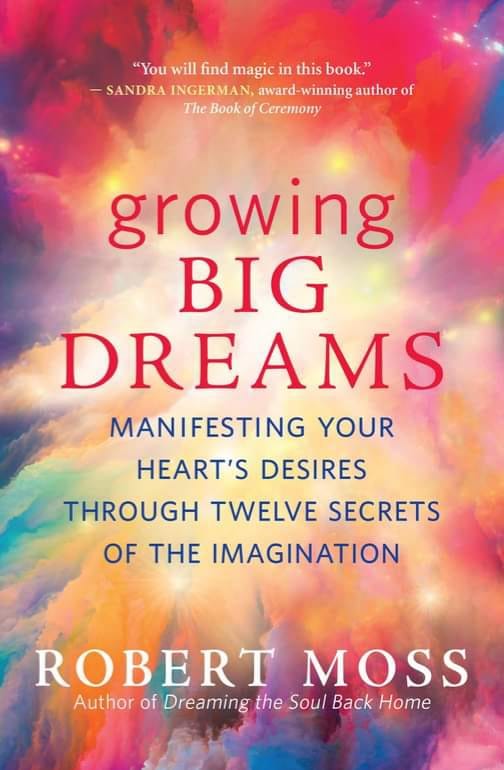
Adapted from Growing Big Dreams: Manifesting Your Heart’s Desires through Twelve Secrets of the Imagination by Robert Moss. Published by New World Library.


Photo (c) Robert Moss


Thursday, November 2, 2023

The practice of imagination


 When have you said to yourself, “It’s only my imagination?” I’ve said it at a moment of strong intuition — intuition that subsequently proved to be correct — that lacked supporting evidence in the moment. I’ve also said it when I’ve had a glimpse of a wonderful future — and then betrayed that vision by diverting my energy to listing all the reasons it cannot be. 

When we dismiss imagination, we exile the part of ourselves that knows things that matter in an extraordinary way and has the power to re-vision and re-create our world. Imagination is the faculty of mind and soul that thinks and acts through images, which, as the English poet Samuel Taylor Coleridge said, are “facts of the mind.” 

They borrow from our life memories and our sensory experiences, but they are more than copies; they can reshape and transform the raw materials into something new. And they can take on energy from a deeper source. 

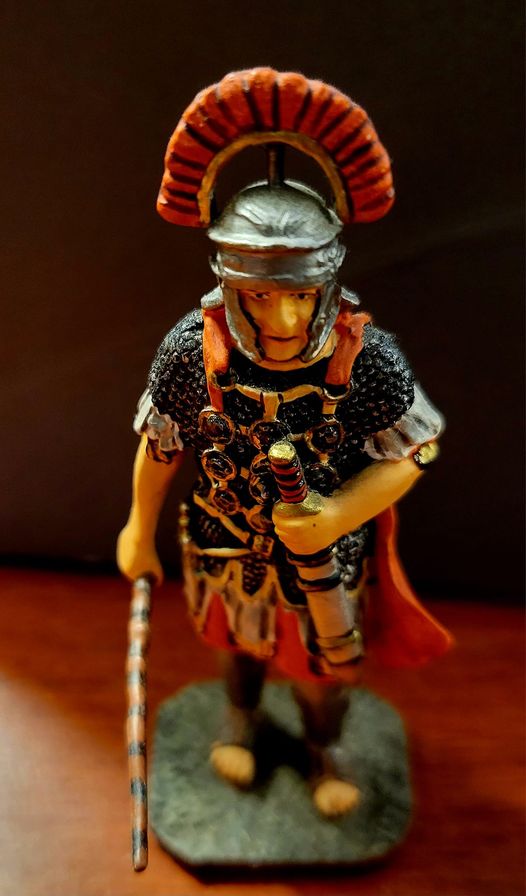
The family of a young girl, Sally, who was suffering night terrors asked for my help. I gave Sally a toy soldier from my childhood — a Roman centurion — and told her that henceforth this would be her night guardian and would keep terrible things out of her space. I ran into the girl three years later, when she was about ten. “Lex is great,” she told me. “Who is Lex?” I inquired.. Sally was scandalized that I had completely forgotten the incident. “He’s the Roman soldier you gave me!” She stamped her foot. “He’s now ten feet tall, and whenever there’s anything yucky around at night, he’s right on it. I never have nightmares now.” 

This is an example of how an image borrowed from one level of reality can become a container for energy from several sources. I could simply have given Sally the idea of a night guardian, but it seemed appropriate, with a young child, to give her an object that embodied that idea. Through the power of  imagination, that object took on a larger and autonomous life. A miniature figure became ten feet tall, and it appeared spontaneously, with the strength to send off psychic intruders. It became a storehouse for protective energy. This was partly the result of wishful thinking (nothing wrong with wishing), but I believe it was also the result of a transpersonal energy — and energy from a realm beyond worldly forms — coming to take up residence in the container that had been made available. 

There is nothing imaginary (in the sense of unreal) about an image that comes alive in our mind. As the English philosopher H. H. Price puts it: “Paradoxical as it may sound there is nothing imaginary about a mental image. It is an actual entity, as real as anything can be.” We experience mental images, and “they are no more imaginary than sensations.” The confusion comes in because we put down the imagination, wrongly believing that to “imagine” is to entertain false ideas or wander off into empty daydreams. 

Since “imaginary” is so often equated with “unreal,” we may save some time and clarity by substituting the adjective “imaginal.” This has a longish pedigree in the English language; it first appears (according to the OED) in 1647 in the context: “That inward life’s the impresse imaginall of Nature’s Art.” The term “imaginal” has begun to acquire currency in recent times among both scholars and healing practitioners due to the influence of Henry Corbin’s work on the realm of images in Sufi and medieval Persian philosophy.  

The realm of images is a real world, as well as a creative state of consciousness. It is the region of mind where meaning takes on form and where objects take on meaning. True poets, in all ages, have understood that the realm of imagination is the fundamental ground of knowledge. 

Honoring our imaginations is of the most urgent and practical importance, because as the philosopher-emperor Marcus Aurelius said, “A man’s life is dyed in the colors of his imagination.” 

We live by images. They control everything we think and do, from brushing our teeth to making love to speaking or not speaking in an office meeting. Images generate and constitute our experience of reality. 

We tell ourselves that reality is out there, but we do not experience that reality directly. “What we experience directly,” says physicist David Deutsch, “is a virtual-reality rendering, conveniently generated for us by our unconscious minds from sensory data plus complex inborn and acquired theories (i.e. programs) about how to interpret them.… Every last scrap of our external experience is of virtual reality.… Biologically speaking, the virtual-reality rendering of their environment is the characteristic means by which human beings survive.” 

Our lives are more or less authentic according to whether we are aware of the role of images and of our own ability to choose and discard or transform the imagery that rules our interactions with everything. Hermann Hesse put this very precisely: “There’s no reality except the one contained within us. That’s why so many people live an unreal life. They take images outside them for reality and never allow the world within them to assert itself.” 

The greatest crisis in our lives is a crisis of imagination. We get stuck, and we bind ourselves to the wheel of repetition, because we refuse to reimagine our situation. We live with a set of negative or confining images and pronounce them “reality.” We do this because we let ourselves get trapped in a particular version of the past or in a consensual hallucination. We do it to cling to the familiar, not daring to give up what we are or have been for what we are meant to become. 

To address our challenges, we need to draw on extraordinary sources of information and invest our energy and attention in a form of active imagination that dares to re-vision everything. 

To be citizens of the world (to quote Marcus Aurelius again) we must cultivate sympathetic imagination, which is what allows us to understand the feelings and motivations of people different from us. The ability to imagine one's self in another person's place is vital to healthy social relations and understanding. A sociopath signally lacks this ability. 

To bring peace and balance to our world, we require historical imagination, by which I mean both the ability to claim what is helpful from the past and the faculty for spotting alternatives to a particular event track— past, present, or future.  

Whether the issues are in our world or our personal life, the practice of imagination requires claiming a creative relationship with the past. There is an image from Ghana that springs to mind. It shows a strange bird looking over its shoulder. This symbolic bird is called Sankofa, and its role is to remind us to bring from the past what can heal and empower us — and dump the rest. 

One thing we want to reclaim from the past is the wisdom of the child-mind. The practice of imagination begins with making room in our lives for the child who knows it’s okay to “make things up” and knows this is fun. 

When asked why he was the one to develop the theory of relativity, Einstein said: “A normal adult never stops to think about problems of space and time. These are things which he has thought about as a child. But my intellectual development was retarded, as a result of which I began to wonder about space and time only when I grew up.” 

Mark Twain insisted, “No child should be permitted to grow up without exercise for imagination. It enriches life for him. It makes things wonderful and beautiful.”  

Whatever age we have reached, we all need a daily workout, and a place to go, in the real world of imagination. Keep working out, and you’ll remember that, as poet Kathleen Raine wrote beautifully, “Imaginative knowledge is immediate knowledge, like a tree, or a rose, or a waterfall or sun or stars.” 

Build your home in the imagination strong enough, and you may find it is the place of creative birthing we all long for, the state of mind Mozart evoked when he said: “I can see the whole of it in my mind at a single glance.… All the inventing and making goes on in me as in a beautiful strong dream.”


Text adapted from The Three “Only” Things by Robert Moss. Published by New World Library.


Art: Robert Moss, "Wrapped in Butterflies"


Thursday, March 9, 2023

True Imagination and the Ten Foot Tall Toy Soldier


When have you said to yourself, “It’s only my imagination?” I’ve said it at a moment of strong intuition — intuition that subsequently proved to be correct — that lacked supporting evidence in the moment. I’ve also said it when I’ve had a glimpse of a wonderful future — and then betrayed that vision by diverting my energy to listing all the reasons it cannot be. 

When we dismiss imagination, we exile the part of ourselves that knows things that matter in an extraordinary way and has the power to re-vision and re-create our world. Imagination is the faculty of mind and soul that thinks and acts through images, which, as the English poet Samuel Taylor Coleridge said, are “facts of the mind.” 

They borrow from our life memories and our sensory experiences, but they are more than copies; they can reshape and transform the raw materials into something new. And they can take on energy from a deeper source.

 The family of a young girl, Sally, who was suffering night terrors asked for my help. I gave Sally a toy soldier from my childhood — a Roman centurion — and told her that henceforth this would be her night guardian and would keep terrible things out of her space. I ran into the girl three years later, when she was about ten. “Lex is great,” she told me. “Who is Lex?” I inquired.. Sally was scandalized that I had completely forgotten the incident. “He’s the Roman soldier you gave me!” She stamped her foot. “He’s now ten feet tall, and whenever there’s anything yucky around at night, he’s right on it. I never have nightmares now.” 

This is an example of how an image borrowed from one level of reality can become a container for energy from several sources. I could simply have given Sally the idea of a night guardian, but it seemed appropriate, with a young child, to give her an object that embodied that idea. Through the power of  imagination, that object took on a larger and autonomous life. A miniature figure became ten feet tall, and it appeared spontaneously, with the strength to send off psychic intruders. It became a storehouse for protective energy. This was partly the result of wishful thinking (nothing wrong with wishing), but I believe it was also the result of a transpersonal energy — and energy from a realm beyond worldly forms — coming to take up residence in the container that had been made available. 

There is nothing imaginary (in the sense of unreal) about an image that comes alive in our mind. As the English philosopher H. H. Price puts it: “Paradoxical as it may sound there is nothing imaginary about a mental image. It is an actual entity, as real as anything can be.” We experience mental images, and “they are no more imaginary than sensations.” The confusion comes in because we put down the imagination, wrongly believing that to “imagine” is to entertain false ideas or wander off into empty daydreams. 

Since “imaginary” is so often equated with “unreal,” we may save some time and clarity by substituting the adjective “imaginal.” This has a longish pedigree in the English language; it first appears (according to the OED) in 1647 in the context: “That inward life’s the impresse imaginall of Nature’s Art.” The term “imaginal” has begun to acquire currency in recent times among both scholars and healing practitioners due to the influence of Henry Corbin’s work on the realm of images in Sufi and medieval Persian philosophy.  

The realm of images is a real world, as well as a creative state of consciousness. It is the region of mind where meaning takes on form and where objects take on meaning. True poets, in all ages, have understood that the realm of imagination is the fundamental ground of knowledge.

 Honoring our imaginations is of the most urgent and practical importance, because as the philosopher-emperor Marcus Aurelius said, “A man’s life is dyed in the colors of his imagination.” 

We live by images. They control everything we think and do, from brushing our teeth to making love to speaking or not speaking in an office meeting. Images generate and constitute our experience of reality. 

We tell ourselves that reality is out there, but we do not experience that reality directly. “What we experience directly,” says physicist David Deutsch, “is a virtual-reality rendering, conveniently generated for us by our unconscious minds from sensory data plus complex inborn and acquired theories (i.e. programs) about how to interpret them.… Every last scrap of our external experience is of virtual reality.… Biologically speaking, the virtual-reality rendering of their environment is the characteristic means by which human beings survive.”

 Our lives are more or less authentic according to whether we are aware of the role of images and of our own ability to choose and discard or transform the imagery that rules our interactions with everything. Hermann Hesse put this very precisely: “There’s no reality except the one contained within us. That’s why so many people live an unreal life. They take images outside them for reality and never allow the world within them to assert itself.” 

The greatest crisis in our lives is a crisis of imagination. We get stuck, and we bind ourselves to the wheel of repetition, because we refuse to reimagine our situation. We live with a set of negative or confining images and pronounce them “reality.” We do this because we let ourselves get trapped in a particular version of the past or in a consensual hallucination. We do it to cling to the familiar, not daring to give up what we are or have been for what we are meant to become. 

The crisis of imagination is pandemic. The 9/11 Commission rightly pronounced that the horror of the worst terrorist attack in American history was “a failure of imagination.” With only a few exceptions, those responsible for security could not imagine a terrorist group executing a plan as bold and horrendous as attacking major targets on American soil with hijacked American planes. Yet the plan had been “in the air” for years, and it was certainly dreamed by many people who had no other access to information about it. In the fall of 1998, a New York woman shared with me a terrifying dream she could not understand, in which American planes were attacking targets on American soil, in Washington, DC, and elsewhere.

 To address our challenges, we need to draw on extraordinary sources of information and invest our energy and attention in a form of active imagination that dares to re-vision everything. 

To be citizens of the world (to quote Marcus Aurelius again) we must cultivate sympathetic imagination, which is what allows us to understand the feelings and motivations of people different from us. The ability to imagine one's self in another person's place is vital to healthy social relations and understanding. A sociopath signally lacks this ability. 

To bring peace and balance to our world, we require historical imagination, by which I mean both the ability to claim what is helpful from the past and the faculty for spotting alternatives to a particular event track— past, present, or future.  

Whether the issues are in our world or our personal life, the practice of imagination requires claiming a creative relationship with the past. There is an image from Ghana that springs to mind. It shows a strange bird looking over its shoulder. This symbolic bird is called Sankofa, and its role is to remind us to bring from the past what can heal and empower us — and dump the rest.

 One thing we want to reclaim from the past is the wisdom of the child-mind. The practice of imagination begins with making room in our lives for the child who knows it’s okay to “make things up” and knows this is fun. 

When asked why he was the one to develop the theory of relativity, Einstein said: “A normal adult never stops to think about problems of space and time. These are things which he has thought about as a child. But my intellectual development was retarded, as a result of which I began to wonder about space and time only when I grew up.” 

Mark Twain insisted, “No child should be permitted to grow up without exercise for imagination. It enriches life for him. It makes things wonderful and beautiful.”  

Whatever age we have reached, we all need a daily workout, and a place to go, in the real world of imagination. Keep working out, and you’ll remember that, as poet Kathleen Raine wrote beautifully, “Imaginative knowledge is immediate knowledge, like a tree, or a rose, or a waterfall or sun or stars.”

Build your home in the imagination strong enough, and you may find it is the place of creative birthing we all long for, the state of mind Mozart evoked when he said: “I can see the whole of it in my mind at a single glance.… All the inventing and making goes on in me as in a beautiful strong dream.”

We should never confuse the power of making things up with idle fantasy. The stronger the imagination, the less imaginary the results. And we should recall that in many religious and philosophical traditions what comes into manifestation in the physical world is emanated from a sphere of creative imagination beyond and superior to the physical. 


Text adapted from The Three “Only” Things by Robert Moss. Published by New World Library.


Saturday, July 24, 2021

What Is In Your Way May Be Your Way


The Stoic emperor Marcus Aurelius did not live the life of an armchair philosopher and was not fortunate in the character of his family or the state of his beleaguered empire.  Nonetheless, in the midst of the fray, writing to establish and maintain a witness perspective on the broiling events around him, he formulated two principles in his Meditations that seem to me to be essential rules of life. The first is that our lives are dyed in the colors of our imaginations.

The second (in the excellent recent translation by Gregory Hays) goes like this: "Our actions may be impeded...but there can be no impeding our intentions or their dispositions. Because we can accommodate and adapt. The mind adapts and converts to its purposes the obstacle to our acting.” In summary: “The impediment to action advances action. What stands in the way becomes the way." [1]

What a magnificent invitation to upend our reflexive response to adversity and seek the opportunity in the obstacle and the gift in the challenge!

It’s not about telling yourself that it’s all good. It’s about making it good.

The obstacle in itself is less important than how we see it and respond to it. We have the power to choose our attitude and adjust our perception. Epictetus, another Stoic philosopher at the other end of the social spectrum from the emperor (as a former slave), counseled that when presented with an obstacle we need t step back and take a cool hard look: “Don’t let the force of an impression when it first hits you knock you off your feet. Say to it: Hold on for a moment, let me see who you are and what you represent. Let me put you to the test.”

This may not be easy in storm of grief or rage or bitter disappointment that come in the face of a letdown, a wound, a loss, a shaming or betrayal. We may have struggle to rise to a witness perspective and see the larger picture. This gets easier when we adopt the practice of looking back on our lives to see if something good came out of a bad situation. 

The blocks we encounter on our roads - whether they are in ourselves, in our circumstances, or both - may be teachers and helpers, as well as part of life's cycles. A block can drive us to discover a new direction, spur us to develop new skills and courage and stamina, or lead us to look again at what really matters in life. We may find that obstacles we encounter on our life paths can save us from compounding mistakes, make us take a longer view of our issues - and encourage us to shift direction and notice better options.

We may even come to recognize that there is a hidden hand that places some of these obstacles in our way. If we can make the necessary attitude adjustments, we may find, like Marcus Aurelius, that what stands in the way becomes the way. 

Sometimes the speed bumps we encounter on the roads of life are just a sign to slow down. Sometimes they look like solid brick walls, or mountains set in our way. Sometimes we feel we have come to a door that won't open however hard we pound, or however many keys we try.

I once had exactly that sense, of coming to a door in my life that would not open. I believed that everything I most wanted lay behind that door. But I simply could not get through. Frustrated, exhausted by trying, I slumped into an easy chair one afternoon and suddenly had a spontaneous vision of my situation. I saw myself beating until my knuckles were bloody on a great oak door banded with iron. Yep, that's how it was. 

A little movie clip began to unfold in my consciousness. It was the kind of dream movie where you are not only the observer but can step right into the action. Slipping into the situation of my second self I felt a kind of prickling at the back of my neck. I turned - now fully inside the vision - to see an elegant but Trickster-ish figure beckoning to me from some distance to my right. He was standing in the middle of an archway. Behind him was a scene of great beauty, with a lovely house on a hill above orchards heavy with fruit and flowering trees in full blossom. I knew, in that instant, that everything I was seeking lay through this archway. 

As I moved towards it, and then through it, I turned to try to understand the whole story. I noticed two things. While with one hand, the Gatekeeper was beckoning me towards the archway of opportunity, with the other hand he had been holding the door that refused me firmly shut. Behind that door, was something like a jail cell, a place of confinement. I had been wasting my energies in a vain attempt to put myself into the wrong place.

I carried guidance from this vision, with its dramatic and objective perspective, into my life immediately. I abandoned work on a certain project and ended a certain professional relationship. I soon found myself, in a creative sense, in that wonderful place of the flowering trees.

I learned from this experience something I believe to be relevant to all of us at certain times of challenge in life. When you feel hopelessly blocked, check whether the block is actually a signal to choose a better way forward. Behind that seemingly insuperable block may be a beneficent power - which I call the Gatekeeper - who is opposing your progress on the path your everyday mind has chosen in order to get you to turn around and find a better way. Schopenhauer wrote of how there can be a "conspiracy of fate" to prevent us from pursuing the wrong goals, He advised that "when fate opposes a plan with such obvious doggedness, we should give it up since. as it is unsuited to our destiny that to us is unknown, it will not  be realized and by wilfully pursuing it we simply draw down upon us the harder blows of fate until in the end we are again on the right track."[2]

This is only one of the ways in which our blocks may be our friends. We may be on the right path, but that path may include challenges that are necessary tests, requiring us to develop the courage and the skills to go forward. As Dion Fortune once put it, the block may be "thrust-block", like that used by sprinters at the start of a race. 

At every major threshold in our life journeys, we are likely to encounter some form of the Dweller at the Threshold, a power that challenges us to brave up and rise to a new level. Faced with such a challenge, and the inner resistance that comes with it, we have a choice. We can break down or break through. I am in favor of breaking through. Practice will teach us when that requires moving forward, despite the block, and when we need to shift direction and go around the block.

References

1. Marcus Aurelius, Meditations trans. Gregory Hays (New York: Modern Library, 2005) 60

2. Arhur Schopenhauer, "Transcendent Speculation on the Apparent Deliberateness in the Fate of the Individual” in Parerga and Paralipomena: Short Philsophical Essays  trans E.F.J.Payne (Oxford: Oxford University Press, 1974.) 218


Text adapted from Growing Big Dreams: Manifesting Your Heart's Desires through Twelve Secrets of Imagination by Robert Moss. Published by New World Library.


photo by RM


Tuesday, October 6, 2020

The Stronger the Imagination, the Less Imaginary the Results


The greatest crisis of our lives is a crisis of imagination. We come to a dead stop because there is a barrier in front of us and we can’t imagine a way to get around or over it. Our work space feels like it is walled with cement blocks that are closing in tighter every day, but we can’t imagine where we would go if we quit. We can’t breathe in an airless relationship but can’t imagine how to take off.  We look in the mirror, when we dare, and see the age lines, the skin blemishes, maybe the thinning hair, not the beauty that we may carry inside. 
    We go on repeating to ourselves the tired old stories, strapped on to us by family or past histories of defeat and disappointment. Or we cling to past memories of brighter days, or that win on the high school sports field, or that sweet summer romance, or that medal for valor or that early success that was never repeated. Either way, by nursing grief or guilt or nostalgia, we manage to go through life looking in the rear vision mirror, stuck in the past, never fully available to the present moment.
     Or we miss the moment by carrying anxiety about the future, playing scenarios for what could go wrong. We give ourselves a hundred reasons not to take the risk of doing something new, something that would take us beyond the gated communities of the mind into the wilds of creative adventure.
    Conscious of it or not, we go around playing our negative mantras. I’m too old. I’m not pretty enough. I don’t have the money. People always let you down. People don’t change. I’m so tired. You don’t think you do this? Pause for a moment. Take off the headphones. Listen to what’s playing on your inner soundtrack. It may be a song. Am I blue?
     I confess there are days, especially between snowstorms in a Northeastern winter, when my mood can slump and go the color of the dirty grey ramparts of ice on the curb in my small gritty city. And more days like these in the shut-up times of pandemic I don’t want to get out of bed even to walk the dog, who is waiting for me patiently. I may be stirred back to life by a dream or a cheering message from a loved one or a plan for an ocean beach vacation or a foreign adventure. But when I find it is still hard to rise above a low, lethargic mood and dump those negative mantras – My legs hurt, I’m played out, I can’t walk on the ice – I call in one of the greatest life coaches I know.
      I know him from his most famous book. Maybe you do too. His book is titled Man’s Search for Meaning. His name is Viktor Frankl. He was an Existentialist – which is to say, someone who believes that we must be authors of meaning for our own lives – and a successful psychiatrist in Vienna before Nazi Germany swallowed Austria in 1938. He was a Jew and a free-thinking intellectual, two reasons for the Nazis to send him to a concentration camp. For several years he was in Auschwitz, the most notorious of the Nazi death camps.
      In the camp, every vestige of humanity was taken from him, except what he could sustain in his mind and his heart. He was in constant pain, reduced to a near-skeleton with a tattooed number on his arm, liable to be beaten or killed at any moment on the whim of a guard. He was there to be worked to death. He watched those around him shot or beaten or carted off to the gas chambers every day.
     He made an astonishing choice. He decided that, utterly deprived of freedom in the nightmare world around him, he would tend one precious candle of light within. He would exercise the freedom to choose his attitude. It sounds preposterous, if you don’t know the story of what unfolded. When people tell us we have a bad attitude in ordinary circumstances, we are usually not grateful. The suggestion that we can choose our attitude when the world around us seems cold and bleak, or we have suffered a major setback, even heartbreak, sounds cruel, and maybe preposterous. But let’s stay with Viktor Frankl.
     When the light went out in his world, he managed to light that inner candle of vision. Despite the pain in his body and the screams and groans around him, he made an inner movie, a film of a possible life in a world where the Nazis had been defeated and Hitler was a memory. It was an impossible vision of course, an escapist fantasy. There was no way he was going to survive Auschwitz.
     But he kept working on his inner movie, night after night, as director, scriptwriter, and star. He produced a scene in which he was giving a lecture in a well-filled auditorium.. His body had filled out, and he was wearing a good suit. The people in the audience were intelligent and enthusiastic. The theme of his lecture was “The Psychology of the Concentration Camps.” In his movie, not only were the death camps a thing of the past; he had retained the sanity and academic objectivity to speak about what went on during the Holocaust from a professional psychiatric perspective.
    This exercise in inner vision, conducted under almost unimaginably difficult circumstances, got Viktor Frankl through. One year after the war, in a good suit, he gave that lecture as he had seen himself doing in his inner movies.

What do we take away from this?
     First, that however tough our situation may seem to be, we always have the freedom to choose our attitude, and this can change everything.  Let’s allow William James to chime in: “The greatest weapon against stress is our ability to choose one thought over another.”
     Second, that our problems, however bad, are unlikely to be quite as bad as the situation of someone who has been sent to a Nazi death camp. That thought may help us to gain perspective, and to stand back from a welter of grief and self-pity and rise to a place where we can start to dream up something better.
     Third, we can make inner movies, and if they are good enough it is possible that they will play in the theater of the world.
     Would you like to make your own life movies, in which you enjoy the satisfaction of your deepest desires? Are you willing to grow a vision of bright possibility so rich and alive that it wants to take root in the world?
      Here are some secrets of the imagination that will get you on your way.


Dreams Show You the Secret Wishes of Your Soul

Every night, if you make the effort to catch some of what is going on, you will find that your dreams take you beyond what you already know. You already have a personal film production company, behind the curtain of the world, that is making dreams exclusively for you. That comedy or horror flick, that romance or action adventure, may be screened in the night to help you see where you are and how you are, or to give you a glimpse of other life possibilities. In other dreams, you get out and about, you socialize, you make visits and receive visitations.
      Dreaming, you travel without leaving home and can be as social as you like. You are also a time traveler. You travel to past times, parallel times and into the possible future. You scout out challenges and opportunities that lie ahead. Beyond seeing the future, it is possible that, dreaming, the observer effect noted in physics comes into play and you take part in the selection of events that will manifest from a quantum soup of possibilities.
     There is even more going on in your nights. Indigenous wisdom teaches that through dreams we learn the secret wishes of the soul.. We are called to follow our heart’s desires, as opposed to the calculations of the ego and other people’s agendas and expectations. We are recalled to our deeper life purpose, and given sources and resources in a deeper reality that will help us to follow our path with heart.


Your Great Imagineer Is Your Magical Child

Don’t doubt for a moment that you have the imagination required to grow a vision of manifesting your heart’s desires that can carry you beyond the stuck places and the dark dreary times. Your inner child is a master of dreams and imagination. She knows the magic of making things up. She engages effortlessly in the deep play that generates creative ideas without regard for consequences. Maybe you lost contact with her as you started to grow up and the adult world trod on her dreams. Maybe there was a time when her world seemed so cold and cruel that she wanted to run away, and may actually have succeeded in running away, so a safe space in Granma’s house or a garden behind the Moon. Maybe this is why you have been in a dream drought for so long; when she went away, you lost the beautiful bright dreamer in you. In chapter 2, you are going to learn how to reclaim that Magical Child, how to convince her that you are safe and you are fun so that you can bring her energy and joy and imagination into your current life.


What Is in Your Way May Be Your Way


The philosopher emperor Marcus Aurelius came to accept, as a rule for his own life, that the obstacle may be the way. When you find yourself blocked or challenged on your life road, that may be a prompt for you to look for a better way, or develop needed skill or the pluck and perseverance to see something through. you’ll want to look again at what you feel is blocking or opposing you on your life road. Sometimes a block is a pause button, indicating, Not right now. Try later. You may discover that a block has been placed in your way to induce you to find a better way. For every door that won’t open or slams shut in your face, look for one that maybe opening. For every setback, search for opportunity. Look for a gift in every wound or challenge though this can be hard and may require hindsight from some distance away. 


Your Big story is hunting you

Australian Aborigines say that the Big stories are hunting the right people to tell them, like predators stalking in the bush. The trick is to put ourselves in a place where the Big stories can find us. We do that when we attend to our dreams and the dreamlike play of symbols and synchronicity in the world around us. We want to learn to step out of the tired old stories we have inherited from family, from other people telling us who we are, from personal histories of failure and defeat. When we are seized by the Big story, we step beyond limiting definitions and beliefs. Great healing becomes available because we can now draw on the immense energy that is generated by the sense of serving a larger purpose and living a mythic life. The muse, or creative genius, and the intelligences of the world-behind-the-world come to support our life projects, because we are following a deeper call.

Your world is as rich or poor, as alluring or dull, as you can imagine. Listen to your dreams, let your inner child out to play, put yourself in a place where you bigger story can grab you. When you move in the energy field of ta big dream of life, the world responds to you, because you are magnetic. You generate events and encounters that open new doors, and your days sparkle with a champagne fizz of magic. Your dreams speak louder and brighter and the extraordinary comes to meet you on any street corner.

      On days when you feel down and defeated, remember Viktor Frankl, dreaming his way out of the nightmare of the death camps. On any day, you have the freedom to choose your attitude, and this is an exercise in creative imagination that can change everything.


Adapted from Growing Big Dreams: Manifesting Your Heart’s Desires through Twelve Secrets of the Imagination by Robert Moss. Published by New World Library.


Thursday, October 3, 2019

At home with the philosopher emperor


I have been rereading the Meditations of Marcus Aurelius in the excellent recent translation by Gregory Hays. I opened the book at random and found my favorite line (“A man’s life is dyed in the color of his imagination”) rephrased in different English: "Your soul takes on the color of your thoughts." On the next the page, I came to essential counsel: what seems to be in your way may be your way. Marcus Aurelius, in the Hays version, puts it like this:

"Our actions may be impeded...but there can be no impeding our intentions or their dispositions. Because we can accommodate and adapt. The mind adapts and converts to its purposes the obstacle to our acting. The impediment to action advances action. What stands in the way becomes the way." [Book 5, 20]

               
Stoic encouragement, from 19 centuries ago, to make friends with our blocks and look for opportunity in any setback.


I turned back to the beginning of the book, possibly not to be recommended since the contents are not structured in any way. Book 1 might seem to belong at the beginning, since it is mostly composed with the emperor's testimonials to mentors (above all Antoninus, the previous emperor). But after this we get recurring ideas and no apparent evolution in personal thinking. The division of the books was probably dictated by the space available on a single papyrus scroll; you come to the end of one and start a new book.
    In his introduction, Hays reminds us that Marcus was not writing for publication and maybe only for an audience of one: himself. He did not give his reflections a title. He wrote a New Thought book for himself, to remind him how to respond to adversity and why he should get out of bed in the morning.
    Throughout he insists that we can come to no real harm if we follow the Logos in ourselves and in the cosmos. It seems that Logos here means something similar to the Dharma in Eastern thought.
     Life is short, Marcus reminds us again and again. And at the end, it seems, we either dissipate as atoms or stream into a greater light. There is no indication here that Marcus believed in a personal afterlife. He certainly did not believe that it matters whether we are remembered by others. They will die too, and those who come later will forget all of us.
There is the stern military injunction: stand at your post, fulfill your assignments, be a Roman. Not surprising in a man compelled to spend so much time with the legions – fighting in Germania, suppressing the Sarmatians, containing the Parthians, dealing with the revolt of Cassius.
   Knowledge has three divisions for him: physics, logic, ethics. His writings are devoted to the third: to mortal duty towards others and towards the order of the universe. He affirms – no doubt against all external evidence – that whatever happens in the world is for the best, that God or gods have a secret plan in conformity with Logos.
    Like Viktor Frankl in Man's Search for Meaning, the Stoic emperor contends that whatever our circumstances, we always have the power to choose our attitude. We can go into an inner fortress that is unassailable from without.


Illustration: Teasing the HG Curtain


I lay down the book, stretch out on the bed,and close my eyes.I immediately see a beautiful woman in a red dress. She swings on theater curtains, opening and closing my view of the space beyond. I see a giant head in profile. It looks like a Roman portrait bust. Beyond it, the scene is bright and warmly lit but undefined from where I am observing. Shall I go through the curtain?


Monday, September 24, 2018

Feeling Blue


I am in love with the whole spectrum of blue. Even the names excite me: aquamarine, azure, chicory, cobalt, cornflower, cyan, Egyptian blue, electric blue, French blue, hyacinth, ice blue, indigo, midnight blue, ocean blue, royal blue, sapphire, sky blue, teal, ultramarine. Colors of sea and sky, of blue fire and lightning, of great blue morphos winging through rainforest, of memory, of saudade, of Touaregs in flaring blue robes against hot desert sands, of home among the stars.
    Our lives are dyed in the colors of our imaginations, said the philosopher emperor Marcus Aurelius. Mine is deeply dyed in blue, running into violets and turquoise, purple and malachite. The marriage of blue and green delights and excites me.
    One of my favorite scenes from nature is of bluebells popping up through lush green grass under ancient beeches in a forest in England.
    I keep an azurite crystal in my line of sight and it has sometimes opened and focused my inner sight. I pick it up now and it becomes my spyglass. It shows me a boy standing in the water of a blue lagoon up to his knees.
    My mind is streaming blue memories:

A dusting of blue woad on the breast of a woman warrior who leaped from the pages of a Geoffrey Treece novel to excite me when I was not yet twelve

The heron blue walls of the chamber of an Egyptian king’s star-copahgus, ready for the return journey to a blue star

The blue lake of healing, above mountain mists, where animal doctors bring humans who are judged worthy

The electric blue fire that is the gate to the School of Soul and the Greater Self

A being with the wings of a giant blue morpho butterfly who showed me how people lose their dream souls and how to bring them home.


The journey to the Blue Lake of Healing is described in Dreamways of the Iroquois. The blue morpho being appears in "Dreamtakers" in my new book Mysterious Realities.