Showing posts with label fantasy. Show all posts

Thursday, May 18, 2023

Lord Dunsany's Hat and a Dreaming God


In Lord Dunsany's early work of fantasy, The Gods of Pegana, an elder god with the resounding name Mana-Yood-Sushai makes the lesser gods including a drummer named Skarl. The effort of creation and the sound of the drum put the creator to sleep. Skarl sits on the mist before Mana's feet, drumming away.

"Some say that the Worlds and the Suns are but the echoes of the drumming of Skarl, and others say that they be dreams that arise in the mind of Mana because of the drumming of Skarl." Either way, when the drumming stops, the world of gods and humans will end. Skarl may grow weary, but he plays on, "for if he ceases for an instant then Mana-Yood-Sushai will start awake, and there will be worlds nor gods no more". 

From these self-published tales of a fictional pantheon Dunsany went on to virtually found the fantasy genre. He was endlessly prolific and soon wildly popular, publishing some 90 books before he died from appendicitis at 79. The Anglo-Irish aristocrat's writing habits were as strange as his stories. According to his wife Lady Beatrice, he wrote with quills he sharpened himself, while sitting on a crumpled old hat. He rarely revised anything. The first draft, often streaming directly from dreams, was usually the last. I would like to know what was going on with the hat. 

The entertaining Jorkens stories are among Dunsany's later productions. Jorkens is a portly bibulous member of the Billiards Club who will spin a yarn for a large whisky and soda. One of his tales, “Lost” is about time travel, about a man who succeeds in going to the past and changing something there but then can’t find his way back to his starting point; in fact he’s bewildered by a wilderness of diverging paths. In another Jorkens story, he claims that in Africa he found a being very different from humanoids, whose species had also discovered fire. He could not produce the evidence because he couldn’t kill a creature that had this ability, previously thought unique to humans. 

Dunsany's family, the Plunketts, settled in Ireland in the 11th century. Dunsany Castle has been in theitr possession – inherited from in-laws – since the 14th century. In the time of Edward Plunkett (the writer) it was still 1600 acres with great herds of cattle and sheep. The current Baron Dunsany is a young metalhead turned vegan who has sold off the livestock and “rewilded” 750 acres. 

Lord Dunsany was actually born in Kent and moved to another family estate there for his last years. pistol and chess champion of Ireland, often out with horse and hounds, schooled at Eton and Sandhurst – not , from the outside, a likely scribe for a dreaming god or an elven princess. Perhaps the hat made all the difference.


Drawing by Robert Moss


Thursday, March 9, 2023

True Imagination and the Ten Foot Tall Toy Soldier


When have you said to yourself, “It’s only my imagination?” I’ve said it at a moment of strong intuition — intuition that subsequently proved to be correct — that lacked supporting evidence in the moment. I’ve also said it when I’ve had a glimpse of a wonderful future — and then betrayed that vision by diverting my energy to listing all the reasons it cannot be. 

When we dismiss imagination, we exile the part of ourselves that knows things that matter in an extraordinary way and has the power to re-vision and re-create our world. Imagination is the faculty of mind and soul that thinks and acts through images, which, as the English poet Samuel Taylor Coleridge said, are “facts of the mind.” 

They borrow from our life memories and our sensory experiences, but they are more than copies; they can reshape and transform the raw materials into something new. And they can take on energy from a deeper source.

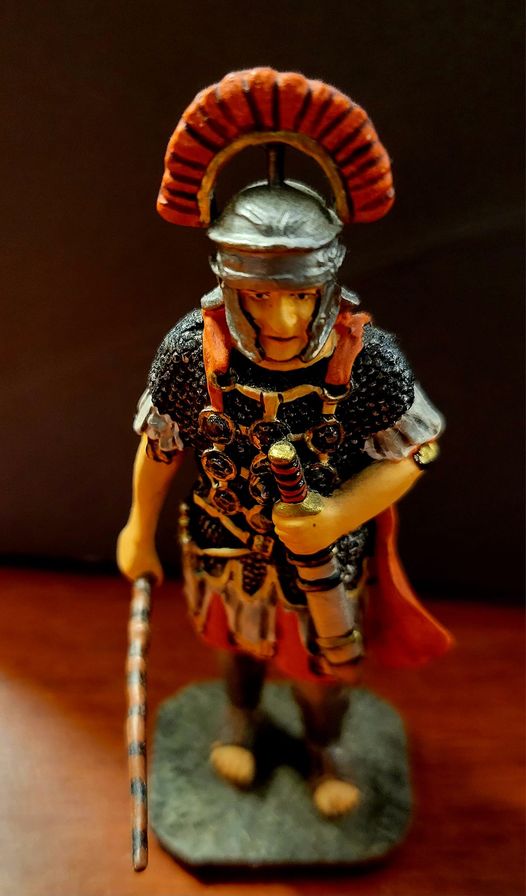
 The family of a young girl, Sally, who was suffering night terrors asked for my help. I gave Sally a toy soldier from my childhood — a Roman centurion — and told her that henceforth this would be her night guardian and would keep terrible things out of her space. I ran into the girl three years later, when she was about ten. “Lex is great,” she told me. “Who is Lex?” I inquired.. Sally was scandalized that I had completely forgotten the incident. “He’s the Roman soldier you gave me!” She stamped her foot. “He’s now ten feet tall, and whenever there’s anything yucky around at night, he’s right on it. I never have nightmares now.” 

This is an example of how an image borrowed from one level of reality can become a container for energy from several sources. I could simply have given Sally the idea of a night guardian, but it seemed appropriate, with a young child, to give her an object that embodied that idea. Through the power of  imagination, that object took on a larger and autonomous life. A miniature figure became ten feet tall, and it appeared spontaneously, with the strength to send off psychic intruders. It became a storehouse for protective energy. This was partly the result of wishful thinking (nothing wrong with wishing), but I believe it was also the result of a transpersonal energy — and energy from a realm beyond worldly forms — coming to take up residence in the container that had been made available. 

There is nothing imaginary (in the sense of unreal) about an image that comes alive in our mind. As the English philosopher H. H. Price puts it: “Paradoxical as it may sound there is nothing imaginary about a mental image. It is an actual entity, as real as anything can be.” We experience mental images, and “they are no more imaginary than sensations.” The confusion comes in because we put down the imagination, wrongly believing that to “imagine” is to entertain false ideas or wander off into empty daydreams. 

Since “imaginary” is so often equated with “unreal,” we may save some time and clarity by substituting the adjective “imaginal.” This has a longish pedigree in the English language; it first appears (according to the OED) in 1647 in the context: “That inward life’s the impresse imaginall of Nature’s Art.” The term “imaginal” has begun to acquire currency in recent times among both scholars and healing practitioners due to the influence of Henry Corbin’s work on the realm of images in Sufi and medieval Persian philosophy.  

The realm of images is a real world, as well as a creative state of consciousness. It is the region of mind where meaning takes on form and where objects take on meaning. True poets, in all ages, have understood that the realm of imagination is the fundamental ground of knowledge.

 Honoring our imaginations is of the most urgent and practical importance, because as the philosopher-emperor Marcus Aurelius said, “A man’s life is dyed in the colors of his imagination.” 

We live by images. They control everything we think and do, from brushing our teeth to making love to speaking or not speaking in an office meeting. Images generate and constitute our experience of reality. 

We tell ourselves that reality is out there, but we do not experience that reality directly. “What we experience directly,” says physicist David Deutsch, “is a virtual-reality rendering, conveniently generated for us by our unconscious minds from sensory data plus complex inborn and acquired theories (i.e. programs) about how to interpret them.… Every last scrap of our external experience is of virtual reality.… Biologically speaking, the virtual-reality rendering of their environment is the characteristic means by which human beings survive.”

 Our lives are more or less authentic according to whether we are aware of the role of images and of our own ability to choose and discard or transform the imagery that rules our interactions with everything. Hermann Hesse put this very precisely: There’s no reality except the one contained within us. That’s why so many people live an unreal life. They take images outside them for reality and never allow the world within them to assert itself.” 

The greatest crisis in our lives is a crisis of imagination. We get stuck, and we bind ourselves to the wheel of repetition, because we refuse to reimagine our situation. We live with a set of negative or confining images and pronounce them “reality.” We do this because we let ourselves get trapped in a particular version of the past or in a consensual hallucination. We do it to cling to the familiar, not daring to give up what we are or have been for what we are meant to become. 

The crisis of imagination is pandemic. The 9/11 Commission rightly pronounced that the horror of the worst terrorist attack in American history was “a failure of imagination.” With only a few exceptions, those responsible for security could not imagine a terrorist group executing a plan as bold and horrendous as attacking major targets on American soil with hijacked American planes. Yet the plan had been “in the air” for years, and it was certainly dreamed by many people who had no other access to information about it. In the fall of 1998, a New York woman shared with me a terrifying dream she could not understand, in which American planes were attacking targets on American soil, in Washington, DC, and elsewhere.

 To address our challenges, we need to draw on extraordinary sources of information and invest our energy and attention in a form of active imagination that dares to re-vision everything. 

To be citizens of the world (to quote Marcus Aurelius again) we must cultivate sympathetic imagination, which is what allows us to understand the feelings and motivations of people different from us. The ability to imagine one's self in another person's place is vital to healthy social relations and understanding. A sociopath signally lacks this ability. 

To bring peace and balance to our world, we require historical imagination, by which I mean both the ability to claim what is helpful from the past and the faculty for spotting alternatives to a particular event track— past, present, or future.  

Whether the issues are in our world or our personal life, the practice of imagination requires claiming a creative relationship with the past. There is an image from Ghana that springs to mind. It shows a strange bird looking over its shoulder. This symbolic bird is called Sankofa, and its role is to remind us to bring from the past what can heal and empower us — and dump the rest.

 One thing we want to reclaim from the past is the wisdom of the child-mind. The practice of imagination begins with making room in our lives for the child who knows it’s okay to “make things up” and knows this is fun. 

When asked why he was the one to develop the theory of relativity, Einstein said: “A normal adult never stops to think about problems of space and time. These are things which he has thought about as a child. But my intellectual development was retarded, as a result of which I began to wonder about space and time only when I grew up.” 

Mark Twain insisted, “No child should be permitted to grow up without exercise for imagination. It enriches life for him. It makes things wonderful and beautiful.”  

Whatever age we have reached, we all need a daily workout, and a place to go, in the real world of imagination. Keep working out, and you’ll remember that, as poet Kathleen Raine wrote beautifully, “Imaginative knowledge is immediate knowledge, like a tree, or a rose, or a waterfall or sun or stars.”

Build your home in the imagination strong enough, and you may find it is the place of creative birthing we all long for, the state of mind Mozart evoked when he said: “I can see the whole of it in my mind at a single glance.… All the inventing and making goes on in me as in a beautiful strong dream.”

We should never confuse the power of making things up with idle fantasy. The stronger the imagination, the less imaginary the results. And we should recall that in many religious and philosophical traditions what comes into manifestation in the physical world is emanated from a sphere of creative imagination beyond and superior to the physical. 


Text adapted from The Three “Only” Things by Robert Moss. Published by New World Library.


Sunday, September 11, 2022

Lord Dunsany's Hat and the Drummer who Keeps a God Dreaming the World


In Lord Dunsany's early work of fantasy, The Gods of Pegana, an elder god with the resounding name Mana-Yood-Sushai makes the lesser gods including a drummer named Skarl. The effort of creation and the sound of the drum put the creator to sleep. Skarl sits on the mist before Mana's feet, drumming away.
"Some say that the Worlds and the Suns are but the echoes of the drumming of Skarl, and others say that they be dreams that arise in the mind of Mana because of the drumming of Skarl." Either way, when the drumming stops, the world of gods and humans will end. Skarl may grow weary, but he plays on, "for if he ceases for an instant then Mana-Yood-Sushai will start awake, and there will be worlds nor gods no more".
From these self-published tales of a fictional pantheon Dunsany went on to virtually found the fantasy genre. He was endlessly prolific and soon wildly popular, publishing some 90 books before he died from appendicitis at 79.

The Anglo-Irish aristocrat's writing habits were as strange as his stories. According to his wife Lady Beatrice, he wrote with quills he sharpened himself, while sitting on a crumpled old hat. He rarely revised anything. The first draft, often streaming directly from dreams, was usually the last. I would like to know what was going on with the hat.

Source: "The Dreams of Mana-Yood-Sushai" from The Gods of Pegana, by Lord Dunsany; illustration by Sidney H. Sime, 1905

Sunday, April 17, 2022

Reality, Illusion and the Rupture of Time in Eliade's Strange Tales


Mircea Eliade is best known in English as a historian of religion, but he was also a prolific author of fiction and fantasy. He regarded the long novel published in English as The Forbidden Forest as his chef d'oeuvre, but many readers will find its loops and repetitions wearisome. However, his shorter fiction can be captivating while evoking some of Eliade's favorite philosophic themes: how the sacred is "camouflaged" in the profane, how at any turning we may encounter a moment of theophany, when the divine irrupts into everyday life and we are released from limits of time and space.
     I have been rereading the stories published in translation as Two Strange Tales. Perhaps we should call stories like this nonfiction fantasy rather than fiction. 
In "Nights in Serampore", Eliade makes himself a lead character. He assigns roles to actual people under their real names, in this case well-known people he encountered in India: the Russian (Eastern Orthodox) scholar of Islam Bogdanov, the Dutch Secretary of the Asia Society, van Manen, and Swami Sivananda (“Shivananda” in this version). The two Westerners, with the narrator (Eliade himself) are in the habit of driving to a rich man’s house in the woods near Serampore, sixteen miles from Calcutta, for long nights of talking, smoking and drinking in a lovely setting, in the perfumed air.
    A mystery develops. A Hindu professor reputed to be a master of tantra and yogic siddhis is seen on the road in his dhoti with the saffron stripes on his forehead. Questioned later, he denies having been there. He is spotted again, after Eliade has been discoursing on “awful” methods used to acquire occult powers in Hindu tradition, like meditating all night while seated on a corpse. That evening, as the threesome leave the rich man’s house, something strange happens during the car ride. It is taking far longer than it should to get to the highway, the trees are getting bigger and bigger. Eliade closes his eyes for a moment and when he opens them the jungle is wild and unfamiliar.
     They hear a woman’s screams. They get out of the car and follow a flickering light through the jungle. It brings them to charcoal burners, and an old, rather grand house. The owner receives them, but moves and speaks very slowly, using only an archaic form of Bengali. The visitors are confused. They forget the screams that brought them here. Then they remember something, and start to ask questions. The owner of the house informs them that they heard the screams of his wife as she was stabbed to death. Look, here is her body, being carried in on a bier.
    Eliade and his friends leave in discomfort and confusion. They can hardly stay when the lady of the house has just been murdered. Weary and drained, they pause under a tree where Eliade takes a nap. Eventually they find their way back to the car. The driver acts as though they never left. Confounded, Eliade and his companions retrace their steps. They return to the tree where Eliade took a nap. They see their footprints on the ground and follow them. They come to a clearing where the signs of their passage end. There is no grand house, no charcoal burners, no murdered woman being prepared for cremation.
    They learn that there was a great house at this place, but that was a hundred and fifty years ago, before it was burned to the ground. The case of the murdered woman, whose name was Lila, was notorious. She died resisting men who were trying to abduct her. It seems that Eliade and his friends were transported across time. Their adventure was not only metaphysical, since it produced physical effects – their torn and dirtied clothes, their footprints on the ground.
     When they seek to make sense of this, their suspicions fall on Suren Bose, the yogi magician. Could he have worked an enchantment, to distract them from spying on whatever he was doing in the forest? How could this be?
     Eliade’s question remains unanswered until he goes to a monastery in the Himalayas and tells his story to Swami Sivananda. The swami explains: “No event in our world is real, my friend. Everything that exists in this universe is illusory. Not only the death of Lila and her husband’s grief, but also the encounter between you, living men, and their shades – all these things are illusory. And in a world of appearances, in which no thing and no event has any permanence, any reality of its own – whoever is master of certain forces can do anything he wishes. Obviously he doesn’t create anything real either, but only a play of appearances.”
   When Eliade struggles with this, Sivananda stages a demonstration. The swami squeezes Eliade's arm and drags him along. Eliade staggers. Hi senses blur. Now he seems to be in a different time and place, back in the humid forest of the south. Sivananda makes him walk faster. He is again at the charcoal kilns, at the big house in the forest. “Wake me up!” Eliade pleads.

In his introduction to Two Strange Tales, Eliade discusses the importance of fiction in his work. Both stories turn on the use of supposed yogic techniques to wield occult powers. The mélange of reality and fiction in these stories, he observes, is well-suited to his concept of “camouflage”, of how the sacred is concealed in the profane. He writes that

in these two stories “camouflage” is used in a paradoxical manner, for the reader has no means to know whether the “reality” is hidden in “fiction” or the other way round, because both processes are intermingled. 
     A favorite technique of mine aims at the imperceptible yet gradual transmutation of a commonplace setting into a new “world’, without however losing its proper, everyday or “natural” structure and qualities...The parallel world of the fantastic is indistinguishable from the given ordinary world, but once this other world is discovered by the various characters it blurs, changes, transforms or dislocates their lives in different ways. 
      Each tale creates its own proper universe, and the creation of such imaginary universes through literary means can be compared with mythical processes...The imaginary universes brought to light in littérature fantastique disclose some elements of reality that are inaccessible to other intellectual approaches.

    The second story, "The Secret of Dr. Honigberger", involves another real person, a colorful German-Romanian from Brasov. The narrator (Eliade himself) receives an invitation from a Mrs Zerlendi to inspect her husband’s Oriental collection. He arrives at the kind of house that often features in Eliade’s fantastic tales, “one of those houses that I never can pass without pausing for a closer look”, an old villa behind an ironwork fence and an overgrown garden with a dried-up pool, where a world disappearing from other parts of the city is strangely preserved. The main entrance is protected by a sunroof of frosted glass, of the kind that struck me when I visited Eliade’s old neighborhood in Bucharest, on a street near Mantuleasa.
      Eliade is seduced by an immense library of 30,000 books. We learn that Mr. Zerlendi was doing research for a biography of Honigberger, a German-Romanian from Brasov who became famous for his adventures in the East. However, Zerlendi disappeared many years before. Going through Zerlendi’s notebook, Eliade finds clues to what happened. Among all his composition books, Zerlendi left a journal written in Sanskrit, correctly assuming that it would take a rarely qualified investigator to recognize and interpret its contents. In this journal he recorded his experiments with yogic techniques, including the art of invisibility.
     Central to his practice was the kind of dream yoga or lucid dreaming that places high value of maintaining continuity of consciousness between waking, dreaming and other states.

After some time I woke up sleeping, or, more precisely, I woke up in sleep, without ever having fallen asleep in the true sense of the word. My body and all my senses sunk into deeper and deeper sleep, but my mind didn’t interrupt its activity for a single instant...
     I was astounded to behold, with my eyelids closed, the very same scene as I had with my eyes open…I saw in any direction I wanted to, I saw wherever I turned my thoughts, whether or not I had my eyes open. 

He sees others moving in their dream bodies.

The unification of consciousness is attained by means of a continuous transition, that is, one without a hiatus of any sort, from the waking state to the state of dreaming sleep, then to that of dreamless sleep, and finally to the cataleptic state. 

Eliade comments: “All the Indian ascetics that I have known who have consented to give me any explanations regarded this stage, the unification of the states of consciousness, as the most important of all. Anyone who did not succeed in experiencing this could never derive any spiritual benefit from following yoga practice.” 
     Dr Zerlendi applied himself to placing himself in cataleptic trance for longer and longer periods. He believed he had proved that he stepped outside time when he rose after 36 hours to find his face as freshly shaven as when he lay down. He laid in suspended animation for 12 hours without drawing breath. He declared, in his secret book, “I know the way to Shambhala. I know how to get there.”
     He made it his aim to transport himself to Shambhala. To do this he would have to step outside time. He practiced the art of invisibility as a step towards gaining the power of teleportation, de-materializing in one reality in order to re-materialize in another.
     Seized with excitement, Eliade smuggles the journal out of the house, in order to study Zerlendi's techniques closely. He will return the book covertly before anyone notices it is missing.
    There is a slight problem. When Eliade returns to the house to interview Mrs Zerlendi again. When he succeeds, nobody remembers him. He protests that he was working in the library for two full months. This is quite impossible, they tell him. There is no library in the house. There used to be one, but it was broken up and sold off twenty years before.
   Eliade goes to the house again, hoping that it will be as he first found it. Now the whole scene is falling apart, like a broken dream. The Zerlendi house is being pulled down.
    My favorite passage in the story: "
I have always divided people into two categories: those who understand death as an end to life and the body, and those who conceive it as the beginning of a new, spiritual existence. And I never form an opinion of any man I meet until I have learned his honest belief about death." 

Nonfiction fantasy. I like the genre description I just invented. In Eliade's case, it not only means that he gives himself permission to use the identities and circumstances of "real" people, starting with himself. It means that the stories are derived from experiences in realities beyond the physical that may be no less real and sometimes intersect - magically or catastrophically -with the world of the senses. 


Quotations are from Two Strange Tales by Mircea Eliade, published (appropriately) by Shambhala (Boston, 1986). The translation is credited to Herder & Herder.

Art: "Nights in Serampore" by Christian Bode (2016)

Friday, March 23, 2018

Jung's Amplification of Miss Frank Miller


I recently re-read Jung’s Symbols of Transformation, a massive revision of a work he composed  thirty-seven years earlier, as he came to the parting of the ways with Freud. He noted that at 36, when he wrote Wandlungen und symbole der libido (published in 1912), he was still fighting to get out of the narrow box of Freud’s theories, and just embarking on the deeper journey towards death in the second half of life. His introduction to the 1950 edition contains some fine general statements about our relations with myth, suggesting that if we are unconscious that we are living a myth, we may be driven by it to unfortunate or disastrous outcomes. 
     He insists that psychology needs to learn from history just as history can learn from psychology.
     The seed of this book is a 20-page journal of the “autosuggestive” fantasies of Miss Frank Miller, an American woman, a writer and journalist and stage performer.  Jung did not know her personally, and got several things wrong about her. Her name was not a pseudonym; she was named for her father in Alabama. Jung diagnosed her fantasies as “the prodromal stages of schizophrenia” and predicted she would eventually suffer a full schizophrenic breakdown; she did not. However, in 1909 she was admitted to a hospital in Massachusetts diagnosed with a “psychopathic personality” and a tendency to “hypomania”. [1].Her fantasies were published in French translation by Théodore Flournoy, a professor of psychology at the University of Geneva and a student of the paranormal, in 1906. Jung read the French translation, not the original.
    It’s desirable to read this text (published as an appendix) before weighing into Jung’s immense commentaries. Miss Miller was clearly a woman of considerable education and intelligence; she notes where her knowledge had to catch up with her experience. She dreams a hymn of creation in which God first manifests Sound, then Light, the Loves. She notes she had not heard at the time of Anaxagoras, who imagined creation starting from chaos in the form of a whirlwind, which presumably involved sound.
    Jung's method in exploiting this material is an example of both circumambulation and amplification. He walks round and around the images, then allows himself to find their likenesses on the big screen, in the mythology and iconography of all the world’s cultures that are known to him.
    Jung’s approach – as he admitted many years later – may also be a textbook example of projection: what he finds in Miss Miller’s psyche are the contents of his own.

"I took Miss Miller's fantasies as ... an autonomous form of thinking, but I did not realize [at that time] that she stood for that form of thinking in myself. She took over my fantasy and became the stage director of it, if one interprets the book subjectively. ...to put it even more strongly, passive thinking seemed to me such a weak and perverted thing that I could only handle it through a diseased woman." [Shamdasani, 2012, 27‐ 28]  “And so I assimilated the Miller side of myself, which did me much good. I found a lump of clay, turned it to gold and put it in my pocket. I got Miller into myself and strengthened my fantasy power by the mythological material” [2].

His justification for turning to myth to illuminate the individual psyche is that psyche is more or less the same everywhere. “Because the basic structure of the psyche is everywhere more or less the same, it is possible to compare what look like individual dream motifs with mythologems of whatever origin.” [3]

References

1.Somu Shamdasani, "A woman called Frank". Spring: Journal of Archetype and Culture (1990) vol. 50, 25-56. 
2. Somu Shamdasani, Introduction to Jungian Psychology: Notes of the Seminar on Analytical Psychology given in 1925 by Carl Jung. (Princeton: Princeton University Press. 2012) 32
3. C.G.Jung, Symbols of Transformation, Collected Works volume 5,para 474

Tuesday, February 28, 2017

The Door in the Wall


What pleasure it can be to return to books we read and loved long ago, and find new meaning, inspiration and enjoyment! Last night, it was a collection of the short stories of H.G.Wells that includes “The Door in the Wall”, a fantasy tale that is a masterpiece of its kind. It speaks to us of essential things, including what shamans call soul loss.
    A young boy, wandering the streets of Kensington, comes to a green door in a white wall with a red Virginia creeper. He plucks up the courage to try the door, and finds himself in a magical garden. There are panthers who nuzzle him like friendly cats, and new friends who play the best games. “Playmates I found there. That was very much to me, because I was a lonely little boy. They played delightful games in a grass-covered court where there was a sun-dial set about with flowers. And as one played one loved.”
    A wise woman shows him a book that contains his life. “It was a story about myself, and in it were all the things that had happened to me ever since I was born. It was wonderful to me, because the pages of that book were not pictures, you see, but realities….People moved and things came and went in them.” And then “at last I came to myself hovering and hesitating outside the green door in the long white wall, and felt again the conflict and the fear.” Back in the world outside the green door, he is a little boy weeping on a long gray street in West Kensington at the hour the lamps are lit.
     He always longs to return. Strangely, he cannot remember the games he played, only the joy of them. He makes the mistake of confiding in a schoolmate and is mocked and bullied by those with no imagination. We know feedback felons of his type in our own lives, people who have lost their own dreams and encourage us to give up on ours.
     As the boy grows into manhood and then an important place in the world, he feels that “some thin tarnish had spread itself over my world” . Nearing forty, he finds “the keen brightness that makes effort easy has gone out of things”. He sees the green door in the white wall again, and again – three times in one year, in different locations in the city – but he is now too busy and too set in adult agendas to pause and try to go through again.
     So he remains with an aching hole in himself, the place where his “child of wonder” once lived, until his death. He dies when he falls down a shaft opened by railway construction – did he mistake it for the green door in the white wall, walking home? The story speaks of soul loss, of how we lose the beautiful bright dreamer in us when we turn our back on his or her dreams.


Friday, October 18, 2013

Time for the Night Watch

Russian fantasy scifi writer Sergei Lukyanenko has turned his Night Watch trilogy into a pentalogy, with publication of a fifth volume, New Watch, following a fourth, Last Watch,  that appeared a few years ago. New Watch is not yet in a U.S. edition, but I placed an order for the Heinemann edition from the U.K., because this is an author I like to follow. The previous books in the Night Watch series seized me with an urgent need to go from one volume to the next without drawing breath.
Lukyanenko’s theme in the Night Watch series is one of the eternal ones that is never out of date: the battle of Dark and Light. The Night Watch is composed of Light Others who keep the Dark side in check. Office hours are 20:00-8:00. The Day Watch consists of Dark Others who monitor and run interference on the Light. Office hours are 8:00 to 20:00. In Moscow (where much of the action takes place) the style of both is like that of hard-drinking, somewhat seedy secret agencies of the Russian government. The only non-drinkers are the vampires of the Day Watch, who can’t metabolize alcohol.
    The Others live much longer than humans and have the power of seeing and traveling through a world-behind-the-world known as the Twilight. The Others are described and graded as magicians. Only magicians of the higher levels can see or travel below the first and second levels of Twilight. We eventually learn that there are seven levels of twilight, but not even Gesar and Zabulon – Higher magicians and chiefs of the Night Watch and Day Watch, respectively - can go there.
The protagonist is Anton Gorodetsky a Light watchman with a sympathy for vampires and a girlfriend/wife (Sveta) who is a notably more powerful magician than he is, even after he becomes a Higher magician in book three (Twilight Watch).
Light and Dark Others are monitored by the Inquisition, also known at the Twilight Watch. The inquisitors are drawn from both Watches and their job is to police the rules of the treaty that is supposed to prevent the balance between Light and Dark from being overthrown.
In book three Dark and Light must combine to fight forces inimical to both. The plot centers on a book long held to be mythical – the Fuaran – that contains the secret of how to turn humans into Others. If all humans are turned into Others, the Others will cease to exist. We are given to understand that the most powerful magicians are actually those with the lowest personal energy, sucking in vitality from the humans all around them. In book four, we learn that the magician with absolute power is the “zero-point” magician, an interesting idea.
I like the way the Others enter into twilight by “pulling up their shadows”. This becomes banal in the movie version of Night Watch when they put on dark glasses, like Neo in The Matrix. I wish the film crew had spent a moment considering how to film the act of stepping into your own shadow. Sometimes, in unpropitious conditions, the only shadow available to Anton is the shadow of an eyelid. A wily adversary in book four (Last Watch) places himself in front of the window, preventing Anton from casting a shadow he could use to see into the twilight.
On the first level of twilight, the world goes gray apart from the “blue moss” which feeds and thrives on human emotions, especially fear and lust. Some structures appear as they do in the ordinary world, but leached of color and substance, so an Other can step through them. At the second level, the world is grayer and emptier, and travelers shed their normal appearance. The deeper you go, the more you risk losing your vital essence and the harder it is to come back. But higher magicians can practice rapid teleportation by diving through deeper levels of the twilight. On the fifth level, you learn the terrible truth about the Others – that they gain their power by stealing it from humans, as air rushes to fill a vacuum.

Lovers of old-fashioned books will enjoy the moment in Last Watch when Gesar, the chief of the Night Watch, gives a reason why books will never disappear: “We only use books for studying magic. When a text is typed into a computer, it doesn’t retain any of the magic.”