Monday, March 13, 2023

Walking a Dream


Jung said that one of the things he liked to do with a dream was to “circumambulate” it, wander around it, considering it from many angles. He liked to do this while in physical motion, wandering around his house on the lake, through the garden, into the woods.

This is a grand way to get greater perspective on a dream. Walking with a dream for a while, you may find that more of the dream narrative returns to you. You are almost sure to get commentary of some kind from what you notice playing around you, wherever you happen to be going.

You may find that both inner and outer perceptions accomplish what a dreaming people of central Africa say we must do with a dream. Like other cultures that value dreaming, the Yansi of Zaire have special words for dreamwork practice. According to anthropologist Mubuy Mpier, the Yansi share dreams every morning, and the core of their approach to dream exploration is embodied in the term a bumi ndoey, which means to “turn a dream.” The teaching is that we need to turn a dream carefully, as we might lift a great rock, to see what is underneath, on the side that is not initially visible.

It’s not only a matter of letting the world illuminate the dream; it’s a case of letting the dream illumine the world. “We do not always have only to sit with closed eyes, moving around in our heads, to draw closer to an image. We can put it in our pocket and carry it with us throughout days and nights,” as Mary Watkins wrote in her passionate appeal in Waking Dreams for us to let images speak to us and through us. “You not only see different things, you see things differently” when you are seized by poetic imagery, poet and scholar Kathleen Raine observed.

One of the things we want to do when we are walking a dream is to notice when it starts to play out in the world around us. There might be a considerable time gap between the dream and its unfolding in the world, so patience and a decent memory — assisted by your journal! — may be required. When a dream does begin to manifest in external reality, let an alert flash on your inner control panel. In my mind, the default version is: Dream Playing Out Now.

When the dream starts playing out, you have several options. They are not mutually exclusive. If there is no sense of danger and the original dream left you feeling happy and confident, you may be content to let the dream play again and enjoy it with all of your senses. Maybe you’ll find that a sense of “rightness” comes with this: that you have made the right choice, that you are in the right place, that at last you have found the right friend or lover or teacher. If you had a darker sense of the dream — if it involved risk or danger — you will want to be poised to change the script, solve a problem, avoid that accident or that drama at the office.

As a dream plays out in exterior reality, you may notice that its symbolism is now alive in your world. This can become a whole education on how to refresh and renew our perspectives on what is a dream and what is real. We need to take dreams more literally and waking life symbolically.

A dream may be fairly literal in the sense that it reveals something that is happening or will happen in the future in the ordinary world. Yet when the dream is enacted, we see that there is symbolism in the physical event. So a literalistic dream can point to a symbolic play in the outer world. Let’s consider an example.

A man I will call Yves dreamed that his ring finger was cut off in an accident. There was blood and pain, and he saw the splintered bone, and woke with feelings of dread and fear. When he brought the dream to me, I asked very early, as is my practice, whether it was possible that he could lose a finger in a literal accident, maybe cutting or slicing something. Did his work involve such risks? Well, yes, it did. He worked part-time pruning vines on a hillside in southern France, where he lived. He agreed that he would need to be more watchful about how he handled the secateurs.

We proceeded to discuss the symbolic levels of the dream. Hard to miss the significance of losing the ring finger in terms of a relationship. He was not married, but he had a live-in partner and felt her interest had begun to stray. This brought in the Freudian bit. Did the loss of “tall man” — the middle finger — speak of a decline in sexual performance?

Yves walked with his dream. Within the week, it began to play out when he made a false move while working in the vineyard. He only narrowly managed to avoid cutting off his own finger with the pruning shears. It was the ring finger, as in the dream. The partial fulfillment of his terrible dream led him to confront the symbolic issues. He sat down with his partner. She told him, with the sexual candor for which the French can be notable, that she was dissatisfied with his sexual performance and had already taken another lover. They agreed to separate.


Big Feet. Detail from painting by Brazilian street artist Pedrito, RM private collection. 

Friday, March 10, 2023

A Dreamer's Notes: Currency of Psychical Excursions


He is wearing what look like tennis whites from an earlier era. He is brisk, upper-crust, charming - and ready to show his credential immediately. He hands me a 500 euro bill with the words "psychical excursions" written across it in a neat hand. 

I recognize the phrase. It was a term employed by the early researchers for the Society for Psychical Research to describe journeys beyond the body in which the traveler appeared to others as a "phantasm of the living". 

The tennis player's mode of introduction suggests that though the language may sound antiquated, this line of inquiry is valid today, and valuable. He did not allow me to return the banknote. I fold it and put it in my pocket. 

After returning from my dream excursion, I reopen Phantasms of the Living, the first major published work from the S.P.R. I find myself at once in the thick of accounts of "psychical excursions", in which the traveler is dreaming and is perceived by others in their own dreams - and sometimes with their physical eyes. 

One report involves a man who was on the steamship Limerick on a rough Atlantic crossing. Worried about him, his wife spontaneously projected herself from her bedroom to embrace him as he lay on his lower birth in his stateroom thousands of miles away. For him, this was a delightful dream - as it was for his wife, when she shared matching details after the trip. 

For one Mr. Tate, a librarian from Cleveland who occupied the upper berth in the cabin, it was a scandalous flouting of the rules. "You're a pretty fellow," he chastised the dreamer in the lower bunk in the morning, "inviting a woman to our room like that." Awake during the night, Mr. Tate had witnessed the visitation with open eyes. 

Next I went looking for tennis players in the early S.P.R. I seemed to recall that the Australian-born psychic investigator Richard Hodgson (famous for his sleuthing after Madame Blavatsky at one point Secretary of the Society) was a champion tennis player. I soon confirmed that he loved a hard game of hardball and died of a heart attack in an especially violent game at Boston’s Union Boat Club.


This is an unedited report from my journal dated January 6, 2023. I drew the illustration on March 10, 2023. I make a daily practice of making at least one sketch from my dreams, old and new. 


Thursday, March 9, 2023

True Imagination and the Ten Foot Tall Toy Soldier


When have you said to yourself, “It’s only my imagination?” I’ve said it at a moment of strong intuition — intuition that subsequently proved to be correct — that lacked supporting evidence in the moment. I’ve also said it when I’ve had a glimpse of a wonderful future — and then betrayed that vision by diverting my energy to listing all the reasons it cannot be. 

When we dismiss imagination, we exile the part of ourselves that knows things that matter in an extraordinary way and has the power to re-vision and re-create our world. Imagination is the faculty of mind and soul that thinks and acts through images, which, as the English poet Samuel Taylor Coleridge said, are “facts of the mind.” 

They borrow from our life memories and our sensory experiences, but they are more than copies; they can reshape and transform the raw materials into something new. And they can take on energy from a deeper source.

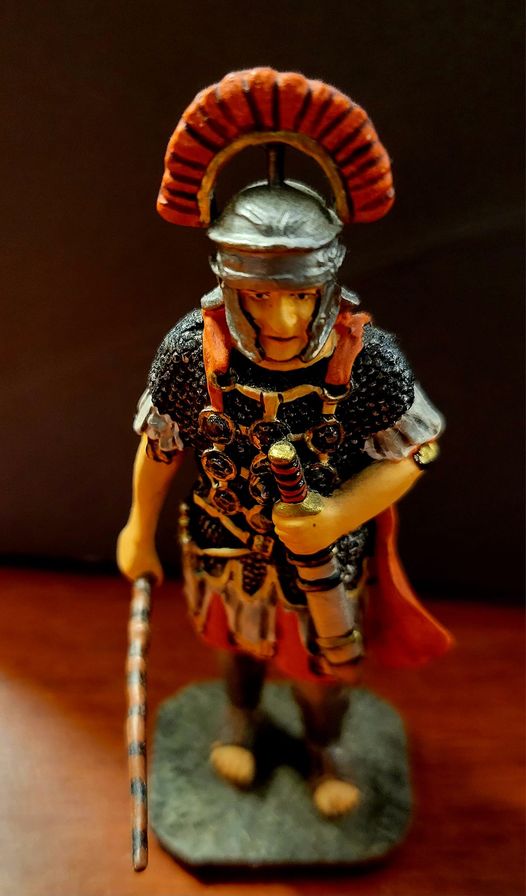
 The family of a young girl, Sally, who was suffering night terrors asked for my help. I gave Sally a toy soldier from my childhood — a Roman centurion — and told her that henceforth this would be her night guardian and would keep terrible things out of her space. I ran into the girl three years later, when she was about ten. “Lex is great,” she told me. “Who is Lex?” I inquired.. Sally was scandalized that I had completely forgotten the incident. “He’s the Roman soldier you gave me!” She stamped her foot. “He’s now ten feet tall, and whenever there’s anything yucky around at night, he’s right on it. I never have nightmares now.” 

This is an example of how an image borrowed from one level of reality can become a container for energy from several sources. I could simply have given Sally the idea of a night guardian, but it seemed appropriate, with a young child, to give her an object that embodied that idea. Through the power of  imagination, that object took on a larger and autonomous life. A miniature figure became ten feet tall, and it appeared spontaneously, with the strength to send off psychic intruders. It became a storehouse for protective energy. This was partly the result of wishful thinking (nothing wrong with wishing), but I believe it was also the result of a transpersonal energy — and energy from a realm beyond worldly forms — coming to take up residence in the container that had been made available. 

There is nothing imaginary (in the sense of unreal) about an image that comes alive in our mind. As the English philosopher H. H. Price puts it: “Paradoxical as it may sound there is nothing imaginary about a mental image. It is an actual entity, as real as anything can be.” We experience mental images, and “they are no more imaginary than sensations.” The confusion comes in because we put down the imagination, wrongly believing that to “imagine” is to entertain false ideas or wander off into empty daydreams. 

Since “imaginary” is so often equated with “unreal,” we may save some time and clarity by substituting the adjective “imaginal.” This has a longish pedigree in the English language; it first appears (according to the OED) in 1647 in the context: “That inward life’s the impresse imaginall of Nature’s Art.” The term “imaginal” has begun to acquire currency in recent times among both scholars and healing practitioners due to the influence of Henry Corbin’s work on the realm of images in Sufi and medieval Persian philosophy.  

The realm of images is a real world, as well as a creative state of consciousness. It is the region of mind where meaning takes on form and where objects take on meaning. True poets, in all ages, have understood that the realm of imagination is the fundamental ground of knowledge.

 Honoring our imaginations is of the most urgent and practical importance, because as the philosopher-emperor Marcus Aurelius said, “A man’s life is dyed in the colors of his imagination.” 

We live by images. They control everything we think and do, from brushing our teeth to making love to speaking or not speaking in an office meeting. Images generate and constitute our experience of reality. 

We tell ourselves that reality is out there, but we do not experience that reality directly. “What we experience directly,” says physicist David Deutsch, “is a virtual-reality rendering, conveniently generated for us by our unconscious minds from sensory data plus complex inborn and acquired theories (i.e. programs) about how to interpret them.… Every last scrap of our external experience is of virtual reality.… Biologically speaking, the virtual-reality rendering of their environment is the characteristic means by which human beings survive.”

 Our lives are more or less authentic according to whether we are aware of the role of images and of our own ability to choose and discard or transform the imagery that rules our interactions with everything. Hermann Hesse put this very precisely: There’s no reality except the one contained within us. That’s why so many people live an unreal life. They take images outside them for reality and never allow the world within them to assert itself.” 

The greatest crisis in our lives is a crisis of imagination. We get stuck, and we bind ourselves to the wheel of repetition, because we refuse to reimagine our situation. We live with a set of negative or confining images and pronounce them “reality.” We do this because we let ourselves get trapped in a particular version of the past or in a consensual hallucination. We do it to cling to the familiar, not daring to give up what we are or have been for what we are meant to become. 

The crisis of imagination is pandemic. The 9/11 Commission rightly pronounced that the horror of the worst terrorist attack in American history was “a failure of imagination.” With only a few exceptions, those responsible for security could not imagine a terrorist group executing a plan as bold and horrendous as attacking major targets on American soil with hijacked American planes. Yet the plan had been “in the air” for years, and it was certainly dreamed by many people who had no other access to information about it. In the fall of 1998, a New York woman shared with me a terrifying dream she could not understand, in which American planes were attacking targets on American soil, in Washington, DC, and elsewhere.

 To address our challenges, we need to draw on extraordinary sources of information and invest our energy and attention in a form of active imagination that dares to re-vision everything. 

To be citizens of the world (to quote Marcus Aurelius again) we must cultivate sympathetic imagination, which is what allows us to understand the feelings and motivations of people different from us. The ability to imagine one's self in another person's place is vital to healthy social relations and understanding. A sociopath signally lacks this ability. 

To bring peace and balance to our world, we require historical imagination, by which I mean both the ability to claim what is helpful from the past and the faculty for spotting alternatives to a particular event track— past, present, or future.  

Whether the issues are in our world or our personal life, the practice of imagination requires claiming a creative relationship with the past. There is an image from Ghana that springs to mind. It shows a strange bird looking over its shoulder. This symbolic bird is called Sankofa, and its role is to remind us to bring from the past what can heal and empower us — and dump the rest.

 One thing we want to reclaim from the past is the wisdom of the child-mind. The practice of imagination begins with making room in our lives for the child who knows it’s okay to “make things up” and knows this is fun. 

When asked why he was the one to develop the theory of relativity, Einstein said: “A normal adult never stops to think about problems of space and time. These are things which he has thought about as a child. But my intellectual development was retarded, as a result of which I began to wonder about space and time only when I grew up.” 

Mark Twain insisted, “No child should be permitted to grow up without exercise for imagination. It enriches life for him. It makes things wonderful and beautiful.”  

Whatever age we have reached, we all need a daily workout, and a place to go, in the real world of imagination. Keep working out, and you’ll remember that, as poet Kathleen Raine wrote beautifully, “Imaginative knowledge is immediate knowledge, like a tree, or a rose, or a waterfall or sun or stars.”

Build your home in the imagination strong enough, and you may find it is the place of creative birthing we all long for, the state of mind Mozart evoked when he said: “I can see the whole of it in my mind at a single glance.… All the inventing and making goes on in me as in a beautiful strong dream.”

We should never confuse the power of making things up with idle fantasy. The stronger the imagination, the less imaginary the results. And we should recall that in many religious and philosophical traditions what comes into manifestation in the physical world is emanated from a sphere of creative imagination beyond and superior to the physical. 


Text adapted from The Three “Only” Things by Robert Moss. Published by New World Library.


Wednesday, March 8, 2023

Place of the Lion


I found the Place of the Lion in a dream. I invite you to make it yours. 

You are at a zoo on a Sunday afternoon. People are wandering about, snacking and chatting as they inspect the animals and birds. As you approach the big cat enclosures, you are uneasy because you know that big cats don't belong in confinement.

When you come to the lion pen, you are disgusted because people are mocking the great beast, pulling faces - until someone screams that the gate is open and the lion could get them. Now all the people are running away.

Instead of fleeing, you step through the open gate, into the place of the lion. The great beast runs towards you and leaps up...and his great paws are on your shoulders...and he licks your face like a friendly dog. He wills you to turn around and look at the scene in the zoo in order to understand what is really going on here.

When you look back, you see that it is the humans that are living in cages. In the comfort of their suburban houses and malls and supermarkets they have failed to notice that they have walled themselves in places of confinement. When you look beyond the lion, you see there are no walls, only an open horizon of wild freedom and possibility. The lion says to you, in his gravely lion voice, "You see, my dear, humans are the only animals that choose to live in cages."


Text adapted from Active Dreaming by Robert Moss. Published by New World Library


Drawings by Robert Moss

Top: "Lion at the Heart"

Bottom: "Place of the Lion"

Illustration by RM


Tuesday, March 7, 2023

A Gift for Resemblances


Divination is the effort to discern the divine will: to identify what supports and what opposes an individual or a community. When properly conducted and interpreted, what comes through may show the shape of things to come. Divination has never been out of style.

      The oldest and most effective forms of divination are those in which you look very carefully at what the world, and your dreams, telling you. You have a question on your mind and you pick up a stone, or examine the bark of a tree, and see what patterns they suggest to you that may hold an answer. The women seers of the German tribes, who gave Roman commanders plenty of trouble, liked to find pictures and hear voices in running water. Plutarch wrote in his biography of Caesar: “Their holy women used to foretell the future by observing eddies in the rivers, and by finding signs in the whirling and in the noise of the water.” When the Romans themselves needed guidance on whether the divine will was favorable or unfavorable to a certain undertaking, they sent their augurs up onto the Capitoline hill to monitor the behavior of birds.

      From very early times, humans have constructed divination kits to limit the answers the world can give you to manageable numbers, that can be read according to an agreed and teachable method of understanding. African diviners carry pouches containing stones and pieces of bones and other objects and artifacts that represent certain themes or outcomes. They can be cast as lots, like runes, to make a story.   

      The world’s great divinatory systems, such as China’s I Ching, West Africa’s Ifa, and Europe’s Tarot, are more than tools for fortune-telling. In their design, the hexagrams, the odu and the cards bring together symbols representing all the forces and processes at work in the world, including those that emanate from a deeper world. The magnitude of the design is clear in the oldest text of the I Ching, from Mawangdui, where it is written that the ancient sages “drummed” the patterns of heaven and earth into the hexagrams. Such patterns give form to the ever-shifting dynamics of manifestation. The world is before you, with all of its players, marshaled in finite numbers adapted to the finite understanding of humans: the sixty-four gua of I Ching, the sixteen master odu and 256 derivative patterns of the Ifa diviner, the 78 cards of Tarot.

      A reading is designed to show what forces and factors are at play in a given moment of time, and which are absent. For a devoted reader of one of these systems, what is missing from the field may be as significant as what is present. If you do a daily card reading, for example, and you find that a certain card or suit never seems to show up, you will want to ask yourself why that element or power is absent from your life. A recurring pattern of absence may be comparable to a medical test that reveals, for example, that you do not have enough iron in your body.

     Great readers, using any of these systems, rely on memory, intuition and a gift for resemblances. Phenomenal memory is required to learn and carry the poetic oral recitations that hold the possible meanings of Ifa. A great babalawo (“father of the mysteries”, the title of the Ifa divination priest) may carry in his head a hundred poetic stories about each of the odu, and will scan his memory banks in a reading to see which of these, in which combinations, are relevant to his client in that moment. A great reader of I Ching will remember, as coins or yarrow sticks reveal a hexagram, not only the commentaries of past masters that he has memorized, but incidents that followed when a certain hexagram came up before. In the presence of the Hanged Man, the Queen of Cups or the Seven of Swords, a great Tarot reader may wander through a personal memory palace where each of the rooms holds a living history of each of the cards – its transformations, its consequences – and there is a great room where the cards move together and interact, as in a medieval pageant with its mystery plays.

     Intuition may involve courting, or at least being receptive to, the guidance of past masters. In China, for many generations, the yarrow stalks preferred for casting the I Ching were plucked from the gravesites of previous masters, including Confucius. The babalawo recognizes that certain odu not only feature the ancestors or the orishas (the gods and demigods of the Yoruba) but may announce their irruption into the space. When the pattern of Ogun, the iron lord of justice and retribution, is revealed, everything comes to a stop while his praise-names are chanted. Those who work deeply with variants of Tarot based on Kabbalah or the work of Western esoteric orders may come to feel they are in contact with the intelligences of some of those who traveled before them on the roads of the Tree of Life.

    In all cultures, attitudes to divination range from superstitious credulity to impatient skepticism. The most pragmatic approach may be the one the great Roman statesman and advocate Cicero attributed to his brother Quintus in a celebrated treatise in which he argues both for and against divination: eventa non causae – pay attention to “outcomes, not causes.” If it works, use it.

From time immemorial, dreams have have been the favorite source of divination, for amateurs and professionals. The dream interpreter is never likely to lack business – even in a society that disparages dreams – because people know that their dreams are important, but need help in three important ways: to figure out the meaning of dreams, to determine appropriate action to be taken, and to disperse or ward off bad energies that may be operating during the night.

The prime requirement for a dream interpreter, according to Artemidorus, the most famous practitioner of this trade before Freud, is “a gift for resemblances.”

The meaning of dreams is often mysterious, and in many societies it has been maintained that a professional - shrink or priest or seer - is required to interpret them. The truth is that dreams are a personal oracle that travels with us everywhere, and we don't need someone else to tell us what they mean if we are prepared to do our own work. Asked why dream symbols can be so difficult to read, a wise ancient interpreter responded that the gods who are kindly to humanity want us to get smart, so they set us puzzles to figure out. This was also sometimes cited as a reason why the pronouncements of the Delphic oracle were famously mysterious and ambiguous.


Graphic: Ifa divination tray


Text adapted from The Secret History of Dreaming by Robert Moss. Published by New World Library.


;


Saturday, March 4, 2023

Dreaming beyond the body we find worlds beyond the body


Wherever spiritual practice is alive, conscious dreaming is recognized as a vital source of instruction on the soul’s survival of death and its condition in the afterlife. Travel guides to the Other Side – like the Tibetan Book of the Dead and the Orphic gold leaf instructions – are derived from the lucid dreaming and astral journeys of shamans, mystics and yogis. The Lakota say that the path of the soul after death is the same as the path of the soul in dreams.
   Even St. Augustine – who had problems with dreams when he abandoned his lover for the church and decided that sex was disgusting – recommended paying the closest attention to dreams in which the dreamer is conscious he is outside his body. In a letter he wrote when he was working on The City of God, Augustine quoted the experience of one Gennadius, “a physician of Carthage”. 
   In a dream, Gennadius encountered a radiant young man who led him to an otherworldly city where he heard singing “so exquisitely sweet as to surpass anything he had ever heard”. Waking, the doctor dismissed his experience as “only a dream”. His radiant visitor returned the following night and asked Gennadius whether he had been asleep or awake when they had met before. 
   At this point, the doctor became aware that he was dreaming. When his guide asked him, “Where is your body now?” he became aware that he was also having an out-of-body experience. This was the preliminary to a teaching session in which he learned that the soul’s condition after death is similar to its condition in dreams, and he lost his doubts about life after life.
    The story of Gennadius finds echoes in the experiences of conscious dreamers today. In the wake of Raymond Moody's Life after Life (1975), there have been a flock of accounts of visionary journeys reported during "near-death experience" (NDE). It is not necessary to suffer life-threatening illness to make a conscious journey to explore the conditions of the soul after death.
    In a dream that was the gateway to many further explorations, I found myself in a large room where people in a circle were waiting for me. An electric blue fire burned in an alcove. A radiant guide indicated that I was to lead them through it. As we danced into the fire, my guide asked, "Where is your body?"
    Now aware that I was dreaming and out of the body, I was briefly tempted to rush back to check on the inert form on the bed. But I managed to stay with the dream and was shown a number of places of teaching for people who seemed to have passed on. At one of these teaching facilities, students of all ages joined their voices in songs of extraordinary beauty. The chorus of one of these songs stirs in me now:

What cannot be seen in the dream
cannot be seen in its glory

Behind the singers rose the buildings of a beautiful university. I have been able to visit this wonderful place of higher learning, meet some of its faculty, and audit some of its classes. For me it is the true Alma Mater, the school of Mother Soul.


Text partly adapted from Conscious Dreaming by Robert Moss. Published by Three Rivers Press.


Art: "He Sees" by Reet Kalamees. In RM private collection.

Tuesday, February 28, 2023

The Fifty-Ninth Swan

I seem to be much with Swan People of late, drifting and winging between dream and myth. Yesterday I flew and swam, as swan and man, along a wild shore to high stony cliffs where a great swan's nest had been laid. I am going through my journals and books, gathering reports, turning some into drawings and drafts for a possible new book. I found a few paragraphs I published in a story titled "The Fifty-Ninth Swan" in Mysterious Realities. It evokes the sadness and the longing of the poet Yeats after his repeated rejection by Maud Gonne.


He is walking in the Seven Woods, at Coole Park. He comes to the lake, and sees that the swans have left sky and water and settled in a green meadow. Across the distance, they look like tufts of sheep’s wool. He can get near to them, perhaps, by crossing a field of cows. As he hoists myself over the stile, a red bull appears and challenges him, head down, steaming and potent, warning him away from his harem. Then the bull gets his scent and turns from him, shaking his rump, as if to say, You are no competition.
     He knows already what the count will reveal. There are fifty-nine swans on the grass, as there were fifty-nine on the water yesterday. He could not identify the solitary swan until now. He watched a mated couple drive the lone swan away with sounds like muffled bugles. He sees the solitary swan struggle through the wet grass. Clumsily, working pinions, he tries to lift off the ground. Perhaps his feathers are wet. It seems so hard for him to get airborne. Finally he wings his way above the lake towards the fairy hills, graceless and unloved.
    The poet flies with him, sharing his pain. Swans are not meant to live alone. They mate for life. I know the mate I would have if she would have me. In the stories I have gathered from the peasantry, and from old books, gods and heroes alike may turn into swans, or be forced to take their shapes under a curse. The love god Aengus, no less, must shapeshift into a swan to find and win the lady he desires, when she flies at Samhain in the company of swans, in their form, to be recognized by the golden chain round her neck.
    He wills myself, climbing higher, into the clouds, to find her spirit in a place of brightness. He couples with her in midair. He falls on her as Zeus comes to Leda. He will make this more than fantasy by carrying the lovely spirit he makes his above the clouds down to the body she has given to a red brute of a man, so she make wake from his spell and leave his cattle field and come to the poet in the green meadow.


Text adapted from Mysterious Realities; Adventures of a Dream Traveler in the Imaginal Realm by Robert Moss. Published by New World Library. 


Art: "Swan and Shadow" from the Swan People cycle of drawings by Robert Moss