Showing posts with label Aengus. Show all posts

Sunday, October 29, 2023

Story for Samhain: The dream god and the swan maiden


We find beauty or terror in our contacts with the Otherworld - or our flight from it - according to our courage and the colors of our imaginations. 

How people respond to the banshee is an excellent example. The banshee is well-known in Celtic folk memory as a death messenger, whose appearance and weird cries are feared as the sign that death is near. The banshee is often depicted as a hag, or a crow, or a crow-woman.  

 But the banshee is actually the bean sidhe, which means "she-faery". She can appear as a being of amazing beauty. She can come as a personal or family guardian in tight situations - as a family banshee appeared to members of the royal house of Munster on the eve of the battle of Clontarf.  

Above all, the banshee comes to invite us or escort us on the Otherworld journey: not only the journey that follows physical death, but on journeys beyond the physical world from which we may return to the body with magic and power.  

Banshees are much abroad at Samhain, or Halloween.  

The story of Aislinge Óenguso, The Dream of Aengus,  turns the traditional fear of the banshee on its head. Instead of being scared of being caught by a banshee, the hero of this story is out to catch one, because night after night, she has been visiting him as his dream lover. This wild love story haunted Yeats all of his life and inspired him to write some of his most haunting verse. We'll call the hero Aengus, as the poet did.  

 Aengus is a lover and a friend of lovers. He is a trickster, a shaman and a soul healer. He is described as "mac Oc", the Young Son, forever young. He lives in the Brugh na Boinne, a palace beneath a Mound of Wonder that recent travelers know as Newgrange. Women everywhere dream of Aengus; his butterfly kisses graze their lips and their secret places.  

 But Aengus is no longer master of his own dreams. His dreams have a mistress. She first appeared by his bedside in a glory of red-gold hair, her long white body dancing through the veils to music that played him like a harp and shook him like a tambourine. Carried by the music and his surge of passionate desire, Aengus flies with her, like a wild swan, into a different landscape.

In the morning, exhausted, he can barely fall out of bed. He is listless, lethargic, not even interested in sex, his speciality. This goes on night after night, day after day. His mother is troubled. She sends for a famous doctor, so skilled he can diagnose what is wrong in a house before he walks through the door, by reading shapes in the smoke from the fire.  

The doctor sees at once that Aengus is away: a part of his soul has left his body to live with his dream lover. The cure is to put body and soul together again. This involves finding the girl, and putting the lovers together in their physical as well as their astral bodies.

Will Aengus please describe his dream mistress as exactly as possible? He aches for her as he speaks of the red-gold hair, the pearly skin.  

Very well, Aengus' mother has resources. She is a queen and a goddess of the Tuatha de Danaan. She will send out searchers to look for a girl who fits Aengus's description.

This is not such an easy assignment, however, because the dream lover is of the Sidhe, and is hidden in the faery mists. A year passes, and she is not found.  

Now Aengus' father is called in. He is the Big Guy among the old gods, the Dagda, one end of whose outrageously huge eight-pronged club delivers instant death, while the other brings the dead back to life. But he can't or won't help with finding the dream lover, except to recommend the far-sighted Bodb the king of the Sidhe in Munster, as the faery for the job.  

 Bodb tracks the girl to yet another of the Mounds of Wonder. The girl is a bean sidhe, and she has the right kind of name for a banshee. Her name is Caer Ibormeith, which means Yew Berry. Of all trees in her landscape, the yew is most intimately associated with death.

It is agreed that Aengus must rally himself and go to Yew Berry's mound to spy on the banshee and make sure she is the one he has dreamed. She is. Her beauty shines beyond that of the "three times fifty" noble ladies about her, all wearing silver at their throats while Yew Berry wears gold.  

 At this point, in a different kind of story, we might expect the dream lovers to fall into each other's arms and elope. After all, they have been doing it every night for two years. But there are complications.

First off, Yew Berry's mound  is in the realm of the notorious Queen Maeve and her jealous husband Aillil, and they must not be scorned. They agree to help bring the lovers together, but Yew Berry's father won't hear of it. Even after the joined forces of the Dagda and King Aillil have stormed his faery fort, he clings to his daughter.  

 There are many tests and battles before the secret is learned. Yew Berry is under an enchantment, sometimes represented as a curse, sometimes - in the deeper tellings - as a gift. She does not stay in one form. She is a beautiful woman for one year. Then for the next year she is a white swan. Then the cycle repeats.  

The day of shapechanging is Samhain. If Aengus would win her, he must find her on the liminal day, on a lake whose name is The Dragon's Mouth. At Samhain, Aengus goes to the Dragon's Mouth. He finds "three times fifty" white swans with silver chains around their necks, and one swan with a gold chain. He recognizes his love in the shape of the beautiful white bird, and calls to Yew Berry to fly to him. No, she tells him. You must change into my form.

Aengus changes, becoming the long-necked bird. They mate, in beating splendor, above the deeps of the Dragon's Mouth. They fly together back to the palace of Brugh na Boinne - Newgrange - and the love music they make in flight is so lovely and lulling that all the land is at peace and people drift into pleasant dreams and stay there for three days.  

 It is an amazing story, a love god smitten by love, and seizing a moment of opportunity - at Samhain - to bring his lover from one realm into another.

In the best-known tellings of the Dream of Aengus, death is not mentioned. But the whole story is a dance with death, in several guises. It involves the death-in-life that we suffer when a part of our soul goes away, because of pain or abuse or heartbreak or - in this case - a longing for something beyond the familiar world. It involves the rescue of someone or something from the Land of the Dead. Yew Berry's name is a dead giveway. Her mound  is actually a piece of the Underworld, her father one of the princes of the dead.  

Terror or beauty, banshee or faery lover. On the Night When the Veil Thins, we are especially reminded that we can never claim the treasures of the Otherworld - and a love bigger than the familiar world - unless we can brave up. 


Text adapted from The Dreamer's Book of the Dead by Robert Moss published by Destiny Books.


 Art: "Swan People" by Robert Moss

Tuesday, September 26, 2023

Swan Inlet


For as long as I can remember, I have dreamed of swans. eyes closed and eyes open. Sometimes they lend me their forms. In a European city, in the twilight state before dawn, a swan rose from my third eye and we flew together over the river and the rooftops. 

This report I entered in my journal two years ago just flew out, seeking more attention. I will share it unedited: 

September 9, 2020

Dream

Swan Inlet

I stand in the woods near water's edge. The light over the bay is rosy gold, as are the waves. They move slowly. The water looks heavy and oleaginous. My guide explains that only swans are at home here. Other water birds avoid this inlet and don't swim in it. We watch a swan gliding into the swell, rocking with it, dipping its head and body after fish. 

Everything is suffused with that golden and rosy light. There is healing and magic here and the secret is with the swans.

Waking, I put myself back in the scene. I pick my way through roots and vines to stand at the edge of the bay. I take from it and the water in my cupped palm looks like olive oil in a spoon. It is lightly scented, a pleasing aroma. On my tongue it is warm and salted just right, like virgin dipping oil in an Italian restaurant. A swan is watching me closely. Will it share the secret? Can I rise on its wings as I did before?

I hope that the guide who was instructing me before will answer. But the only voice I hear now is my own. Swans fly over the oily waters in arrowhead formation toward the pink sun on the horizon.

                                                    ~

I think of Plato and the swans. There is a Greek tradition that Socrates dreamed the night before he met Plato that a young swan settled n his lap, developed at once into a full-grown bird and took off into the sky with a song that enchanted all hearers. [1]  In the Phaedo, Socrates says that swans sing most beautifully when they sense they are going to die. “They rejoice because they are about to approach the god whose servants they are.” This, we are told, should be a model for humans. 

Socrates says of himself that “like the swans” he is in the service of Apollo, “the holy property of a god.” Here, among swans, he gives the best definition of real philosophy, that it is “nothing other than practice for dying and being dead.” [2]

Before his death, Plato is said to have dreamed he shapeshifted into a swan.

I think of the swan in the Brihadaranyaka Upanishad, or "Great Forest Book", one of the oldest Upanishads, at least 2300 years old.. In a beautiful passage, the dreamer travels between worlds as "the lonely swan", flying in and out of the nest of the body. We are told that the dreamer is godlike in their ability to create in the dreamspace.

Here the dream state is described as a state of "emitting" [srj], a word that can also mean the ejaculation of semen. The dreamer "emits" [srjate] or projects "joys, happinesses and delights...ponds, lotus pools and flowing streams, for he is the Maker." We learn that as we grow the practice of dreaming, we can create realities. The word srj is also used to describe the way a turtle projects its head and paws from under its shell.

I think of the swan shamans of the Dane-zaa of the Pacific Northwest, who used to be called the Beaver Indians. Their word for a shaman is Naachin, which means Dreamer. As in the Upanishads, the Dane-zaa say that a powerful dreamer travels like a swan from and back to the nest of the body. ”The Dreamers are like swans in their ability to fly from one season to another. Like the swans that fly south in the winter, Dreamers fly to a land beyond the sky and bring back songs for the people on Earth.” [3]

I think of a shapeshifting Irish god who must become a swan to meet and mate with his dream lover. He is Aengus, and she is Caer Ibormeith, which means Yew Berry and hints at intimacy with death and the underworld. Yew Berry is under an enchantment, sometimes represented as a curse, sometimes - in the deeper tellings - as a gift. She does not stay in one form. She is a beautiful woman for one year. Then for the next year she is a white swan. Then the cycle repeats.  

The day of shapechanging is Samhain. Halloween. If Aengus would win the lady, he must find her on the liminal day, on a lake whose name is The Dragon's Mouth. At Samhain, Aengus goes to the Dragon's Mouth. He finds "three times fifty" white swans with silver chains around their necks, and one swan with a gold chain. He recognizes his love in the shape of the beautiful white bird, and calls to Yew Berry to fly to him. No, she tells him. You must change into my form.

Aengus changes, becoming the long-necked bird. They mate, in beating splendor, above the deeps of the Dragon's Mouth. They fly together back to the palace of Brugh na Boinne - Newgrange - and the love music they make in flight is so lovely and lulling that all the land is at peace and people drift into pleasant dreams and stay there for three days.  [4]


References

1. Patricia Cox Miller, Dreams in Late Antiquity (Princeton: Princeton University Press 1994) 3.

2. Phaedo 64a.

3.  Robin Ridington, “They Dream about Everything: The Last Dreamers of the Dane-zaa” in Ryan Hurd and Kelly Bulkeley (eds) Lucid Dreaming: New Perspectives on Consciousness in Sleep (Santa Barbara: Praeger, 2014) vol. 2, 194.

4. Jeffrey Gantz, trans. and ed., "The Dream of Óengus" in Early Irish Myths and Sagas (New York: Dorset Press, 1985) 107-112. I have used Yeats' preferred spelling for the name of the Irish god of love and dreams. For my full account of this story, see Robert Moss, The Dreamer's Book of the Dead (Rochester, Vermont: Destiny Books, 2005) 18-21. 


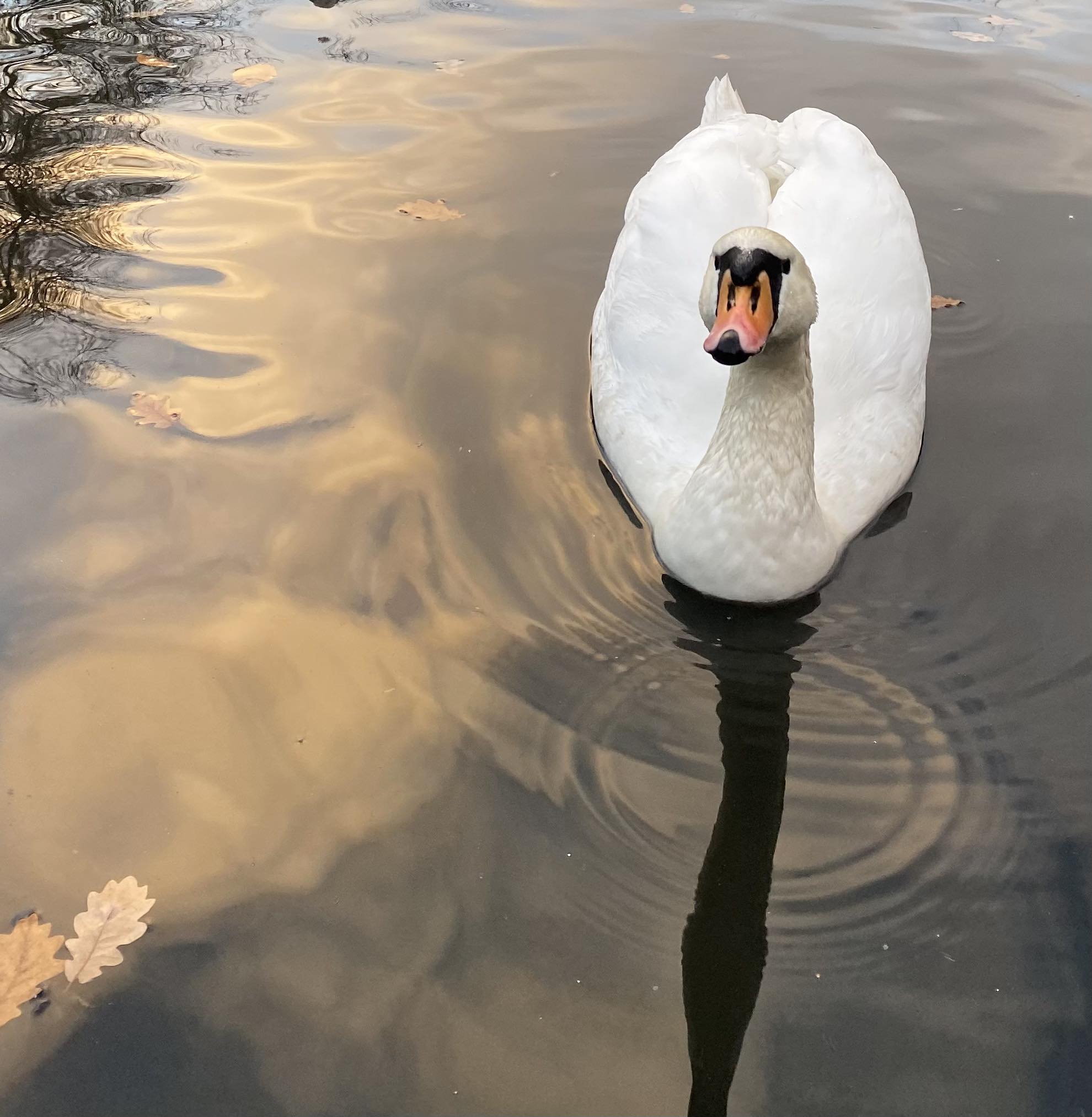
Photo by Romy Needham

Journal drawing by Robert Moss

Tuesday, February 28, 2023

The Fifty-Ninth Swan

I seem to be much with Swan People of late, drifting and winging between dream and myth. Yesterday I flew and swam, as swan and man, along a wild shore to high stony cliffs where a great swan's nest had been laid. I am going through my journals and books, gathering reports, turning some into drawings and drafts for a possible new book. I found a few paragraphs I published in a story titled "The Fifty-Ninth Swan" in Mysterious Realities. It evokes the sadness and the longing of the poet Yeats after his repeated rejection by Maud Gonne.


He is walking in the Seven Woods, at Coole Park. He comes to the lake, and sees that the swans have left sky and water and settled in a green meadow. Across the distance, they look like tufts of sheep’s wool. He can get near to them, perhaps, by crossing a field of cows. As he hoists myself over the stile, a red bull appears and challenges him, head down, steaming and potent, warning him away from his harem. Then the bull gets his scent and turns from him, shaking his rump, as if to say, You are no competition.
     He knows already what the count will reveal. There are fifty-nine swans on the grass, as there were fifty-nine on the water yesterday. He could not identify the solitary swan until now. He watched a mated couple drive the lone swan away with sounds like muffled bugles. He sees the solitary swan struggle through the wet grass. Clumsily, working pinions, he tries to lift off the ground. Perhaps his feathers are wet. It seems so hard for him to get airborne. Finally he wings his way above the lake towards the fairy hills, graceless and unloved.
    The poet flies with him, sharing his pain. Swans are not meant to live alone. They mate for life. I know the mate I would have if she would have me. In the stories I have gathered from the peasantry, and from old books, gods and heroes alike may turn into swans, or be forced to take their shapes under a curse. The love god Aengus, no less, must shapeshift into a swan to find and win the lady he desires, when she flies at Samhain in the company of swans, in their form, to be recognized by the golden chain round her neck.
    He wills myself, climbing higher, into the clouds, to find her spirit in a place of brightness. He couples with her in midair. He falls on her as Zeus comes to Leda. He will make this more than fantasy by carrying the lovely spirit he makes his above the clouds down to the body she has given to a red brute of a man, so she make wake from his spell and leave his cattle field and come to the poet in the green meadow.


Text adapted from Mysterious Realities; Adventures of a Dream Traveler in the Imaginal Realm by Robert Moss. Published by New World Library. 


Art: "Swan and Shadow" from the Swan People cycle of drawings by Robert Moss

Saturday, October 30, 2021

The dream god and the faery lover at Halloween


We find beauty or terror in our contacts with the Otherworld - or our flight from it - according to our courage and the colors of our imaginations. 

How people respond to the banshee is an excellent example. The banshee is well-known in Celtic folk memory as a death messenger, whose appearance and weird cries are feared as the sign that death is near. The banshee is often depicted as a hag, or a crow, or a crow-woman.  

 But the banshee is actually the bean sidhe, which means "she-faery". She can appear as a being of amazing beauty. She can come as a personal or family guardian in tight situations - as a family banshee appeared to members of the royal house of Munster on the eve of the battle of Clontarf.  

Above all, the banshee comes to invite us or escort us on the Otherworld journey: not only the journey that follows physical death, but on journeys beyond the physical world from which we may return to the body with magic and power.  

Banshees are much abroad at Samhain, or Halloween.  

The story of Aislinge Óenguso, The Dream of Aengus,  turns the traditional fear of the banshee on its head. Instead of being scared of being caught by a banshee, the hero of this story is out to catch one, because night after night, she has been visiting him as his dream lover. This wild love story haunted Yeats all of his life and inspired him to write some of his most haunting verse. We'll call the hero Aengus, as the poet did.  

 Aengus is a lover and a friend of lovers. He is a trickster, a shaman and a soul healer. He is described as "mac Oc", the Young Son, forever young. He lives in the Brugh na Boinne, a palace beneath a Mound of Wonder that recent travelers know as Newgrange. Women everywhere dream of Aengus; his butterfly kisses graze their lips and their secret places.  

 But Aengus is no longer master of his own dreams. His dreams have a mistress. She first appeared by his bedside in a glory of red-gold hair, her long white body dancing through the veils to music that played him like a harp and shook him like a tambourine. Carried by the music and his surge of passionate desire, Aengus flies with her, like a wild swan, into a different landscape.

In the morning, exhausted, he can barely fall out of bed. He is listless, lethargic, not even interested in sex, his speciality. This goes on night after night, day after day. His mother is troubled. She sends for a famous doctor, so skilled he can diagnose what is wrong in a house before he walks through the door, by reading shapes in the smoke from the fire.  

The doctor sees at once that Aengus is away: a part of his soul has left his body to live with his dream lover. The cure is to put body and soul together again. This involves finding the girl, and putting the lovers together in their physical as well as their astral bodies.

Will Aengus please describe his dream mistress as exactly as possible? He aches for her as he speaks of the red-gold hair, the pearly skin.  

Very well, Aengus' mother has resources. She is a queen and a goddess of the Tuatha de Danaan. She will send out searchers to look for a girl who fits Angus's description.

This is not such an easy assignment, however, because the dream lover is of the Sidhe, and is hidden in the faery mists. A year passes, and she is not found.  

Now Aengus' father is called in. He is the Big Guy among the old gods, the Dagda, one end of whose outrageously huge eight-pronged club delivers instant death, while the other brings the dead back to life. But he can't or won't help with finding the dream lover, except to recommend the far-sighted Bodb the king of the Sidhe in Munster, as the faery for the job.  

 Bodb tracks the girl to yet another of the Mounds of Wonder. The girl is a bean sidhe, and she has the right kind of name for a banshee. Her name is Caer Ibormeith, which means Yew Berry. Of all trees in her landscape, the yew is most intimately associated with death.

It is agreed that Aengus must rally himself and go to Yew Berry's mound to spy on the banshee and make sure she is the one he has dreamed. She is. Her beauty shines beyond that of the "three times fifty" noble ladies about her, all wearing silver at their throats while Yew Berry wears gold.  

 At this point, in a different kind of story, we might expect the dream lovers to fall into each other's arms and elope. After all, they have been doing it every night for two years. But there are complications.

First off, Yew Berry's mound  is in the realm of the notorious Queen Maeve and her jealous husband Aillil, and they must not be scorned. They agree to help bring the lovers together, but Yew Berry's father won't hear of it. Even after the joined forces of the Dagda and King Aillil have stormed his faery fort, he clings to his daughter.  

 There are many tests and battles before the secret is learned. Yew Berry is under an enchantment, sometimes represented as a curse, sometimes - in the deeper tellings - as a gift. She does not stay in one form. She is a beautiful woman for one year. Then for the next year she is a white swan. Then the cycle repeats.  

The day of shapechanging is Samhain. If Aengus would win her, he must find her on the liminal day, on a lake whose name is The Dragon's Mouth. At Samhain, Aengus goes to the Dragon's Mouth. He finds "three times fifty" white swans with silver chains around their necks, and one swan with a gold chain. He recognizes his love in the shape of the beautiful white bird, and calls to Yew Berry to fly to him. No, she tells him. You must change into my form.

Aengus changes, becoming the long-necked bird. They mate, in beating splendor, above the deeps of the Dragon's Mouth. They fly together back to the palace of Brugh na Boinne - Newgrange - and the love music they make in flight is so lovely and lulling that all the land is at peace and people drift into pleasant dreams and stay there for three days.  

 It is an amazing story, a love god smitten by love, and seizing a moment of opportunity - at Halloween - to bring his lover from one realm into another.

In the best-known tellings of the Dream of Aengus, death is not mentioned. But the whole story is a dance with death, in several guises. It involves the death-in-life that we suffer when a part of our soul goes away, because of pain or abuse or heartbreak or - in this case - a longing for something beyond the familiar world. It involves the rescue of someone or something from the Land of the Dead. Yew Berry's name is a dead giveaway. Her mound  is actually a piece of the Underworld, her father one of the princes of the dead.  

Terror or beauty, banshee or faery lover. On the Night When the Veil Thins, we are especially reminded that we can never claim the treasures of the Otherworld - and a love bigger than the familiar world - unless we can brave up. 


Adapted from The Dreamer's Book of the Dead by Robert Moss. Published by Destiny Books.

Journal drawing by Robert Moss from a spontaneous night vision. A white swan took flight from my third eye and we went flying together lover a river in Europe.


Monday, October 31, 2016

The dream god and the fairy lover: an Irish story for Halloween


We find beauty or terror in our contacts with the Otherworld - or our flight from it - according to our courage and the colors of our imaginations.
    How people respond to the banshee is an excellent example. The banshee is well-known in Celtic folk memory as a death messenger, whose appearance and weird cries are feared as the sign that death is near. The banshee is often depicted as a hag, or a crow, or a crow-woman.
    But the banshee is actually the bean sidhe, which means "she-faery". She can appear as a being of amazing beauty. She can come as a personal or family guardian in tight situations - as a family banshee appeared to members of the royal house of Munster on the eve of the battle of Clontarf.
    Above all, the banshee comes to invite us or escort us on the Otherworld journey: not only the journey that follows physical death, but on journeys beyond the physical world from which we may return to the body with magic and power. Banshees are much abroad at Samhain, or Halloween.
    The story of The Dream of Aengus,  turns the traditional fear of the banshee on its head. Instead of being scared of being caught by a banshee, the hero of this story is out to catch one, because night after night, she has been visiting him as his dream lover. This wild love story haunted Yeats all of his life and inspired him to write some of his most haunting verse. We'll call the hero Aengus, as the poet did.
     Aengus is a lover and a friend of lovers. He is a trickster, a shaman and a soul healer. He is described as "mac Oc", the Young Son, forever young. He lives in the Brugh na Boinne, a palace beneath a Mound of Wonder that recent travelers know as Newgrange. Women everywhere dream of Aengus; his butterfly kisses graze their lips and their secret places.
    But Aengus is no longer master of his own dreams. His dreams have a mistress. She first appeared by his bedside in a glory of red-gold hair, her long white body dancing through the veils to music that played him like a harp and shook him like a tambourine. Carried by the music and his surge of passionate desire, Aengus flies with her, like a wild swan, into a different landscape.
    In the morning, exhausted, he can barely fall out of bed. He is listless, lethargic, not even interested in sex, his speciality. This goes on night after night, day after day. His mother is troubled. She sends for a famous doctor, so skilled he can diagnose what is wrong in a house before he walks through the door, by reading shapes in the smoke from the fire.
    The doctor sees at once that Aengus is away: a part of his soul has left his body to live with his dream lover. The cure is to put body and soul together again. This involves finding the girl, and putting the lovers together in their physical as well as their astral bodies.
    Will Aengus please describe his dream mistress as exactly as possible? He aches for her as he speaks of the red-gold hair, the pearly skin. Very well, Aengus' mother has resources. She is a queen and a goddess of the Tuatha de Danaan. She will send out searchers to look for a girl who fits Angus's description.
    This is not such an easy assignment, however, because the dream lover is of the Sidhe, and is hidden in the faery mists. A year passes, and she is not found.
    Now Aengus' father is called in. He is the Big Guy among the old gods, the Dagda, one end of whose outrageously huge eight-pronged club delivers instant death, while the other brings the dead back to life. But he can't or won't help with finding the dream lover, except to recommend the far-sighted Bodb the king of the Sidhe in Munster, as the faery for the job.
Bodb tracks the girl to yet another of the Mounds of Wonder.
    The girl is a bean sidhe, and she has the right kind of name for a banshee. Her name is Caer Ibormeith, which means Yew Berry. Of all trees in her landscape, the yew is most intimately associated with death.
    It is agreed that Aengus must rally himself and go to Yew Berry's mound to spy on the banshee and make sure she is the one he has dreamed. She is. Her beauty shines beyond that of the "three times fifty" noble ladies about her, all wearing silver at their throats while Yew Berry wears gold.
    At this point, in a different kind of story, we might expect the dream lovers to fall into each other's arms and elope. After all, they have been doing it every night for two years. But there are complications.
    First off, Yew Berry's mound  is in the realm of the notorious Queen Maeve and her jealous husband Aillil, and they must not be scorned. They agree to help bring the lovers together, but Yew Berry's father won't hear of it. Even after the joined forces of the Dagda and King Aillil have stormed his faery fort, he clings to his daughter.
    There are many tests and battles before the secret is learned. Yew Berry is under an enchantment, sometimes represented as a curse, sometimes - in the deeper tellings - as a gift. She does not stay in one form. She is a beautiful woman for one year. Then for the next year she is a white swan. Then the cycle repeats.
    The day of shapechanging is Samhain. If Aengus would win her, he must find her on the liminal day, on a lake whose name is The Dragon's Mouth. At Samhain, Aengus goes to the Dragon's Mouth. He finds "three times fifty" white swans with silver chains around their necks, and one swan with a gold chain. He recognizes his love in the shape of the beautiful white bird, and calls to Yew Berry to fly to him. No, she tells him. You must change into my form.
    Aengus changes, becoming the long-necked bird. They mate, in beating splendor, above the deeps of the Dragon's Mouth. They fly together back to the palace of Brugh na Boinne - Newgrange - and the love music they make in flight is so lovely and lulling that all the land is at peace and people drift into pleasant dreams and stay there for three days.
    It is an amazing story, a love god smitten by love, and seizing a moment of opportunity - at Halloween - to bring his lover from one realm into another.
    In the best-known tellings of the Dream of Aengus, death is not mentioned. But the whole story is a dance with death, in several guises. It involves the death-in-life that we suffer when a part of our soul goes away, because of pain or abuse or heartbreak or - in this case - a longing for something beyond the familiar world. It involves the rescue of someone or something from the Land of the Dead. Yew Berry's name is a dead giveway, since the yew is the favorite tree for planting in graveyards. Her mound  is actually a piece of the Underworld, her father one of the princes of the dead.
    Terror or beauty, banshee or faery lover. On the Night When the Veil Thins, we are especially reminded that we can never claim the treasures of the Otherworld - and a love bigger than the familiar world - unless we can brave up.


Adapted from The Dreamer's Book of the Dead by Robert Moss (Destiny Books) (c) Robert Moss. All Rights reserved.

Art:"The Dream Maiden Visits Angus" by Ernest Charles Wallcousins (1883-1976).

Thursday, October 30, 2014

Loving the banshee: a story for Samhain


We find beauty or terror in our contacts with the Otherworld– or our flight from it – according to our courage and the colors of our imaginations.
    How people respond to the banshee is an excellent example. The banshee is well-known in Celtic folk memory as a death messenger, whose appearance and weird cries are feared as the sign that death is near. The banshee is often depicted as a hag, or a crow, or a crow-woman.
    But the banshee is actually the bean sidhe, which means“she-faery”. She can appear as a being of amazing beauty.She can come as a personal or family guardian in tight situations – as a family banshee appeared to members of the royal house of Munster on the eve of the battle of Clontarf. Above all, she comes to invite us or escort us on the Otherworld journey: not only the journey that follows physical death, but on journeys beyond the physical world from which we may return to the body with magic and power. 
     Banshees are much abroad at Samhain, or All Hallows' Eve. My favorite story about this turns the traditional fear of the banshee on its head. Instead of being scared of being caught by a banshee, the hero of this story is out to catch one, because night after night, she has been visiting him as his dream lover. This wild love story haunted Yeats all of his life and inspired him to write some of his most haunting verse. We’ll call the hero Aengus, as the poet did.

Aengus is a lover and a poet, with a trickster side. Some say he tricked his own queenly mother into letting him take over her palace, under a Mound of Wonder that recent travelers know as Newgrange. Women everywhere dream of Aengus;his butterfly kisses graze their lips and their secret places. Need I mention that he is a god?
    Whatever he is, in the story Aengus is no longer master of his own dreams. His dreams have a mistress. She first appeared by his bedside in a glory of red-gold hair, her long white body dancing 
through the veils to music that played him like a harp and shook him like a tambourine. Carried by the music and his surge of passionate desire, Aengus flies with her, like a wild swan, into a different landscape.
    In the morning, exhausted, he can barely fall out of bed. He is listless, lethargic, not even interested in sex, his speciality. This goes on night after night, day after day. His mother is troubled. She sends for a famous doctor, so skilled he can diagnose what is wrong in a house before he walks through the door, by readings shapes in the smoke from the fire.
     The doctor sees at once that Aengus is away: a part of his soul has left his body to live with his dream lover. The cure is to put body and soul together again. This involves finding the girl, and putting the lovers together in their physical as well as their astral bodies.
    Will Aengus please describe his dream mistress as exactly as possible? He aches for her as he speaks of the red-gold hair, the pearly skin, the tilt of her breasts. Very well, Aengus’ mother has resources. She is a queen and a goddess of the Tuatha de Danaan. She will send out searchers to look for a girl who fits Angus’s description.  This is not such an easy assignment, however, because the dream lover is of the Sidhe, and is hidden in the faery mists. A year passes, and she is not found.      
     Now Aengus’ father is called in. He is the Big Guy among the old gods, the Dagda, one end of whose outrageously huge eight-pronged club delivers instant death, while the other brings the dead 
back to life. But he can’t or won’t help with finding the dream lover, except to recommend the far-sighted Bodb (pronounced “Bove”), the king of the Sidhe in Munster, as the faery for the job.
      Bodb tracks the girl to yet another of the Mounds of Wonder that make the whole of Ireland – for those whose senses are still alive – a many-breasted goddess. The girl is a bean sidhe, and she has the right kind of name for a banshee. Her name is Caer Ybormeith, which means Yew Berry Castle. Of all trees in her landscape, the yew is most intimately associated with death.
      It is agreed that Aengus must rally himself and go to Yew Berry’s mound to spy on the banshee and make sure she is the one he has dreamed. She is. Her beauty shines beyond that of the “three times fifty” noble ladies about her, all wearing silver at their throats while Yew Berry wears gold.
      At this point, in a different kind of story, we might expect the dream lovers to fall into each other’s arms and elope. After all, they have been doing it every night for two years.But there are complications. First off, Yew Berry’s Mound of Wonders is in the realm of the notorious Queen Maeve and her jealous husband Aillil, and they must not be scorned. They agree to help bring the
lovers together, but Yew Berry’s father won’t hear of it. Even after the joined forces of the Dagda and King Aillil have stormed his faery fort, he clings to his daughter.
      There are many tests and battles before the secret is learned. Yew Berry is under an enchantment, sometimes represented as a curse, sometimes – in the deeper tellings –as a gift. She does not stay in one form. She is a beautiful woman for one year. Then for the next year she is a white swan.Then the cycle repeats. 
      The day of shapechanging is Samhain. If Aengus would win her, he must find her on the liminal day, on a lake whose name is The Dragon’s Mouth.
      At Samhain, Aengus goes to the Dragon’s Mouth. He finds “three times fifty” white swans with silver chains around their necks, and one swan with a gold chain. He recognizes his love in the shape of the beautiful white bird, and calls to Yew Berry to fly to him. No, she tells him. You must change
into my form.
       Aengus changes, becoming the long-necked bird. They mate, in beating splendor, above the deeps of the Dragon’s Mouth. They fly together back to the palace of Brugh na Boine – Newgrange – and the love music they make in flight is so lovely and lulling that all the land is at peace and people drift into pleasant dreams and stay there for three days. Since then, some say that Caer Ibormeith has become a goddess of sleep and dreams.

What is the message of this story for us? Myth, like poetry, cannot be shrink-wrapped. In the best-known tellings of the Dream of Aengus, death is not mentioned; Lady Gregory’s version even manages (amazingly) to omit Samhain. But the whole story is a dance with death, in several guises.
    It involves the death-in-life that we suffer when a part of our soul goes away, because of pain or abuse or heartbreak or – in this case – a longing for something beyond the familiar world.
     It involves the rescue of someone or something from the Land of the Dead. As noted, Caer Ibormeith’s name is a dead giveway. Her Mound of Wonder is actually a piece of the Underworld, her father one of the princes of the dead.
      I have not seen much about this in prose commentaries, but Yeats brought this out, with his poetic insight, in his late poem “The Old Age of Queen Maeve”. In this marvelous re-visioning, “Aengus 
borrows the vocal chords of Maeve’s sleeping husband to request her help in releasing his lover from her father’s dark kingdom. When Maeve agrees to break open the faery mound, the diggers are panicked by the guardians of the Underworld who fly at them through the air - “great cats with silver claws, bodies of shadow and blind eyes like pearls”and “red-eared hounds with long white bodies”.

Terror or beauty, banshee or dream lover. False opposites,perhaps. On the Night When the Veil Thins, we are especially reminded that we can never claim the treasures of the Otherworld – and a love bigger than the familiar world - unless we can brave up.

Notes
My retelling of the Dream of Angus is based on Jeffrey Gantz’s translation of a 1782 manuscript whose content is clearly from a much earlier time; see “The Dream of Óengus” in Early Irish Myths and Sagas. (New York: Dorset Press, 1985) 107-112. I have preferred to use Yeats' spelling
of Angus’s name. Though beautifully written, Lady Gregory’s well-known version of the same story omits the vital detail that the Day of Shapechanging – the one day of the year when Angus can claim his love – is of course Samhain. Her account is in Cuchulain of Muirthemne, reprinted in Lady
Gregory, Complete Irish Mythology (London: Slaney Press,1994) 420-22.

Text adapted from Robert Moss, The Dreamer's Book of the Dead published by Destiny Books.