Showing posts with label Coleridge. Show all posts

Saturday, May 3, 2025

Riding Inside the Tiger


I teach and learn by sharing stories and - especially when it comes to dreaming - I don't want to hear from educators and experts who don't share their personal experiences. In this respect Namkhai Norbu does not disappoint. Especially in his book on Dzogchen, The Crystal and the Way of Light (even more than in his book on dream yoga) he shares memorable dream experiences.
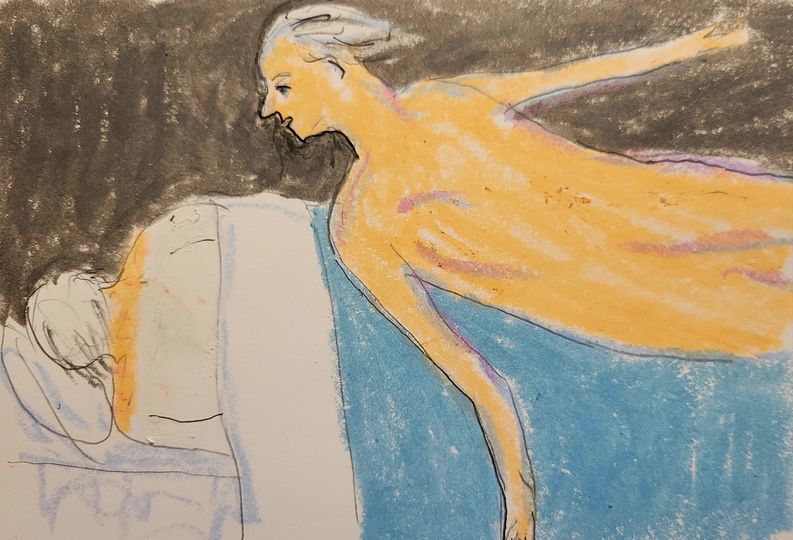
     The simplest and most endearing comes from very early in his life. When he was quite small, he dreamed many times that he was riding inside the belly of a roaring beast he thought must be a tiger. In those days no motor car had ever been seen in his remote part of Tibet. When he encountered automobiles years later, he realized what his dreams had prepared him for. I am so charmed by this tale that I have turned it into a drawing. 

When the dreamer is ready, the teacher will appear 

Namkhai’s account of his dream education suggests a modification in a well-known maxim. It’s not just that when the student is ready, the teacher will appear. It’s also: when the dreamer is ready, the teacher will appear.
     Aged sixteen, as a student teacher in China, Namkhai dreamed he met a very old man he knew to be
a master. The master lived in a white Chinese-style cement house; the name Padmasambhava was written in Tibetan over the dor. The master chanted a mantra of Padmasambhava. Then he instructed Namkhai to go round the house to a great rock and look for the entrance to a cave. Inside the cave, he would find eight natural mandalas. The dreamer’s father appeared and chanted the Prajnaparamita sutra. Namkhai joined in chanting the sutra and they walked round the inside of the cave together. He could see the edges of the mandalas but not their full form before he woke up.
     A year later, back in Tibet, Namkhai heard a visitor talk to his father about an extraordinary old man who was living in a village of white Chinese-style houses in the region. He felt strongly this was the old man from his dream. Reminding his father of the dream, he asked if they could visit the old man in the white house. They set off on horseback and rode for four days. They came to a vialge of white concrete Chinese-style houses and knew the master’s house because mantra of Padmasambhava was over the door. The old man was Chamchun Dorje, a Dzogchen master; he became Namkhai’s primary teacher.[1]     

When you wake with a dream in your hand 

“What if you slept,” Coleridge wrote, famously, “And what if in your sleep you dreamed and what if in your dream you went to heaven and there plucked a strange and beautiful flower
and what if when you awoke you had that flower in your hand, ah, what then?”
     Coleridge’s question was answered for Namkhai in his early dream education. He learned that a certain kind of dream can spill over into the world. He woke with something he had dreamed in his hand.
     One of his uncles was renowned as a tertön, a "treasure revealer" of hidden texts that sometimes appeared as tiny scrolls in unusual places, apparently transmitted across generations by ancient masters. While staying with his uncle in a remote area, Namkhai dreamed he was visited by a dakini.
     She gave him a small scroll of paper containing a sacred text. She said this was very important and that on waking he should give it to his uncle. In the dream he knew he was dreaming. He gripped the scroll tightly in one fist and wrapped the other around it. It was not permitted to disturb his uncle until after his morning rituals, so he drifted off still with his fists clamped together.
     Waking at dawn, he opened his hand and found there really was a tiny scroll within it. He was too excited to wait. He woke up his uncle and presented the scroll. His uncle took it and said matter-of-factly, “Thank you, I expecting this” as if there had been a routine delivery at the door. [2] 
 

When you are called to travel to a deceased master 

When he was living and teaching in Italy, Namkhai’s guru, Chamchun Dorje, called him in a dream to return to Tibet. He traveled to his master in the dream. His guru told him that it was time for him to take up Todgal, a higher level of Dzogchen practice.  For this, he needed to go to another teacher, Jigmed Linba. 

I thought this was a very strange thing to say because I knew, of course, that Jigmed Linba was a great Dzogchen master of the eighteenth century who had been dead for many years. I thought perhaps I had misunderstood what my master had said so I asked him to explain, but he just said, “Jigmed Linba is up on the mountain behind the house. Go and see him right away.” [3] 

Disbelieving, Namkhai scaled a sheer cliff, noticing that the whole text of a tantra was incised on it, with the title of the text on a standing stone at the top, He found a cave where a beautiful boy with long flowing hair, dressed in a filmy blue garment, was seated. Could this really be the deceased Dzogchen master?  He clambered up on top of the rock and said to the boy, “I was told to come to you.” The boy motioned for him to sit, then took out a little scroll and began reading a Dzogchen text on the Four Lights of Todhgal.
     Look through the Tibetan Buddhist biographies in Serinity Young’s Dreaming in the Lotus and you will find that, again and again, gurus dream with their disciples and the masters appear in dreams to convey essential teachings.[4] This theme is well crystallized by Lama Choedak Yuthok:
 

Some people actually gain enlightenment during dreams. Some practitioners while in the middle of dreams which they recognized as dreams, invited great lineage masters of past ages. They came and gave teachings, and some of these practitioners became enlightened as a result. There are a lot of whispered teachings like this. They are known as ‘near lineage’ teachings. Some practitioners who received these could write, teach and transmit the teachings with amazing eloquence. They did not have to bother about studying any texts. One master received three months’ worth of teachings in the course of a single three-hour dream.


References 

1. Namkhai Norbu Crystal and the Way of Light: Sutra, Tantra and Dzogchen ed. John Shank (London and New York: Routledge & Kegan Paul, 1987) pp.9-10.
2. ibid pp. 51-52.
3. ibid p.102.
4. Serinity Young , Dreaming in the Lotus: Buddhist Dream Narrative, Imagery, & Practice (Boston: Wisdom Publications, 1999).
5. Lama Choedak Yuthok ed. Pauline Westwood, Lamdre: Dawn of Enlightenment. (Gorum Publications, 1997).


Illustration: “Riding Inside the Tiger” by Robert Moss


Friday, April 12, 2024

Dream Bruises and Other Bleedthroughs


What if in your dream you went to heaven and there plucked a strange and beautiful flower and what if when you awoke you had that flower in your hand?


Coleridge's famous question is not a hypothetical to active and conscious dreamers, who notice various types of bleedthrough between different dimensions of reality and experience.
    A nurse who took part in one of my early dream classes later told me she had dreamed of a visitation from a being that was half woman, half deer. Waking in her second floor apartment, she found deer scat on her floor. Trying to make sense of this (nurses are no-nonsense, practical people) she recognized that a deer might have wandered onto the grounds of her apartment complex. But she was quite certain there was no way it could have gotten up her stairs or through her window! She was content to accept the unlikely deer poop as a sign from the deeper universe that her visitation had been absolutely for real. She later found the deer-woman turning up as a guide when she was caring for patients, especially the dying who needed help to prepare for their journeys beyond this world.
    In his account of his personal dreams in The Crystal and the Way of Light, Dzogchen master Nakhai Norbu gives a memoriable example of something being transferred from a dream into the hand of the dramer. 
One of his uncles was renowned as a tertön, a "treasure revealer" of hidden texts that sometimes appeared as tiny scrolls in unusual places, apparently transmitted across generations by ancient masters. While staying with his uncle in a remote area, Namkhai Nprbu dreamed he was visited by a dakini.
     She gave him a small scroll of paper containing a sacred text. She said this was very important and that on waking he should give it to his uncle. In the dream he knew he was dreaming. He gripped the scroll tightly in one fist and wrapped the other around it. It was not permitted to disturb his uncle until after his morning rituals, so he drifted off still with his fists clamped together. Waking at dawn, he opened his hand and found there really was tiny scroll within it. He was too excited to wait. He woke up his uncle and presented the scroll. His uncle took it and said “Thank you, I expecting this” as if nothing had happened.  
     On a land of marvels and siddhis, a report of this kind would have drawn respect and keen interest rather than incredulity.  
     One of the most common bleedthroughs from the realm of dream or astral experience into the world of the body is astral repercussion, to use a term favored by Dion Fortune and her peers. This is what happens when what is experienced in the astral body during its excursions outside the physical body leave physical marks when it returns.
    While Fortune described cases where this kind of thing can be seriously depleting, even life-threatening, to the experiencer, astral repercussion may be a routine side effect of getting out and about in a subtle energy body, sometimes wholly benign and even entertaining. In the first letter from Lady Valerie D'Arcy in my novel Fire Along the Sky, she protests that an amorous visit from her lover in the form of a leopard-man left her with bite marks on her body; this fictional scene was drawn from experience!
    Let me give an example from my dream life a few summers ago. I was enjoying a rather lazy week's vacation on a lake, swimming and reading a lot, spending a lot more time in bed overnight than is my typical pattern. My body's peace and ease over those summer days was balanced by the nocturnal adventures of my dream self. In a dream thriller that could easily be filmed in the style of The Bourne Identity, I went on a wild ride through the Bois de Boulogne in Paris. We have to dodge road-blocks and predatory packs that are out to stop cars and rob their drivers and passengers, or worse. The predators use all sorts of stratagems to get drivers to stop, sometimes pushing children in front of the cars. When they do that to us, I grab control of the steering wheel from my driver, managing to avoid hitting a child being used as bait, so we escape the trap. I hurt my arm making this maneuver, but pay little attention because soon I am caught up in a big-stakes international intrigue.
    I wake happy and excited. I felt like I had stepped into a movie to play an Action Man hero, and this was really enjoyable. But - uh, oh - how did that bruise come to appear on the underside of my left upper arm? There really was no physical cause I could locate. On the other hand, there was all that action in the dream, and the pain I experienced during the car chase. Someone had jabbed something at me through the window of the car, in that mad ride through the Bois de Boulogne.
   Inter-dimensional bleedthroughs bring us awake to the fact that we are engaged in more than one order of reality, and that what happens beyond our default (physical) reality may not only be no less real, but sometimes more so. If the dream gave me the bruise, then which was more real: my night escapade in Paris, or my lazy day by a lake in Vermont?
    We are also drawn to reflect on our lager anatomy. We have more than one vehicle of consciousness. Beyond the physical body, we have an etheric, or dense energy, vehicle, and an astral body in which we travel in dreams, and higher vehicles given different names in different tarditiosn. When we go dreaming, we often travel beyind the physical body and we rarely go as a disembodied thought form. We travel in the astral body, sometmes carrying a significant amount of denser etheric energy. Take too much with you, and you return depleted - and you are vulnerable to  significant etheric reopercussion on your physical body.
      In modern Western society, we are not told much about the subtle body, but understanding its reality and its requitrements is essential to or psychic wellbeing and to safe and rewarding adventures beyond the physical. 


Drawing: "Autoscopy" by Robert Moss

Thursday, November 2, 2023

The practice of imagination


 When have you said to yourself, “It’s only my imagination?” I’ve said it at a moment of strong intuition — intuition that subsequently proved to be correct — that lacked supporting evidence in the moment. I’ve also said it when I’ve had a glimpse of a wonderful future — and then betrayed that vision by diverting my energy to listing all the reasons it cannot be. 

When we dismiss imagination, we exile the part of ourselves that knows things that matter in an extraordinary way and has the power to re-vision and re-create our world. Imagination is the faculty of mind and soul that thinks and acts through images, which, as the English poet Samuel Taylor Coleridge said, are “facts of the mind.” 

They borrow from our life memories and our sensory experiences, but they are more than copies; they can reshape and transform the raw materials into something new. And they can take on energy from a deeper source. 

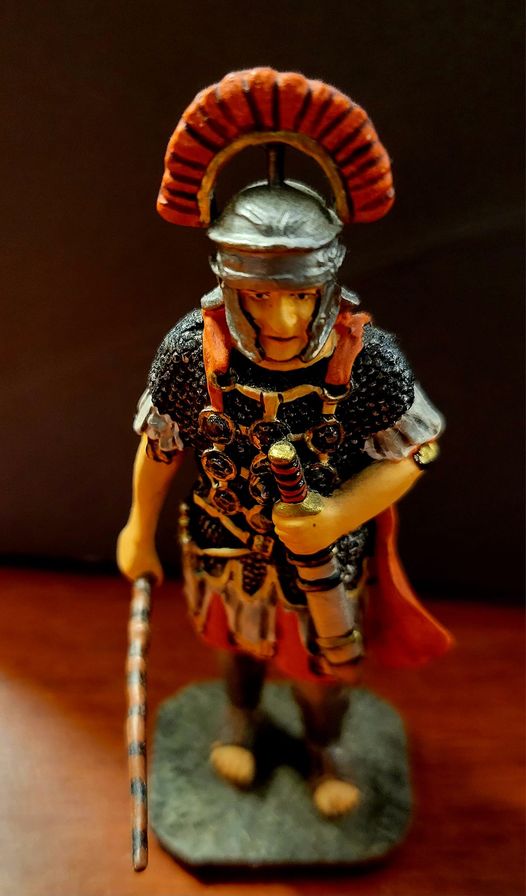
The family of a young girl, Sally, who was suffering night terrors asked for my help. I gave Sally a toy soldier from my childhood — a Roman centurion — and told her that henceforth this would be her night guardian and would keep terrible things out of her space. I ran into the girl three years later, when she was about ten. “Lex is great,” she told me. “Who is Lex?” I inquired.. Sally was scandalized that I had completely forgotten the incident. “He’s the Roman soldier you gave me!” She stamped her foot. “He’s now ten feet tall, and whenever there’s anything yucky around at night, he’s right on it. I never have nightmares now.” 

This is an example of how an image borrowed from one level of reality can become a container for energy from several sources. I could simply have given Sally the idea of a night guardian, but it seemed appropriate, with a young child, to give her an object that embodied that idea. Through the power of  imagination, that object took on a larger and autonomous life. A miniature figure became ten feet tall, and it appeared spontaneously, with the strength to send off psychic intruders. It became a storehouse for protective energy. This was partly the result of wishful thinking (nothing wrong with wishing), but I believe it was also the result of a transpersonal energy — and energy from a realm beyond worldly forms — coming to take up residence in the container that had been made available. 

There is nothing imaginary (in the sense of unreal) about an image that comes alive in our mind. As the English philosopher H. H. Price puts it: “Paradoxical as it may sound there is nothing imaginary about a mental image. It is an actual entity, as real as anything can be.” We experience mental images, and “they are no more imaginary than sensations.” The confusion comes in because we put down the imagination, wrongly believing that to “imagine” is to entertain false ideas or wander off into empty daydreams. 

Since “imaginary” is so often equated with “unreal,” we may save some time and clarity by substituting the adjective “imaginal.” This has a longish pedigree in the English language; it first appears (according to the OED) in 1647 in the context: “That inward life’s the impresse imaginall of Nature’s Art.” The term “imaginal” has begun to acquire currency in recent times among both scholars and healing practitioners due to the influence of Henry Corbin’s work on the realm of images in Sufi and medieval Persian philosophy.  

The realm of images is a real world, as well as a creative state of consciousness. It is the region of mind where meaning takes on form and where objects take on meaning. True poets, in all ages, have understood that the realm of imagination is the fundamental ground of knowledge. 

Honoring our imaginations is of the most urgent and practical importance, because as the philosopher-emperor Marcus Aurelius said, “A man’s life is dyed in the colors of his imagination.” 

We live by images. They control everything we think and do, from brushing our teeth to making love to speaking or not speaking in an office meeting. Images generate and constitute our experience of reality. 

We tell ourselves that reality is out there, but we do not experience that reality directly. “What we experience directly,” says physicist David Deutsch, “is a virtual-reality rendering, conveniently generated for us by our unconscious minds from sensory data plus complex inborn and acquired theories (i.e. programs) about how to interpret them.… Every last scrap of our external experience is of virtual reality.… Biologically speaking, the virtual-reality rendering of their environment is the characteristic means by which human beings survive.” 

Our lives are more or less authentic according to whether we are aware of the role of images and of our own ability to choose and discard or transform the imagery that rules our interactions with everything. Hermann Hesse put this very precisely: There’s no reality except the one contained within us. That’s why so many people live an unreal life. They take images outside them for reality and never allow the world within them to assert itself.” 

The greatest crisis in our lives is a crisis of imagination. We get stuck, and we bind ourselves to the wheel of repetition, because we refuse to reimagine our situation. We live with a set of negative or confining images and pronounce them “reality.” We do this because we let ourselves get trapped in a particular version of the past or in a consensual hallucination. We do it to cling to the familiar, not daring to give up what we are or have been for what we are meant to become. 

To address our challenges, we need to draw on extraordinary sources of information and invest our energy and attention in a form of active imagination that dares to re-vision everything. 

To be citizens of the world (to quote Marcus Aurelius again) we must cultivate sympathetic imagination, which is what allows us to understand the feelings and motivations of people different from us. The ability to imagine one's self in another person's place is vital to healthy social relations and understanding. A sociopath signally lacks this ability. 

To bring peace and balance to our world, we require historical imagination, by which I mean both the ability to claim what is helpful from the past and the faculty for spotting alternatives to a particular event track— past, present, or future.  

Whether the issues are in our world or our personal life, the practice of imagination requires claiming a creative relationship with the past. There is an image from Ghana that springs to mind. It shows a strange bird looking over its shoulder. This symbolic bird is called Sankofa, and its role is to remind us to bring from the past what can heal and empower us — and dump the rest. 

One thing we want to reclaim from the past is the wisdom of the child-mind. The practice of imagination begins with making room in our lives for the child who knows it’s okay to “make things up” and knows this is fun. 

When asked why he was the one to develop the theory of relativity, Einstein said: “A normal adult never stops to think about problems of space and time. These are things which he has thought about as a child. But my intellectual development was retarded, as a result of which I began to wonder about space and time only when I grew up.” 

Mark Twain insisted, “No child should be permitted to grow up without exercise for imagination. It enriches life for him. It makes things wonderful and beautiful.”  

Whatever age we have reached, we all need a daily workout, and a place to go, in the real world of imagination. Keep working out, and you’ll remember that, as poet Kathleen Raine wrote beautifully, “Imaginative knowledge is immediate knowledge, like a tree, or a rose, or a waterfall or sun or stars.” 

Build your home in the imagination strong enough, and you may find it is the place of creative birthing we all long for, the state of mind Mozart evoked when he said: “I can see the whole of it in my mind at a single glance.… All the inventing and making goes on in me as in a beautiful strong dream.”


Text adapted from The Three “Only” Things by Robert Moss. Published by New World Library.


Art: Robert Moss, "Wrapped in Butterflies"


Thursday, March 9, 2023

True Imagination and the Ten Foot Tall Toy Soldier


When have you said to yourself, “It’s only my imagination?” I’ve said it at a moment of strong intuition — intuition that subsequently proved to be correct — that lacked supporting evidence in the moment. I’ve also said it when I’ve had a glimpse of a wonderful future — and then betrayed that vision by diverting my energy to listing all the reasons it cannot be. 

When we dismiss imagination, we exile the part of ourselves that knows things that matter in an extraordinary way and has the power to re-vision and re-create our world. Imagination is the faculty of mind and soul that thinks and acts through images, which, as the English poet Samuel Taylor Coleridge said, are “facts of the mind.” 

They borrow from our life memories and our sensory experiences, but they are more than copies; they can reshape and transform the raw materials into something new. And they can take on energy from a deeper source.

 The family of a young girl, Sally, who was suffering night terrors asked for my help. I gave Sally a toy soldier from my childhood — a Roman centurion — and told her that henceforth this would be her night guardian and would keep terrible things out of her space. I ran into the girl three years later, when she was about ten. “Lex is great,” she told me. “Who is Lex?” I inquired.. Sally was scandalized that I had completely forgotten the incident. “He’s the Roman soldier you gave me!” She stamped her foot. “He’s now ten feet tall, and whenever there’s anything yucky around at night, he’s right on it. I never have nightmares now.” 

This is an example of how an image borrowed from one level of reality can become a container for energy from several sources. I could simply have given Sally the idea of a night guardian, but it seemed appropriate, with a young child, to give her an object that embodied that idea. Through the power of  imagination, that object took on a larger and autonomous life. A miniature figure became ten feet tall, and it appeared spontaneously, with the strength to send off psychic intruders. It became a storehouse for protective energy. This was partly the result of wishful thinking (nothing wrong with wishing), but I believe it was also the result of a transpersonal energy — and energy from a realm beyond worldly forms — coming to take up residence in the container that had been made available. 

There is nothing imaginary (in the sense of unreal) about an image that comes alive in our mind. As the English philosopher H. H. Price puts it: “Paradoxical as it may sound there is nothing imaginary about a mental image. It is an actual entity, as real as anything can be.” We experience mental images, and “they are no more imaginary than sensations.” The confusion comes in because we put down the imagination, wrongly believing that to “imagine” is to entertain false ideas or wander off into empty daydreams. 

Since “imaginary” is so often equated with “unreal,” we may save some time and clarity by substituting the adjective “imaginal.” This has a longish pedigree in the English language; it first appears (according to the OED) in 1647 in the context: “That inward life’s the impresse imaginall of Nature’s Art.” The term “imaginal” has begun to acquire currency in recent times among both scholars and healing practitioners due to the influence of Henry Corbin’s work on the realm of images in Sufi and medieval Persian philosophy.  

The realm of images is a real world, as well as a creative state of consciousness. It is the region of mind where meaning takes on form and where objects take on meaning. True poets, in all ages, have understood that the realm of imagination is the fundamental ground of knowledge.

 Honoring our imaginations is of the most urgent and practical importance, because as the philosopher-emperor Marcus Aurelius said, “A man’s life is dyed in the colors of his imagination.” 

We live by images. They control everything we think and do, from brushing our teeth to making love to speaking or not speaking in an office meeting. Images generate and constitute our experience of reality. 

We tell ourselves that reality is out there, but we do not experience that reality directly. “What we experience directly,” says physicist David Deutsch, “is a virtual-reality rendering, conveniently generated for us by our unconscious minds from sensory data plus complex inborn and acquired theories (i.e. programs) about how to interpret them.… Every last scrap of our external experience is of virtual reality.… Biologically speaking, the virtual-reality rendering of their environment is the characteristic means by which human beings survive.”

 Our lives are more or less authentic according to whether we are aware of the role of images and of our own ability to choose and discard or transform the imagery that rules our interactions with everything. Hermann Hesse put this very precisely: There’s no reality except the one contained within us. That’s why so many people live an unreal life. They take images outside them for reality and never allow the world within them to assert itself.” 

The greatest crisis in our lives is a crisis of imagination. We get stuck, and we bind ourselves to the wheel of repetition, because we refuse to reimagine our situation. We live with a set of negative or confining images and pronounce them “reality.” We do this because we let ourselves get trapped in a particular version of the past or in a consensual hallucination. We do it to cling to the familiar, not daring to give up what we are or have been for what we are meant to become. 

The crisis of imagination is pandemic. The 9/11 Commission rightly pronounced that the horror of the worst terrorist attack in American history was “a failure of imagination.” With only a few exceptions, those responsible for security could not imagine a terrorist group executing a plan as bold and horrendous as attacking major targets on American soil with hijacked American planes. Yet the plan had been “in the air” for years, and it was certainly dreamed by many people who had no other access to information about it. In the fall of 1998, a New York woman shared with me a terrifying dream she could not understand, in which American planes were attacking targets on American soil, in Washington, DC, and elsewhere.

 To address our challenges, we need to draw on extraordinary sources of information and invest our energy and attention in a form of active imagination that dares to re-vision everything. 

To be citizens of the world (to quote Marcus Aurelius again) we must cultivate sympathetic imagination, which is what allows us to understand the feelings and motivations of people different from us. The ability to imagine one's self in another person's place is vital to healthy social relations and understanding. A sociopath signally lacks this ability. 

To bring peace and balance to our world, we require historical imagination, by which I mean both the ability to claim what is helpful from the past and the faculty for spotting alternatives to a particular event track— past, present, or future.  

Whether the issues are in our world or our personal life, the practice of imagination requires claiming a creative relationship with the past. There is an image from Ghana that springs to mind. It shows a strange bird looking over its shoulder. This symbolic bird is called Sankofa, and its role is to remind us to bring from the past what can heal and empower us — and dump the rest.

 One thing we want to reclaim from the past is the wisdom of the child-mind. The practice of imagination begins with making room in our lives for the child who knows it’s okay to “make things up” and knows this is fun. 

When asked why he was the one to develop the theory of relativity, Einstein said: “A normal adult never stops to think about problems of space and time. These are things which he has thought about as a child. But my intellectual development was retarded, as a result of which I began to wonder about space and time only when I grew up.” 

Mark Twain insisted, “No child should be permitted to grow up without exercise for imagination. It enriches life for him. It makes things wonderful and beautiful.”  

Whatever age we have reached, we all need a daily workout, and a place to go, in the real world of imagination. Keep working out, and you’ll remember that, as poet Kathleen Raine wrote beautifully, “Imaginative knowledge is immediate knowledge, like a tree, or a rose, or a waterfall or sun or stars.”

Build your home in the imagination strong enough, and you may find it is the place of creative birthing we all long for, the state of mind Mozart evoked when he said: “I can see the whole of it in my mind at a single glance.… All the inventing and making goes on in me as in a beautiful strong dream.”

We should never confuse the power of making things up with idle fantasy. The stronger the imagination, the less imaginary the results. And we should recall that in many religious and philosophical traditions what comes into manifestation in the physical world is emanated from a sphere of creative imagination beyond and superior to the physical. 


Text adapted from The Three “Only” Things by Robert Moss. Published by New World Library.


Tuesday, March 7, 2017

Our days are full of dream residue


We often wake with a dream hangover, even if we don't recall the dreams that caused it. Freud said that dreams are full of "day residue", thoughts and memories left over from waking life. It is no less true that our days are full of dream residue.
     Sometimes we become aware of this when we wake up feeling jet-lagged or even as if we have been run over by a truck, even though we seemed to sleep well enough. This is often the effect of what esoteric writers used to call "astral repercussion". You get out and about in an energy body, in night dreams, and what happens to that astral vehicle may reverberate in your physical system. In extreme cases, like those Dion Fortune made the stuff of the highly illuminating and sometimes cautionary tales in her Secrets of Doctor Taverner, bruises or apparent wounds may be left on the physical body.
    Those jetlag sensations may be caused by a lot of dream travel;  if you are flying across the world in a dream body, especially if you are crossing large bodies of water (which drain energy from the subtle body) you may have quite literal reasons to feel the way you would feel after a long flight on a plane. Frequent fliers need to learn more about the nature and care and maintenance of energy bodies, which is a major theme in my book Dreamgates.
     Our dream activity, remembered or not, often sets the tone for the day. Sometimes we rise with a terrific surge of energy and confidence or a clear sense of direction that was lacking the day before. We may say that we slept well; chances are we also dreamed well.
     The "vigilance" theory developed by Finnish dream researcher Antti Revonsuo maintains that in dreams the brain rehearses for patterns of challenge and opportunity that lie ahead, preparing us to move faster and more effectively when certain situations arise, and that this activity is important and useful whether or not we remember our dreams.
     Deja vu is one of the most striking examples of dream residue, though many of us fail to understand how it comes about. We meet a person or enter a scene that is absolutely familiar to us; we are sure we have seen this before. Most often this is because we are now catching up, in waking life, with an event that first took place in a dream.
    Sometimes dream residue is so outrageous and in our face that we can't fail to see it. In my book Conscious Dreaming I report an episode shared with me by a nurse who dreamed she received a visitation from a guide who appeared as half-woman, half-deer. In the morning, she was amazed to find deer scat on the rug in her second-floor apartment. It seemed impossible that it could be there - unless it spilled from the dream.
    We might recall Coleridge's famous questions:

What if you slept? And what if, in your sleep, you dreamed? And what if, in your dream, you went to heaven and there plucked a strange and beautiful flower? And what if, when you awoke, you had the flower in your hand? Ah, what then?

Then we would know that the dream experiences are real, and that what goes on in the dream world doesn't necessarily stay in the dream world. It happens.

Photo of Cafe Jet-Lag in Les Halles, Paris by Robert Moss


Thursday, June 2, 2016

Dream bruises, dream love-bites and other cases of astral repercussion


What if in your dream you went to heaven and there plucked a strange and beautiful flower and what if when you awoke you had that flower in your hand?

Coleridge's famous question is not a hypothetical to active and conscious dreamers, who notice various types of bleedthrough between different dimensions of reality and experience.
    A nurse who took part in one of my early dream classes later told me she had dreamed of a visitation from a being that was half woman, half deer. Waking in her second floor apartment, she found deer scat on her floor. Trying to make sense of this (nurses are no-nonsense, practical people) she recognized that a deer might have wandered onto the grounds of her apartment complex. But she was quite certain there was no way it could have gotten up her stairs or through her window! She was content to accept the unlikely deer poop as a sign from the deeper universe that her visitation had been absolutely for real. She later found the deer-woman turning up as a guide when she was caring for patients, especially the dying who needed help to prepare for their journeys beyond this world.
    One of the most common bleedthroughs from the realm of dream or astral experience into the world of the body is astral repercussion, to use a term favored by Dion Fortune and her peers. This is what happens when what is experienced in the astral body during its excursions outside the physical body leaves physical marks when it returns.
    While Fortune described cases where this kind of thing can be seriously depleting, even life-threatening, to the experiencer, astral repercussion may be a routine side effect of getting out and about in a subtle energy body, sometimes wholly benign and even entertaining. In the first letter from Lady Valerie D'Arcy in my novel Fire Along the Sky, she protests that an amorous visit from her lover in the form of a leopard-man left her with bite marks on her body; this fictional scene was drawn from experience!
    Let me give an example from my dream life during a lazy week of summer vacation on Lake Champlain. I spent my time swimming and reading, dining well, spending a lot more time in bed overnight than is my typical pattern. My body's peace and ease over those summer days was balanced by the nocturnal adventures of my dream self. 
    In a dream thriller that could easily be filmed in the style of The Bourne Identity, I go on a wild ride through the Bois de Boulogne in Paris. We have to dodge road-blocks and predatory packs that are out to stop cars and rob their drivers and passengers, or worse. The predators use all sorts of stratagems to get drivers to stop, sometimes pushing children in front of the cars. When they do that to us, I grab control of the steering wheel from my driver, managing to avoid hitting a child being used as bait, so we escape the trap. I hurt my arm making this maneuver, but pay little attention because soon I am caught up in a big-stakes international intrigue.
    I woke happy and excited. I felt like I had stepped into a movie to play an Action Man hero, and this was really enjoyable. But - uh, oh - how did that bruise come to appear on the underside of my left upper arm? There really was no physical cause I could locate. On the other hand, there was all that action in the dream, and the pain I experienced during the car chase. Someone had jabbed something at me through the window of the car, in that mad ride through the Bois de Boulogne.
   Inter-dimensional bleedthroughs bring us awake to the fact that we are engaged in more than one order of reality, and that what happens beyond our default (physical) reality may not only be no less real, but sometimes more so. If the dream gave me the bruise, then which was more real: my night escapade in Paris, or my lazy day by a lake in Vermont?

Dearest Shane,

I dream you as the leopard. Last night you came to me in his skin.You frightened me, pressing against my face. I knew you by the eyes.
     This night vision was entirely real. As I write this, I feel the places in my body you praised and fed. 
I cannot undress in front of Sir Henry tonight, even if he begs me to do it, because I have bite marks and a spectacular bruise, ovoid and empurpled as an eggplant, blooms on my inner thigh. 
     Can you cause a leopard, Shane?

- love letter from Lady Valeie D'Arcy to Shane Hardacre, the opening page of my novel Fire Along the Sky published by Excelsior Editions. Please note that only the second edition contains the letters.