Showing posts with label Mark Twain. Show all posts

Tuesday, September 12, 2023

Walking a dream


I am going to share my report of an ordinary day, without huge events or revelations, just a soft rhyming pattern. When at home, I start the day by lingering in bed for a little while after waking to harvest my dreams from the night. On the day I describe, I woke with a big dream in my mind. There are big dreams and little dreams. You know when a dream rates as big because you feel it, just as you know that coincidence is more than “mere” coincidence because you feel that.

In my dream, I was in London in the time of the Blitz. I returned from this excursion feeling excited and moved and deeply stirred. My dream had taken me, it seemed, into the life of a Royal Air Force pilot in a time of danger and love and romance. He loved women, and women loved him. One of the women he adored was a wartime nurse. They did not get to spend much time together.

It seemed I was in his body, in his situation, sharing his moments of passion and his fierce willingness to put his life on the line for what he believed in. As I slowly came back from this dream adventure, I felt his presence, as if for a moment both of us were in bed. I felt grateful for this deep and renewed connection with someone I believe to be a member of my spiritual family in another time, and outside time. .

When I was satisfied I was holding the essence of my dream of the pilot, I got out of bed, showered, threw on clothes. I had one swallow of coffee – literally, because my little dog was waiting for his walk. Dogs walk you no matter what. So very soon I was out on the street with my dog, heading for the park.

I was now taking the second step in my daily practice. The first step is to hold the essence of the dream, not necessarily all the details, but the essence. I had that. Out on the street, I was walking my dream as well as my dog. I was not puzzling over the dream, and certainly not trying to analyze it. The dream was simply in my mind, and perhaps in my energy field. I was open to the world showing me something that might reflect the dream, as the dream cast its reflection on the world.

As I walked the dream, I was ready to do another daily practice, which is to pay attention to three things that enter my field of perception, through any or all of my senses. These three things do not have to be extraordinary, weird or even surprising. They may be things you might never notice at all, let alone look at twice, unless you were playing this kind of game. A license plate might catch your eye, because it is a novelty plate or has a combination of letters and numbers that intrigues you. You attention might be drawn by the cry of a bird, or the words of a stranger talking on his cell phone or doing karaoke with his headphones. Maybe something dropped on the sidewalk or left on the curb for trash collection will catch your eye. Maybe you’ll smell cooking, or diesel fumes, or a perfume that takes you back to Paris in the spring of a certain year.

Paying attention to things like this, on any street on any day, is a way of consulting sidewalk oracles. When the takeaway is a set of mostly visual images I think of this as playing Sidewalk Tarot. Whatever pops up might be a card from a divination deck. It might be your card of the day, or part of a three-card spread, or a larger spread.     

That morning, while the dog sniffed a hydrant, I noticed a license plate I had never seen on my street before. The plate was distinguished by the red letters RN. It belonged to a registered nurse. Nothing unusual here, but it was very special to me, that morning, because I was walking with the bittersweet memories of a wartime romance with a nurse. I have the soft, cozy sense of confirmation. It feels a little as if an unseen hand has patted me on the shoulder.

I walked on with my dog into the big park. We took the longest path, around the lake. I paused to admire the beautiful weeping willow across water and thin ice. She was green last week. Now winter had yellowed and thinned her gorgeous hair. There was a story in this tree. I resolved to get to know her better.

When I return to my house, I grab a full mug of coffee and went to my study to do my next daily practice. I wrote my dream report, starting with the date and the title I had chosen for my dream. I might have been missing certain details by now, but I had the essence, and key incidents returned to me, vivid and strong, as I wrote. I noted my feelings, and wrote a few lines about the connection between this dream and other dreams and “far memories” of a British pilot in the Second World War. I added a further note on synchronicity, my sighting of the RN’s license plate.

I was now ready to play another game that is part of my everyday practice. I did a bit of bibliomancy. The word means divination by the book. By the book, that's what it literally means, divination by the book. People have done it with sacred and special books, like the Bible the Koran or the poetry of Rumi or Dante or Homer, for as long as humans have had books.

I generally do my book-dipping with whatever book falls to hand. On the day I walked with the dream of the pilot, I decided to go back to Heraclitus. The work of this often enigmatic Greek philosopher survives only in fragments. Because of their brevity, they are good to consult if you would rather play with a sentence than a longer passage.

I opened Charles Kahn’s edition of Heraclitus casually, with my non-dominant hand. My eye fell on a one-liner. The translation read: Gods and men honor those who have fallen in battle. In part of myself, I wanted to ignore that message and try again. The line spoke of war and violence and we have quite enough of those in my world.

But my dream was still with me, the dream that took me into the life of a brave man who was killed in a necessary war, a war for humanity against the unspeakable evil that had taken possession of Germany under Hitler. Once again, I felt a deep sense of confirmation, a firmer hand on my shoulder. Gods and men honor those who are fallen in battle.  I thought of another line in Heraclius, about the dead and the living are constantly engaged, how the fortunes o mortals and immortals interweave, how we may live in the dead and they may live in us.

I felt the deep, deep sense of recognition and gratitude and blessing.  I wrote a one-liner from this: "I am in communion with the dead. They are alive in me, and I am alive in them." I wrote those words in my journal, then wrote them again on an index card, in the neatest hand I could manage. I put the card in a box, with many others composed in the same way. This, too, is daily practice for me. I compose a one-liner of the kind Mark Twain called a “snapper”. It may rise to the level of an aphorism. When I have made a collection, written out on cards, I have a rather interesting deck I can use any time to get a message for the day.

Walking a dream. I recommend it as daily practice, whenever you recall a dream. You carry your dream with you as you go about the day. You notice how the world illuminates the dream and how maybe the dream illuminates the world. You may find that a dream image is playing in the world around you. Maybe the world gives you a second opinion. Maybe something that comes up is a commentary on the dream in a way that you can receive.  Maybe a sequence of incidents and observations extends the dream narrative. Sometimes you may feel that a dream is spilling into the world. When you simply wander with a dream, more of the dream may come back to you. You may be excited to discover, as your memory grows, that your first recollections were a tide pool, not the ocean that feeds it.


Text partly adapted from Sidewalk Oracles: Playing with Signs, Symbols and Synchronicity in Everyday Life by Robert Moss. Published by New World Library


AI-assisted street photo

Thursday, March 9, 2023

True Imagination and the Ten Foot Tall Toy Soldier


When have you said to yourself, “It’s only my imagination?” I’ve said it at a moment of strong intuition — intuition that subsequently proved to be correct — that lacked supporting evidence in the moment. I’ve also said it when I’ve had a glimpse of a wonderful future — and then betrayed that vision by diverting my energy to listing all the reasons it cannot be. 

When we dismiss imagination, we exile the part of ourselves that knows things that matter in an extraordinary way and has the power to re-vision and re-create our world. Imagination is the faculty of mind and soul that thinks and acts through images, which, as the English poet Samuel Taylor Coleridge said, are “facts of the mind.” 

They borrow from our life memories and our sensory experiences, but they are more than copies; they can reshape and transform the raw materials into something new. And they can take on energy from a deeper source.

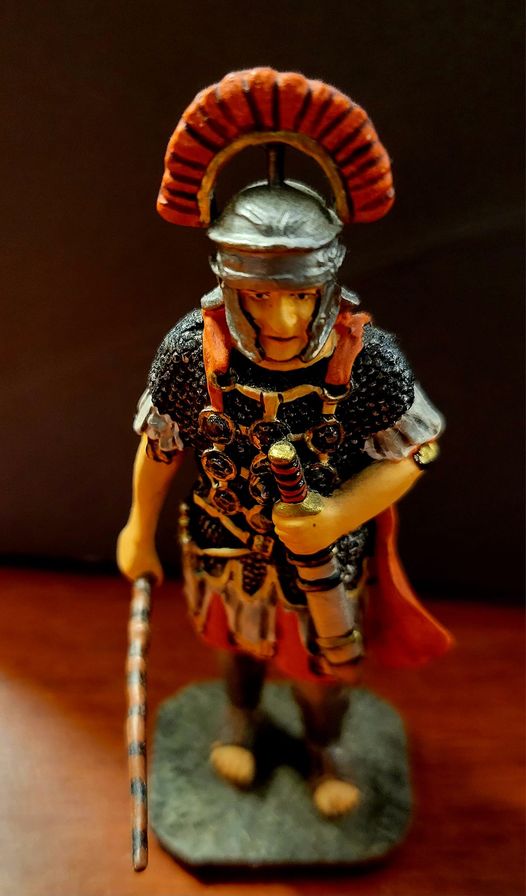
 The family of a young girl, Sally, who was suffering night terrors asked for my help. I gave Sally a toy soldier from my childhood — a Roman centurion — and told her that henceforth this would be her night guardian and would keep terrible things out of her space. I ran into the girl three years later, when she was about ten. “Lex is great,” she told me. “Who is Lex?” I inquired.. Sally was scandalized that I had completely forgotten the incident. “He’s the Roman soldier you gave me!” She stamped her foot. “He’s now ten feet tall, and whenever there’s anything yucky around at night, he’s right on it. I never have nightmares now.” 

This is an example of how an image borrowed from one level of reality can become a container for energy from several sources. I could simply have given Sally the idea of a night guardian, but it seemed appropriate, with a young child, to give her an object that embodied that idea. Through the power of  imagination, that object took on a larger and autonomous life. A miniature figure became ten feet tall, and it appeared spontaneously, with the strength to send off psychic intruders. It became a storehouse for protective energy. This was partly the result of wishful thinking (nothing wrong with wishing), but I believe it was also the result of a transpersonal energy — and energy from a realm beyond worldly forms — coming to take up residence in the container that had been made available. 

There is nothing imaginary (in the sense of unreal) about an image that comes alive in our mind. As the English philosopher H. H. Price puts it: “Paradoxical as it may sound there is nothing imaginary about a mental image. It is an actual entity, as real as anything can be.” We experience mental images, and “they are no more imaginary than sensations.” The confusion comes in because we put down the imagination, wrongly believing that to “imagine” is to entertain false ideas or wander off into empty daydreams. 

Since “imaginary” is so often equated with “unreal,” we may save some time and clarity by substituting the adjective “imaginal.” This has a longish pedigree in the English language; it first appears (according to the OED) in 1647 in the context: “That inward life’s the impresse imaginall of Nature’s Art.” The term “imaginal” has begun to acquire currency in recent times among both scholars and healing practitioners due to the influence of Henry Corbin’s work on the realm of images in Sufi and medieval Persian philosophy.  

The realm of images is a real world, as well as a creative state of consciousness. It is the region of mind where meaning takes on form and where objects take on meaning. True poets, in all ages, have understood that the realm of imagination is the fundamental ground of knowledge.

 Honoring our imaginations is of the most urgent and practical importance, because as the philosopher-emperor Marcus Aurelius said, “A man’s life is dyed in the colors of his imagination.” 

We live by images. They control everything we think and do, from brushing our teeth to making love to speaking or not speaking in an office meeting. Images generate and constitute our experience of reality. 

We tell ourselves that reality is out there, but we do not experience that reality directly. “What we experience directly,” says physicist David Deutsch, “is a virtual-reality rendering, conveniently generated for us by our unconscious minds from sensory data plus complex inborn and acquired theories (i.e. programs) about how to interpret them.… Every last scrap of our external experience is of virtual reality.… Biologically speaking, the virtual-reality rendering of their environment is the characteristic means by which human beings survive.”

 Our lives are more or less authentic according to whether we are aware of the role of images and of our own ability to choose and discard or transform the imagery that rules our interactions with everything. Hermann Hesse put this very precisely: There’s no reality except the one contained within us. That’s why so many people live an unreal life. They take images outside them for reality and never allow the world within them to assert itself.” 

The greatest crisis in our lives is a crisis of imagination. We get stuck, and we bind ourselves to the wheel of repetition, because we refuse to reimagine our situation. We live with a set of negative or confining images and pronounce them “reality.” We do this because we let ourselves get trapped in a particular version of the past or in a consensual hallucination. We do it to cling to the familiar, not daring to give up what we are or have been for what we are meant to become. 

The crisis of imagination is pandemic. The 9/11 Commission rightly pronounced that the horror of the worst terrorist attack in American history was “a failure of imagination.” With only a few exceptions, those responsible for security could not imagine a terrorist group executing a plan as bold and horrendous as attacking major targets on American soil with hijacked American planes. Yet the plan had been “in the air” for years, and it was certainly dreamed by many people who had no other access to information about it. In the fall of 1998, a New York woman shared with me a terrifying dream she could not understand, in which American planes were attacking targets on American soil, in Washington, DC, and elsewhere.

 To address our challenges, we need to draw on extraordinary sources of information and invest our energy and attention in a form of active imagination that dares to re-vision everything. 

To be citizens of the world (to quote Marcus Aurelius again) we must cultivate sympathetic imagination, which is what allows us to understand the feelings and motivations of people different from us. The ability to imagine one's self in another person's place is vital to healthy social relations and understanding. A sociopath signally lacks this ability. 

To bring peace and balance to our world, we require historical imagination, by which I mean both the ability to claim what is helpful from the past and the faculty for spotting alternatives to a particular event track— past, present, or future.  

Whether the issues are in our world or our personal life, the practice of imagination requires claiming a creative relationship with the past. There is an image from Ghana that springs to mind. It shows a strange bird looking over its shoulder. This symbolic bird is called Sankofa, and its role is to remind us to bring from the past what can heal and empower us — and dump the rest.

 One thing we want to reclaim from the past is the wisdom of the child-mind. The practice of imagination begins with making room in our lives for the child who knows it’s okay to “make things up” and knows this is fun. 

When asked why he was the one to develop the theory of relativity, Einstein said: “A normal adult never stops to think about problems of space and time. These are things which he has thought about as a child. But my intellectual development was retarded, as a result of which I began to wonder about space and time only when I grew up.” 

Mark Twain insisted, “No child should be permitted to grow up without exercise for imagination. It enriches life for him. It makes things wonderful and beautiful.”  

Whatever age we have reached, we all need a daily workout, and a place to go, in the real world of imagination. Keep working out, and you’ll remember that, as poet Kathleen Raine wrote beautifully, “Imaginative knowledge is immediate knowledge, like a tree, or a rose, or a waterfall or sun or stars.”

Build your home in the imagination strong enough, and you may find it is the place of creative birthing we all long for, the state of mind Mozart evoked when he said: “I can see the whole of it in my mind at a single glance.… All the inventing and making goes on in me as in a beautiful strong dream.”

We should never confuse the power of making things up with idle fantasy. The stronger the imagination, the less imaginary the results. And we should recall that in many religious and philosophical traditions what comes into manifestation in the physical world is emanated from a sphere of creative imagination beyond and superior to the physical. 


Text adapted from The Three “Only” Things by Robert Moss. Published by New World Library.


Wednesday, March 23, 2022

You can’t find serendipity unless you get lost


The cardinal navigational law of serendipity is this: You can only get to the magic kingdom by getting lost. You get there when you think you are going somewhere else and fall off the maps.

Take the case of Mark Twain's search for fortune in Brazil. He wasn't yet Mark Twain. He was young Sam Clemens from Missouri, eking out a living in a print shop in Iowa, drinking red whiskey and dreaming of greatness.

Up there in the guest house in Keokuk, Iowa, Sam Clemens read a book that described “a vegetable product with miraculous powers” that grew in Brazil. Sam was “fired with a longing” to go up the Amazon, secure a supply of this miracle plant – and make a fortune. He sailed to New Orleans on a riverboat whose pilot was the celebrated Horace Bixby.

When he got to New Orleans, Sam found that no ship in port was sailing for Brazil, and no one could tell him how to get there. So he changed his plans, sought out Bixby, and used his gift of the gab to persuade the old river man to take him on as an apprentice pilot, which was a pretty good meal ticket in those days.

Working on the Mississippi river, he got many of the ideas for the books that made him famous under the pen-name he now borrowed from the boatmen’s cry “Mark Twain”, meaning two fathoms, safe water.

The miracle plant Sam had set out to find was coca. Had he succeeded in his original plan, Keokuk, Iowa would have become the cocaine capital of America. Because Sam Clemens couldn’t find Brazil, he failed to become the first cocaine dealer in North American history and instead became Mark Twain.

-

Mark Twain made a lifelong study and practice of navigating by coincidence. For more on this, read "Mark Twain's Rhyming Life" in The Secret History of Dreaming by Robert Moss. Published by New World Library.


Saturday, September 12, 2020

Mark Twain's terrible memories of the future


Great humor often sparkles on the surface of a dark tide of challenge or tragedy. Mark Twain, still America's most beloved humorist, was stricken by many terrible events in his life and that of his family - the loss of a beloved brother and later his favorite daughter, the loss of all his money late in life, forcing him to start over - yet generally managed to come back laughing, and making the rest of us laugh.
    His ability to laugh his way through did not mean numbing himself to tragedy. Sam Clemens (who adopted the pen name Mark Twain) dreamed the death of his younger brother Henry before it took place, in exact detail, and this haunted him for the rest of his life..
     Sam and Henry were set to embark together on the riverboat Pennsylvania, Sam as apprentice pilot, Henry as a  lowly “mud clerk”, given food and sleeping space in return for helping out at places on the river where there were no proper landing sites. The night before they sailed, Sam dreamed  he saw Henry as a corpse, laid out in a metal casket, dressed in one of his older brother’s suits, with a huge bouquet of white roses on his chest and a single red rose at the center.
     Sam woke grief-stricken, convinced this had actually happened and that Henry was laid out in the next room. He could not collect himself, or convince himself that the dream was not “real” until he had walked around outside. He had walked a whole block, he recalled, “before it suddenly flashed on me that there was nothing real about this – it was only a dream.”
     Family members urged him to dismiss his terrible dream; after all, it was “only a dream”. Though the force of his feelings told him something else, Sam agreed to try to put the dream out of his mind.
     The tragedy began to unfold soon after the two young men boarded the Pennsylvania. The pilot of the Pennsylvania, William Brown, was an autocrat with a violent temper with whom Sam was soon scrapping. During the voyage downriver, Sam got into a full-blown fight with him. The captain sided with Sam, and said they would find a new pilot when they got to New Orleans. But a new pilot could not be found and since Sam and Brown could not coexist on the same boat, Sam was transferred to another vessel, leaving Henry on the Pennsylvania, which started the upriver journey fist. Just before they parted company, Sam and Henry discussed how they would act in the event of a riverboat disaster such as a boiler explosion, which was a common occurrence.
      The Pennsylvania’s boiler exploded in a hell of steam and fire, in the way they had discussed.  Badly burned, Henry survived for a few days, to die in Memphis, where the injured were carried. His handsome face was untouched, and the kindly lady volunteers were so moved by his beauty and innocence that they gave him the best casket, a metal box.
     When Sam entered the “dead-room” of the Memphis Exchange on June 21, 1858, he was horrified to see the enactment of his dream: his dead brother laid out in a metal casket in a borrowed suit. Only one element was missing: the floral bouquet. As Sam watched and mourned, a lady came in with a bouquet of white roses with a single red one at the center and laid it on Henry’s chest.
    Mark Twain kept telling and retelling the circumstances of Henry’s death, in his mind and in his writing, for the rest of his life. He was one of the first to join the Society for Psychical Research after it was founded in London in 1882 in the hope that its investigators could help him understand the workings of dream precognition. He could never escape the thought that – had he only known how to use the information from his dream – he might have been able to prevent Henry’s death.

When I described this episode in a lecture, someone asked, "What's the use of dreaming the future if you can't do anything about it?"       
    My response: any future we can foresee, whether in dreams or though intuition or careful analysis, is a possible future. We may be able to change the odds on the manifestation of a future event, reducing the likelihood that something unwanted will happen, or improving our chances of securing a happy outcome.
     Our ability to dream the future is part of our basic survival kit, part of what kept us alive when we were little more than naked apes without good weapons, trying to fend off leathery raptors or saber-toothed tigers. In our Active Dreaming approach, we use these key methods to work with dreams of the future in order to make better choices and shape the future for the better:

1. Run a reality check on all dream material
Ask, of any and all dream material: Is it remotely possible that something going on in this dream could manifest in the future, literally or symbolically (or both)?

2. Practice dream reentry to clarify and expand the available information
If you can get your head back inside the dream, you may be able to get clarity on the when, where, how and who of a possible future event. If you think of a dream as a place you have been, it's not too hard to understand that because you have been to that place, you might be able to go there again. When you succeed in reentering a dream space, you are not confined to your first memories of the dream on waking, which may have been muddled and fragmentary. You can enter other, related scenes and bring back much more data.

3. Make a practical action plan to use your dream guidance
If you now feel sure that your dream revealed a possible future, you want to  to take definite and appropriate action to head off an undesirable future event, or to bring through possible good fortune. The action plan may range from getting a health checkup to being extra cautious at a certain road intersection, to checking up on your financial planner, to sharing dream information with another person to whom it may relate.
    Some cultures teach rituals for containing or taming an unwanted future. I am intrigued by an apotropaic ritual in traditional Iroquoian society, which consisted of play-acting parts of an evil future, foreseen in a dream, in the hope that the partial fulfillment of the dream in the performance would satisfy whatever was at work in the secret order of events, so that the full evil portended by the dream would no longer have to be play out. I have written about this in Dreamways of the Iroquois. Bizarre though it may sound, I have seen this method work.

Back to Mark Twain, and his terrible dream of Henry laid out in a casket, with the bouquet of roses on his chest. Could the methods described above have enabled Sam Clemens to help his brother to escape the "dead room" in Memphis? Of course, we cannot know. But I feel quite certain that Mark Twain would have been willing to give the Active Dreaming methods summarized above a better-than-college try, had he known about them. 
    Had he not allowed his family to talk him into dismissing his dream as "only a dream", careful analysis might have drawn him to think about possible scenarios for death along the river, of which the most likely for someone working on a riverboat, in those days, was a boiler explosion of the kind that caused Henry's death.
    Through dream reentry, Mark Twain might have been able to establish how the death scene came about, and might then have been able to take action by counseling his brother not to travel, separated from him, on the return voyage upriver with the rage-filled pilot.
     Mark Twain paid close attention to dreams and coincidence throughout his life and was keenly interested in improving his practice. In my Secret History of Dreaming, I describe how he returned, in his later fiction, to his regrets that he had not gone ahead and staged a kind of dream theater at home to help his beloved daughter Suzy lift the oppression of dreams in which she was being pursued and eaten by bears, dreams that may have portended her tragic death from illness but could also have been the key to healing had they been fully heard and acted upon.


For more on Mark Twain's dreams and his study of coincidence and what he called "mental telegraphy," please read the chapter titled "Mark Twain's Rhyming Life" in my Secret History of Dreaming, published by New World Library.


Image: Steamboat explosion (in this case the SS Sultana) on the Mississippi River, from Harper's Weekly (1865)


Wednesday, May 27, 2020

The Double, the Dream Traveler and Mark Twain's Mysterious Stranger


Mark Twain’s last major work of fiction was born at the site of an ancient Celtic ferry crossing on Lake Lucerne, in the summer of 1897, after the tragic death of his daughter Susy. Writing, as always, was his therapy for grief and disappointment. On the lake, he wrote for nine hours a day, seven days a week. A cluster of drafts emerged that he called “The Chronicles of Young Satan”.  Eleven years later,he was still working on it, off and on. The novella was published posthumously as The Mysterious Stranger.
     On the title page, Mark Twain described it as “Being an Ancient Tale Found in a Jug, and Freely Translated from the Jug.” This was another of his insider’s jokes. In addition to the jesting allusion to booze, the line is echoed by a remark made by the Mysterious Stranger halfway through the story: “One cannot pour the starred and shoreless expanse of the universe into a jug”.
     The Mysterious Stranger is set in a medieval Austrian village in the time of the witch burnings. The title character appears to boys on a wild hilltop as a handsome youth with magical powers, which he first demonstrates by lighting a pipe by pure will. He proceeds to demonstrate rather greater powers, creating miniature people out of clay and destroying them when he is bored with them. He can transport himself and others to distant places – China, the Moon – instantly. He can fold time so that lengthy journeys in other lands occupy only instants in the ordinary environment.
      He can change people’s fates, and demonstrates again and again that the smallest alteration in one of the links of fate can make a radical difference in the outcome. Getting up two minutes later than was in the plan can make the difference between life and death. His interventions (such as ensuring a boy gets up two minutes later than destined) may be anonymous and natural-seeming, or showy (as when he knocks down a whole troupe of witch-hunters at the narrator’s request, breaking a rib in every person).
       He is invisible unless he chooses to be seen. He can easily take possession of chosen subjects, moving over them like “transparent film” before he goes inside. He spins moralizing stories – sometimes illustrated by grand panoramas exhibiting the whole sweep of history, from Cain and Abel on – to prove the idiocy of the “moral sense” in humans. He insists that it is humans who create right and wrong and then most often choose wrong. At the end of the tale, he contends that there is no heaven and hell, no God, no afterlife, no larger meaning – that everything we experience is “only a dream”. In the last words of the story, the narrator (speaking for the author?) agrees.
 This Satan at first identifies himself as an “angel” and says he is the nephew of the more notorious Satan. All angels, he says, are indifferent to humanity. But he is capable of doing humans a good turn – which often proves to be the gift of early death (even by being burned as a witch) in order to avoid lengthy suffering that would otherwise ensue.
     He gives himself a name for the times, Philip Traum, which means Philip Dream. He is an attractive figure. Animals love him. His arrival energizes people. He seems to enjoy playing with humans, but there is an edge of cruelty to his play, like that of a boy digging into an anthill. He presents a very bleak picture of humanity, and its capabilities, insisting that no human ever voluntarily changes his prearranged fate – while hinting an infinite parallel event tracks and outcomes available through the slightest change. His circus tricks, his talking cat (a cornucopia cat called Agnes), and his way of producing vast effects by tiny tinkering in a person’s life are echoed in Bulgakov’s version of the devil in Moscow in The Master and Margarita.
      Playing in and around the novella are themes that have long haunted Mark Twain: the theme of the double, and the separate life of a dream self that travels freely outside the body. He describes “the presence in us of another person, not a slave of ours but…with a character distinctly its own.”  Musing on Jekyll and Hyde again, he describes them as “dual persons in one body, quite distinct in nature and character and presumably each with a conscience of his own.” He speculates in his Notebook that “two persons in a man have no command over each other.” They “do not even know each other and…have never even suspected one another’s existence.”
      He distinguishes the double from another aspect of the self that operates independently from the ordinary personality, and is not confined to the body. “We have a spiritualized self which can detach itself and go wandering off upon affairs of its own.” This is not the double, the “partner in duality.” He notes, “I am not acquainted with my double…but I am acquainted (dimly) with my spiritualized self and I know that it are one, because we have common memory.” This “spiritualized self” is the dream traveler, at home in many worlds.
   “Waking I move slowly; but in my dreams my unhampered spiritualized body flies to the ends of the earth in a millionth of a second. Seems to - and I believe, does....
“I do actually make immense excursions in my spiritualized person. I go into awful dangers...I go to unnamable places, I do unprincipled things; and every vision is vivid, every sensation - physical as well as moral - is real.”


Sunday, September 24, 2017

Mark Twain on the wrong page

Notice what's showing through the slip. This is one of my rules of kairomancy, the art of navigating by synchronicity. Consider what happened when Mark Twain found himself on the wrong page.
    Mark Twain was a great student of meaningful coincidence, and even published an essay on "Mental Telegraphy", citing his own experiences of mind reaching to mind across distance without need of instruments.
    However, he missed what was showing through a recurring slip that he made, and his inattention bankrupted him. We may smile over the story because it happened in another time and the victim revived. However, it has practical lessons for us in our current lives.
    Mark Twain always hoped to make a bundle doing something other than writing or speaking. He thought he saw his chance with the development of a new typesetting machine. Remembering his sweaty days, as young Sam Clemens, toiling with heavy trays of type in hick print shops, he dreamed of being present at the creation of a new technology that would make printing speedy and accurate, He was captivated by a man with a plan for a new typesetting machine, an indefatigable self-promoter named James Paige.

    As Mark Twain ruefully recalled later, Paige “could persuade a fish to come and take a walk with him.” Twain was soon convinced that Paige’s machine was going to be the biggest thing since Gutenberg, and he drained his bank accounts to become the biggest investor in the project. However, the enterprise was bedeviled by delay after delay, By the time Paige had completed a working prototype, his machine was obsolete, overtaken by new and superior typesetters. Mark Twain lost most of his money in this fiasco.
    Now for the word clue that was missed. Mark Twain never seemed to get the name of the inventor or the machine named after him right. I’ve gone through his correspondence and his journal entries on this theme. Again and again, he wrote “Page” instead of “Paige.” Mark Twain had decided to invest all his money in a machine that promised to make printing more accurate. Yet he could never spell the name of the machine or its inventor correctly.
     Doesn’t it seem that there was a cautionary message here? I’ll bet that with hindsight, Mark Twain would have agreed to the snapper: 
Notice what’s showing through the slip.
     He was very near broke when a “chance” encounter introduced him to the man who put him back on his feet. “We were strangers when we met and friends when we parted, half an hour afterward,” he recalled in his Autobiography. “The meeting was accidental and unforeseen but it had memorable and unforeseen consequences for me. He dragged me out of that difficulty and out of the next one.”
     The meeting took place in the lobby of the Murray Hill Hotel, where Sam’s friend Dr Rice recognized Henry Rogers of Standard Oil. Mark Twain and the forceful capitalist – sometimes called “Hell Hound” Rogers - hit it off. Rogers restructured his business affairs and sheltered him from his creditors until he was finally out of debt.


Further reading


For more on Mark Twain’s  wrong Paige and  his “rhyming life”, see chapter 10 of The Secret History of Dreaming. For more on the rules of kairomancy, and synchronicity games to play, see Sidewalk Oracles: Playing with Signs, Symbols and Synchronicity in Everyday Life.
   

Saturday, December 19, 2015

Grow your poetic health


“The bottom of the mind is paved with crossroads,” wrote the French poet Paul Valéry. This marvelous, mysterious line stirs up the imagination. It encourages us to think about how on the surface of the mind we may have been shortchanging ourselves. We may have been snagging ourselves in limited, linear thinking, even trapping ourselves in mental boxes.
Life is full of crossroads. We often rush through them without noticing the choices that were open in a Kairos moment. Or else we see our choices in false absolutes, duty versus pleasure, good versus bad, black or white. In the deeper mind, we are ready to take a more spacious view and roam with more freedom in the garden of forking paths, even to see that Yogi Berra may have spoken truth when he said, “If you come to a fork in the road, take it.”
Kairomancers take care of their poetic health by developing a tolerance for ambiguity and a readiness to see more angles and options than the surface mind perceives. They grow poetic health by cultivating that “talent for resemblances” that two wise Greeks, Aristotle and Artemidorus, both held to be the primary qualification for a dream interpreter — and that is no less a vital prerequisite for recognizing signs and symbols in waking life.
Mark Twain is supposed to have said that history rhymes. I don’t know whether he really said that or not. The words have not been found in the canonical texts of this wonderfully noncanonical humorist. I do know that life rhymes. We notice recurring themes and symbols in dreams: running late for the plane, not prepared for the test, trying to keep the bear out of the living room. In the same way, we notice that themes and situations recur in everyday life
Pay attention when the same theme, or symbol, or image comes up again and again, just as you might pay attention to recurring dreams. When a theme or situation comes at you again and again in dreams, that is often a signal that there is a message coming through that you need to read correctly — and that, beyond merely getting the message, you need to do something about it, to take action. It is the same with rhyming sequences and repeating symbols in waking life.
When you begin to notice a repetition of a certain situation in life, you may say, “Okay, we’re going around the track again. Maybe I want to make sure that I’m not just going around and around in my life in circles of repetition, but that I am on a spiral path.” Which would mean that each time life loops around to where you think you were before, you’ve risen to a slightly higher level, so you can see things with greater awareness and, hopefully, make better choices.
There is a whole education in the art of poetic living in Baudelaire’s poem “Correspondances”:

La Nature est un temple où de vivants piliers
Laissent parfois sortir de confuses paroles;
L’homme y passe à travers des forêts de symboles
Qui l’observent avec des regards familiers.

Nature is a temple whose living pillars
Sometimes let slip mysterious messages;
We walk here through a forest of symbols
That watch us with knowing eyes.
[My free translation]

Baudelaire, the urban dandy, has it exactly right: we are walking in a forest of living symbols that are looking at us. When we are in a state of poetic health, we understand that “the imagination is the most scientific of the faculties, because it is the only one to understand the universal analogy, or that which a mystical religion calls correspondence.”

Les parfums, les couleurs et les sons se répondent.   
Perfumes, colors, and sounds correspond.


Text adapted from Sidewalk Oracles: Playing with Signs, Symbols and Synchronicity in Everyday Life by Robert Moss. Published by New World Library.

Portrait of Baudelaire by Gustave Courbet (1848)


Sunday, July 12, 2015

A one-liner a day keeps verbal diarrhea away


I have been asked for guidance, yet again, on keeping it simple. "How can I eliminate superfluous clutter and say what I need to say in fewer and better words?"
    If it is a matter of getting your story together in speaking to others, our Lightning (or Lightening) process is excellent practice. You take turns with a friend or a group to tell personal experiences, which may be dreams or anything else that has story value. If it is your turn to speak, you make it your game to tell your story as simply and clearly as possible. You leave out unnecessary background. You give your story a title. You are conscious of your need to hold the attention of your listeners, and they accept their need to listen closely and then to offer helpful feedback.
    When it comes to writing, here are a couple of daily games I play that you may find helpful.

     Compress the essence of anything you wish to say so it will fit on one side of a small (3"x 5") index card. We do this very often in my workshops and it is amazing what focus it brings. As  a sample of what is possible through the "index card" process, consider this account of how we harvested remarkable tales in miniature from a deep group journey in a workshop I led in the mountains of Romania. Everything here, apart from my introduction, is a selection of narratives written on one side of a small index card.
      Keep a journal and on any day you can, harvest a one-liner from your experiences, reflections and reading. I do this all the time. I re-write some of my one liners on index cards and keep them in a box I use as a personal oracle, dipping in to pull out a thought for the day. I did this just now, for purposes of illustration, and pulled out the following one-liners:

Don't pray against, pray for.

Creating is healing,

Be still when you have nothing to say; when genuine passion moves you, say what you've got to say and say it hot.

I borrowed that last one from D.H. Lawrence. It is exquisitely relevant to our theme here.

Hone the craft of creating your own one-liners, and you may become an aphorist, a maker of aphorisms, those witty, pithy one-liners that distill something of the human condition. Mark Twain is the American master of this art, forever crackling with snappers and astonishers. I celebrate the art of making aphorisms here.
     Coming up with a one-liner can help you to draw the moral from a life experience, or a message for action. In dreamwork, producing a bumper sticker or action phrase from a dream narrative and any subsequent exploration gives you a way to carry energy and direction from the dream.
     Play like this and you have a chance to entertain the spirits. The Inuits say we need to entertain the spirits by offering them "fresh words", which is grand advice.
    The heart of the matter is this:

The more you need to say, the more need to say it in fewer words.

Let me say that again, in fresh words:

A one-liner a day keeps verbal diarrhea away.


Sunday, September 21, 2014

The more you need to say, the more need to say it in fewer words


I am greatly in favor of aphorisms, those witty, pithy one-liners that distill something of the human condition. When I was a teenager, I picked up a copy of the Maxims of the Duc de la Rochefoucauld, and was delighted by the ice rapier wielded by this worldly seventeenth-century prince observing the foibles of his fellow-humans.

We are strong enough to endure the misfortunes of others.

Our virtues are often nothing more than our vices in disguise. 

François VI, Duc de la Rochefoucauld (1613-1680)

Of course, I loved Oscar Wilde's waggish tongue, despite being made to play Ernest (when I wanted to play Algernon) two years running in my boys' school production of The Importance of Being Earnest. In period attire, as Jack Worthing ("Ernest") I apologized to the boy playing Gwendolen for not being more wicked:

Jack: Gwendolen, it is a terrible thing for a man to find out suddenly that all his life he has been speaking nothing but the truth. Can you forgive me?

Gwendolen: I can. For I feel that you are sure to change.

Before I got to university, I discovered another French master of the one-liner, Nicolas Chamfort, a handsome charmer whose robust view of life  and jovial self-mockery contrasted with his messy suicide in the throes of the French Revolution, in which he was successively a Jacobin and an anti-Jacobin.

A day without laughter is a day wasted. 

Contemplation often makes life miserable. We should act more, think less, and stop watching ourselves live.

Public opinion is the worst of all opinions.

If it wasn't for me, I'd do brilliantly. 

-          -  Nicolas Chamfort (1741-1794) 

Then I found Mark Twain, and was enchanted by his endless repertoire of punch-lines and snappers, which I often find myself quoting in public talks.

I don't want to hear about the Moon from someone who has not been there.

Choose Heaven for the climate, Hell for the company.

- Mark Twain 

Mark Twain was great one for keeping a notebook. He carried one everywhere, and you can see the gestation of many of his best ideas - and first drafts of his one-liners - in the collected editions that I now keep in my library.
    If you want to enhance your ability to deliver fresh one-liners, keep a journal. Jot down your thoughts, your observations, the odd phrase overheard in the street, a line that jumps out of a book. Develop the practice of writing a one-liner, a bumper-sticker or snapper, to distill the message of a dream or the quality of an incident, or a day.
    For confirmation that the journal-er is on the way to becoming an aphorist, consider the practice of the  case of the German polymath Georg Cristoph Lichtenberg, a contemporary of Chamfort.  
    Lichtenberg  journaled thoughts, observations and witticisms, starting in his student years, in notebooks that he called his Waste Books (Sudelb cher). He borrowed this term from the English accounting houses of his day. For English bookkeepers, a “waste book” was a temporary register of transactions, jotted down in rough form before being entered in meticulous copperplate in a formal account book. I like the throwaway quality of the term. It encourages us to get down the scraps and the rough sketches, without concern for form or structure or even spelling
   Here are a few of the choicest entries from Lichtenberg's vast collection of snappers and astonishers (as Mark Twain might have called them):

A person reveals his character by nothing so clearly as the joke he resents. 

The most dangerous of all falsehoods is a slightly distorted truth. 

I forget most of what I read, just as I do most of what I have eaten, but I know that both contribute no less to the conservation of my mind and my body on that account. 

Everyone is a genius at least once a year.  The real geniuses simply have their bright ideas closer together.

- Georg Christoph Lichtenberg (1742-1799)

Follow Lichtenberg's practice of keeping a "waste book" - a journal where you write without concern for the consequences - and you'll find you have your one-liners closer together.
   My aphorism from all of this:


The more you need to say, the more need to say it in fewer words.


For the word-sleuths:


The word "aphorism" is derived from the Greek ἀφορισμός aphorismos, meaning "delimitation" or "definition". To qualify as an aphorism, a statement must be fresh, concise and memorable. The terms was first used for the Aphorisms of Hippocrates, in which the famous first sentence is a specimen of the genre: "Life is short, art long, opportunity fleeting, experience deceptive, judgment difficult." The whole quote continues: "The physician must not only be prepared to do what is right himself, but also to make the patient, the attendants, and externals cooperate."


Art: Portrait of  François VI, Duc de la Rochefoucauld by Théodore Chassériau. Public domain.