Showing posts with label Kathleen Raine. Show all posts

Monday, January 22, 2024

Walking a Dream


Jung said that one of the things he liked to do with a dream was to “circumambulate” it, wander around it, considering it from many angles. He liked to do this while in physical motion, wandering around his house on the lake, through the garden, into the woods.

This is a grand way to get greater perspective on a dream. Walking with a dream for a while, you may find that more of the dream narrative returns to you. You are almost sure to get commentary of some kind from what you notice playing around you, wherever you happen to be going.

You may find that both inner and outer perceptions accomplish what a dreaming people of central Africa say we must do with a dream. Like other cultures that value dreaming, the Yansi of Zaire have special words for dreamwork practice. According to anthropologist Mubuy Mpier, the Yansi share dreams every morning, and the core of their approach to dream exploration is embodied in the term a bumi ndoey, which means to “turn a dream.” The teaching is that we need to turn a dream carefully, as we might lift a great rock, to see what is underneath, on the side that is not initially visible.

It’s not only a matter of letting the world illuminate the dream; it’s a case of letting the dream illumine the world. “We do not always have only to sit with closed eyes, moving around in our heads, to draw closer to an image. We can put it in our pocket and carry it with us throughout days and nights,” as Mary Watkins wrote in Waking Dreams, her passionate appeal for us to let images speak to us and through us. “You not only see different things, you see things differently” when you are seized by poetic imagery, poet and scholar Kathleen Raine observed.

One of the things we want to do when we are walking a dream is to notice when it starts to play out in the world around us. There might be a considerable time gap between the dream and its unfolding in the world, so patience and a decent memory — assisted by your journal! — may be required. When a dream does begin to manifest in external reality, let an alert flash on your inner control panel. In my mind, the default version is: Dream Playing Out Now.

When the dream starts playing out, you have several options. They are not mutually exclusive. If there is no sense of danger and the original dream left you feeling happy and confident, you may be content to let the dream play again and enjoy it with all of your senses. Maybe you’ll find that a sense of “rightness” comes with this: that you have made the right choice, that you are in the right place, that at last you have found the right friend or lover or teacher. If you had a darker sense of the dream — if it involved risk or danger — you will want to be poised to change the script, solve a problem, avoid that accident or that drama at the office.

As a dream plays out in exterior reality, you may notice that its symbolism is now alive in your world. This can become a whole education on how to refresh and renew our perspectives on what is a dream and what is real. We need to take dreams more literally and waking life symbolically.

A dream may be fairly literal in the sense that it reveals something that is happening or will happen in the future in the ordinary world. Yet when the dream is enacted, we see that there is symbolism in the physical event. So a literalistic dream can point to a symbolic play in the outer world. Let’s consider an example.

A man I will call Yves dreamed that his ring finger was cut off in an accident. There was blood and pain, and he saw the splintered bone, and woke with feelings of dread and fear. When he brought the dream to me, I asked very early, as is my practice, whether it was possible that he could lose a finger in a literal accident, maybe cutting or slicing something. Did his work involve such risks? Well, yes, it did. He worked part-time pruning vines on a hillside in southern France, where he lived. He agreed that he would need to be more watchful about how he handled the secateurs.

We proceeded to discuss the symbolic levels of the dream. Hard to miss the significance of losing the ring finger in terms of a relationship. He was not married, but he had a live-in partner and felt her interest had begun to stray. This brought in the Freudian bit. Did the loss of “tall man” — the middle finger — speak of a decline in sexual performance?

Yves walked with his dream. Within the week, it began to play out when he made a false move while working in the vineyard. He only narrowly managed to avoid cutting off his own finger with the pruning shears. It was the ring finger, as in the dream. The partial fulfillment of his terrible dream led him to confront the symbolic issues. He sat down with his partner. She told him, with the sexual candor for which the French can be notable, that she was dissatisfied with his sexual performance and had already taken another lover. They agreed to separate.


Text adapted from Sidewalk Oracles: Playing with Signs, Symbols and Synchronicity in Everyday Life by Robert Moss. Published by New World Library. 

 Photo by RM

Thursday, November 2, 2023

The practice of imagination


 When have you said to yourself, “It’s only my imagination?” I’ve said it at a moment of strong intuition — intuition that subsequently proved to be correct — that lacked supporting evidence in the moment. I’ve also said it when I’ve had a glimpse of a wonderful future — and then betrayed that vision by diverting my energy to listing all the reasons it cannot be. 

When we dismiss imagination, we exile the part of ourselves that knows things that matter in an extraordinary way and has the power to re-vision and re-create our world. Imagination is the faculty of mind and soul that thinks and acts through images, which, as the English poet Samuel Taylor Coleridge said, are “facts of the mind.” 

They borrow from our life memories and our sensory experiences, but they are more than copies; they can reshape and transform the raw materials into something new. And they can take on energy from a deeper source. 

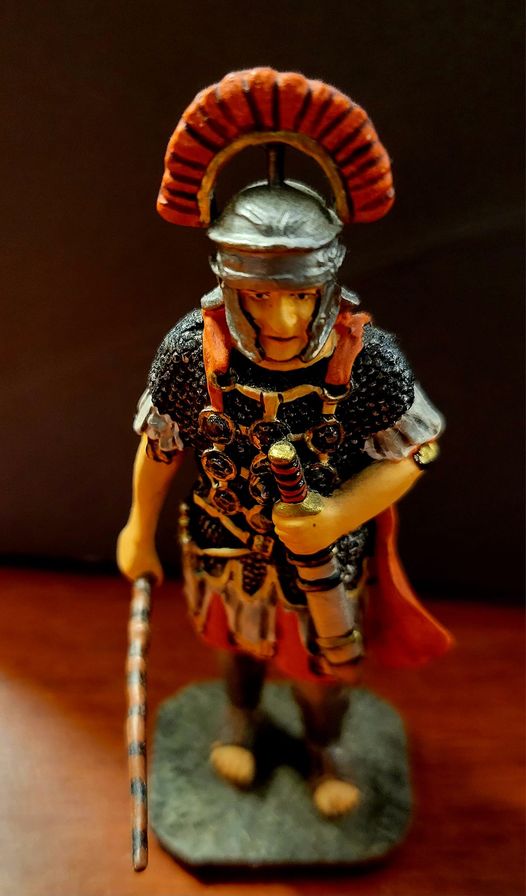
The family of a young girl, Sally, who was suffering night terrors asked for my help. I gave Sally a toy soldier from my childhood — a Roman centurion — and told her that henceforth this would be her night guardian and would keep terrible things out of her space. I ran into the girl three years later, when she was about ten. “Lex is great,” she told me. “Who is Lex?” I inquired.. Sally was scandalized that I had completely forgotten the incident. “He’s the Roman soldier you gave me!” She stamped her foot. “He’s now ten feet tall, and whenever there’s anything yucky around at night, he’s right on it. I never have nightmares now.” 

This is an example of how an image borrowed from one level of reality can become a container for energy from several sources. I could simply have given Sally the idea of a night guardian, but it seemed appropriate, with a young child, to give her an object that embodied that idea. Through the power of  imagination, that object took on a larger and autonomous life. A miniature figure became ten feet tall, and it appeared spontaneously, with the strength to send off psychic intruders. It became a storehouse for protective energy. This was partly the result of wishful thinking (nothing wrong with wishing), but I believe it was also the result of a transpersonal energy — and energy from a realm beyond worldly forms — coming to take up residence in the container that had been made available. 

There is nothing imaginary (in the sense of unreal) about an image that comes alive in our mind. As the English philosopher H. H. Price puts it: “Paradoxical as it may sound there is nothing imaginary about a mental image. It is an actual entity, as real as anything can be.” We experience mental images, and “they are no more imaginary than sensations.” The confusion comes in because we put down the imagination, wrongly believing that to “imagine” is to entertain false ideas or wander off into empty daydreams. 

Since “imaginary” is so often equated with “unreal,” we may save some time and clarity by substituting the adjective “imaginal.” This has a longish pedigree in the English language; it first appears (according to the OED) in 1647 in the context: “That inward life’s the impresse imaginall of Nature’s Art.” The term “imaginal” has begun to acquire currency in recent times among both scholars and healing practitioners due to the influence of Henry Corbin’s work on the realm of images in Sufi and medieval Persian philosophy.  

The realm of images is a real world, as well as a creative state of consciousness. It is the region of mind where meaning takes on form and where objects take on meaning. True poets, in all ages, have understood that the realm of imagination is the fundamental ground of knowledge. 

Honoring our imaginations is of the most urgent and practical importance, because as the philosopher-emperor Marcus Aurelius said, “A man’s life is dyed in the colors of his imagination.” 

We live by images. They control everything we think and do, from brushing our teeth to making love to speaking or not speaking in an office meeting. Images generate and constitute our experience of reality. 

We tell ourselves that reality is out there, but we do not experience that reality directly. “What we experience directly,” says physicist David Deutsch, “is a virtual-reality rendering, conveniently generated for us by our unconscious minds from sensory data plus complex inborn and acquired theories (i.e. programs) about how to interpret them.… Every last scrap of our external experience is of virtual reality.… Biologically speaking, the virtual-reality rendering of their environment is the characteristic means by which human beings survive.” 

Our lives are more or less authentic according to whether we are aware of the role of images and of our own ability to choose and discard or transform the imagery that rules our interactions with everything. Hermann Hesse put this very precisely: There’s no reality except the one contained within us. That’s why so many people live an unreal life. They take images outside them for reality and never allow the world within them to assert itself.” 

The greatest crisis in our lives is a crisis of imagination. We get stuck, and we bind ourselves to the wheel of repetition, because we refuse to reimagine our situation. We live with a set of negative or confining images and pronounce them “reality.” We do this because we let ourselves get trapped in a particular version of the past or in a consensual hallucination. We do it to cling to the familiar, not daring to give up what we are or have been for what we are meant to become. 

To address our challenges, we need to draw on extraordinary sources of information and invest our energy and attention in a form of active imagination that dares to re-vision everything. 

To be citizens of the world (to quote Marcus Aurelius again) we must cultivate sympathetic imagination, which is what allows us to understand the feelings and motivations of people different from us. The ability to imagine one's self in another person's place is vital to healthy social relations and understanding. A sociopath signally lacks this ability. 

To bring peace and balance to our world, we require historical imagination, by which I mean both the ability to claim what is helpful from the past and the faculty for spotting alternatives to a particular event track— past, present, or future.  

Whether the issues are in our world or our personal life, the practice of imagination requires claiming a creative relationship with the past. There is an image from Ghana that springs to mind. It shows a strange bird looking over its shoulder. This symbolic bird is called Sankofa, and its role is to remind us to bring from the past what can heal and empower us — and dump the rest. 

One thing we want to reclaim from the past is the wisdom of the child-mind. The practice of imagination begins with making room in our lives for the child who knows it’s okay to “make things up” and knows this is fun. 

When asked why he was the one to develop the theory of relativity, Einstein said: “A normal adult never stops to think about problems of space and time. These are things which he has thought about as a child. But my intellectual development was retarded, as a result of which I began to wonder about space and time only when I grew up.” 

Mark Twain insisted, “No child should be permitted to grow up without exercise for imagination. It enriches life for him. It makes things wonderful and beautiful.”  

Whatever age we have reached, we all need a daily workout, and a place to go, in the real world of imagination. Keep working out, and you’ll remember that, as poet Kathleen Raine wrote beautifully, “Imaginative knowledge is immediate knowledge, like a tree, or a rose, or a waterfall or sun or stars.” 

Build your home in the imagination strong enough, and you may find it is the place of creative birthing we all long for, the state of mind Mozart evoked when he said: “I can see the whole of it in my mind at a single glance.… All the inventing and making goes on in me as in a beautiful strong dream.”


Text adapted from The Three “Only” Things by Robert Moss. Published by New World Library.


Art: Robert Moss, "Wrapped in Butterflies"


Thursday, March 9, 2023

True Imagination and the Ten Foot Tall Toy Soldier


When have you said to yourself, “It’s only my imagination?” I’ve said it at a moment of strong intuition — intuition that subsequently proved to be correct — that lacked supporting evidence in the moment. I’ve also said it when I’ve had a glimpse of a wonderful future — and then betrayed that vision by diverting my energy to listing all the reasons it cannot be. 

When we dismiss imagination, we exile the part of ourselves that knows things that matter in an extraordinary way and has the power to re-vision and re-create our world. Imagination is the faculty of mind and soul that thinks and acts through images, which, as the English poet Samuel Taylor Coleridge said, are “facts of the mind.” 

They borrow from our life memories and our sensory experiences, but they are more than copies; they can reshape and transform the raw materials into something new. And they can take on energy from a deeper source.

 The family of a young girl, Sally, who was suffering night terrors asked for my help. I gave Sally a toy soldier from my childhood — a Roman centurion — and told her that henceforth this would be her night guardian and would keep terrible things out of her space. I ran into the girl three years later, when she was about ten. “Lex is great,” she told me. “Who is Lex?” I inquired.. Sally was scandalized that I had completely forgotten the incident. “He’s the Roman soldier you gave me!” She stamped her foot. “He’s now ten feet tall, and whenever there’s anything yucky around at night, he’s right on it. I never have nightmares now.” 

This is an example of how an image borrowed from one level of reality can become a container for energy from several sources. I could simply have given Sally the idea of a night guardian, but it seemed appropriate, with a young child, to give her an object that embodied that idea. Through the power of  imagination, that object took on a larger and autonomous life. A miniature figure became ten feet tall, and it appeared spontaneously, with the strength to send off psychic intruders. It became a storehouse for protective energy. This was partly the result of wishful thinking (nothing wrong with wishing), but I believe it was also the result of a transpersonal energy — and energy from a realm beyond worldly forms — coming to take up residence in the container that had been made available. 

There is nothing imaginary (in the sense of unreal) about an image that comes alive in our mind. As the English philosopher H. H. Price puts it: “Paradoxical as it may sound there is nothing imaginary about a mental image. It is an actual entity, as real as anything can be.” We experience mental images, and “they are no more imaginary than sensations.” The confusion comes in because we put down the imagination, wrongly believing that to “imagine” is to entertain false ideas or wander off into empty daydreams. 

Since “imaginary” is so often equated with “unreal,” we may save some time and clarity by substituting the adjective “imaginal.” This has a longish pedigree in the English language; it first appears (according to the OED) in 1647 in the context: “That inward life’s the impresse imaginall of Nature’s Art.” The term “imaginal” has begun to acquire currency in recent times among both scholars and healing practitioners due to the influence of Henry Corbin’s work on the realm of images in Sufi and medieval Persian philosophy.  

The realm of images is a real world, as well as a creative state of consciousness. It is the region of mind where meaning takes on form and where objects take on meaning. True poets, in all ages, have understood that the realm of imagination is the fundamental ground of knowledge.

 Honoring our imaginations is of the most urgent and practical importance, because as the philosopher-emperor Marcus Aurelius said, “A man’s life is dyed in the colors of his imagination.” 

We live by images. They control everything we think and do, from brushing our teeth to making love to speaking or not speaking in an office meeting. Images generate and constitute our experience of reality. 

We tell ourselves that reality is out there, but we do not experience that reality directly. “What we experience directly,” says physicist David Deutsch, “is a virtual-reality rendering, conveniently generated for us by our unconscious minds from sensory data plus complex inborn and acquired theories (i.e. programs) about how to interpret them.… Every last scrap of our external experience is of virtual reality.… Biologically speaking, the virtual-reality rendering of their environment is the characteristic means by which human beings survive.”

 Our lives are more or less authentic according to whether we are aware of the role of images and of our own ability to choose and discard or transform the imagery that rules our interactions with everything. Hermann Hesse put this very precisely: There’s no reality except the one contained within us. That’s why so many people live an unreal life. They take images outside them for reality and never allow the world within them to assert itself.” 

The greatest crisis in our lives is a crisis of imagination. We get stuck, and we bind ourselves to the wheel of repetition, because we refuse to reimagine our situation. We live with a set of negative or confining images and pronounce them “reality.” We do this because we let ourselves get trapped in a particular version of the past or in a consensual hallucination. We do it to cling to the familiar, not daring to give up what we are or have been for what we are meant to become. 

The crisis of imagination is pandemic. The 9/11 Commission rightly pronounced that the horror of the worst terrorist attack in American history was “a failure of imagination.” With only a few exceptions, those responsible for security could not imagine a terrorist group executing a plan as bold and horrendous as attacking major targets on American soil with hijacked American planes. Yet the plan had been “in the air” for years, and it was certainly dreamed by many people who had no other access to information about it. In the fall of 1998, a New York woman shared with me a terrifying dream she could not understand, in which American planes were attacking targets on American soil, in Washington, DC, and elsewhere.

 To address our challenges, we need to draw on extraordinary sources of information and invest our energy and attention in a form of active imagination that dares to re-vision everything. 

To be citizens of the world (to quote Marcus Aurelius again) we must cultivate sympathetic imagination, which is what allows us to understand the feelings and motivations of people different from us. The ability to imagine one's self in another person's place is vital to healthy social relations and understanding. A sociopath signally lacks this ability. 

To bring peace and balance to our world, we require historical imagination, by which I mean both the ability to claim what is helpful from the past and the faculty for spotting alternatives to a particular event track— past, present, or future.  

Whether the issues are in our world or our personal life, the practice of imagination requires claiming a creative relationship with the past. There is an image from Ghana that springs to mind. It shows a strange bird looking over its shoulder. This symbolic bird is called Sankofa, and its role is to remind us to bring from the past what can heal and empower us — and dump the rest.

 One thing we want to reclaim from the past is the wisdom of the child-mind. The practice of imagination begins with making room in our lives for the child who knows it’s okay to “make things up” and knows this is fun. 

When asked why he was the one to develop the theory of relativity, Einstein said: “A normal adult never stops to think about problems of space and time. These are things which he has thought about as a child. But my intellectual development was retarded, as a result of which I began to wonder about space and time only when I grew up.” 

Mark Twain insisted, “No child should be permitted to grow up without exercise for imagination. It enriches life for him. It makes things wonderful and beautiful.”  

Whatever age we have reached, we all need a daily workout, and a place to go, in the real world of imagination. Keep working out, and you’ll remember that, as poet Kathleen Raine wrote beautifully, “Imaginative knowledge is immediate knowledge, like a tree, or a rose, or a waterfall or sun or stars.”

Build your home in the imagination strong enough, and you may find it is the place of creative birthing we all long for, the state of mind Mozart evoked when he said: “I can see the whole of it in my mind at a single glance.… All the inventing and making goes on in me as in a beautiful strong dream.”

We should never confuse the power of making things up with idle fantasy. The stronger the imagination, the less imaginary the results. And we should recall that in many religious and philosophical traditions what comes into manifestation in the physical world is emanated from a sphere of creative imagination beyond and superior to the physical. 


Text adapted from The Three “Only” Things by Robert Moss. Published by New World Library.


Friday, September 24, 2021

The Cave of the Nymphs


The Neoplatonist philosopher Porphyry wrote a commentary on a scene in Homer's Odyssey that offers a remarkable allegory of the soul's comings and goings from embodiment in this world. A translation of Porphyry's text, new to the English language at that time, inspired William Blake to paint a picture full of codes for the awakening spirit.

For  Porphyry the Cave of the Nymphs is a “harbor of the soul”, a waystation between the worlds. Porphyry insisted that nous (mind, spirit) is never contained in the body, but only “acts in it” through affinity or gravitation. An affinity for what is moist and humid brings souls back into incarnation; a tendency towards what is dry and light and fiery carries the soul into the realms of the immortals. In the Cave of the Nymphs, Naiads (spirits of fresh waters and fountains) weave “moist envelopes” – “purple tissues” – on stone, and bees deposit their honey in stone urns. Images of taking on flesh, of coming into generation. 

The word-picture fascinated William Blake, who gave it visual form in a watercolor painting found only in 1947 in the clutter atop a cabinet in a stately home in Devonshire. The first experts to examine the picture decided to give it a title from one of Blake’s letters: “The Sea of Time and Space”. Kathleen Raine explains in fine detail that the picture is an illustration of the Cave of the Nymphs. It seems that Mystery rituals dedicated to Odysseus and the Naiads – and the soul? – were actually held in a cave near the beach of Dexa in Ithaca where Odysseus is said to have returned to his homeland, dreaming. 

Kathleen Raine discusses Blake's imagery in an essay in her book Blake and Antiquity. She finds ithat even with self-taught, self-driven Blake, it is true (as Yeats declared) that poetry is “the traditional expression of certain heroic and religious themes, passed on from age to age, modified by individual genius, but never abandoned.”  

In 1947 a stately home in Devonshire called Arlington Court was taken over by the National Trust. Among broken glass and junk on the top of a pantry cover was found a painting by Blake clearly dated 1821. The art experts provisionally titled it “The Sea of Time and Space”, after a phrase in one of Blake’s letters and in his poem “Milton]. Its actual nature – as an illustration to Porphyry and Homer – was not recognized for a long time because of the tendency to regard Blake as an “untaught original” rather than an autodidact who devoured and integrated huge bodies of literature. The symbols appear again and again in Blake’s own work, yet we see that they also have deep roots in mythic experience and Neoplatonist tradition. For Raine, 

Neoplatonism may be compared to an underground river that flows through European history, sending up, from time to time, springs and fountains; and wherever its fertilizing stream emerges, there imaginative thought revives, and we have a period of great art and poetry. [1] 

Blake was a contemporary of Thomas Taylor, who brought the Neoplatonists into the English language (and was often ridiculed for it). Taylor was a crusader for the philosophy of Plotinus, calling on the young men of his time to take up its “weapons of truth”. He published the first English translation of Porphyry’s De antro nympharum

Blake's picture gives s nymphs, weavers at a loom, a sea-god, souls entering incarnation, bright spirits reborn -  perpetual cycle of the descent and ascent of souls between an eternal and a temporal world. 

In Mystery traditions, the  voyage of Odysseus in its entirety was read as the type of such a journey of soul. The sea, in constant flux, is the world. The watery cave of Calypso is the world’s enchantments. The beggar’s rags in which Odysseus returns home are the body, which the soul discards when they are no longer needed. The sea crossing, as in many legends and myths, is the type of the soul’s journey to the Otherworld. 

Blake incorporates the image of Odysseus throwing something out to sea, his face averted. This borrows an image from Book V of the Odyssey where the  hero is washed up on the Phaeacian shore. Odysseus is the soul survivor of the wreck of his ship; the goddess Ino takes pity on him and lends him her girdle, urging him to swim to shore. When he lands he must throw her girdle back to her, turning his face away. In Blake’s painting, the hero has thrown the girdle; the goddess has caught it, and she is dissolving back into a spiral of radiant cloud.

Athena stands behind Odysseus, a figure of Divine Wisdom, pointing to the shining realm of the sun.

Things to look for in Blake's painting:

The source of life in the underground river or spring. 

The dry and the moist. Heraclitus sas “a dry soul is the wisest” although “moisture appears delightful to souls”. 

Womb and tomb: Birth into the cave is a death from eternity. The Cave of the Nymphs is the womb through which humans are born into the physical world. 

Bowls and urns: Blake shows them carried like water pots on the heads of winged nymphs in the depths of the cave. 

Bees: These winged nymphs are Porphyry’s bees, winged souls about to descend into the cave of the world through womb-like vessels. 

Weavers: Blake has borrowed from his own Daughters of Albion, who ply their shuttles to bind immortals into mortal bodies. In Homer, there are marble looms and purple garments. Porphyry’s gloss is that “the formation of the flesh is on or about the bones, which in the bodies of animals resemble stones.” There is a hint of cruelty in the faces of the weavers. 

The child enmeshed: To the right of the looms, in Blake’s image, a little girl is enmeshed in what the nymphs are weaving – she is being woven into a body. 

The tubs: borrowed from Porphyry (who in turn borrowed from the Gorgias and Hesiod): the tub or bucket of the evolved, temperate and “dry” soul that is intact and can hold its contents, and the one of the person ruled by passion that is pierced and spills everywhere. Seen in two figures in the right foreground of Blake’s painting: a resolute woman turns her back on the swirl and climbs the steps, holding a bucket in her right hand while her left is raised towards the heavenly world. She is opposed by the nymphs. Close to her, a “moist soul” lolls half-immersed in a tub which lies on its side, forever spilling and unfilled even as water streams into it; she looks happy but she disgusts Blake, because she is caught in the “deadly sleep” of physical life and is on her downward journey. 

The river’s mouth: the lowest stage of descent into matter in Blake’s painting. Here he introduces Fates who control the entry of souls into the Sea of Time and Space. Savage and cruel, one unwinds the thread, a second measures it, a third waits with shears to cut it off. Phorcys (who Raine sees as a variant of Proteus) bears the phallic distaff from which the thread is unwound. 

The sleeping sun god – when this world wakes, the other world sleeps.


1. Kathleen Raine, "The Cave of the Nymphs" in Raine, Blake and Antiquity: The A.E. Mellon Lectures in the Fine Arts (Princeton N.J.: Bollingen, 1977) 4


William Blake, "Sea of Space and Time" (1821)


Friday, June 25, 2021

Walking a Dream


Jung said that one of the things he liked to do with a dream was to “circumambulate” it, wander around it, considering it from many angles. He liked to do this while in physical motion, wandering around his house on the lake, through the garden, into the woods.

This is a grand way to get greater perspective on a dream. Walking with a dream for a while, you may find that more of the dream narrative returns to you. You are almost sure to get commentary of some kind from what you notice playing around you, wherever you happen to be going.

You may find that both inner and outer perceptions accomplish what a dreaming people of central Africa say we must do with a dream. Like other cultures that value dreaming, the Yansi of Zaire have special words for dreamwork practice. According to anthropologist Mubuy Mpier, the Yansi share dreams every morning, and the core of their approach to dream exploration is embodied in the term a bumi ndoey, which means to “turn a dream.” [1] The teaching is that we need to turn a dream carefully, as we might lift a great rock, to see what is underneath, on the side that is not initially visible.

It’s not only a matter of letting the world illuminate the dream; it’s a case of letting the dream illumine the world. “We do not always have only to sit with closed eyes, moving around in our heads, to draw closer to an image. We can put it in our pocket and carry it with us throughout days and nights,” as Mary Watkins wrote in her passionate appeal for us to let images speak to us and through us. “You not only see different things, you see things differently” when you are seized by poetic imagery, poet and scholar Kathleen Raine observed.

One of the things we want to do when we are walking a dream is to notice when it starts to play out in the world around us. There might be a considerable time gap between the dream and its unfolding in the world, so patience and a decent memory — assisted by your journal! — may be required. When a dream does begin to manifest in external reality, let an alert flash on your inner control panel. In my mind, the default version is: Dream Playing Out Now.

When the dream starts playing out, you have several options. They are not mutually exclusive. If there is no sense of danger and the original dream left you feeling happy and confident, you may be content to let the dream play again and enjoy it with all of your senses. Maybe you’ll find that a sense of “rightness” comes with this: that you have made the right choice, that you are in the right place, that at last you have found the right friend or lover or teacher. If you had a darker sense of the dream — if it involved risk or danger — you will want to be poised to change the script, solve a problem, avoid that accident or that drama at the office.

As a dream plays out in exterior reality, you may notice that its symbolism is now alive in your world. This can become a whole education on how to refresh and renew our perspectives on what is a dream and what is real. We need to take dreams more literally and waking life symbolically.

A dream may be fairly literal in the sense that it reveals something that is happening or will happen in the future in the ordinary world. Yet when the dream is enacted, we see that there is symbolism in the physical event. So a literalistic dream can point to a symbolic play in the outer world. Let’s consider an example.

A man I will call Yves dreamed that his ring finger was cut off in an accident. There was blood and pain, and he saw the splintered bone, and woke with feelings of dread and fear. When he brought the dream to me, I asked very early, as is my practice, whether it was possible that he could lose a finger in a literal accident, maybe cutting or slicing something. Did his work involve such risks? Well, yes, it did. He worked part-time pruning vines on a hillside in southern France, where he lived. He agreed that he would need to be more watchful about how he handled the secateurs.

We proceeded to discuss the symbolic levels of the dream. Hard to miss the significance of losing the ring finger in terms of a relationship. He was not married, but he had a live-in partner and felt her interest had begun to stray. This brought in the Freudian bit. Did the loss of “tall man” — the middle finger — speak of a decline in sexual performance?

Yves walked with his dream. Within the week, it began to play out when he made a false move while working in the vineyard. He only narrowly managed to avoid cutting off his own finger with the pruning shears. It was the ring finger, as in the dream. The partial fulfillment of his terrible dream led him to confront the symbolic issues. He sat down with his partner. She told him, with the sexual candor for which the French can be notable, that she was dissatisfied with his sexual performance and had already taken another lover. They agreed to separate.


[1] Mubuy Mpier, “Dreams Among the Yansi” in E.M.Jedrej and Rosalind Shaw (eds) Dreaming, Religion and Society in Africa (New York: E.J.Brill, 1992) 100-1110


Text adapted from Sidewalk Oracles by Robert Moss. Published by New World Library.
Photos by RM