Showing posts with label time. Show all posts

Sunday, July 27, 2025

The Cave of the Dreaming God


A stranger gave us directions

at the mouth of the subway.

My friend and I heard him

but we had trouble with his accent

and disagreed about what he said.

The guitar man busking quarters heard

but claimed he had been there already.

Everyone else was on cellphones

or lost in headphone land.


"Get down, go down, find the Gatekeeper

who will ask you for the correct time.

There's only one right answer,

here or anywhere. Don't screw this up.

Then go west of certainty, north of comfort.

Take passage over the Jell-O sea.

Study, talk politely to demons.

and you may know the dreams of Time."


So we went down the tunnel and told the ticket man

who bared his teeth, "The only time is now."

He growled, but let us into ferry-land

where we took the Western Line

and sailed off the maps to the slow motion sea

that moves like tree sap dreaming of amber.


We came at last to the island where Chronos

lies bound in sleep. It took us only thirty years

of constant study and conversation with spirits

- but noone is counting here - to win entry

to the Cave of the Dreaming God.


In the slipstream of Time that is no time

possible histories flicker off and on;

ifs and might-have beens and might-bes,

memories of the future, roads not taken

in one world but followed somewhere else.


We learned not to look too long

at what we prefer not to see -

goosestepping Nazis in London,

plump Protestant ayatollahs ruling Hollywood,

Earth infested by bog-men and hungry ghosts

or ruled by insectoid dynasties from a hungry star.

To look here is to pluck from the quantum soup

a strand that becomes a species thought

and may become an event track in the serial world.


"Jus' like pickin a guitar" said the busker

when we came up from the underground.

So we'll keep the Cave of the Dreaming God

well-hidden, like a fleck of pyrite in a drop of amber

on the fob of a dead poet’s pocket watch.


- Robert Moss


Saturday, April 13, 2024

The Soul throws an image before her


When the soul wishes to experience something she throws an image of the experience out before her and enters into her own image.

The words are from Meister Eckhart, the medieval German theologian and mystic who knew about the laws of the larger reality through direct experience. I first read then and jotted them down as an undergraduate, eons ago. They turn up now and then unexpectedly, as they did just now in an old journal. I went looking just now for the exact source (the history professor in me dies hard) and I see that you can order a Meister Eckhart Quote Bag with this inscription.

I'm tickled by the notion that instead of putting this quote in your bag of tricks, you might want to try packing what you carry through the day inside the thought.

It's a thought that demands walking meditation. Travel with it, and see how it shapes and illuminates your day. Then test it against your dreams.

The medieval master is telling us something vitally important about our relationship with time and about the secret of manifestation. He draws us to think about the confluence between what medieval theologians called the Aevum - the realm between time and eternity - and events in our world. It is in the Aevum that the incidents and circumstances of our physical lives are generated, in this understanding, through the agency of imagination, that great faculty of soul. On most days, most of us, sequestered from soul and its knowing, are merely receivers of the results of choices made in this realm that is hidden from the ordinary mind.

Who knew where we stood? 
In an aevum maybe, where time's conferred

with the beginning we gave it,
but with no end in sight.

These beckoning lines are from a poem titled "Aevum" by M.E.Caballero-Robb. They strengthen the enjoinder to walk through a day - why not today? - with Meister Eckhart's thought. That means asking, of whatever develops during the day, What image am I now entering? And, Where and how was this image created?

Then, energized by these reflections, we go the long step further, which is to seek to be present, as conscious co-creators, in the place where soul makes its choices on what we - as its vehicles - will experience in the world.

Do I sound like a mystic? Very well, you may call me a mystic, but I would say that I am a mystic of a very practical order. We are talking about how worlds are made.

By the way, a more famous Meister Eckhart quote is this: "If the only prayer you said in your life was Thank You, that would suffice." That is my own philosophy of prayer, and it is the practice of people who live close to the Earth as well as the heavens, and give thanks daily for its gifts. Oh yes, you can get that on a "quote bag" too.


Drawing by Robert Moss

Sunday, May 22, 2022

Where the Dream Hunter Meets the Physicist


Writing in the early 1920s, the Russian ethnographer Waldemar Bogoras charted the remarkable convergence between the ideas of modern physics and the worldview of the ancient dream shamans.

"While perusing some works of Einstein, Minkowski, Mach, the Russian professor Umov and others, I came to notice certain coincidences, more or less unexpected. Namely, when these scientists tried to transform their abstract formulas into more concrete combinations of psychical facts the material preferred by them closely resembled some shamanistic stories and descriptions, that are spread among primitive peoples in Asia and America.  In a way one could possibly say that the ideas of modern physics about space and time, when clothed with concrete psychical form, appeared as shamanistic." [1] 

Exiled to Siberia by the Tsarist regime because of his revolutionary sympathies as a student, Bogoras (aka Vladimir Bogoraz) lived among the Chukchi and studied other indigenous peoples of the far north. He gave us a pioneer account of their multiverse where we may find many parallels with relativity theory, quantum entanglement and the Many World hypothesis. 

For the shaman as for modern physics "there exists no absolute time...The idea of time for the most part is wholly rejected" in the shaman's perception of the worlds and relations between them.[2] Contraction or dilation of time is common in dreaming and shamanic trance journeys. In less than half an hour a shaman may pass through the Upper, Lower and Middle Worlds, rescue a soul, fight with hostile spirits, and have many other adventures.  

Space, size and proportion are also infinitely malleable. A spirit visitor may appear as a giant at the start of an encounter and shrink to the size of a gnat at the end of it. 

Human beings (and other beings) have doubles in parallel worlds; what happens to one may affect all. "It is possible to assume the same thing or being as residing at the same time in two separate places. 'At the same time ' is more strictly 'outside of time'.....The same being, human or animal, natural or supernatural, material or physical, is represented as having two or several forms, separate and coinciding. The being, however, does not assume these forms in turns, at first one, then another. It possesses all of them simultaneously. The forms are like the right side and the under side of the same cloth." [3]

 To heal an illness or correct a problem, it may be necessary to travel outside time to another world to fix something there. If you need help of this kind, you want to call a dream traveler, or shaman, who may send a bird or animal alter ahead to scout the ways. 

Your best way to understand these things is through dreaming. Bogoras writes that dreams are a primary source of knowledge for the Chukchi and other shamanic peoples of the far north. Dreams are the most important source of "religious experience" which means the understanding of reality given a world view in which the sacred and the profane are everywhere enmeshed, and the extraordinary is entwined with the ordinary.

Bogoras gives an arresting account of the practical benefits of dreaming in a hunter-gatherer society in this report from a Chukchi hunter: "I have no need to visit my traps every day. I know without this when a fox is caught there. Thar very night I have a dream of a red-haired woman who wants to assault me. And when in the end she is subdued and we have love, then it is a sign that a fox is caught in the trap." [4] 

"Dream-land," Bogoras writes, "is a distinct form of being that is assumed by man every night of his life." It is an "other form of being, a double life." He demonstrates  that he is truly an anthropologist who broke the glass when he adds, as a statement about what happens in dreaming everywhere, that "every night we actually lie on our bed and withal leave for another...world." [5] 


Waldemar (aka Vladimir) Bogoras (1865-1936)  wrote that the universe of the shaman is one of constant motion between different levels of a three-tiered cosmos. That would describe his own life. Exiled to Siberia by the Tsarist regime as a revolutionary student, he lived among the Chukchi and studied their shamanic practices. He wrote exquisite pioneer works of ethnography and helped to develop an orthography for their language. For a time he was a curator at the American Museum of National History and co-leader of the museum-sponsored Jessup Expedition to study indigenous peoples of northeast Asia and Alaska. Under the pseudonym “Tan” he published popular tales of the north. Back in Russia, he survived efforts to purge him as ‘anti-Marxist” and a “class-enemy” in Stalin’s time. He died on a train near Kharkiv, Ukraine in May 1936.


References

[1]Waldemar Bogoras, “Ideas of Space and Time in the Conception of Primitive Religion” in American Anthropologist vol.27, no.2 (April, 1925) 205

[2] ibid 232-3

[3] ibid 235-6

[4] ibid 209

[5] ibid 241-2


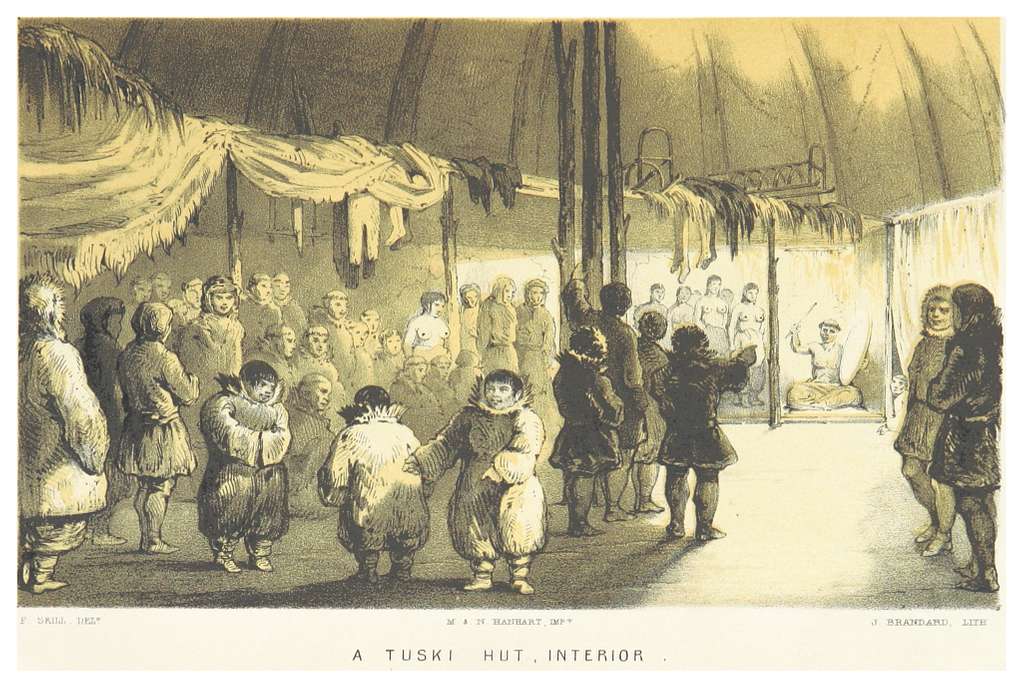
Image: Illustration by William Hulme Hooper in Ten months among the Tents of the Tuski(1853)


Thursday, January 13, 2022

Dreaming, we are time travelers


We are time travelers in our dreams and one thing that goes on, probably every night, is that the dream self travels into the possible future, scouting out challenges and opportunities that lie ahead. Depending on whether we remember such dream scouts, and can read the information correctly, and can then decide on appropriate action, we can move away from undesirable future events and towards ones that are more attractive.

J. W. Dunne (1875-1949) was a pioneer researcher in this field. He was in every way a product of Britain in the Edwardian era. He was not a mystic, a shaman or an occultist. He was a soldier, an aeronautical engineer, a fly fisherman and a crack shot. He came out of the Anglo-Irish military caste. He designed and built the first British military aircraft, and his prototype was soon adopted and manufactured in the United States.  In all things, he was a determined scientist and rationalist who looked for the logic in life’s anomalies. 

What distinguished him from other members of his upper class military type was that he dreamed and remembered and recorded his dreams. He noticed something remarkable. The incidents he dreamed were often located in the future rather than the past. And their content often involved things he knew nothing about before the dreams.

The data that shifted Dunne’s conception of reality – first when he was a sub-lieutenant of the Imperial Yeomanry, fighting the Boers, then when he was convalescing in Italy, and many times later – were dreams in which he saw, with remarkable accuracy, events that lay in the future. Sometimes his dreams anticipated news of world events that he had not yet received. His dreams gave him “news flashes” of an earthquake in Madagascar and of troop movements in Sudan long before the newspapers arrived with printed reports of those events.

Dunne started keeping a detailed journal of his dreams, and found that he dreamed of the future – on average – as often as the past. This led him to realize that in dreams, time works differently than in our usual experience of waking life. He drew friends and family members into an ongoing “Experiment with Time” and collected a great deal of data on “time displacement” as observed in dreams. 

He extended his experiments into waking precognition – for example, by trying to guess what he would find in a book he would later pick up at random in his club. He quickly concluded that precognition can be achieved in waking states as well as in dreams, but requires “a steadying of attention” and practice in controlling the imagination that are not easily attained. 

He published his findings in 1927  in a book titled An Experiment with Time that had wide influence in the interval between the two world wars; it was read and eagerly discussed by many leading scientists, writers and politicians. An expanded and revised edition was published in 1934. This is the version I use, and return to frequently.

Dunne evolved a complex mathematical model he called Serialism in his effort to account for the fact that time does not move in a linear fashion in dreams – and perhaps in the larger universe. In his last book,  Intrusions?,  published posthumously, he makes the bold statement that his precognitive dreams were "caused by something which I was going to experience in waking life later on”.

This is a most interesting theory: that future events not only cast a shadow before them, but cause us to dream of them – and perhaps, in dreaming, to help bring a certain event track into our physical experience, out of an immense range of alternative possible futures.

In Intrusions?, he  provided further details of the precognitive dreams recounted in An Experiment with Time that he suppressed in the earlier book, apparently for fear of not sounding scientific and respectable. The strongest  dream "intrusions" containing glimpses of the future were often accompanied by inner voices, sometimes a tremendous chorus of voices crying "Look, look, look!" He describes this phenomenon as the "rousing of attention".

Dunne moved towards the understanding that our experience of  linear time  is an illusion of the limited ordinary mind. Viewed from the fourth dimension,  past, present and future are in fact simultaneous and only experienced sequentially because of our mental perception of them. In the dream state the mind is not shackled in this way and is able to perceive events in the past and future with equal facility. The dream self, as "Observer 2" may be able to view past, present and future at the same time. Beyond this 4D view, however, there may be larger perspectives, of an "Observer 3" who watches the watcher observing the actor, and then "observers" on successively higher levels of reality and consciousness. 

When he expounds his Serialist theory, Dunne becomes very hard to follow and he fails to take us into one of the most interesting aspects of this inquiry: the possibility that we are consciously choosing, usually unwittingly. between parallel timelines leading to alternate futures.  His great contribution is the example of his pragmatic, fact-based approach to gathering and appraising examples of precognition from everyday (and every night) experience. 
Dunne's experiment provided impressive evidence that precognition or prevision is quite normal in dreams. Many people are unaware of it because they don't remember their dreams or don't look for correspondences with later events in ordinary life. However, there is nothing weird or special about the "temporal freedom" of the dreaming self. Know it or not - like it or not - we may all be time travelers in our dreams.
As J.B.Priestley summed it up in Man and Time Dunne's experiment demonstrated that the ability to transcend time in dreams "is not a privilege enjoyed by a few very strange and special people. It is part of our common human lot. We are not - even though we might prefer to be - the slaves of chronological time. We are, in this respect, more elaborate, more powerful, perhaps nobler creatures than we have lately taken ourselves to be."

Keep a dream journal over time and watch for subsequent physical events that may resemble a dream and you will soon confirm the reality of dream precognition. You are now on track to do the really interesting stuff. If you can see the future, you may be able to change it for the better. If you can't see whether you are going, you are likely to end up where you are headed.

Make some time in your life to record the time travels of your dreaming self and you may find, with practice, that you can do more. You can enter the perspective of the witness self who can see a whole timeline. You may even, on a high rooftop of the mind, enter the vista of a higher observer who sees the forking paths of the multiverse and the weave of connections between different lives, across time and space, in a spacious Now.

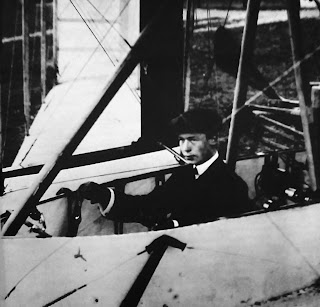
Photo: The young J.W.Dunne, designer of Britain's first military aircraft, as a pilot.

Saturday, September 7, 2019

Nine Keys to Living Consciously in the Multiverse


1
The only time is Now. All other times - past, present and parallel - can be accessed in this moment of Now, and may be changed for the better.

2
We dream to wake up. Dreaming is not fundamentally about what happens during sleep. It is about waking up to a deeper order of reality. Dreaming is a discipline; to get really good at it requires practice, practice, practice.

3
Treasures are waiting for us in the Place Between Sleep and Awake. The easiest way to become a lucid or conscious dreamer is to spend more time in the twilight zone between waking and sleep, or between sleep and waking. Tinker Bell told Peter Pan to look for her in the Place between Sleep and Awake. This liminal state is a place of encounter with inner guides and transpersonal visitors. It is also a place of heightened psychic perception and creative breakthroughs, where it is easy to make connections that escape the daily mind.

4
We live in the Speaking Land, as the First Peoples of my native Australia say. Everything in the world around us is alive and conscious and will speak to us if we are paying attention. Navigating by synchronicity becomes very simple, even irresistible, when we stream into this mode of understanding.

5
To live well, we must practice death. We bring courage and clarity to life choices when we are aware that death is always with us, and that we should be ready to meet it any day.

6
We must feed and honor our animal spirits. A working connection with them gives us immense resources for self-healing.

7
We have a guide for our lives who is no stranger. He is always with us and does not judge us. This is the Self on a higher level. When we rise to the perspective of the Greater Self, we are able to make peace between different personality aspects, including our counterparts in other times and parallel realities.

8
We are at the center of all times. The dramas of lives being lived in other times and in parallel realities may be intensely relevant to understanding and navigating our current relationships and life issues. We can learn to reach into those other lives to share gifts and lessons. We can dialog with our own older and younger selves within our present lifetimes.

9
We must entertain the spirits, starting with our very own - the child self, the inner artist, the passionate teen, the animal spirits, the creative daimon.


Text adapted from The Boy Who Died and Came Back by Robert Moss. Published by New World Library.

Photo: Path in Transylvania by Robert Moss


Friday, April 19, 2019

Nine Keys to Living Consciously in the Multiverse


The only time is Now. All other times - past, present and parallel - can be accessed in this moment of Now, and may be changed for the better.

We dream to wake up. Dreaming is not fundamentally about what happens during sleep. It is about waking up to a deeper order of reality. Dreaming is a discipline; to get really good at it requires practice, practice, practice.

Treasures are waiting for us in the Place Between Sleep and Awake. The easiest way to become a lucid or conscious dreamer is to spend more time in the twilight zone between waking and sleep, or between sleep and waking.  Tinker Bell told Peter Pan to look for her in the Place between Sleep and Awake. This liminal state is a place of encounter with inner guides and transpersonal visitors. It is also a place of heightened psychic perception and creative breakthroughs, where it is easy to make connections that escape the daily mind.

We live in the Speaking Land, as the First Peoples of my native Australia say. Everything in the world around us is alive and conscious and will speak to us if we are paying attention. Navigating by synchronicity becomes very simple, even irresistible, when we stream into this mode of understanding.

To live well, we must practice death. We bring courage and clarity to life choices when we are aware that death is always with us, and that we should be ready to meet it any day.

We must feed and honor our animal spirits. A working connection with them gives us immense resources for self-healing.

We have a guide for our lives who is no stranger. He is always with us and does not judge us. This is the Self on a higher level. When we rise to the perspective of the Greater Self, we are able to make peace between different personality aspects, including our counterparts in other times and parallel realities.

We are at the center of all times. The dramas of lives being lived in other times and in parallel realities may be intensely relevant to understanding and navigating our current relationships and life issues. We can learn to reach into those other lives to share gifts and lessons. We can dialog with our own older and younger selves within our present lifetimes.

We must entertain the spirits, starting with our very own – the child self, the inner artist, the passionate teen, the animal spirits, the creative daimon.


Text adapted from The Boy Who Died and Came Back: Adventures of a Dream Archaeologist in the Multiverse by Robert Moss. Published by New World Library.


Art: "Moon Door" by René Magritte

Tuesday, April 2, 2019

Time and the dreamer


I look at my watch. It is nearly 4:20. I must get on with my lecture. I close my eyes.
    I am standing before to a group of forty or fifty people seated in chairs arranged in a relaxed horseshoe pattern. It is rather irritating that behind the audience is a café area where people are talking quite loudly. At one point, I have to call to the café crowd to keep it down, and they do.
    My subject is time, and the dreamer’s relationship with time. I talk briskly and smoothly about how, especially in dreams, consciousness is forever traveling ahead of the body, returning with reports about conditions on the roads ahead. We can use these travelogues from the future to make better choices at the crossroads that lie before us.
     I next talk about how we also travel into the past. We visit scenes from our earlier lives. We visit other eras across history, sometimes as observers, sometimes entering fully into the mind and experience of other personalities. I talk about how we need to discern carefully whether we are dealing with ancestors, spiritual kin, reincarnational dramas – or counterpart personalities living in other times and other realities.
     To get a handle on all of this, I suggest, we need to rise to the perspective of a self on a higher level, a hub personality or oversoul. From this perspective, we may be able to recognize that a number of personalities – including our present selves – are joined to a central personality, a slightly higher self, as spokes join the hub of a wheel. Looking from this position, from above and beyond linear time, we can see that the dramas of many personalities are playing in the same spacious Now, and turn with each other.
    This is all being received well, but I keep looking at my wristwatch because I am determined to finish in precisely forty minutes, on the hour. I succeed.
    I open my eyes and look at the wristwatch I left on my bedside table. It is precisely 5:00 in the morning. The time I spent giving my lecture, in my dream, exactly coincided with the time that I lay in bed. Contrary to what people may say, dreamers can get things done on time.

Sunday, March 29, 2015

Time and the dreamer


I look at my watch. It is nearly 4:20. I must get on with my lecture. I close my eyes.
    I am standing before to a group of forty or fifty people seated in chairs arranged in a relaxed horseshoe pattern. It is rather irritating that behind the audience is a café area where people are talking quite loudly. At one point, I have to call to the café crowd to keep it down, and they do.
    My subject is time, and the dreamer’s relationship with time. I talk briskly and smoothly about how, especially in dreams, consciousness is forever traveling ahead of the body, returning with reports about conditions on the roads ahead. We can use these travelogues from the future to make better choices at the crossroads that lie before us.
     I next talk about how we also travel into the past. We visit scenes from our earlier lives. We visit other eras across history, sometimes as observers, sometimes entering fully into the mind and experience of other personalities. I talk about how we need to discern carefully whether we are dealing with ancestors, spiritual kin, reincarnational dramas – or counterpart personalities living in other times and other realities.
     To get a handle on all of this, I suggest, we need to rise to the perspective of a self on a higher level, a hub personality or oversoul. From this perspective, we may be able to recognize that a number of personalities – including our present selves – are joined to a central personality, a slightly higher self, as spokes join the hub of a wheel. Looking from this position, from above and beyond linear time, we can see that the dramas of many personalities are playing in the same spacious Now, and turn with each other.
    This is all being received well, but I keep looking at my wristwatch because I am determined to finish in precisely forty minutes, on the hour. I succeed.
    I open my eyes and look at the wristwatch I left on my bedside table. It is precisely 5:00 in the morning. The time I spent giving my lecture, in my dream, exactly coincided with the time that I lay in bed. Contrary to what people may say, dreamers can get things done on time.


Afternote

Sports psychologists report that athletes get the same benefits from practice or workout in dream/visualization as in physical reality, but that full value depends on doing the exercises over the same time period.  I was intrigued by my experience of conducting a dream activity  (in this case, giving a lecture) in exactly the same period of linear time that would be required in ordinary reality. However, the great thing in general about dream time is that it is almost infinitely elastic, so we can have experiences that would take days or longer in a few minutes, when that pleases us and our dream helpers.

Art: René Magritte, "Time Transfixed" (1938) Art Institute of Chicago

Sunday, February 1, 2015

Of Kairos and sea shells


Paradise Island, Bahamas

Kairos is jump time, opportunity time, the special moment that you seize or miss. In Kairos moments you may feel you have been released from linear time, or that powers from outside time have irrupted into your world. The Greeks personified Kairos as a young, fleet-footed god, completely bald except for a curling lock falling over his forehead. Hence the phrase, "seize time by the forelock." If you meet this fellow on the road and fail to seize the moment, you'll find him very hard to catch. Kairos is slippery.
    Brutus talks about Kairos time, the time of opportunity, in a famous passage in Shakespeare's Julius Caesar:


There is a tide in the affairs of men,
Which, taken at the flood, leads on to fortune;
Omitted, all the voyage of their life
Is bound in shallows and in miseries.
On such a full sea are we now afloat,
And we must take the current when it serves
Or lose our ventures.

    Kairos, in Greek, has related meanings in two interesting contexts: in archery and in weaving. In archery, kairos means an opening in the specific sense of a long aperture through which the archer must make his arrow pass, as Odysseus, at the start of the battle with the suitors, must fire an arrow through the holes in a dozen ax heads to prove himself. Meeting the test of this kind of Kairos requires fine precision and the force to drive the arrow all the way. In the art of weaving, kairos is the moment when the weaver must draw the yarn through the gap that opens - just for that moment - in the warp of the fabric that is being woven.
    On the last day of my visit to the Bahamas, where I was teaching at the Sivananda Ashram over the past week, I had an experience of Kairos that touched my heart. I had packed my bags. I was due at the dock on the other side of the ashram in a couple of minutes, to catch the boat to Nassau en route to the airport. My hand was moving to shut down my laptop and tuck it away in my carry-on bag.
   In this instant, I received a message from a dear friend and student. Could I possibly offer a sea shell to the ocean for her deceased mother, who loved the ashram and stayed here many years ago?
   There was no tick-tock time to do this, but Kairos - and the heart - take precedence over Chronos. I ran down the steps to the white sand beach in front of the ashram and hunted up and down until I found a small white shell. I padded into the shallows and released the shell, gently, into the streaming hair of the sea goddess, with a prayer for my friend's mother.
   May her paths be open.
   I caught my boat. When Kairos is in play, ordinary time is either suspended, or elastic.
   May we always be available to the Kairos moments when immediate action is required. 


Wednesday, September 4, 2013

Time is pleated

Like the pants I prefer, time for me is pleated, not flat.
    A pleat is made when fabric is doubled back upon itself, and secured in place. A much greater length of fabric may be involved than is visible. In a knife pleat, the standard ratio of fabric to finished pleat is 3:1. So three inches of fabric will make one inch of pleat.
    So it seems to me that the fabric of time is gathered or bunched. As in garments, this allows room for movement and expansion.
    It also means that what is visible conceals the gathering of the fabric of many times - the dramas of many lives - into the current time line. We seem to be on a certain event track, running more or less straight. But behind it, there is the gathering, and the ratio of the hidden weaving of time to the visible time line may be much, much higher than 3:1.

Saturday, January 12, 2013

Flights of time

Flight 1929 (or 1845) from Minneapolis to Seattle, Friday January 11, 2013

I am boarding my second flight of the day, from Minneapolis to Seattle. My flight number is 1929, and I am playing with the significance of that number as a year in the timeline of history. The year of the Wall Street Crash and the beginning of the Great Depression, for starters, hmm.
     When I take my seat, a cheery voice with a Southern accent informs me, through the intercom, that I am on flight 1845. I check my boarding pass. It stillsays 1929. Is the announcer confused? Maybe they'll correct in the next announcement. No, we are reassured, a few minutes later, that we are on flight 1845, still bound for Seattle. And again, "This is Delta flight 1845."
      I start to play with the idea that time has turned trickster. I have been transported back from 1929 to 1845. Let's see, what happened in 1845? The start of a war between Mexico and the United States. Thoreau moves to Walden Pond. Edgar Allen Poe publishes "The Raven". (I looked some of this up later.) Is there some connection between what happened in 1845 and what happened in 1929, and with the present?
      I glance to my right. A couple of young Amish or Mennonite women have taken the seats across the aisle. Their hair is closley confined in their gauzy caps, tied under their chins, and their homespun dresses cover their ankles. I feel I have been transported on this plane of reality back a further century, perhaps to the early 1700s.
     I take up my in-flight reading. I have brought a fresh trade paper edition of The Nature of Personal Reality, a Seth book (channeled by Jane Roberts) that I purchased in a mass market edition on 8.8.88 and started reading then. I found it enormously helpful, together with Seth Speaks and The Education of Oversoul Seven, purchased the same day, in my efforts to find a model of undertanding for the wild and reality-shifting experiences of waking up in the multiverse that were shaking my world that summer.
      I open the Seth book at random to find him speaking, with fierce clarity, about our need to change our relations with time and sleep in order to wake up to the nature of multidimensional reality. We need to grasp that sleeping for longer than four hours at a time is undesirable and unhealthy, because in sleep, whether we are conscious of this or not, we are traveling outside the body, and to stay away for too long can leave us groggy and (I would add jet-lagged). Seth recommends a main period of no more than four hours sleep, reinforced by a nap somewhere else in the daily cycle. I could not agree more, and remember how confirming it was for me to read this back in 1988, because I have always followed this plan, long before I became fully conscious of why it makes sense, except to the pill-pushers in the sleep meds industry.
     I look up and the in-flight monitors have gone dark. Then two words come up on the screen: SLEEP TIME. Yes.
     The games of time on Delta flight 1929 (or 1845) get better and better. The pilot informs us early in the game that our flight time from Minneapolis to Seattle will be precisely 3 hours 52 minutes. Now, this is a "hard time" estimate: time in the air as opposed to the soggier estimates made to cover less predictable things like time on the ground, air traffic delays, taxiing on rinways. Before I see Mount Rainier raising her glorious snowy peak above the clouds, the pilot comes on the intercom again to announce, with wondering excitement, that he has great news of us. We have gained an hour. Flight time will be only 2 hours 52 minutes. There is no obvious explanation for how we are coming in an hour early on a relatively short flight, no strong tail wind, for example, We are among the games of time.
    All of which is trilling for me, since I am on my way to lead a new adventure titled "Time Travel and Reality Creation" at magical Mosswood Hollow, one of my favorite retreat centers, out in the foothills of the Cascades. At baggage claim, where my suitcase joins the carousel immediately, my flight number is once again 1929.
    On the drive to Mosswood Hollow, I tell my host, Paul Martin, about this entertaining sequence. We stop at the Safeway in Duvall because I like to treat workshop participants to a little wine with our splendid dinners, if it is their pleasure. My bill at the cash register is precisely $111.11. A Chinese man behind beams and gives me two thumbs up. "Good luck," he chortles. "Very good luck." I feel the same. I gladly hand over 111.11 and give thanks that the worlds are playing nicely with each other today.