Showing posts with label multiverse. Show all posts

Sunday, July 27, 2025

The Cave of the Dreaming God


A stranger gave us directions

at the mouth of the subway.

My friend and I heard him

but we had trouble with his accent

and disagreed about what he said.

The guitar man busking quarters heard

but claimed he had been there already.

Everyone else was on cellphones

or lost in headphone land.


"Get down, go down, find the Gatekeeper

who will ask you for the correct time.

There's only one right answer,

here or anywhere. Don't screw this up.

Then go west of certainty, north of comfort.

Take passage over the Jell-O sea.

Study, talk politely to demons.

and you may know the dreams of Time."


So we went down the tunnel and told the ticket man

who bared his teeth, "The only time is now."

He growled, but let us into ferry-land

where we took the Western Line

and sailed off the maps to the slow motion sea

that moves like tree sap dreaming of amber.


We came at last to the island where Chronos

lies bound in sleep. It took us only thirty years

of constant study and conversation with spirits

- but noone is counting here - to win entry

to the Cave of the Dreaming God.


In the slipstream of Time that is no time

possible histories flicker off and on;

ifs and might-have beens and might-bes,

memories of the future, roads not taken

in one world but followed somewhere else.


We learned not to look too long

at what we prefer not to see -

goosestepping Nazis in London,

plump Protestant ayatollahs ruling Hollywood,

Earth infested by bog-men and hungry ghosts

or ruled by insectoid dynasties from a hungry star.

To look here is to pluck from the quantum soup

a strand that becomes a species thought

and may become an event track in the serial world.


"Jus' like pickin a guitar" said the busker

when we came up from the underground.

So we'll keep the Cave of the Dreaming God

well-hidden, like a fleck of pyrite in a drop of amber

on the fob of a dead poet’s pocket watch.


- Robert Moss


Tuesday, March 4, 2025

Dream bilocation


Do you experience being in two (or more) dreams at the same time? I am not talking about the experience of dream-within-dream (though that is no less interesting) but about being conscious that you are involved in two (or more) unfolding and distinct dream situations at the same time. You may or may not be aware of your dormant body in the bed while engaged in these other realities.

We may find it hard to sustain dual (or multiple) consciousness in dreamtime. As we leave the dreams, our waking editor - who likes linear order - may try to turn them into a single narrative, blurring our memory and understanding of what was going on.

The phenomenon is important. Growing the ability to sustain consciousness in two or more dream situations at the same time is excellent practice for becoming a conscious citizen of the multiverse.

I had an indelible experience of this when I was teaching at the Esalen Institute in California., which I titled “Mysteries of Ulan Bator”. I was caught up in twin adventures in Mongolia, one in the 1930s (involving a race to locate the spirit banner of Genghis Khan), the other in a possible or parallel future, where I am arriving in the Mongolian capital to take part in a conference on shamanism. At the same time, I am aware of my body in the bed and the roll of the Pacific breakers under my windows in the Big House.

This was a case, at the least, of trilocation.  I was in three different times and at two different places. And while seesawing between my room at Big Sur and Mongolia in the past and possible future, I was sometimes able to observe all three situations. 

In his notes in The Unknown Reality (a Seth book) Rob Butts, Jane Roberts' husband and amanuensis, writes that he was amazed when he first found himself in two dream situations simultaneously. His astonishment deepened when he discovered that his experience  were trumped by those of others in their circle, notably Sue Watkins, who claimed to be able to sustain consciousness of many personalities and their dramas at the same time, in dreaming.

When you become aware that you are dreaming, inside a dream, you may find that you are practicing a simple form of bilocation, at least while you remain lucid. Your dream self is out there, near or far, while you are also aware of your dormant body, alive and breathing, and its physical environment.

I know that bilocation can be accomplished in states of waking dream. I think of the evening when I was drumming for a shamanic circle on a mountain in the Adirondacks when a hawk that was visible and palpable only to me slapped my shoulder. The hawk encouraged me to leave my body, traveling with part of my consciousness, for a reunion with an important mentor, an arendiwanen or woman of power who was Mother of the Wolf Clan of the Mohawk people centuries ago. While I traveled to meet her. enough of my mind remained with my body in the room for me to be able to continue to drum for the group and to watch over its physical and psychic wellbeing.


Journal drawing by Robert Moss


Friday, July 26, 2024

William James, Lost and Found in the Multiverse


William James, the greatest American philosopher and psychologist and a neighbor of mine in the Albany NY of an earlier time, coined the word “multiverse”, which he gave a hinge, rendering it as “multi-verse”. In  his chapter on “The Perception of Reality” volume 2 of his Principles of Psychology [1890] he outlines a “many worlds” theory in which he describes realities created by mind and belief, including the abstract world of scientific theory and the worlds of “tribal gods” and religion-based afterlives.

      In the Hibbert lectures published as A Pluralistic Universe, James argues for a “multi-verse” as follows:


Pluralism lets things really exist in the each-form or distributively. Monism thinks that the all-form or collective-unit form is the only form that is rational. The all-form allows of no taking up and dropping of connexions, for in the 'all' the parts are essentially and externally co-implicated. In the each-form, on the contrary, a thing may be connected by intermediate things, with a thing with which it has no immediate or essential connexion.
    If the each-form be the eternal form of reality no less than the form of temporal appearance, we still have a coherent world, and not an incarnate incoherence, as is charged by so many absolutists. Our 'multiverse' still makes a 'universe'; for every part, though it may not be in actual or immediate connexion, is nevertheless in some possible or mediate connexion with every other part, however remote. [1] 
     
    Things are 'with' one another in many ways, but nothing includes everything or dominates over everything [2]  

     God is not the absolute, but is Himself a part. . . . His functions can be taken as not wholly dissimilar to those of the other smaller parts — as similar to our functions, consequently, having an environment, being in time, and working out a history just like ourselves, He escapes from the foreignness from all that is human, of the static, timeless, perfect absolute [3]. 


While wrestling with this language - not James' most euphonious -  I came again across this statement in The Varieties of Religious Experience: "The founders of every church owed their power originally to the fact of their direct personal communion with the divine." [4] 

    That “direct personal communion" has been accomplished through dreams and visions and interior dialogue and observation of signs and marvels in the natural world, all facets of dreaming as we understand it in the dream school. James reminds us that religion without dreaming is divorced from its very origins. 

     In The Will to Believe, James offered two insights that are highly relevant to the dismissal of dreaming, and the conditions for useful study of it: "As a rule we disbelieve all facts and theories for which we have no use." [5] 


And then:


The most useful investigator, because the most sensitive observer, is always he whose eager interest in one side of the question is balanced by an equally keen nervousness lest he become deceived. [6]

In a letter to Henry Rankin on June 16, 1901, he put it this way: ?"The mother sea and fountainhead of all religions lie in the mystical experiences of the individual, taking the word mystical in a very wide sense. All theologies and ecclesiasticisms are secondary growths superimposed."  Borrowing from his friend, the great British psychic researcher and scholar, F.W.H. Myers,  James explained that "mystical consciousness" is related to the existence of an "extended subliminal self, with a thin partition through which messages make irruption."
     For most of us, it is through dreams that the subliminal self most frequently irrupts through that "thin partition" into everyday awareness. James says this about dream reality in Principles of Psychology:


The world of dreams is our real world whilst we are sleeping, because our attention then lapses from the sensible world. Conversely, when we wake the attention usually lapses from the dream-world and that becomes unreal. But if a dream haunts us and compels our attention during the day it is very apt to remain figuring in our consciousness as a sort of sub-universe alongside of the waking world.
    Most people have probably had dreams which it is hard to imagine not to have been glimpses into an actually existing region of being, perhaps a corner of the 'spiritual world. 'And dreams have accordingly in all ages been regarded as revelations, and have played a large part in furnishing forth mythologies and creating themes for faith to lay hold upon. The 'larger universe,' here, which helps us to believe both in the dream and in the waking reality which is its immediate reductive, is the total universe, of Nature plus the Super-natural.
    The dream holds true, namely, in one half of that universe ; the waking perceptions in the other half. Even to-day dream-objects figure among the realities in which some ' psychic-researchers' are seeking to rouse our belief. All our theories, not only those about the supernatural, but our philosophic and scientific theories as well, are like our dreams in rousing such different degrees of belief in different minds. [7]

Dwell with that last statement for a moment.  The dream "holds true" in half the "total" universe, and is our way to access and experience this reality. If William James is correct, if we have divorced ourselves from dreaming, we are only halflings, only half present in the universe.
    It does not seem that William James kept a regular journal of dreams, but he did record disturbing dreams from his nights in  San Franciso in 1906 that led him to ask further questions about reality in the mutiverse. He called what happened “the most peculiar experience of my whole life”. He said that it put him in a state of mental confusion that made his teeth chatter. To compound the strangeness, he wrote that the nocturnal adventures that had shaken him to his core were "dreams I could not remember myself to have had”.
     On the night of February 12, 1906,  James slept in a bed at Stanford University. He woke at breakfast time from “a quiet dream of some sort”. While gathering his thoughts, his memory of the dream “seemed suddenly to get mixed up with reminiscences of a dream of an entirely different sort, which seemed to telescope, as it were, into the first one, a dream very elaborate, of lions, and tragic”. He decided that the lion dream must have been “a previous dream of the same sleep”. However, he found the apparent mingling of two dreams to be “something very queer, which I had never before experienced” – and deeply troubling.
    The following night, he woke from heavy sleep in the middle of a dream. Thinking about the dream he became confused by the irruption of two more dreams into his memory. They “shuffled themselves abruptly in between the parts of the first dream” and he could not grasp their origin.
   “Whence come these dreams? I asked. They were close to me, and fresh, as if I had just dreamed them; and yet they were far away from the first dream.” He could not find a connection between them. One had a “cockney atmosphere”, and “happened to someone in London”. The other two dreams had American locales. In one, perhaps the one from which he wakened, he was trying on a coat. The other was “a sort of nightmare and had to do with soldiers”
     Each dream had completely different content and a distinct emotional charge. Yet as they telescoped in and out of each other, James noted, “I seemed to myself to have been their common dreamer, they seemed quite as distinctly not to have been dreamed in succession, in that one sleep… I seemed thus to belong to three different dream-systems at once, no one of which would connect itself either with the others or with my waking life. I began to feel curiously confused and scared, and tried to wake myself up wider, but I seemed already wide-awake.” [emphasis added]
     His emotional response was amazingly strong. “Presently cold shivers of dread ran over me: am I getting into other people's dreams?” Was this telepathy, or a descent into dementia and mental confusion, even multiple personality disorder?
     "Decidedly I was losing hold of my 'self,' and making acquaintance with a quality of mental distress that I had never known before, its nearest analogue being the sinking, giddying anxiety that one may have when, in the woods, one discovers that one is really lost."
    Who is the dreamer? Whose are the dreams? He repeated the question over and over, even in the published version of his notes. “Whose? whose? WHOSE? Unless I can attach them, I am swept out to sea with no horizon and no bond, getting lost. …My teeth chattered at the thought.”
     His experiences increased his empathy for those diagnosed with dementia, Verwirrtheit [mental confusion] or suffering “invasions of secondary personality”. “We regard them as simply curious; but what they want in the awful drift of their being out of its customary self, is any principle of steadiness to hold on to. We ought to assure them and reassure them that we will stand by them, and recognize the true self in them to the end.”
     Desperate to explain what had happened to him on those San Francisco nights, he played with the notion that it had something to do with the hour of waking. On going to bed, he normally slept heavily until after two. On the nights of multiple dreams, he had woken around midnight. He had never remembered “midnight dreams" before. Was it possible that his mind was playing catchup, bringing him dreams from midnights past that had escaped him until now? The idea gave him relief. He had been scared to let himself return to sleep and dreams. Now he lay down, fell asleep, and woke at seven with “a curious, but not alarming, confusion between two dreams.”
     As things settled, James continued to be haunted by the shock of those San Francisco nights. “My confusion was foudroyante [like a lightning bolt], a state of consciousness unique and unparalleled in my 64 years of the world's experience.” 
     He felt unable to rule out the possibility that his multiple dreams were produced by “a telepathic entrance into someone else's dreams” or “a doubling up of personality".
     “I don't know now 'who' had those three dreams, or which one 'I' first woke up from, so quickly did they substitute themselves back and forth for each other, discontinuously…To this day I feel that those extra dreams were dreamed in reality, but when, where, and by whom, I cannot guess.”
It appears that James never settled his inquiry as to what had made his teeth chatter, though brilliantly equipped to do so. He used the term "multiverse" but did not make the full connection with dreaming, which may be our best way to observe and understand the many worlds on a human level. In serial dreams, in which we find ourselves in parallel realities over time, we learn that we may be living continuous lives elsewhere. Through nested and multiple interactive dreams we awaken to the probability that we and our dream doubles are active in many realities at the same time. Growing the practice of conscious, volitional dreaming is the royal road to fulfilling James' aim of expanding the "margins" of  consciousness  and our understanding of the nature of reality. He stood on the cusp but held back. 


References

1. William James, 
A Pluralistic Universe. London: Lomgmans, Green, 1909. p. 324

2. ibid., p. 321.

3. ibid, p. 318.

4.  William James, The Varieties of Religious ExperienceLondon: Longmans, Green 1952, p.31.

5. William James, The Will to Believe and Other Essays in Popular Philosophy. London: Longmans, Green, 1897.

6. ibid, p. 21

7.  William James, Principles of Psychology.  New York: Henry Holt, 1890 vol. 2, p.294n. 

8. James kept a detailed record of his experiences in his college bed in San Francisco on the nights of February 12-13, 1906 but it gives only brief and vague impressions of the content of the dreams that appalled him. He published most of these journal pages in an essay on the expansion of the field of consciousness in a scholarly journal in 1910. See William James, “A Suggestion About Mysticism” in The Journal of Philosophy, Psychology and Scientific Methods Vol. 7, No. 4 (Feb. 17, 1910) 85-92.

Drawing of William James on Willett Street by Robert Moss

Wednesday, February 7, 2024

The Midnight Library and the Café Jet-Lag


"Sometimes just to say your own truth out loud is enough to find others like you."

It's a great moment in Matt Haig's great novel The Midnight Library, when Nora, who is sliding between parallel lives, discovers there are others like her. This is what Hugo, the first to reveal himself, tells her. 

"We are sliders. We have a root life in which we lying somewhere, unconscious, suspended between life and death, and then we arrive in a place...A library, a video store, an art gallery, a casino, a restaurant..." 

And this place becomes the portal to a parallel world where you find yourself in the body and situation of your parallel self as they are in this same moment. You'll be challenged to catch up with their divergent biography, with a lover you never knew, a job you never held, songs you never learned, muscles you didn't know you had. 

The many worlds interpretation of reality, as it has evolved, makes sliding acceptable to theoretical physics. The architecture for transit - the library, the video store - is easier for human minds than theorems about quantum waves. 


Matt Haig's protagonist, Nora Seed, is exploring this territory while lying between life and death after overdosing. Her surroundings resemble an immense library, in the care of a lady who looks like her beloved librarian from elementary school. All the books in the midnight library are bound in green; to open any one is to enter a different parallel; life in which Nora made different choices.

We come to understand that the challenge for her is to find a life in which she wants to stay in a body in the physical world. She must white out volumes of her vast Book of Regrets. She can't take forever to do this. At a certain point the library of this limb will crumble and dematerialize.

The librarian tells Nora, "Every time one decision is taken over another, the outcomes differ. An irresistible variation occurs, which in turn leads to further variations...You have as many lives as you have possibilities. There are lives where you made different choices. And those choices lead to different outcomes. If you had done just one thing differently, you would have a different life story."

We are then informed that "Doing one thing differently is often the same as doing everything differently. Actions can't be reversed within a lifetime, however much we try...But you are no longer within a lifetime. You have popped outside." 

The books in the library are near or far according to how near or far the alternate life is from the current one (in time as well as space since greater divergence seems related to earlier separation).

Nora learns to think of the life in which her body is lying in a coma as her "root" life, with all the others spreading and diverging like branches of a gigantic tree. I think of Sylvia Plath picture of  existence as a fig tree where you see the juicy fruit of other possible lives but can't get to them and must watch them rot. Here you can get to them but may leave them to rot. 

 So here is the friendly librarian's challenge: Which life would you like to try on?" 

 Choose to stay in another life and it will be as if it was always there. Your memory of the life you were living before - and of the midnight library- will fade and disappear. The book of that life will not be returned to shelves. 

 Nora starts by following her regret over not marrying a boyfriend named Dan and living his dream of running a country pub. The author teases us with his name for the Oxfordshire village where the pub is located: Littleworth. Nora lands in her slightly different body without knowing anything about the scene - she doesn't know where the loo is, or the name of the whiskery regular. A question not answered is: what happens to the Nora who was living at the Three Horseshoes pub while the "original" Nora is in her body and life?

Things don't work out at the pub, or with the boyfriend, now a surly dipsomaniac husband. Try again, and again. Each time there's the small problem of trying to catch up with all the things your parallel; self was doing before you slid into her body. Nora flunks a speech she is supposed to give, as an Olympic star, to a thousand people, because she can't remember the story of this alternate self.

When you check out another life, through a book from the midnight library, you start at the same exact time  00:00. In this other life you made other choices in the past. That is past history of which you may remember little or much or nothing in the body you are now in. You cannot touch that past. You can make choices in the present and future of the alternate life that will become your definitive life, unless disappointment throws you out of it. 

Among the infinity of parallel lives you may choose from, according to library rules, there is a category that is forbidden: lives in which you are already dead. We are told there are no books for such lives because the library is about possibilities and the dead don't have any.

This seems to me to be a wrongful restriction. The dead have choices, like the living, and plenty of possible futures. In exploring my own parallel lives I have entered worlds where I died years ago. Some I find quite enjoyable, even beautiful. For relaxation I sometimes go the penthouse of a Robert who died before me. I enjoy swimming in his rooftop pool, and foraging in his vast library, and watching dreams that play all around me, as if I have slipped into a virtual reality pod, when I stretch out on his bed.

 Nora's dialogues with the slider Hugo, who seems addicted to quantum jumping for its own sake, are marvelous and an effortless introduction to the Many Worlds hypothesis in physics which suggests that there are an infinite number of divergent parallel universes. "Every moment of your life you enter a new universe. With every decision you make." 

Sliders might be popping in and out of parallel worlds all the time. People around them generally don’t notice even when they say, "My mind went blank" or "I am not myself today."

Hugo says, with admirable clarity, that "the human brain can't handle the complexity of an open quantum wave function so it organizes or translates this complexity into something it understands." Like librarian in a library. When Hugo goes sliding, his departure lounge is not a library, but a video store. Other sliders use different launch pads There is always a guide who resembles someone who was helpful in life.  

You don't need to be half-dead to explore this field for yourself, though we all exist somewhere between life and death. I use a very special library, and a cosmic video store, and an art gallery or museum often as portals for lucid dream adventures in parallel worlds and others. I open such spaces to adventurous dream travelers as departure lounges for group journeys powered by shamanic drumming. and play guide for groups that want first-hand experience of these things.

 I have made Matt Haig's novel recommended treading for the advanced dreamers who are engaged with me in exploring and mapping the multiverse. His sliders' varying choice of portals makes me reflect that, beyond a library and a video store, I could make more use of restaurants. I often dine well in my dreams and return with the taste in my mouth. I think I will see whether the Café Jet-Lag in Paris, where I would often stop for coffee or vin rouge after overnight flights, is a friendly transit lounge for interdimensional travel. The name matches my condition when I return from world-jumping. 

I am told that since my last visit the Café Jet-Lag has closed. This is not a serious obstacle to making a return visit. If in my root life the café is no longer there, I am pretty sure I can find it in a parallel continuum, maybe even one in which the old farmer's market is still in business nearby at Les Halles. 


Art: "Dream Library" by Robert Moss

Sunday, December 10, 2023

Models of the Multiverse: Indra's Net and the Golden Lion


Indra's Net is a powerful model of the interconnectedness of all phenomena, well-know in Eastern tradition. When Indra fashioned the world, he made it as a web, and at every knot in the web is tied a pearl. Everything that exists, or has ever existed, every idea that can be thought about, every fact that is true - every dharma, in the language of Indian philosophy - is a pearl in Indra's net. Not only is every pearl tied to every other pearl within the web on which they hang, but on the surface of every pearl is reflected every other jewel on the net. Everything that exists in Indra's web implies all else that exists. [1]

-    The Avataṃsaka Sūtra has it that far away in the heavenly abode of the great god Indra, there is a wonderful net which has been hung by some cunning artificer in such a manner that it stretches out infinitely in all directions. In accordance with the extravagant tastes of deities, the artificer has hung a single glittering jewel in each "eye" of the net, and since the net itself is infinite in dimension, the jewels are infinite in number. There hang the jewels, glittering like stars. Choose any one of these jewels and study it closely and you will find that in its polished surface are reflected all the other jewels in the net, infinite in number. Each of the jewels reflected in this one jewel is also reflecting all the other jewels; the process of reflecting is infinite. [2]

Around the year 700, Fazang, the third patriarch of the Hua-Yen school in China, changed the image of the starry net into a golden lion to instruct the empress Wu.

In each of the lion's eyes, in its ears, limbs, and so forth, down to each and every single hair, there is a golden lion. All the lions embraced by each and every hair simultaneously and instantaneously enter into one single hair. Thus, in each and every hair there are an infinite number of lions... The progression is infinite, like the jewels of Celestial Lord Indra's Net: a realm-embracing-realm ad infinitum is thus established, and is called the realm of Indra's Net. [3]     

 The lion represents the cosmos, parts of the lion the various phenomena of the universe; the gold itself represents emptiness. The lion has a mane, teeth, claws and eyes: parts that seem distinct. Yet the essential substance of the entire lion was the same -gold. Within each hair there are infinite lions. The differences are all superficial. Such is the nature of the integrated, interconnected Flower Garland universe. After demonstrating this principle to the empress, using the sculpture of a lion at the imperial palace gate, Fazang wrote a one-chapter Essay on the Golden Lion.

In his Treatise on the Five Teachings, a house is used as a metaphor for the universe. The complex interplay between joists, uprights, roof, tenons and mortises—the sum total of structural relationships between all parts--is contained in a single rafter. The nature of the infinite can be seen in the infinitesimal. The role of the rafter--or any other component--helps one understand the interdependence of all sentient beings. Certainly, Fazang’s flair for the theatrical and his ability to convey the message to his patrons through such brilliant demonstrations, helped successfully propagate Flower Garland Buddhism.


References

1.  Timothy Brook, Vermeer's Hat: The Seventeenth Century and the Dawn of the Global World (London: Profile Books, 2009)22. 

2. cf Francis H. Cook, Hua-Yen Buddhism: The Jewel Net of Indra, (Pennsylvania State University Press, 1977).

3.  Steve Odin, Process Metaphysics and Hua-Yen Buddhism: A Critical Study of Cumulative Penetration Vs. Interpenetration, (Albany NY: State University opf New York Press, Press, 1982) 17


Monday, February 7, 2022

The Midnight Library and the Café Jet-Lag


"Sometimes just to say your own truth out loud is enough to find others like you."

It's a great moment in Matt Haig's great novel The Midnight Library, when Nora, who is sliding between parallel lives, discovers there are others like her. This is what Hugo, the first to reveal himself, tells her.
"We are sliders. We have a root life in which we lying somewhere, unconscious, suspended between life and death, and then we arrive in a place...A library, a video store, an art gallery, a casino, a restaurant..."
And this place becomes the portal to a parallel world where you find yourself in the body and situation of your parallel self as they are in this same moment. You'll be challenged to catch up with their divergent biography, with a lover you never knew, a job you never had, songs you never learned, muscles you didn't know you had.
The many worlds interpretation of reality, as it has evolved, makes sliding acceptable to theoretical physics. The architecture for transit - the library, the video store - is easier for human minds than theorems about quantum waves.

You don't need to be half-dead to explore this field for yourself, though we all exist somewhere between life and death. I use a very special library, and a cosmic video store, and an art gallery or museum often as portals for lucid dream adventures in parallel worlds and others and play guide for groups that want first-hand experience of these things..
Matt Haig's slider remind me that perhaps I haven't made sufficient use of restaurants, though I often dine well in my dreams and return with the taste in my mouth. I think I will see whether the Café Jet-Lag in Paris, where I would often stop for coffee or vin rouge after overnight flights, is a friendly transit lounge for interdimensional travel. The name matches my condition when I return from world-jumping.


Thursday, January 13, 2022

Dreaming, we are time travelers


We are time travelers in our dreams and one thing that goes on, probably every night, is that the dream self travels into the possible future, scouting out challenges and opportunities that lie ahead. Depending on whether we remember such dream scouts, and can read the information correctly, and can then decide on appropriate action, we can move away from undesirable future events and towards ones that are more attractive.

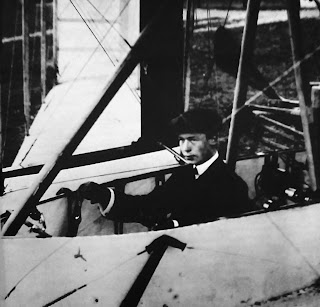
J. W. Dunne (1875-1949) was a pioneer researcher in this field. He was in every way a product of Britain in the Edwardian era. He was not a mystic, a shaman or an occultist. He was a soldier, an aeronautical engineer, a fly fisherman and a crack shot. He came out of the Anglo-Irish military caste. He designed and built the first British military aircraft, and his prototype was soon adopted and manufactured in the United States.  In all things, he was a determined scientist and rationalist who looked for the logic in life’s anomalies. 

What distinguished him from other members of his upper class military type was that he dreamed and remembered and recorded his dreams. He noticed something remarkable. The incidents he dreamed were often located in the future rather than the past. And their content often involved things he knew nothing about before the dreams.

The data that shifted Dunne’s conception of reality – first when he was a sub-lieutenant of the Imperial Yeomanry, fighting the Boers, then when he was convalescing in Italy, and many times later – were dreams in which he saw, with remarkable accuracy, events that lay in the future. Sometimes his dreams anticipated news of world events that he had not yet received. His dreams gave him “news flashes” of an earthquake in Madagascar and of troop movements in Sudan long before the newspapers arrived with printed reports of those events.

Dunne started keeping a detailed journal of his dreams, and found that he dreamed of the future – on average – as often as the past. This led him to realize that in dreams, time works differently than in our usual experience of waking life. He drew friends and family members into an ongoing “Experiment with Time” and collected a great deal of data on “time displacement” as observed in dreams. 

He extended his experiments into waking precognition – for example, by trying to guess what he would find in a book he would later pick up at random in his club. He quickly concluded that precognition can be achieved in waking states as well as in dreams, but requires “a steadying of attention” and practice in controlling the imagination that are not easily attained. 

He published his findings in 1927  in a book titled An Experiment with Time that had wide influence in the interval between the two world wars; it was read and eagerly discussed by many leading scientists, writers and politicians. An expanded and revised edition was published in 1934. This is the version I use, and return to frequently.

Dunne evolved a complex mathematical model he called Serialism in his effort to account for the fact that time does not move in a linear fashion in dreams – and perhaps in the larger universe. In his last book,  Intrusions?,  published posthumously, he makes the bold statement that his precognitive dreams were "caused by something which I was going to experience in waking life later on”.

This is a most interesting theory: that future events not only cast a shadow before them, but cause us to dream of them – and perhaps, in dreaming, to help bring a certain event track into our physical experience, out of an immense range of alternative possible futures.

In Intrusions?, he  provided further details of the precognitive dreams recounted in An Experiment with Time that he suppressed in the earlier book, apparently for fear of not sounding scientific and respectable. The strongest  dream "intrusions" containing glimpses of the future were often accompanied by inner voices, sometimes a tremendous chorus of voices crying "Look, look, look!" He describes this phenomenon as the "rousing of attention".

Dunne moved towards the understanding that our experience of  linear time  is an illusion of the limited ordinary mind. Viewed from the fourth dimension,  past, present and future are in fact simultaneous and only experienced sequentially because of our mental perception of them. In the dream state the mind is not shackled in this way and is able to perceive events in the past and future with equal facility. The dream self, as "Observer 2" may be able to view past, present and future at the same time. Beyond this 4D view, however, there may be larger perspectives, of an "Observer 3" who watches the watcher observing the actor, and then "observers" on successively higher levels of reality and consciousness. 

When he expounds his Serialist theory, Dunne becomes very hard to follow and he fails to take us into one of the most interesting aspects of this inquiry: the possibility that we are consciously choosing, usually unwittingly. between parallel timelines leading to alternate futures.  His great contribution is the example of his pragmatic, fact-based approach to gathering and appraising examples of precognition from everyday (and every night) experience. 
Dunne's experiment provided impressive evidence that precognition or prevision is quite normal in dreams. Many people are unaware of it because they don't remember their dreams or don't look for correspondences with later events in ordinary life. However, there is nothing weird or special about the "temporal freedom" of the dreaming self. Know it or not - like it or not - we may all be time travelers in our dreams.
As J.B.Priestley summed it up in Man and Time Dunne's experiment demonstrated that the ability to transcend time in dreams "is not a privilege enjoyed by a few very strange and special people. It is part of our common human lot. We are not - even though we might prefer to be - the slaves of chronological time. We are, in this respect, more elaborate, more powerful, perhaps nobler creatures than we have lately taken ourselves to be."

Keep a dream journal over time and watch for subsequent physical events that may resemble a dream and you will soon confirm the reality of dream precognition. You are now on track to do the really interesting stuff. If you can see the future, you may be able to change it for the better. If you can't see whether you are going, you are likely to end up where you are headed.

Make some time in your life to record the time travels of your dreaming self and you may find, with practice, that you can do more. You can enter the perspective of the witness self who can see a whole timeline. You may even, on a high rooftop of the mind, enter the vista of a higher observer who sees the forking paths of the multiverse and the weave of connections between different lives, across time and space, in a spacious Now.

Photo: The young J.W.Dunne, designer of Britain's first military aircraft, as a pilot.

Thursday, November 25, 2021

Where’s the rest of me?


Where’s the rest of me?

Part of me is weeping against an ash tree beside a field of hay
Part of me checked out of this body at age three
Part of me never left London
Part of me is on an island of no-pain where I never have to grow up
Part of me never stopped fighting battles that cannot be won
Part of never stopped winning battles that should not be fought
Part of me never left that marriage, or that early love
Part of me wears a lion robe lined with the night sky
Part of me remembers this as a fading dream
Part of me does not know he has more than one body
Part of me is teaching school in a dusty town in New South Wales
Part of me is painting with Kupka in a French garden
Part of me is an African witchdoctor dancing with spirits all night
Part of me is fighting the Magical Battle of Britain
Part of me is entertaining in a villa in the astral realm of Luna
Part of me is in the Cinema of Lost Dreams, lost in the movies
Part of me fights to leave my body whenever I suffer heartbreak
Part of me abandoned me when I gave up on a life dream
Part of me hanged himself from the World Tree but did not die
Part of me is swimming with manta rays in the South Pacific
Part of me is interrogating the ghosts of Egyptian sorcerers
Part of me keeps score by money and part of me flees from it
Part of me is the tiger and part of me is the sheep
Part of me stands at the center of all these selves
and reminds them of our family motto: Reviresco. I grow back
Part of me is weeping against an ash tree beside a field of hay


Art: "Alternate Lives" by Robert Moss

Thursday, May 27, 2021

Night Gardens of Forking Paths


I try not to rush to organize my dream memories as a linear narrative. I love stories with a beginning, a middle and an end. However, I am also aware that in dreaming we may shift from one scene - or one world - to another. Dreams may be nested inside each other, or playing on many screens at the same time. Dreaming, we can act and observe simultaneously in multiple realities on multiple tracks.

My dreams from the last cycle of sleep overnight remind me of Borges' story “the Garden of Forking Paths”. Riffing on the detective genre, Borges anticipates the Many Worlds hypothesis in physics with his account of a legendary unfinished Chinese novel whose plotline is quite different from most narratives. In fiction, as in ordinary life, a character typically comes to a point of decision, makes a choice, and then the paths not taken fade away. In Borges’ fiction within a fiction, all possible outcomes of an event are manifested simultaneously, opening different event tracks. The proliferation of possibilities is enacted again and again along each track. The constantly-diverging paths may converge again, as the result of new circumstances.

In the Borges story, the stakes include life or death and vital wartime intelligence. My brief report from a dream excursion last night involves small decisions without scary consequences. I find it entertaining as a dream introduction to the forking paths of the Many Worlds.

Four Tracks to Prague


I deliver a wildly popular lecture to a big crowd in a castle near Prague. In the forecourt afterwards, I notice there are hundreds of Czech coins on the ground. I bend down, pick up a 20 korun piece, and present it to a young woman. She is embarrassed, pointing out that the coins were left as an offering. I tell her she can  use the 20 crowns (about $1) to make an offering in support of something she wants to manifest in her own life.  There is a wonderful sense of abundance, service and simplicity.

After many hugs with people from the group, I am alone and need to find my way from the castle to a hotel near the city center.

I explore at least four options. Though they are laid out here as a sequence, I think I travel on all four tracks simultaneously in the spacious reality of dreaming.

1. I follow the crowd from my lecture. I see lots of people walking to the city center along railroad tracks. I walk parallel to them, across the tracks. Then

2. I am on a train. A laughing girl puts a hat on my head that isn’t mine as we come to a station. I retrieve my hat from an overhead rack. It is soft tweed like an Irish walking hat. Someone has removed the leather band. When I try it on, the hat is too small for me and the crown has changed shape. It now looks like the "topper" on a cartoon leprechaun. I forget the hat because now

3. I am walking down the hill from the castle to a pleasant shopping district. I meet an elegant lady in furs from Vienna. She is sampling several fine wines and may be a dealer. She tells me, "I am here for the wine". We discuss sharing a taxi. Before this happens

4. I manage to hail a cab in a different neighborhood Solo again, I wait for the driver to make room for my packages. The taxi morphs into an armored military vehicle bristling with weapons. The soldiers are friendly and soon we are speeding along the highway towards Prague.

Feelings:  Entertained. Glad to have some new material relevant to one of my favorite themes: living consciously in the multidimensional universe.

Reality check: I was scheduled to lead a retreat in northern Bohemia this week, before the pandemic forced me to put a hold on in-person workshops and international air travel. I have taught and traveled in the Czech Republic many times over the past decade. Transit issues involving the Czech Republic are not an exotic element in my dreams.

I have taught and traveled in Ireland, have some Irish ancestry and am not a stranger to leprechauns.

I like good wines but not as much as the lady from Vienna, known only to me in the dream.

I love trains, though I rarely ride them these days. I am alive to the symbolic resonance of a train (as in training) and a track (as in line to a certain destination) in dreams.

The switch to a military vehicle in #4 may reflect security concerns in relation to literal travel.

My dream travel agent, also no doubt my dream scriptwriter, gave me at least four ways of getting to my destination As I noted, I don't think options 1-4 are a linear sequence. They appear to be glimpses of events unfolding on four parallel tracks in alternate realities, between which the focus of my dominant personality shifts back and forth. I am arriving at the station, amid the funny business with the hat, at the same moment I am speeding along a highway towards Prague, in the armored car.

Maybe this isn’t so different from life anywhere – except that in ordinary reality we are often quite oblivious to the fact that we walk in many worlds.


Top Photo: View from Nové Město nad Metují by Robert Moss


Saturday, January 18, 2020

Paleopsych 101


1. Spirits are real.

2. We are not alone: we live in a multidimensional universe peopled with beings — spirits of nature, gods and daimons, angels and ancestors — who take a close interest in our affairs and influence our lives for good or ill.

3. We are more than our bodies and brains, which are only vehicles for soul.

4. The soul survives the death of the body.

5. Soul journeying is the key to the spiritual worlds and the knowledge of ultimate reality. The soul makes excursions outside the body in dreams and visions. The heart of spiritual practice is to learn to shift consciousness at will and travel beyond time and space. Through soul-flight, we return to worlds beyond the physical plane in which our lives have their source and are able to explore many dimensions of the Otherworld.

6. Souls are corporeal, though composed of much finer substance than the physical body.

7. People have more than one soul. In addition to the vital soul that sustains physical life — closely associated with the breath — there is a “free soul,” associated with the dreambody, which can travel outside the body and separates from it at physical death, as well as an enduring spirit whose home is on the higher planes.

8. Souls — or pieces of soul — can be lost or stolen. This is the principal cause of disease and misfortune.

9. Some people have more souls than others and have the ability to make excursions to different places at the same time.

10. At death, different vehicles of soul go to different lots. Through conscious dreaming, it is possible to explore the conditions of the afterlife to prepare for one’s death and to assist souls of the dying and departed.

11. We are born with counterparts in nature. For example, we are born with a totem animal and a relationship with natural forces (wind or water or lightning) that are part of our basic identity and help to pattern the natural flow of our energy.

12. We are born with counterparts in other places and times, and in other dimensions of reality. When we encounter them through interdimensional travel, they become allies and sometimes teachers.


Adapted from my book Dreamgates: Exploring the Worlds of Soul, Imagination and Life Beyond Death. Published by New World Library.

Art: detail from Henri Rousseau, "The Dream" (1910)