Showing posts with label dreaming the future. Show all posts

Friday, December 20, 2024

Active Imagination and Dream Reentry


By my observation, any image that belongs to us can be worked in the cause of healing and resolution and soul growing. I have seen wonders accomplished when a dreamer has resolved to confront an initially dark and terrible image and find the gift in the nightmare. The fiercest dragons guard the richest treasures, and to earn the support of greater powers we are required to brave up. I have also seen lives saved and visits to the ER avoided by getting back inside a dream, clarifying what is going on - and applying that information to avoid manifesting an unwanted future event that may be playing in the dream. This may require courage, and significant work.
     Jung said towards the end of his life that he did not want to spend time with patients who were unwilling to do the work of active imagination. His method of active imagination and my technique of dream reentry have much in common, including the recognition that “dreams are the facts from which we must proceed” and that the raw power of images coming directly and spontaneously to the perceiver must not be shackled to theory or rules of interpretation. Stay with the image, amplify it by tracking its parallels in mythology and folklore and other dreams, go back to the image and develop it through active imagination – these are three signature features of Jung’s approach to dreams, and I encourage active dreamers to practice all of them.  Amplification requires, as Jung insisted, a “wide culture”. Active Imagination, like dream reentry, may demand courage. I think of Robert A. Johnson, the author of Inner Work, a very readable introduction to Jung’s approach. He was terrified by a lion that appeared to him in his study. He knew the lion was a vision, but it was so real he could not bear to enter his normal place of work. After many efforts to reach an understanding with the lion through active imagination, he managed a deal in which the lion would appear as a statue like the ones in front of the New York Public Library, a statue holding a book.
     Our Active Dreaming approach goes to places that Active Imagination may fail to reach. By making a dream or another personal image the portal for a shamanic journey, often powered by drumming, we enter directly into the other worlds and other times where the dream action took place (and may have continuing to unfold after our attention moved elsewhere and we returned to our bodies wherever we parked them.).
     Active dreamers are more likely than most Jungians to seek clues to the future in dreams, to look at the possibility that a dream shows a future event literally or symbolically. He knew that we intuit the future – his own visions shortly before the Great War of a bloody floodtide drowning Europe left him no doubt about that -but he seems to have rarely asked whether a dream could play out in the future in everyday life despite his interest in “primitive” cultures and his familiarity with mountain peasants, for all of whom clues to the future, from a weather forecast to a death in the family,  were one of the main things to look for in dreams.
     Jung was a doctor who guided his patients through amplification and active imagination. I am a teacher who gives dreamers a process they can do by themselves or – if sociable – do with others, using a dream as a portal for an adventure in solo or mutual lucid dreaming.


Illustration: "Drumming for Dream Reentry" by Robert Moss

Sunday, June 16, 2024

When your dream soul goes flying


From the Teachings of Island Woman:

The memory of a dream is the memory of a journey. It may have been a short visit to a neighbor's place or a date with the lover you will meet three years from now. It may have been a journey to the spirits on the moon, or into a universe inside a stone that is as big as the universe out there.

When your dreamsoul goes flying, it visits the future and brings back memories of things that haven’t happened yet in the Shadow World. Sometimes you can stop those things from coming to pass. Sometimes you just have to live them out. Sometimes you can tame a future you don’t want by acting out a little piece of it, enough to contain the event that is trying to come through.
   Life is full of crossroads. Often you don’t even notice them until they are behind you, unless you know how to dream. Through dreaming, you can scout out the different trails you might follow and see where they lead. Through dreaming, you are already choosing the events that will take place in your waking life.

There is limitless power and beauty and healing available to us in the dreamworlds. To keep body and soul together in the surface world – and to live from the purposes of the soul – we need to bring that dream energy through. This requires action in the Shadow World.
    The first part of that action may be speech, but not the chatter of idle birds or village gossips. The speech required is an act that brings something new into a world. Dreaming gives us the songs and the magic words that can bring something up from a soupy ocean of possibilities to take root in the earth. That is why real men and women of power are poets, singers, storytellers, performers. With skeins of song and dancing needles of magic words, they reweave the fabric of reality.
   When we do this, we know that we are entertaining the spirits: our own vital spirits, the spirits of the ancestors, the great ones who reach to us from beyond space and time, the ancient and shining ones.

Nothing happens until it is dreamed. When we bring something good from the dreamworld into the surface world, we do the work of the Creator. We join in dancing a world into being, as Sky Woman danced on Turtle’s back.


-


"Island Woman" is the name I gave to an indigenous arendiwanen ("woman of power") who was born Huron and raised Mohawk some 300 years ago. She became Mother of the Wolf Clan of the Kanienkehaka, or Mohawk people, and a revered healer and dream shaman. She called me in lucid dreams in the late 1980s, after I moved to a farm on the edge of traditional Mohawk country and I had to study the Huron and Mohawk languages to understand and record her teachings. For her fuller teachings and my discoveries about her in historical records, see my book
Dreamways of the Iroquois

Drawing: "Island Woman" by Robert Moss

Thursday, July 14, 2022

Nine Ways Dreams Wake Us Up


Here’s an open secret about dreaming. It’s not fundamentally about sleeping. It’s really about waking up. Here’s how:


  1. We solve problems in our sleep 

If you want to solve a problem, or need a fresh perspective, sleep on it. Write down your intention (“I would like guidance on X”) before turning in, and be ready to record something whenever you wake up. Even if you have forgotten your dreams, you may find you have your solution.


  1. Dreams coach us for future challenges and opportunities.

We dream events before they take place; maybe nothing happens until it is dreamed. Dreams not only show us things that will come. They show us the possible future, giving us previews of future situations that may or may not play out, depending on whether we read the message correctly and take appropriate action.


  1. Dreams show us what our bodies need to stay well. 

We have a wise physician and healer available in our dreamtime every night. Our dream doctor can predict possible symptoms long before they develop, prescribe appropriate treatments, and give us images the body can believe in to make us well or keep us well. Our dream doctor makes house calls and doesn’t charge a cent!


  1. Dreams hold up a magic mirror to our actions and behavior 

Dreams give us an objective picture of our current actions and attitudes, and show us where they are likely to lead.


  1. Dreams are a secret laboratory.

Many of our greatest scientists, inventors and discoverers have been world-class dreamers. The list includes Isaac Newton, chemist Friedrich Kekule, inventor Elias Howe (who dreamed up the first practical sewing machine needle, giving us the modern garment industry) and quantum physicists Niels Bohr and Wolfgang Pauli, who said that dreams were his “secret laboratory.”


  1. Dreams are a creative studio 

To be creative is to bring something new into the world. Whatever our field of interest – from a dinner party menu to the next leap in nanotechnology – our dreams provide a creative studio where we try out new ideas and make connections that escape the everyday mind.


  1. Dreams help us mend our divided selves 

Our dreams put us in touch with many parts of ourselves, including shadow aspects we may have sought to repress or deny, and also that larger and wiser Self who can help us grow.


  1. Dreaming is a key to better relationships

Dreams can introduce our life partners. They can also put juice and depth into an existing relationship, or show us when it is time to cut our losses and move on. Sharing dreams in a family circle or among friends or workmates is a great way to build stronger connections, solve mutual problems – and have fabulous fun. Through dreams, we can also heal our relations with our departed, bringing a blessed sense of forgiveness, closure and continuing or reviving love.


  1. Dreams recall us to our larger purpose 

Australian Aborigines say that the Big stories are hunting the right people to tell them, like predators stalking in the bush. Dreams put us in touch with our bigger stories and our larger life purpose. When we can make a connection between life’s everyday dramas and a bigger story, we find courage and direction for whatever life throws at us.

-


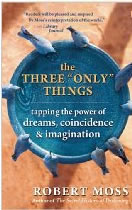
Adapted from The Three "Only" Things: Tapping the Power of Dreams, Coincidence and Imagination by Robert Moss. Published by New World Library.


"Dream Producers" journal drawing by RM


Friday, April 22, 2022

Meeting Your Dreams in Everyday life


Do you meet your dreams on the roads of everyday life?

There are dreams you would love to meet in ordinary life because they are full of joy and romance and creative fulfillment. You want the magic to spill over into the physical world, That may require some effort on your part, to bring a map from the dream and follow clues from that map to get you to the place of happy manifestation.

There are dreams you don't want to meet in everyday life because they are full of challenge or scary stuff or mere tedium. You need to confront what you don't like in the dream in the place where you encountered it and see whether you can change things inside the dream. If not, you need to bring enough information from the dream to clarify what it may portend - and the take the necessary action to avoid meeting that bad dream on your ordinary roads.
There are dreams about which your feelings are neutral. You're not sure whether you want to meet them in physical life or leave them as memories of experiences in another reality. near or far from where you are, waking. You don't need to hurry to do anything with these dreams. You just file the information in your memory bank - and your journal - and make yourself ready to encounter a corresponding event if the dream shows up on your life road.


Photo: "Rainbow Serpent on the Sidewalk" by Robert Moss

Thursday, December 30, 2021

Dreaming towards Epiphany


Whatever you do as the year turns, write in your journal! Write your dreams from the night, and your dreams of life for the coming year. Write, in particular, whatever you receive from dreams, synchronicity and spontaneous revelation over the last night of the Old Year and the first day of the New Year.
    If you were up all night partying - or the effect of your New Year's Eve reveling knocked your dreams out of memory - then record and work with the first dream that comes the following night, and whatever dreamlike symbols the world around you may give you.  
    In Japan they make a special effort to catch and work with the very first dream of the new year. Many Japanese people pay close attention to Hatsuyume, the first dream of the New Year. It may come in the night of December 31-January 1 but - since many may be up late partying or suffering the after-effects - it may come in the following day or on the night of January 1-2.     
     I would counsel you to stay alert for dreams for the New Year for a slightly longer period. In my mind the turning of the year rolls from December 30 until January 6, which is Epiphany in the Christian calendar, the day of “showing forth" when the Magi come to Bethlehem following their star, to honor the Christ child. Beyond the religious context, an epiphany may be a sudden revelation or perception of the reality or essential meaning of something important. It may be the gift of a dream.

   
In hopes of a lucky dream to kick off the New Year, some Japanese invoke the Shichifukujin or "Seven Lucky Gods" and may place a picture of them under the pillow. These may not be part of our belief system, but we have other sources of guidance and blessing available, and it is always appropriate to ask for help and blessing if we do it nicely!

 If you are ready to dream in the New Year, you could set the simple intention: 


Show me what the New Year will bring


Or give this a positive spin by couching your request to your dream makers the following way: 


Show me the best that life holds for me and those I love in the year ahead. 


Be as specific or as general as you like, but ask in a way that excites you and reflects your willingness to receive guidance and enter on new adventures.
     Don't forget that dreams require action! Your first action is to record anything you remember from your dreams and the drifty state of hypnagogia. Share it with a friend, if you can, using our Lightning Dreamwork process. Walk with your dream and see how what is going on around you may illuminate the dream and how your dream may illuminate your world.
    If you saw things in your dream you don't want to manifest in the year ahead, comb through the material with the eye of a detective, asking Who, What, When, Where, How? If you can clarify the details of the dream and identify where it may play out in coming events, you may be able to take appropriate action to avoid an event you don't want to live through in your physical life. You can also try to accomplish this by going back inside your dream, in a conscious reentry journey, to see whether you can change the script where it was playing. You may want to try writing the story of your dream so it comes to a happy ending. If those approaches feel artificial, however, that may be telling you that physical action is required to reshape the probable future for the better.
    If your first dream for the New Year is full of promise, then celebrate - but make it part of your celebration, once again, to take action to embody the energy and promise of the dream and to help it to take root in the world. Don't leave the old year without your journal, and don't enter the new year without your dreams. 
    May your New Year be filled with abounding joy, and may your best dreams come true!

Art: Sassetta, Journey of the Magi (1433-35)


Tuesday, May 25, 2021

When Dreams Are Memories of the Future


You have dreamed the future. You say you don't remember? Think again. Surely you've had the experience of déjà vu. The cat crosses the street in front of you, the tall guy steps into the restaurant, the light shimmers on the water or on your new lover's hair just so, and you know you have been in this scene before. I have yet to meet anyone who hasn't felt a tingle at a moment like this, a shiver that brings with it the knowledge that the world is deeper than we have been taught.

      What has this got to do with dreaming the future? Everything. In French, déjà vu literally means "already seen". The phrase begs the question of how we can possibly have "already seen" something we have not set eyes on before. In most cases, what is going on when we experience déjà vu is this: an event we once dreamed is now manifesting in waking life. We may have forgotten the dream, but now that it is playing out in the physical world, we remember something. If we wanted to describe the phenomenon more accurately, still borrowing from French, we would call it  déjà rêvé, "already dreamed".

     What comes back to us, in déjà vu, is a memory of the future. We traveled ahead of ourselves, in a dream, and forgot the trip until we found ourselves back in the same place.

     The sporadic experience of déjà vu is just our entry point here, just a way to establish that we are talking about something that is common, if not universal, human experience. To get better at remembering the future, we need to become active dreamers. In dreams, we are time travelers. Released from the laws of Newtonian physics and the consensual hallucinations we harbor in our everyday brains, the dream self travels into past time, future time, and alternate realities.

     I have the impression that every night, my dream self is traveling ahead of me on my possible roads into the future, scouting the ways. He brings me memories of the future, the way you or I might bring back postcards and souvenirs from a trip abroad. Part of my daily practice is to scan every detail that I remember from my dreams with this in mind, asking: is it remotely possible that any of this could happen in the future, literally or symbolically?

     Memorias do futuro. Memories of the future. I once saw that sign on a bar in a dusty town in the northeast of Brazil. If we truly have memories of the future, does that mean that the future already exists?

     Yes and no. Any  future we can foresee is a possible - not inevitable - future. When we wake up to the fact that we have access to memories of the future, especially in dreams, we can start drawing on this data bank to change things for the better. We are not condemned to stay on a particular event track unless we have totally forgotten where it leads, and refuse to consider switching to a different line. We can use souvenirs of the future, delivered in dreams, to avert an unwanted future event, or to bring a happy future event into manifestation.

     To do these things, we need to grow our understanding and our practice. For simplicity, we can distinguish several modes of knowing the future: 

Precognition

Through precognition, we see events and circumstances ahead of time, as they will be played out. A precognitive dream may be literal, or symbolic or both. For example, a dream of a twister might turn out to be both a preview of a literal disaster and advance notice of an emotional storm that will hit with the force of a tornado. Once you have confirmed your ability to see - or rather remember - the future in this way, you are ready to do much more interesting things.

Early Warnings

In dreams and intuitive flashes, and through the play of coincidence, we may receive an early warnings of a possible future development we may not want - a crisis at work, the bust-up of a relationship, a health problem, a car accident.

If we read the clues correctly, we can use such early warnings to avoid a possible future problem by taking preemptive action. 

Opportunity Calls

Our dream self returns from his night excursions with tips about coming opportunities. These tips require action if we are going to manifest a future we'll enjoy.You remember a dream in you are in your ideal home, or doing the work that nourishes your soul and your bank account, or you are with your soulmate, who is someone you have not yet met in the regular world. You need to take physical action to get yourself, in your physical body, to where your dream self has already been. 

Choosing Alternate Event Tracks

Dreaming, we discover and inhabit the true nature of time, as it has always been known to dream travelers and is now confirmed by modern science. Linear time, as measured by clocks, and experienced in plodding sequences of one thing following another, always heading in the same direction, is an illusion of limited human awareness, at best (as Einstein said) a convenience. In dreaming, as in heightened states of consciousness, we step into a more spacious time, and we can move forwards or backwards at varying speeds.We not only travel to past and future; we travel between alternate timelines. With growing awareness, we can develop greater and greater ability to choose the event track - maybe one of infinite alternative possible event tracks - that will be followed through a certain life passage, or even the larger history of our world.

This may be a case of the observer effect operating on a human scale. It is well understood that at quantum levels, deep within subatomic space, the act of observation plucks a specific phenomenon out of a mass of possibilities. It may be that, when our dream selves observe something of the future, we select a certain event track that will begin to be manifested in the physical world. By a fresh act of observation, through active dreaming, we can then proceed to alter that event track, or switch to an entirely different one.


For much more on this subject see chapter 6 of Conscious Dreaming and my book Dreaming True


Illustration: RM+AI

Saturday, September 12, 2020

Mark Twain's terrible memories of the future


Great humor often sparkles on the surface of a dark tide of challenge or tragedy. Mark Twain, still America's most beloved humorist, was stricken by many terrible events in his life and that of his family - the loss of a beloved brother and later his favorite daughter, the loss of all his money late in life, forcing him to start over - yet generally managed to come back laughing, and making the rest of us laugh.
    His ability to laugh his way through did not mean numbing himself to tragedy. Sam Clemens (who adopted the pen name Mark Twain) dreamed the death of his younger brother Henry before it took place, in exact detail, and this haunted him for the rest of his life..
     Sam and Henry were set to embark together on the riverboat Pennsylvania, Sam as apprentice pilot, Henry as a  lowly “mud clerk”, given food and sleeping space in return for helping out at places on the river where there were no proper landing sites. The night before they sailed, Sam dreamed  he saw Henry as a corpse, laid out in a metal casket, dressed in one of his older brother’s suits, with a huge bouquet of white roses on his chest and a single red rose at the center.
     Sam woke grief-stricken, convinced this had actually happened and that Henry was laid out in the next room. He could not collect himself, or convince himself that the dream was not “real” until he had walked around outside. He had walked a whole block, he recalled, “before it suddenly flashed on me that there was nothing real about this – it was only a dream.”
     Family members urged him to dismiss his terrible dream; after all, it was “only a dream”. Though the force of his feelings told him something else, Sam agreed to try to put the dream out of his mind.
     The tragedy began to unfold soon after the two young men boarded the Pennsylvania. The pilot of the Pennsylvania, William Brown, was an autocrat with a violent temper with whom Sam was soon scrapping. During the voyage downriver, Sam got into a full-blown fight with him. The captain sided with Sam, and said they would find a new pilot when they got to New Orleans. But a new pilot could not be found and since Sam and Brown could not coexist on the same boat, Sam was transferred to another vessel, leaving Henry on the Pennsylvania, which started the upriver journey fist. Just before they parted company, Sam and Henry discussed how they would act in the event of a riverboat disaster such as a boiler explosion, which was a common occurrence.
      The Pennsylvania’s boiler exploded in a hell of steam and fire, in the way they had discussed.  Badly burned, Henry survived for a few days, to die in Memphis, where the injured were carried. His handsome face was untouched, and the kindly lady volunteers were so moved by his beauty and innocence that they gave him the best casket, a metal box.
     When Sam entered the “dead-room” of the Memphis Exchange on June 21, 1858, he was horrified to see the enactment of his dream: his dead brother laid out in a metal casket in a borrowed suit. Only one element was missing: the floral bouquet. As Sam watched and mourned, a lady came in with a bouquet of white roses with a single red one at the center and laid it on Henry’s chest.
    Mark Twain kept telling and retelling the circumstances of Henry’s death, in his mind and in his writing, for the rest of his life. He was one of the first to join the Society for Psychical Research after it was founded in London in 1882 in the hope that its investigators could help him understand the workings of dream precognition. He could never escape the thought that – had he only known how to use the information from his dream – he might have been able to prevent Henry’s death.

When I described this episode in a lecture, someone asked, "What's the use of dreaming the future if you can't do anything about it?"       
    My response: any future we can foresee, whether in dreams or though intuition or careful analysis, is a possible future. We may be able to change the odds on the manifestation of a future event, reducing the likelihood that something unwanted will happen, or improving our chances of securing a happy outcome.
     Our ability to dream the future is part of our basic survival kit, part of what kept us alive when we were little more than naked apes without good weapons, trying to fend off leathery raptors or saber-toothed tigers. In our Active Dreaming approach, we use these key methods to work with dreams of the future in order to make better choices and shape the future for the better:

1. Run a reality check on all dream material
Ask, of any and all dream material: Is it remotely possible that something going on in this dream could manifest in the future, literally or symbolically (or both)?

2. Practice dream reentry to clarify and expand the available information
If you can get your head back inside the dream, you may be able to get clarity on the when, where, how and who of a possible future event. If you think of a dream as a place you have been, it's not too hard to understand that because you have been to that place, you might be able to go there again. When you succeed in reentering a dream space, you are not confined to your first memories of the dream on waking, which may have been muddled and fragmentary. You can enter other, related scenes and bring back much more data.

3. Make a practical action plan to use your dream guidance
If you now feel sure that your dream revealed a possible future, you want to  to take definite and appropriate action to head off an undesirable future event, or to bring through possible good fortune. The action plan may range from getting a health checkup to being extra cautious at a certain road intersection, to checking up on your financial planner, to sharing dream information with another person to whom it may relate.
    Some cultures teach rituals for containing or taming an unwanted future. I am intrigued by an apotropaic ritual in traditional Iroquoian society, which consisted of play-acting parts of an evil future, foreseen in a dream, in the hope that the partial fulfillment of the dream in the performance would satisfy whatever was at work in the secret order of events, so that the full evil portended by the dream would no longer have to be play out. I have written about this in Dreamways of the Iroquois. Bizarre though it may sound, I have seen this method work.

Back to Mark Twain, and his terrible dream of Henry laid out in a casket, with the bouquet of roses on his chest. Could the methods described above have enabled Sam Clemens to help his brother to escape the "dead room" in Memphis? Of course, we cannot know. But I feel quite certain that Mark Twain would have been willing to give the Active Dreaming methods summarized above a better-than-college try, had he known about them. 
    Had he not allowed his family to talk him into dismissing his dream as "only a dream", careful analysis might have drawn him to think about possible scenarios for death along the river, of which the most likely for someone working on a riverboat, in those days, was a boiler explosion of the kind that caused Henry's death.
    Through dream reentry, Mark Twain might have been able to establish how the death scene came about, and might then have been able to take action by counseling his brother not to travel, separated from him, on the return voyage upriver with the rage-filled pilot.
     Mark Twain paid close attention to dreams and coincidence throughout his life and was keenly interested in improving his practice. In my Secret History of Dreaming, I describe how he returned, in his later fiction, to his regrets that he had not gone ahead and staged a kind of dream theater at home to help his beloved daughter Suzy lift the oppression of dreams in which she was being pursued and eaten by bears, dreams that may have portended her tragic death from illness but could also have been the key to healing had they been fully heard and acted upon.


For more on Mark Twain's dreams and his study of coincidence and what he called "mental telegraphy," please read the chapter titled "Mark Twain's Rhyming Life" in my Secret History of Dreaming, published by New World Library.


Image: Steamboat explosion (in this case the SS Sultana) on the Mississippi River, from Harper's Weekly (1865)


Saturday, September 29, 2018

An Egyptologist aces his exam by dreaming it ahead of time


A common dream theme is of having to take a test for which you are unprepared. If you have no literal exam ahead of you, these dreams may be regarded as symbolic of a test that life is putting to you. However, if you are facing a literal exam, such dreams can be very helpful rehearsals when taken quite literally and used to guide last-minute preparation.

When I spoke at the Bermuda Rotary some years back, I confessed that one of the reasons I did very well at exams in my last years of high school was that I sometimes dreamed exam questions ahead of time, which clued me in to how I should approach my last-minute prep. 

The Bermuda Rotary is an interesting institution; the British Governor and his lady were present for my luncheon talk, along with yachtsmen, financial moguls and past and present members of the island government. An elegant black Bermudan lady, until recently the island Minister of Education, stood up at the end of my remarks and declared, "I want to endorse the statement by Mister Moss that we can dream examination questions ahead of time. This helped me greatly when I was in school. I recommend that anyone who knows a student should pass this advice along."

I discovered a fascinating and detailed account of how dreaming exam questions ahead of time aided the career of a famous scholar, E.A.Wallis Budge, who produced many important works on ancient Egypt, including a famous edition of the Egyptian Book of the Dead, during his long tenure at the British Museum. His career might never have gotten off the ground had he not dreamed, in exact detail, what would happen in a locked room where he would be presented with green examination papers containing certain Assyrian texts for translation. 

Budge recounted the episode to his friend H. Rider Haggard, the famous author of King Solomon's Mines and She, and Haggard retold it in his autobiography. I'll let Haggard (no mean raconteur, who fired my imagination with his adventure tales when I was a boy) tell the story: 

"When he was at Cambridge Dr. Peile of Christ's offered [Budge] an exhibition if he would be examined in Assyrian, and as Budge's funds were exiguous he was very anxious to get the exhibition. An examiner, Professor Sayce of Oxford, was found to set the papers--four in all-- and the days for the examination were fixed. 

"The night before the day of the examination Budge dreamed a dream in which he saw himself seated in a room that he had never seen before--a room rather like a shed with a skylight in it. The tutor came in with a long envelope in his hand, and took from it a batch of green papers, and gave one of these to Budge for him to work at that morning. The tutor locked him in and left him. When he looked at the paper he saw it contained questions and extracts from bilingual Assyrian and Akkadian texts for translation. The questions he could answer, but he could not translate the texts, though he knew them by sight, and his emotions were so great that he woke up in a fright. At length he fell asleep, but the dream repeated itself twice, and he woke up in a greater fright than before. 

"He then got up--it was about 2 A.M.--went downstairs to his room, lighted a fire, and, finding the texts in the second volume of Rawlinson's great work, found the four texts and worked at them till breakfast-time, when he was able to make passable renderings of them.

"He went to College at nine, and was informed that there was no room in the Hall, it being filled by a classical examination, and that he must go into a side room near the kitchens. His tutor led him to the room, which was the duplicate, skylight and all, of the one he had seen in his dream. The tutor took from his breast pocket a long envelope, and from it drew out several sheets of green paper similar to that of the dream, and gave Budge the examination paper for that morning, saying that it was green because Sayce, on account of delicate eyesight, was obliged to use green paper when writing cuneiform. The tutor then turned, said he would come back at twelve, and, going out, locked the door behind him as Budge saw him do in the dream. 

"When he sat down at the table and looked at the paper he saw written on it the questions and four pieces of text for translation, and the texts were line for line those which he had seen in his dream. Surprise at his good fortune prevented him from writing steadily, but at length he got to work and had finished the paper before the tutor appeared and unlocked the door at noon. The three other papers were easier, and Budge got the exhibition--for him a very vital matter.

"I asked Budge if he could explain the matter, or account for it in any way, and he said,'"No. My mother and maternal grandmother both had dreams of this sort from time to time when they were in any kind of difficulty, and in their dreams they were either shown what to do or were in some way helped. Being very pious folk, they regarded these dreams as the work of Divine Providence, who wished for some reason to help them out of trouble or difficulty. For myself, I could never imagine Providence troubling about any examination, but I was quite overcome for a time with astonishment at my good luck.'"

 [source: H.Rider Haggard, The Days of My Life: An Autobiography]

photo: Budge in his office at the British Museum


Wednesday, May 9, 2018

Dreaming your exam questions ahead of time

Have you dreamed of having to take an exam for which you are not prepared? If so, you are not alone! This is one of the most common dream themes. When it comes up in my own dreams, or in dreams people share with me, I am always reminded that we are in the school of life, and are set many tests. I also look closely at the details of a dream to see of there is guidance to handle a specific test that is coming up.
     If you are literally in school, at any level, you don't want to miss the possibility that your dreams are coaching you for coming tests in quite literal and specific ways. I did very well in history exams in my last year in high school because I dreamed some of the essay topics that would be set ahead of time and was able to adjust my last-minute preparation accordingly.
     I mentioned this when I gave a luncheon talk at the Bermuda Rotary some years ago. The British Governor and his lady were present for my talk, along with yachtsmen, financial moguls and past and present members of the island government. An elegant black Bermudan lady, until recently the island Minister of Education, stood up at the end of my remarks and declared, "I want to endorse the statement by Mister Moss that we can dream examination questions ahead of time. This helped me greatly when I was in school. I recommend that anyone who knows a student should pass this advice along." 
     I came across a fascinating and detailed account of how dreaming exam questions ahead of time aided the career of a famous scholar, E.A.Wallis Budge, who produced many important works on ancient Egypt, including a well-known edition of the Egyptian Book of the Dead, during his long tenure at the British Museum. His career might never have gotten off the ground had he not dreamed, in exact detail, what would happen in a locked room where he would be presented with green examination papers containing certain Assyrian texts for translation. Budge recounted the episode to his friend H. Rider Haggard, the famous author of King Solomon's Mines and She, and Haggard retold it in his autobiography. I'll let Haggard (no mean raconteur, who fired my imagination with his adventure tales when I was a boy) tell the story: 

"When he was at Cambridge Dr. Peile of Christ's offered [Budge] an exhibition if he would be examined in Assyrian, and as Budge's funds were exiguous he was very anxious to get the exhibition. An examiner, Professor Sayce of Oxford, was found to set the papers--four in all-- and the days for the examination were fixed.  
    "The night before the day of the examination Budge dreamed a dream in which he saw himself seated in a room that he had never seen before--a room rather like a shed with a skylight in it. The tutor came in with a long envelope in his hand, and took from it a batch of green papers, and gave one of these to Budge for him to work at that morning. The tutor locked him in and left him. When he looked at the paper he saw it contained questions and extracts from bilingual Assyrian and Akkadian texts for translation. The questions he could answer, but he could not translate the texts, though he knew them by sight, and his emotions were so great that he woke up in a fright. At length he fell asleep, but the dream repeated itself twice, and he woke up in a greater fright than before.  
    "He then got up--it was about 2 A.M.--went downstairs to his room, lighted a fire, and, finding the texts in the second volume of Rawlinson's great work, found the four texts and worked at them till breakfast-time, when he was able to make passable renderings of them. 
    "He went to College at nine, and was informed that there was no room in the Hall, it being filled by a classical examination, and that he must go into a side room near the kitchens. His tutor led him to the room, which was the duplicate, skylight and all, of the one he had seen in his dream. The tutor took from his breast pocket a long envelope, and from it drew out several sheets of green paper similar to that of the dream, and gave Budge the examination paper for that morning, saying that it was green because Sayce, on account of delicate eyesight, was obliged to use green paper when writing cuneiform. The tutor then turned, said he would come back at twelve, and, going out, locked the door behind him as Budge saw him do in the dream.  
     "When he sat down at the table and looked at the paper he saw written on it the questions and four pieces of text for translation, and the texts were line for line those which he had seen in his dream. Surprise at his good fortune prevented him from writing steadily, but at length he got to work and had finished the paper before the tutor appeared and unlocked the door at noon. The three other papers were easier, and Budge got the exhibition--for him a very vital matter."

Rider Haggard asked Budge if he could explain how a dream prepared him in such a specific way for the unusual conditions of his exam in Assyriology. Budge replied, '"No. My mother and maternal grandmother both had dreams of this sort from time to time when they were in any kind of difficulty, and in their dreams they were either shown what to do or were in some way helped. Being very pious folk, they regarded these dreams as the work of Divine Providence, who wished for some reason to help them out of trouble or difficulty. For myself, I could never imagine Providence troubling about any examination, but I was quite overcome for a time with astonishment at my good luck.'"

My own explanation is that in dreams, part of our consciousness - indigenous cultures call it the dream soul - is forever scouting ahead of us, preparing us for situations that lie ahead.

Source: H.Rider Haggard, The Days of My Life: An Autobiography (written in 1910-12, published posthumously, following his instructions, in 1926)


Wednesday, September 13, 2017

We dream the future, all the time


Our dreams are constantly coaching us for challenges and opportunities that lie ahead of us on the roads of life. It’s possible that we rehearse everything that will take place in the future in our dreams, though we forget most of it. Across human evolution, dreaming has been a vital survival mechanism. In the days when we were naked apes without good weapons, our dream radar – our ability to scout across both space and time – often enabled us to avoid becoming breakfast for saber-toothed tigers or leathery raptors.
     A recent theory posits that dreaming prepares us for challenges by putting us through frequent workouts in threat simulation, helping us to develop the reflexes and responses that will get us through. Our relationship with the future in dreams is much deeper and more important than this. In dreaming, we have access to the matrix in which the events and circumstances that will manifest in our physical lives have their origins. We can not only see future events; we can choose – to varying degrees, and according to our level of consciousness – which among many possible future events will manifest.
     It’s my impression that we are dreaming the future all the time. If you adopt the practice of recording your dreams and comparing the dream data with subsequent events, it won’t take long for you to notice some match-ups. The incidents you preview in your dreams may be trivial or terrifying, blah or wonderful. They may be events in your own life, or events in the future history of the world.
         In our dreams, we have several kinds of engagement with the future.  

Precognitive Dreams

Through precognition, we see events and circumstances ahead of time, as they will be played out. A precognitive dream may be literal, or symbolic or both. For example, a dream of a tsunami might turn out to be both a preview of a literal disaster and advance notice of an emotional storm that will hit with the force of a tsunami. We may not understand what we have seen in a precognitive dream until a physical event catches up with that dream. It may also be difficult for us to understand what we have seen because we are looking at things from a certain angle, perhaps the perspective of a different person. But with practice, we can learn to recognize markers that a dream relates to future events, and we can then move to clarify and use the dream information.
      Such practice becomes very interesting when our dreams show us possible future events that can be changed for the better.

Early Warning Dreams 

Dreams may contain early warnings of a possible future development we may not want – a crisis at work, the bust-up of a relationship, a health problem, a car accident. We may not want to focus on any of these unpleasant possibilities. But if we are willing to study what an early warning dream is telling us, we will often find that it is giving us vital information that can help us avoid a possible future problem if we take appropriate action.
     Sometimes we dream the future for the benefit of another person, even a great cause. What will then happen depends whether we can find an effective way to get the dream information to the person who can best act upon it.

Early Opportunity Dreams 

Early opportunity dreams may also require action if we are going to manifest a future we’ll enjoy. You dream you are in your ideal home, or doing the work that nourishes your soul and your bank account, or you are with your soulmate, who is someone you have not yet met in the regular world. These dreams may be inspiring and encouraging, but you won’t want to leave them floating away from your physical life like helium balloons that have lost their strings. You’ll want to figure out what practical action you can take to move decisively in the direction of that happy dream.

Choosing Alternate Event Tracks

Any future we can see (in dreams or through wakeful intuition) is a possible future. We can influence the odds on the manifestation of a specific future event. While it may seem impossible for an individual to change certain future events perceived in dreams – like a natural disaster or death at an advanced age – it may still be possible to work with the dream information in a useful way: for example, to alert friends not to go on vacation in the place where the dreamed hurricane will hit, or to help someone whose death is near, and the family, to meet that situation with grace and closure.
     We not only travel to past and future; we travel between alternate timelines. With growing awareness, we can develop greater and greater ability to choose the event track – maybe one of infinite alternative possible event tracks – that will be followed through a certain life passage, or even the larger history of our world. This may be a case of the observer effect operating on a human scale. It is well understood that at quantum levels, deep within subatomic space, the act of observation causes plucks a specific phenomenon out of a bubbling cauldron of possibilities. It may be that, in the cauldron of our dreaming: through the act of observation, we select a certain event track that will begin to be manifested in the physical world. By a fresh act of observation, or re-visioning, we can then proceed to alter that event track, or switch to an entirely different one.

Practical advice on dreaming the future

1. Record your dreams. Date them and give them titles. Note your feelings right after each dream.
2. Ask, of any dream: Is it remotely possible that some part of this dream could manifest in the future, literally or metaphorically?
3. Learn to reenter your dreams to clarify information.
4. Come up with an action plan.  If you don't like the possible future event you have dreamed, create an action plan to avoid it or contain it, or at least be fully prepared. If you do like a possible future you have dreamed, come up with an action plan to make it more likely that it will manifest.
5. Note when a later event seems to fulfill a dream. Try to identify personal markers that are telling you that a dream is about the future.

Adapted from The Three “Only” Things: Tapping the Power of Dreams, Coincidence and Imagination by Robert Moss. Published by New World Library.