Showing posts with label Inanna. Show all posts

Tuesday, September 10, 2024

The Ur-Ground of Literature


 The raw sexuality of her call to her lover is wild and shocking: “Plow my vulva!” He plunges into her like a “wild bull”. When they couple, he is the green life of all growing things and she is the Queen of Heaven. He is Dumuzi and she is Inanna.

     But she is called to go down into the dark places, and travels a terrifying path of ordeal and initiation. When she returns, transformed, to the surface world, she finds that her man has forgotten her, playing king of all he surveys. Her angry curse sucks the light out of his day. Now Dumuzi dreams that everything turns against him. Trees are uprooted, his hearth fire is doused, his drinking cup is thrown down, his shepherd’s crook is taken away. A fierce raptor seizes a lamb from his sheepfold, and he knows that something fearsome and unforgiving is coming for him.
     Death is coming for him, and his only hope lies in the love and feminine wisdom of his younger sister, Geshtin-anna. She is a reader, “a tablet-knowing scribe”, who knows the meaning of words and of dreams.
    She helps him to hide, but in the end he cannot escape his own demons. He is overpowered by galla demons and carried down to the realm of Inanna’s dark double, the Queen of the Underworld, into his own cycle of death and rebirth.. Grieving, both Inanna and his constant sister will seek him in the lower world, using drumming, like shamans. And they will make a deal by which Geshtin-anna will take her brother’s place in the Underworld for half the year, giving him time up top with the goddess in her sunnier disposition. But that is a later story in the cycle of Inanna.
    The Dream of Dumuzi is the oldest recorded dream. It was written in Sumer nearly five thousand years ago, scored with marks on baked clay that look like the tracks of a very thoughtful sandpiper. Almost certainly, it was written by a woman. We can’t miss the fact that the first dream interpreter on record is a woman who can read and write, the “tablet-knowing scribe.”
    Geshtin-anna becomes the goddess of dream divination (and of wine).

The Dream of Dumuzi, unclothed in its beauty and terror in a modern translation by Diane Wolkstein, is great writing, and takes us where great writers do not fear to go: into the inner chambers of the heart, into the demon-haunted mind, into the mysteries of death and rebirth. Thanks to its survival, we can say without hesitation that one of the first uses of writing – which was invented in Sumer – was to record dreams, and that one of the great things to emerge from recording dreams, at least five thousand years ago, was literature. Writers have always been dreamers. [1]        


Dumuzi was king of Uruk, not far from Ur, the most famous city of the Sumerians and the one from which Abraham set out to found a new people. So Bert States is doubly correct when he says “dreaming is the Ur-form of all fiction.” [2]
    States suggests that storytelling springs from the same “skill” that allows us to produce dream narrativesand compares the mental state of the creative writer to that of a lucid dreamer: “Just as the lucid dreamer is slightly awake, slightly outside the dream, while being largely inside it, so the waking author is slightly asleep, or slightly inside the fiction while being largely outside it.” [3] Many fiction writers (including me) would attest to the accuracy of this description. It probably applies to creative minds from many fields operating in a flow state of relaxed attention or attentive relaxation. In this state, as Samuel Beckett wrote of Proust, the writer may also be, for the moment, “an extratemporal being” [4] 
    Dreams provided both energy and inspiration for literary creation. As a boy, Aeschylus (born 525 BCE) was sent to watch over ripening grapes in a vineyard. When he dozed off, Dionysus, god of wine and drama, appeared to him and gave him instructions for a new kind of theatre. Prior to this, ancient Greek drama was rather static ritual, with a single actor on stage, and a chorus that did not interact directly with him. Aeschylus was inspired in his dream to introduce a second actor; this was the birth of Western theatre. He went on to write ninety plays, although only seven are extant.

“Poetry is always the result of flooding”, a young poet told Stefania Pandolfo as she journeyed among rural Moroccan villagers for whom dreaming and poetry are vitally important, and always interweaving. A real poem bursts from an emotion that is inundating, overwhelming – until it finds creative release. [5] 
   The most respected poet in the area, one Sheikh Mohammed, was alien to poetry until he dreamed of a flood. The dream came at a time of personal trauma when he was close to despair. Previously a violent man of action, he had managed to blow off his right hand in a gun accident. He dreamed the river was coming down in flood, its front like a mountain, carrying everything it encountered in its path, trees and carrion and debris. Instead of fleeing, he stood there in the dry riverbed, watching and waiting. Then he opened his mouth and swallowed the flood and everything borne along by it. He recounted the dream to his mother and she told him that he had become a poet. This became his life’s calling.[6]
     From the priestess-scribe who wrote Dumuzi’s story to the latest novels by Stephen King and Neil Gaiman, dreams have provided wonderful material for stories and novels, scripts and poems. The dream may provide the rough first sketch of a theme or a plot or a character, with everything still to be worked out and delivered – perhaps with the help of subsequent dreams – over a considerable period of time. The dream may have the structure and detail required for a finished story or poem (but is unlikely to be “finished” in the sense that it will be truly good writing until the raw report has been shaped and polished). The dream may be inserted in a narrative and attributed to one of the characters as Graham Greene did for Querry in A Burnt-Out Case). The dream may be delivered as a story without a frame, as Franz Kafka delivered a nightmare in Metamorphosis while insisting, in the tale, that the man turned into a giant bug was not dreaming.
   The literary dream has been used as a plot device in many ways. It may be used to take the reader into the inner life of a character. It may be used to set up critical narrative tension, for example between a character’s desires and his conscience, a central theme in Dostoyevsky’s use of dreams.
    The dream can be used as an architectural device, to open and frame a story that may be anything but a dream; the medieval Roman de la Rose is a classical example, from an age when dreams were greatly respected. In the classic Chinese novel The Dream of the Red Chamber novel opens with a goddess creating a mountain from 36,501 pieces of stone, one of which - rejected - is a speaking rock whose complaint is heard by two immortals and is gifted with a very mobile life, in different forms, in the mortal world – known to gods and immortals as the Red Dust - and elsewhere.[7]

     Writing and dreaming are closely related in daily practice. Writers who keep journals and record their dreams are giving themselves a warm-up, flexing the creative muscles that will work on the larger project. Writers who may not record their dreams with any regularity nonetheless rise from sleep with their heads full of words – as Dickens related in his letter to Dr. Stone – that are pressing to come out. [8]
A writer’s dream may help to “break up the great fountains of the deep” (a phrase Mark Twain used repeatedly) releasing the power of long-buried memories, or bringing through ideas that have been growing in the preconscious or the deeper unconscious for years or decade. That is how Aslan came to C.S. Lewis, giving him the key to Narnia. As “Jack” Lewis recalled 

The Lion all began with a picture of a Faun carrying an umbrella and parcels in a snowy wood. The picture had been in my head since I was about sixteen. Then one day, when I was about forty, I said to myself: ‘Let’s try to make a story about it.’
    At first I had little idea how the story would go. But then suddenly Aslan came bounding into it. I think I had been having a good many dreams about lions about that time. Apart from that, I don't know where the Lion came from or why he came. But once he was there He pulled the whole story together, and soon he pulled the six other Narnian stories in after him. [9]] 

     Finally, it is in dreams and flow states that writers come into contact with inner helpers. Robert Louis Stevenson communed with his “Brownies” in states of reverie, and gave them the credit for doing better than half his literary work. Yeats spoke of the “mingling of minds” that can bring assistance, in a creative venture, from intelligences that seem to belong to other times or other dimensions. Milton described the source of his inspiration as   

....my celestial patroness, who deigns
Her nightly visitation unimplored,
And dictates to me slumbering, or inspires
Easy my unpremeditated prose [] 

Milton spoke of “being milked” after his nights of inspiration, as – totally blind by the time he composed his most famous work – he dictated to a scribe.


Notes and References

 1. This translation of the Dream of Dumuzi is in Wolkstein, Diane and Samuel Noah Kramer, Inanna, Queen of Heaven: Her Stories and Hymns from SumerNew York: Harper & Row, 1983, pp 74-84.     Dumuzi (later called Tammuz) is a Mystery god who dies and is reborn, and the cycle of his ever-recurring death and resurrection is also the cycle of the crops in what is now southern Iraq. He dies in the spring at the time Iraqi farmers, in their hot country, harvest their wheat and barley; he is resurrected when they put seeds in the earth. In the Christian calendar, this is Easter time. The Shia ritual mourning for the martyred Imam Hussein at the site of the battle of Karbala – a rite Saddam tried to suppress – takes place at the same time. Life rhymes, and so do the life cycles of gods. See  E.W.Fernea, Guests of the Sheikh. Garden City, NY: Doubleday, 1969.

2. Bert O. States, Dreaming and Storytelling. IthacaNYCornell University Press, 1993.1993, p.3. 

3.  Bert O. States, Bert O., “Authorship in Dreams and Fictions” in Dreaming vol.4 no.4 (December, 1994) pp. 239-240

4. Samuel Beckett, Proust. New York: Grove, 1931, p. 56)

5.Stefania Pandolfo,  Impasse of the Angels: Scenes from a Moroccan Space of Memory. ChicagoUniversity of Chicago Press, 1997, p.259]

6. ibid p. 265

7. Tsao Hsueh-chin, Dream of the Red Chamber (1754). Trans. and adapted by Chichen Wang. New York: Anchor Books, 1989.

8. Charles Dickens letter to Dr Stone. February 2, 1851; see Warrington Winters, “Dickens and the Psychology of Dreams” in PMLA vol.63 no.3 (September 1948) pp. 984-1006.

9. Lewis, C.S., “It All Began with a Picture”, Junior Radio Times, vol. 68 (July 15, 1960) reprinted in Of Other Worlds. San Diego and New York: Harcourt Brace, 1975, p. 42.

10. Paradise Lost IX. 21-4


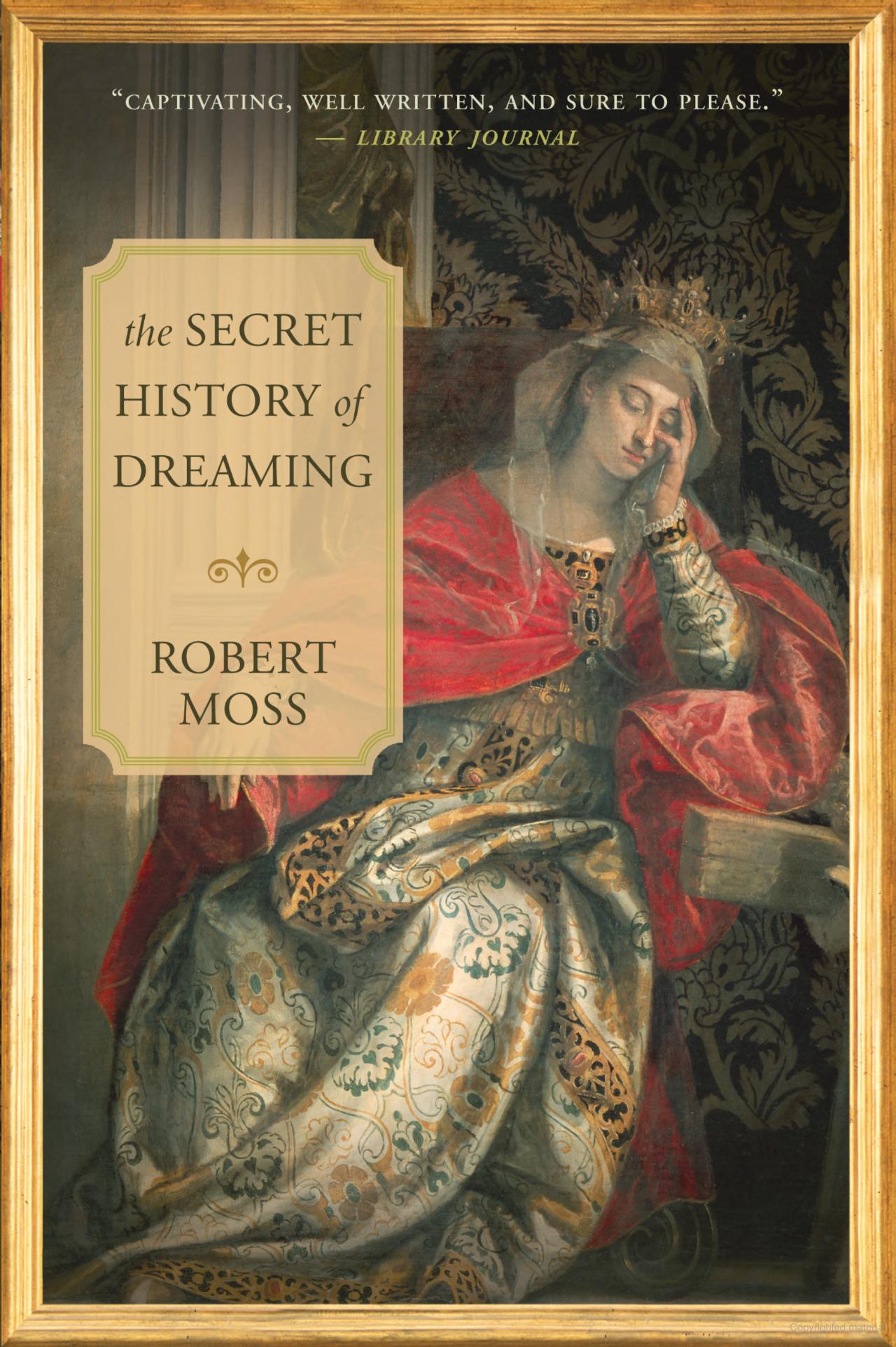
Text adapted from The Secret History of Dreaming by Robert Moss. Published by New World Library.


Sunday, May 7, 2023

Know the myth you are living


We all conceal
A god within us, we all deal
With heaven direct, from whose high places we derive
The inspiration by which we live.
 

-          Ovid, Ars Amatoria III, 549–550 (trans. James Michie)


As some people use the word, myth is synonymous with fake news, or superstition, or outmoded hand-me down beliefs. A myth may be a prevailing worldview – that the earth is flat or the still center of the turning universe, that humanity begins with Adam and Eve, that the world is enthralled by a dark Demiurge. For the Greeks, mythos was the spirit of the play, familiar to the audience yet as unpredictable as the gods in how it would unfold in a fresh drama.

A myth may be a sacred teaching story that explains how the world came into being – and what is beyond it – and why bad things, as well as good, things happen, and what it means to be human. A myth may justify the ways of gods to humans, or those of humans before their Creator. A myth may introduce you, like the major arcana of tarot, to essential members of your archetypal family: to personified forces at play in your life and your universe.

A myth may invite you to consider who among the gods defends you, and who has it in for you. A myth may also be a living reality beyond the realm of facts, a source of truth that cannot be confirmed in a laboratory experiment but may be evidenced by the data of raw experience.

Your dreams can be a nightly screening of gods and archetypes. A dream may be your place of encounter with a Big story that is looking for you. It may call you to a tradition about which you previously knew nothing ."In the absence of an effective general mythology, each of us has his primary, unrecognized, rudimentary, yet secretly potent pantheon of dream," as Joseph Campbell wrote in The Hero with a Thousand Faces. Psychologist Betsy Meador was called to study Inanna and her priestess after a dream that involved the prayer flags of the great Sumerian goddess, Queen of Heaven and Earth, that were previously unknown to her.

I was seized by Kali in a terrifying night vision – beginning with sleep paralysis – when I was fourteen. I wrote a cycle of poems in her honor. Later her brother-consort Kala, better known as Yama, became one of my principal mentors, reminding me to consider every life choice in the presence of Death. A little-known Celtic deity came into my ken in a series of dreams in which I was defending my property with a long-handled hammer, like a weaponized croquet mallet. Some shelf elf produced a Gallo-Roman statue of a god with a similar hammer, named in the inscription as Sucellos, which means the Good Striker. He seems to share some qualities with Thor. He is also the consort of a great goddess of abundance, called Rosmerta by the Gauls and Abundantia by the Romans.

We confirm our relationship with a patron deity, or power animal, when it comes to our aid. Athena came to me like this in Anatolia and loaned me her owl eyes. The Bear has come to me like this many times since it claimed me when I found the courage to step back into the space of a dream where it had terrified me.

Myths are a cauldron of stories and symbols that hold superabundant energy for life. You want to become conscious of the myth you are living. If you are unconscious about this, then the myth is living you and you may be driven into confusion and disaster, like Odysseus when his men lose control of the winds. In different phases of life, we may inhabit – and be inhabited by – different myths. We may find ourselves in the play of rival stories. We may be able to match and mix.

The great scholar of religions Wendy Doniger writes about the “seed text”, bija mantra. In her book Splitting the Difference: Gender and Myth in Ancient Greece and India, she describes how she found this in the story of an Indian goddess, Saranyu, who cloned herself in order to get away from a husband she detested, leaving a compliant Hindu version of a Stepford Wife at home while she ranged free as a wild mare. This story kept after Doniger for decades, prompting her to reach deeper and deeper into its well. Whenever she heard it, she would say, “That’s the story of my life.”

“Myth, by design, makes it clear that we are meant to be something more than our personal history,” declared P.L.Travers, the author of Mary Poppins who was inspired to make Mary a star traveler by a childhood vision of her deceased father turning into a star.

The myths we are living now swing on hinges into other lives, whose myths swing back at us. Because our present life dramas are connected with those of other personalities, in other places and times, within our multidimensional family, it is not surprising that “old” gods and “dead” religions feature in our spontaneous mythology, as mediated by dreams and visions and by moments on the roads of this world when we experience a hidden hand, pushing us forward or holding us back, or rearranging the stage set.


Illustrations by Robert Moss. Original mixed media paintings.

Top: Eyebrows of Zeus

Bottom: Faces of Yama

Friday, April 2, 2021

Risen God, Goddess Rising


I give thanks for the risen god
The one whose blood became poppies
The one torn apart by the boar
The one who hung himself in the world tree
   sacrificing himself to himself
The one dismembered by his women
    in the ecstasy of their love
The wild bull called to the goddess
    who faces his killer in the arena
The ones who die when the seed corn
     goes into Earth, to sprout again
The deer king who is willing sacrifice
The one whose dark twin boxed him in
     and scattered his parts
     and rose under beating wings
The beautiful shepherd sent down
     to the Underworld by his consort
     to learn all that women endure    
The one who rose from the dark cave
     in a shining body but still wears
     a crown of thorns because of all
    the wrongs that are done in his name


I give thanks for the goddess rising
The one who chose to go down
    to the Great Below to meet her dark sister
The one who was ripped from the daylight world
    to bring treasures out of darkness as
    Queen of the Underworld and of herself
The one who fell through a hole
    in the Earth in the Sky and danced
    a new world into being on turtle’s back
The one who is always three
    maiden, mother, crone
    endlessly recreating herself
The ones who raise their lovers as sons
   and heal the wounded warrior in man
The one who raises the dead to give birth
    to the golden child
The Great Mother of a thousand faces
   whose bounty streams like milk
The Lady of Beasts
The deep mind of Earth
The bright intelligence of stars
The Divine Feminine we need
    to repair our world
    and redeem our kind


I give thanks for the power to die
    and come back on any day.


Drawing "Willing Sacrifice" by RM


Tuesday, January 26, 2021

Know the myth you are living

.
We all conceal
A god within us, we all deal
With heaven direct, from whose high places we derive
The inspiration by which we live.

-          Ovid, Ars Amatoria III, 549–550 (trans. James Michie)


As some people use the word, myth is synonymous with fake news, or superstition, or outmoded hand-me down beliefs. A myth may be a prevailing worldview – that the earth is flat or the still center of the turning universe, that humanity begins with Adam and Eve, that the world is enthralled by a dark Demiurge. For the Greeks, mythos was the spirit of the play, familiar to the audience yet as unpredictable as the gods in how it would unfold in a fresh drama.
      A myth may be a sacred teaching story that explains how the world came into being – and what is beyond it – and why bad things, as well as good, things happen, and what it means to be human. A myth may justify the ways of gods to humans, or those of humans before their Creator. A myth may introduce you, like the major arcana of tarot, to essential members of your archetypal family: to personified forces at play in your life and your universe.
      A myth may invite you to consider who among the gods defends you, and who has it in for you. A myth may also be a living reality beyond the realm of facts, a source of truth that cannot be confirmed in a laboratory experiment but may be evidenced by the data of raw experience.
      Your dreams can be a nightly screening of gods and archetypes. A dream may be your place of encounter with a Big story that is looking for you. It may call you to a tradition about which you previously knew nothing ."In the absence of an effective general mythology, each of us has his primary, unrecognized, rudimentary, yet secretly potent pantheon of dream," as Joseph Campbell wrote in The Hero with a Thousand Faces. Psychologist Betsy Meador was called to study Inanna and her priestess after a dream that involved the prayer flags of the great Sumerian goddess, Queen of Heaven and Earth, that were previously unknown to her.
       I was seized by Kali in a terrifying night vision – beginning with sleep paralysis – when I was fourteen. I wrote a cycle of poems in her honor. Later her brother-consort Kala, better known as Yama, became one of my principal mentors, reminding me to consider every life choice in the presence of Death. A little-known Celtic deity came into my ken in a series of dreams in which I was defending my property with a long-handled hammer, like a weaponized croquet mallet. Some shelf elf produced a Gallo-Roman statue of a god with a similar hammer, named in the inscription as Sucellos, which means the Good Striker. He seems to share some qualities with Thor. He is also the consort of a great goddess of abundance, called Rosmerta by the Gauls and Abundantia by the Romans.
       We confirm our relationship with a patron deity, or power animal, when it comes to our aid. Athena came to me like this in Anatolia. The Bear has come to me like this many times since it claimed me when I found the courage to step back into the space of a dream where it had terrified me.
       Myths are a cauldron of stories and symbols that hold superabundant energy for life. You want to become conscious of the myth you are living. If you are unconscious about this, then the myth is living you and you may be driven into confusion and disaster, like Odysseus when his men lose control of the winds. In different phases of life, we may inhabit – and be inhabited by – different myths. We may find ourselves in the play of rival stories. We may be able to match and mix.
        The great scholar of religions Wendy Doniger writes about the “seed text”, bija mantra. In her book Splitting the Difference: Gender and Myth in Ancient Greece and India, she describes how she found this in the story of an Indian goddess, Saranyu, who cloned herself in order to get away from a husband she detested, leaving a compliant Hindu version of a Stepford Wife at home while she ranged free as a wild mare. This story kept after Doniger for decades, prompting her to reach deeper and deeper into its well. Whenever she heard it, she would say, “That’s the story of my life.”
      “Myth, by design, makes it clear that we are meant to be something more than our personal history,” declared P.L.Travers, the author of Mary Poppins who was inspired to make Mary a star traveler by a childhood vision of her deceased father turning into a star.
      The myths we are living now swing on hinges into other lives, whose myths swing back at us. Because our present life dramas are connected with those of other personalities, in other places and times, within our multidimensional family, it is not surprising that “old” gods and “dead” religions feature in our spontaneous mythology, as mediated by dreams and visions and by moments on the roads of this world when we experience a hidden hand, pushing us forward or holding us back, or rearranging the stage set.


Photo by RM: Assyrian lion in British Museum


Sunday, April 12, 2020

Risen God, Goddess Rising


Today I give thanks for the risen god
The one whose blood became poppies
The one torn apart by the boar
The one who hung himself in the world tree
   sacrificing himself to himself
The one dismembered by his women
    in the ecstasy of their love
The wild bull called to the goddess
    who faces his killer in the arena
The ones who die when the seed corn
     goes into Earth, to sprout again
The deer king who is willing sacrifice
The one whose dark twin boxed him in
     and scattered his parts
     and rose under beating wings
The beautiful shepherd sent down
     to the Underworld by his consort
     to learn all that women endure    
The one who rose from the dark cave
     in a shining body but still wears
     a crown of thorns because of all
    the wrongs that are done in his name

Today I give thanks for the goddess rising
The one who chose to go down
    to the Great Below to meet her dark sister
The one who was ripped from the daylight world
    to bring treasures out of darkness as
    Queen of the Underworld and of herself
The one who fell through a hole
    in the Earth in the Sky and danced
    a new world into being on turtle’s back
The one who is always three
    maiden, mother, crone
    endlessly recreating herself
The ones who raise their lovers as sons
   and heal the wounded warrior in man
The one who raises the dead to give birth
    to the golden child
The Great Mother of a thousand faces
   whose bounty streams like milk
The Lady of Beasts
The deep mind of Earth
The bright intelligence of stars
The Divine Feminine we need
    to repair our world
    and redeem our kind

I give thanks for the power to die
    and come back on any day,
    Especially on this day.


- Easter Sunday 2020


Drawings by Robert Moss


Monday, February 3, 2020

"Sargon lay down not to sleep but he lay down to dream"

I have been saying for decades that dreaming is not fundamentally about what happens during sleep; it is about waking up to a deeper reality. I found confirmation for this understanding in a Sumerian text that is a mere four millennia old. It is the story of "Sargon and Ur-Zababa". The famous Sargon of Akkad began his career as a cupbearer to Ur-Zababa, the Sumerian king of Kish around 2350 bce.. Ill and anxious, the ruler of Kish asked Sargon to dream on his behalf. We then read "Sargon lay down not to sleep but he lay down to dream" Sargon's dream brought no comfort to the king.He saw the goddess Inanna as a beautiful young woman "high as the heavens and vast as the earth" who drowned Ur-Zababa in a river of blood. Ur-Zababa tried to have the dreamer killed but he was the one who died and Sargon took his throne. The people believed, because of his dream, that Sargon was under the aegis of the great goddess. Source: Gil H. Renberg, Where Dreams May Come: Incubation Sanctuaries in the Greco-Roman World (Leiden: Brill, 2017) 45

Thursday, January 24, 2019

Know the myth you are living

As some people use the word, myth is synonymous with fake news, or superstition, or outmoded hand-me down beliefs. A myth may be a prevailing worldview – that the earth is flat or the still center of the turning universe, that humanity begins with Adam and Eve, that the world is enthralled by a dark Demiurge. For the Greeks, mythos was the spirit of the play, familiar to the audience yet as unpredictable as the gods in how it would unfold in a fresh drama.
      A myth may be a sacred teaching story that explains how the world came into being – and what is beyond it – and why bad things, as well as good, things happen, and what it means to be human. A myth may justify the ways of gods to humans, or those of humans before their Creator. A myth may introduce you, like the major arcana of tarot, to essential members of your archetypal family: to personified forces at play in your life and your universe.
      A myth may invite you to consider who among the gods defends you, and who has it in for you. A myth may also be a living reality beyond the realm of facts, a source of truth that cannot be confirmed in a laboratory experiment but may be evidenced by the data of raw experience.
      Your dreams can be a nightly screening of gods and archetypes. A dream may be your place of encounter with a Big story that is looking for you. It may call you to a tradition about which you previously knew nothing ."In the absence of an effective general mythology, each of us has his primary, unrecognized, rudimentary, yet secretly potent pantheon of dream," as Joseph Campbell wrote in The Hero with a Thousand Faces. Psychologist Betsy Meador was called to study Inanna and her priestess after a dream that involved the prayer flags of the great Sumerian goddess, Queen of Heaven and Earth, that were previously unknown to her.
       I was seized by Kali in a terrifying night vision – beginning with sleep paralysis – when I was fourteen. I wrote a cycle of poems in her honor. Later her brother-consort Kala, better known as Yama, became one of my principal mentors, reminding me to consider every life choice in the presence of Death. A little-known Celtic deity came into my ken in a series of dreams in which I was defending my property with a long-handled hammer, like a weaponized croquet mallet. Some shelf elf produced a Gallo-Roman statue of a god with a similar hammer, named in the inscription as Sucellos, which means the Good Striker. He seems to share some qualities with Thor. He is also the consort of a great goddess of abundance, called Rosmerta by the Gauls and Abundantia by the Romans.
       We confirm our relationship with a patron deity, or power animal, when it comes to our aid. Athena came to me like this in Anatolia. The Bear has come to me like this many times since it claimed me when I found the courage to step back into the space of a dream where it had terrified me.
       Myths are a cauldron of stories and symbols that hold superabundant energy for life. You want to become conscious of the myth you are living. If you are unconscious about this, then the myth is living you and you may be driven into confusion and disaster, like Odysseus when his men lose control of the winds. In different phases of life, we may inhabit – and be inhabited by – different myths. We may find ourselves in the play of rival stories. We may be able to match and mix.
        The great scholar of religions Wendy Doniger writes about the “seed text”, bija mantra. In her book Splitting the Difference: Gender and Myth in Ancient Greece and India, she describes how she found this in the story of an Indian goddess, Saranyu, who cloned herself in order to get away from a husband she detested, leaving a compliant Hindu version of a Stepford Wife at home while she ranged free as a wild mare. This story kept after Doniger for decades, prompting her to reach deeper and deeper into its well. Whenever she heard it, she would say, “That’s the story of my life.” 

      “Myth, by design, makes it clear that we are meant to be something more than our personal history,” declared P.L.Travers, the author of Mary Poppins.
       The myths we are living now swing on hinges into other lives, whose myths swing back at us. Because our present life dramas are connected with those of other personalities, in other places and times, within our multidimensional family, it is not surprising that “old” gods and “dead” religions feature in our spontaneous mythology, as mediated by dreams and visions and by moments on the roads of this world when we experience a hidden hand, pushing us forward or holding us back, or rearranging the stage set.

Art: Frantisek Kupka, "The Path of Silence"

Saturday, June 30, 2018

The myths we are living swing on hinges into other lives


As some people use the word, myth is synonymous with fake news, or superstition, or outmoded hand-me down beliefs. A myth may be a prevailing worldview – that the earth is flat or the still center of the turning universe, that humanity begins with Adam and Eve, that the world is enthralled by a dark Demiurge. A myth may be a sacred teaching story that explains how the world came into being – and what is beyond it – and why bad things, as well as good, things happen, and what it means to be human. A myth may justify the ways of gods to humans, or those of humans before their Creator.
    A myth may introduce you, like the major arcana of tarot, to essential members of your archetypal family: to personified forces at play in your life and your universe. A myth may invite you to consider who among the gods defends you, and who has it in for you. A myth may also be a living reality beyond the realm of facts, a source of truth that cannot be confirmed in a laboratory experiment but may be evidenced by the data of raw experience.
    Your dreams can be a nightly screening of gods and archetypes. A dream may be your place of encounter with a Big story that is looking for you. It may call you to a tradition about which you previously knew nothing. Psychologist Betty De Shong Meador, author of Inanna: Lady of Largest Heart was called to study Inanna and her poet-priestess after a dream that involved the prayer flags of the great Sumerian goddess, Queen of Heaven and Earth, that were previously unknown to her.
     I was seized by Kali in a terrifying night vision – beginning with sleep paralysis – when I was fourteen. I wrote a cycle of poems in her honor. Later Kala, better known as Yama, became one of my principal mentors, reminding me to consider every life choice in the presence of Death.
     A little-known Celtic deity came into my ken in a series of dreams in which I was defending my property with a long-handled hammer, like a weaponized croquet mallet. Some shelf elf produced then image of a Gallo-Roman statue of a god with a similar hammer, named in the inscription as Sucellos, which means the Good Striker. He seems to share some qualities with Thor. He is also the consort of a great goddess of abundance, called Rosmerta by the Gauls and Abundantia by the Romans. 
   
    We confirm our relationship with a mythic power when it comes to our aid. Athena came to me like this in Anatolia when I incurred the wrath of another ancient deity, a story told in my new book Mysterious Realities. The Bear has come to me like this many times since it claimed me when I found the courage to step back into the space of a dream where it had terrified me.
     Myths are a cauldron of stories and symbols that hold superabundant energy for life. You want to become conscious of the myth you are living. If you are unconscious about this, then the myth is living you and you may be driven into confusion and disaster, like Odysseus when his men lose control of the winds. In different phases of life, we may inhabit – and be inhabited by – different myths. We may find ourselves in the play of rival stories. We may be able to match and mix.
    The great scholar of religions Wendy Doniger writes about the “seed text”, bija mantra. In her book Splitting the Difference: Gender and Myth in Ancient Greece and India, this is the story of the goddess Saranyu (later called Samjna). Her father is the great Maker. He compels her to marry a hot, misshapen lump (who happens to be the Sun) who sires twins on her, Yama and Yami.  She can’t stand the male or the marriage, so she abandons her family. She makes sure that her defection will go unnoticed by creating a double, called Shadow (Chhaya) or Look-Alike and gives her copy clear instructions that she is never to reveal the swap to her husband. 
      Beyond the Indian names and exotic trappings, many of us may find a mirror for certain life situations in this myth. You can't abide a soul-crushing situation. So the spirited part of you takes off to run free, leaving a compliant copy in the house. Maybe no one will notice that you are soul-gone unless you overdo the Stepford Wife performance or do something completely out of character with the earlier you they remember. Wendy Doniger says that this story has kept after her for decades, prompting her to reach deeper and deeper into its well. Whenever she hears it, she says “That’s the story of my life.” 
      The myths we are living now swing on hinges into other lives, whose myths swing back at us. Because our present life dramas are connected with those of other personalities, in other places and times, within our multidimensional family, it is not surprising that “old” gods and “dead” religions feature in our spontaneous mythology, as mediated by dreams and visions and by moments on the roads of this world when we experience a hidden hand, pushing us forward or holding us back, or rearranging the stage set.


Image: The goddess Yami (also called Yamuna) and attendants, red sandstone sculpture from Rajasthan c.800 in the Los Angeles County Museum of Art.

I am leading a high-octane weekend adventure in "Living on the Mythic Edge" in Berkeley, California on October 27-28, 2018/


Wednesday, May 10, 2017

The call of Inanna and the first named author in history

Inanna
daughter of the Moon
silken bud unfolding

riding out on your wild blue bull
through the Gate of Wonder.

I am riffing on a version of "Inanna and Ebih",  written by the high priestess of the Moon God at Ur around 2300 bce. The literal translation is in Betty De Shong Meador's brilliant Inanna, Lady of Largest Heart.
    I was excited to learn that Meador was called to the great Sumerian goddess Inanna by a dream . She dreamed she saw two fellow Jungian analysts – conservative, by-the-book types - being buried. Strange sticks with loops at the top were planted in the earth around their graves.
      At the time, Inanna was unknown to her and she made no association between the dream and the goddess.  Long after, in one of Erich Neumann’s books, she found a picture of the looped poles like the ones in her dream. She read that they are symbols of Inanna and the earliest way of writing her name in pictographs. They are reed posts. They may represent door posts, or the props for a curtain. In pictographs (see photo), reed pieces hanging down from the rings, sometimes look like women's hair, or ribbons.
     Why would doorposts made from reeds be a symbol for the Queen of Earth and Heaven? Doorposts of this kind could denote the passage to the storehouse,the place of fertility and abundance that are the gifts of the goddess in her beneficent mode. Doorposts could also denote the passage between the worlds. Inanna herself passed through a series of doorways in her famous Descent to the Underworld. So the reed doorposts - in a country with little timber or stone - could be the Mesopotamian version of the pylon gate in Egypt or the dolmen arch in Celtic lands.
     There is further significance in the reeds. In ancient Mesopotamia, dream incubation took place in reed huts.You would step between reed doorposts to dream with intention, maybe to dream yourself into a close encounter with the goddess herself. The marshes of southern Mesopotamia, full of reeds, offered a liminal dreamy landscape. Legend has it that Sargon of Akkad, the father of the priestess who wrote poems and hymns of Inanna was abandoned in a reed basket, sealed with pitch, on a river,  to be found by the gardener who raised him.  A baby from the reeds, long before Moses.
      Meador waxes poetic about the reed posts of Inanna as “insurgent flags”. In her words, “Inanna’s symbol standing tall on the graves was an image of strength and courage from a culture outside of and alien to patriarchal thinking... Inanna’s tall reed standards stand like insurgent flags amid the bastion of traditional beliefs that restrict women.” The meet-up between the old dream and new research into the mythic cycle of Inanna led the Jungian analyst to make a huge new leap in her work and understanding, into Goddess realms. "This new perspective propelled me onto my future path.” 
       As Meador studied the texts, she found Inanna's wild call for her chosen lover to plow her field. The goddess calls for Dumuzi, who is both the "wild bull" and the plowman:

My field needs hoeing
Dumuzi, I call you
It is you I want for prince. 

     Inanna is many, a great goddess who refuses all boundaries and limitations. For Meador, she is the Sumerian “personification of the whole of reality”. 

You wear the robes
of the old, old gods. 

     Meador discovered a soul friend in ancient Mesopotamia. She happens to be the first named author in all of human history. Her name is Enheduanna. The "en" in her name means "high priestess". She was the daughter of King Sargon of Akkad and high priestess of the moon god Nanna. She was also a poet of the first rank, and the most passionate of her poems were devoted to presenting Inanna in all her faces. She composed 42 temple hymns that have survived  and the "Exaltation of Inanna"(Nin-Me-Sar-Ra) infused with her passion for the goddess.
     It is really absurd that Enheduanna is relatively unknown. She is the first named author in world literature. She is a great poet. She is advancing a whole theology and philosophy that promotes the great Goddess as the one beyond the many. She writes with searing passion and eloquence about the many aspects of the self. The goddess she praises – in all her dark and light – is within her, and within the whole of nature and the whole cosmic order. Both contain multitudes.
     Meador writes that “in Enheduanna’s writing, we witness that moment when an individual is selected out of the mass of humanity into a new consciousness of self-definition and self-worth...Enheduanna begins to understand emotion as the graze of the goddess’ hand across a person’s soul. Image and emotion become the language of the goddess to the particular individual.”
    Called to the goddess and the ancient poet through the doorway of a dream. Goddesses and dead poets can make that happen. I know about this.


Quotes here are from Betty De Shong Meador, Inanna, Lady of Largest Heart: Poems of the Sumerian High Priestess Enheduanna. Published by University of Texas Press.

Tuesday, August 30, 2016

Goddess at the Heart


She has a thousand faces.
She is virgin, mother and crone.
She is creator, preserver and destroyer.
She gives birth, endlessly. 
Her womb is the gateway of death and rebirth.
She is Queen of Earth and Heaven.

She fell through a hole in her world
and danced our world into being on turtle’s back.
She hid the sunlight from the world
when she was abused by men
and could only be lured back
when shown her radiant face in a mirror.

She is lover, warrior and shaman.
She is the one who repairs the broken soul.
She raises the god in man with her breath.
 

Men tried to confine her to limited roles,
to force her into wedlock with despotic gods.
Then the Church sought to bury her.
But the Goddess returned as Mary,
and now she is loose again,
asking us to honor and embody her
in the forms that please her.

I am only a man, but I serve the Goddess.
When I was still a virgin, she claimed me
in one of her most fearsome forms,
and I carry her mark in a secret place.

I have been taught by ancient priestesses
in a mountain temple in the sky
in a mandorla of amber light
in worlds that open through an oak door
and a bee hive and a sea mist.

I have met the Goddess in molten lava,
as Spider Woman and Reindeer Queen
and as Great Mother Bear.
Bees flew me to a place of her mysteries.
I feel her hair stream in the sea waves.
I love her in the deep loamy earth.
I see her robe swirl in the shifting stars. 


Drawing by RM

Thursday, January 7, 2016

Inanna at the breakfast table

The plot thickens, the veil of mystery flutters and closes and opens. The night before I posted my blog piece titled "A Dream Doorway to Inanna", a male friend dreamed that he saw me having to deal with a skeptic in a group. Dream Robert revealed he was wearing a jeweled necklace with something resembling a "letter opener", studded with lapis lazuli, hanging down from it. Using this power tool, Dream Robert invoked a goddess. She appeared, raging at the ignorance and stupidity of humans. Her rage brought skyscrapers tumbling down. When my friend sent his report, I remarked, "That sounds like Inanna in her take-no-prisoners mode." He did not know about Inanna, which makes it all the more interesting that - as I study the original sources again - it seems that the placement of the jewels in Dream Robert's outfit strongly resembles the placement of jewels on Inanna's outfit as she dresses to visit her dark sister. I'm now guessing that the "letter opener" studded with lapis lazuli may be Inanna's lapis measuring stick, which is in her hand as she begins her descent to the Underworld, or one her other rods and wands of power. Lapis lazuli has great significance in the Inanna story; it was believed to supports powers of seership and to light the way to the afterlife.  
We dream of Inanna, and maybe she dreams of us, whether we call her goddess or archetype. Once, when I was leading a retreat in the foothills of the Cascades, Inanna took possession of the breakfast table where our group was gathered for coffee, waffles and dreams.    "How is your dream recall?" I asked the first person to join me at the table.    She proceeded to recount a dream in which she is traveling through a dusty landscape to the home of a tarot reader. Instead of spreading the cards, the tarot reader shows her two fish tanks, each containing elaborate dioramas. At the center of each is a statuette of a goddess. The dreamer recognizes the goddess forms: Isis and Inanna. The tarot reader tells her she must choose one. She chooses Inanna. Immediately a great tornado whips up,swirling everything around her. She wakes excited and curious to know mor eabout the power and the attributes of the goddess she chose.     We started talking about Inanna and the great cycle of poems composed in her name in ancient Sumer. I spoke of the terrifying praise-poems in which Inanna goes forth into battle, with a flashing carnelian at her throat and the mace of a warrior raised in her hand, with the force of a tornado. I mentioned that in my carry-on bag for this trip there just happened to be a copy of the beautiful versions of the Inanna poems composed by Diane Wolkstein and Samuel Noah Kramer.     We were joined by a psychologist who had made a close study of the myths of Inanna and spoke about the story of the Descent of the Goddess as the model for a woman's journey to the depths to meet and integrate her Shadow side. She reminded us that one of the mysteries in this mythic cycle is that we are not given a clear reason why Inanna chose to make her descent to the darkest level of the Underworld, the realm of her dark sister, Ereshkigal, tobe hung in a meathook. We do know that she did this of her own volition. It was a choice she made freely.     We had now been joined by many other dreamers, all eager to take part in the weave of mythic associations that was taking place over the waffles and coffee. One woman shared that she was in the midst of a ritual journey through the Descent of Inanna organized by a women's group and unfolding over many days. She had made the descent, through visualization and ritual, through the seven gates of Inanna's descent, at each of which she was required to give up an aspect of her power and protection. As she made this mythic journey, she realized that it evoked many of her personal life dramas and passages - for example, losing a job and leaving a home - which now assumed even deeper resonance.    I confessed that Inanna, in full warrior mode, makes me, as a mere man, a little nervous. At that moment, a woman named Moon took the place at the table that someone had just left free. I smiled. Inanna is the daughter of Nanna, the Sumerian Moon god, and I am a very lunar man. We were at a mythic edge - with all the juice that brings - that was also a family situation.
We see again how dreams are only personal myths; they are swing doors between our world and the world of gods, archetypes and others. I am thinking again about my friend's dream of me invoking a goddess with a power tool that looked like a letter opener. In front of me now, as I write, is the letter opener I use every day. It has the form of the caduceus, twin serpents wrapped around a staff and here surmounted by wings. The earliest form of the caduceus was in Mesopotamia. It seems to have been one of the many forms of the staff or wand of power of Inanna. It turns up all over the world map later on, including as the want of Hermes and Mercury and Hermanubis. But it seems to begin with Inanna. Perhaps, without knowing it, I have been reaching to her every time I open mail.
That turns my mind to a famous statement from Jewish tradition, that a dream that is not interpreted is like a letter that is left unopened. We do better than interpret dreams, in our Active Dreaming practice. We engage with the dream world, we enter it at will, and we bring gifts from it into waking life. We are ready to act in the understanding that our dreams may be a nightly field of interaction with greater powers, and that those powers - even of often camouflaged - are at play in our ordinary world. I look at the letter opener again. Inanna's people in ancients times did not have paper or parchment or papyrus. They recorded dreams on clay tablets that were then baked, making them strong and durable enough for us to read of Inanna's Descent to the Underworld and the Dream of Dumuzi more than 5,000 years later. They had an interesting expression in Sumerian for dreams that defy understanding. Such dreams are inside "a closed archive basket of the gods" - that is to say, a basket of dream reports written in cuneiform with a read stylus on those tablets of baked clay." Sometimes the gods open the archive basket and give us a myth to live by, even in our modern lives.

Wednesday, January 6, 2016

A dream doorway to Inanna


Inanna
daughter of the Moon
silken bud unfolding

riding out on your wild blue bull
through the Gate of Wonder.

I am riffing on a version of "Inanna and Ebih",  written by the high priestess of the Moon God at Ur around 2300 bce. The literal translation is in Betty De Shong Meador's brilliant Inanna, Lady of Largest Heart.
    I was excited to learn that Meador was called to the great Sumerian goddess Inanna by a dream . She dreamed she saw two fellow Jungian analysts – conservative, by-the-book types - being buried. Strange sticks with loops at the top were planted in the earth around their graves.
      At the time, Inanna was unknown to her and she made no association between the dream and the goddess.  Long after, in one of Erich Neumann’s books, she found a picture of the looped poles like the ones in her dream. She read that they are symbols of Inanna and the earliest way of writing her name in pictographs. They are reed posts. They may represent door posts, or the props for a curtain. In pictographs (see photo), reed pieces hanging down from the rings, sometimes look like women's hair, or ribbons.
     Why would doorposts made from reeds be a symbol for the Queen of Earth and Heaven? Doorposts of this kind could denote the passage to the storehouse,the place of fertility and abundance that are the gifts of the goddess in her beneficent mode. Doorposts could also denote the passage between the worlds. Inanna herself passed through a series of doorways in her famous Descent to the Underworld. So the reed doorposts - in a country with little timber or stone - could be the Mesopotamian version of the pylon gate in Egypt or the dolmen arch in Celtic lands.
     There is further significance in the reeds. In ancient Mesopotamia, dream incubation took place in reed huts.You would step between reed doorposts to dream with intention, maybe to dream yourself into a close encounter with the goddess herself. The marshes of southern Mesopotamia, full of reeds, offered a liminal dreamy landscape. Legend has it that Sargon of Akkad, the father of the priestess who wrote poems and hymns of Inanna was abandoned in a reed basket, sealed with pitch, on a river,  to be found by the gardener who raised him.  A baby from the reeds, long before Moses.
      Meador waxes poetic about the reed posts of Inanna as “insurgent flags”. In her words, “Inanna’s symbol standing tall on the graves was an image of strength and courage from a culture outside of and alien to patriarchal thinking... Inanna’s tall reed standards stand like insurgent flags amid the bastion of traditional beliefs that restrict women.” The meet-up between the old dream and new research into the mythic cycle of Inanna led the Jungian analyst to make a huge new leap in her work and understanding, into Goddess realms. "This new perspective propelled me onto my future path.” 
       As Meador studied the texts, she found Inanna's wild call for her chosen lover to plow her field. The goddess calls for Dumuzi, who is both the "wild bull" and the plowman:

My field needs hoeing
Dumuzi, I call you
It is you I want for prince. 

     Inanna is many, a great goddess who refuses all boundaries and limitations. For Meador, she is the Sumerian “personification of the whole of reality”. 

You wear the robes
of the old, old gods. 

     Meador discovered a soul friend in ancient Mesopotamia. She happens to be the first named author in all of human history. Her name is Enheduanna. The "en" in her name means "high priestess". She was the daughter of King Sargon of Akkad and high priestess of the moon god Nanna. She was also a poet of the first rank, and the most passionate of her poems were devoted to presenting Inanna in all her faces. She composed 42 temple hymns that have survived  and the "Exaltation of Inanna"(Nin-Me-Sar-Ra) infused with her passion for the goddess.
     It is really absurd that Enheduanna is relatively unknown. She is the first named author in world literature. She is a great poet. She is advancing a whole theology and philosophy that promotes the great Goddess as the one beyond the many. She writes with searing passion and eloquence about the many aspects of the self. The goddess she praises – in all her dark and light – is within her, and within the whole of nature and the whole cosmic order. Both contain multitudes.
     Meador writes that “in Enheduanna’s writing, we witness that moment when an individual is selected out of the mass of humanity into a new consciousness of self-definition and self-worth...Enheduanna begins to understand emotion as the graze of the goddess’ hand across a person’s soul. Image and emotion become the language of the goddess to the particular individual.”
    Called to the goddess and the ancient poet through the doorway of a dream. Goddesses and dead poets can make that happen. I know about this.


Quotes here are from Betty De Shong Meador, Inanna, Lady of Largest Heart: Poems of the Sumerian High Priestess Enheduanna. Published by University of Texas Press.