Showing posts with label soul remembering. Show all posts

Tuesday, December 31, 2024

We must live into our own time


We must live into our own time

We must live into our own time.
The memories of the broken cord,
the nest emptied of its young,
the lost love, the knocking at the ribs,
at the midnight door, the starling silences
cannot help us here.

Yet their tremulous rising,
dropletted as from the dawn sea,
is almost more than we can bear
and enough to turn houses upside down,
break families and the destiny of a present life.

There is danger in knowing our other selves,
danger in remembering too much, too soon,
of what lay beyond the stiff portal of birth.
Yet life itself in its endless wheelings
through the blur of feathers, through wind and sun
brings us face to face with the Other -
face of desire, face of the heart’s highest longing,
face of red hatred, face of cold fear -
and we are called, backward or forward
(whose time prevails now?)
into another life, and the forking paths of soul.


Written in 1994 on a napkin in an Irish pub in New York City. Left unfinished, like life.


Monday, March 21, 2022

A Night with the Princes from the East


The Assignment

An old friend has asked me to lunch with a pair of foreigners, a man and a woman who are Persian or Near Eastern. We go to a restaurant where he disappears to converse with staff in the background. I join the foreign couple at a table. We seem to be the only patrons in the restaurant, which is either windowless or has the windows heavily draped. the decor is expensive but anonymous, generic hotel or airport lounge style.
     The first phase of the conversation is guarded and superficial. I decide I'm ready to go, having discharged my personal obligation.
     My friend approaches me, highly agitated, as I prepare to leave. He gestures at a set of handwritten notes and a typed memo that he slipped to me earlier but I haven't bothered to read. These papers, especially the handwritten notes, make it plain that the people I am lunching with are top priority. It is vitally important for me to pursue the conversation and draw them out, so that their words can be recorded. I have been picked to pursue this opportunity because the couple trust me.
     I yield, lingering at the table to drain glass after glass of armagnac. The man matches me, glass for glass, with cognac. The mood is increasingly jolly and intimate. I can only guess at the size of the bill for all these drinks, but I plan to present the bill to my friend. The waiter seems to be in on the plot. He refers to us as "Excellencies" and "Your Highnesses." It seems the "assignment" will be completed by the end of our session, which looks likely to continue for the rest of the afternoon.

I woke from this dream in a pool of moonlight, lying on a bed in a cabin on North Hero Island on Lake Champlain. I was excited and intensely curious, wanting to know much more about the message I was supposed to record. I needed to go back into the dream, and made it my intention to do this, lying on my back on the bed. I kept a pad and paper close to my hand. If I succeeded in resuming my conversation with the mysterious strangers, I was determined not to forget my assignment to record the proceedings.

The Prince and Princess of Fars
 

I focus on the restaurant as my portal for dream reentry.. The name of the restaurant is "The Golden Cage" or "The Golden Bowl". I confirm that the restaurant, though spacious, is tightly sealed - no views of the outside. 
     I try to examine the papers my friend gave me. I find there are three documents, in a large manila envelope: handwritten notes, on several smallish pieces of high-quality bond; a typed memo; and a clipping from a newspaper. The newspaper is the Tehran Times. The headline describes a visit by "The Prince and Princess of Fars."
     I need to talk to them.
     The man shows himself. He is pleasant-looking, clean-shaven, with an oval face, black hair combed straight with the slightest suggestion of sideburns, large dark brown eyes, immaculately dressed. The woman's features, by contrast, are indistinct. She is veiled, not in Islamic style but in "High Priestess" mode of the Tarot trump.
     The man is Shams. I met him in a previous dream. He is wearing a beautiful grey-blue shirt with a narrow white banded collar under his tailored suit. He says I may know the veiled princess as Fatima. He urges me to study the typed sheet my friend gave me. I review the paper, and find it contains a list of 20 questions. The first questions give me shivers:

1. What is the nature of exile?
2. What are the conditions for the return?

As I record the questions on my pad, Shams, gives me his responses, for the record:

1. What is the nature of Exile?

To be an exile is to be separated unwillingly from your homeland. This is the condition of the soul when it comes into the body. It is the condition of the higher man when he is separated from his Higher Self.

2. What are the conditions for Return?

The return requires courage, the willingness to deny the ways of the world. It is always a journey to the Mountain. It requires cutting the cord of attachment to worldly things.
    There are many tests and obstacles along the way, also distractions and temptations. But Home reaches out to guide the returning exile. There is always a guide. The appearances of the guide are almost always unexpected. The face may be that of a familiar friend, or a stranger.

3. What is the Source?

The Source is the bottomless well of remembering. You may see it as a passage or a bore-hole, leading to inexhaustible reserves. Do not confuse the bore-hole with what lies beyond it. From a certain viewpoint, the bore-hole is also the birth canal. You may learn to swim back, into the Water of life, into the womb of the Ancient Mother.

4. Who is the Guide?

The guide is the emissary of the level of Intelligence - the level of the Real - that you are able to work with at this time. The guide takes the form you are ready to recognize.

5. What is the Kingdom?

The kingdom is this world. But a true crown is earned only through the blessing of the Other World. the true crown is Xvarnah.

6. Is there eternal conflict between good and evil?

There are competing forces in the cosmos. Humans interact with the battles and struggles of races beyond the human. The conflicts of this world are related to those of subtler kingdoms.
In dealing with problems of good and evil, humans must know that
- In the universe, humans interact and have intercourse with beings other-than-human that are friendly, neutral, hostile or inimical to men.
- Demons are real, often generated by human thought and emotion.
- There are "criminal souls".
- The principle of "active evil" is also a real phenomenon.
- In the world of duality, it is necessary to take sides. Embodied beings, in a world of duality, cannot evade this choice.

7. What is the work of the Invisible Schools?

You are born (which is to say, re-born) within a spiritual tradition or lineage. You are called in dreams and visionary states to resume contact with teachers of your Order. You may be invited to attend other schools but you are born with one primary connection.


8. What are the conditions for soul travel?

The keys to the practice are in meditation, concentration, the presence of the guide, courage for the journey. Also a trustworthy map and a password. Above all, the traveler's robe.
It is not only a matter of leaving the physical body, but of putting on the heavenly body.
This has to be earned, to be grown (or rather, re-grown).
     The celestial body, the true Body of Light, is required for the high experience of soul travel.

I broke contact for a moment to tiptoe into the bathroom. When I returned, I was given some personal information, and was then able to return to the questions. The ninth question involved the nature of the soul. We got through 13 of the 20 questions, but the quality of my reception began to waver, and we agreed to reserve the completion of the dialogue for another time. I dated my journal report as I always do. August 1, 1998.
     I pulled on shirt and shorts and walked down to the lake. In the twilight before dawn, I lay out on the floating dock and watched the changing light on the lake. A silver streak near the horizon gradually increased in size. 
      A rosy blush spread over it, cloudlike against the silver, until the water looked more like the sky than the sky itself. A field of bright, clear blue, shaped like an elongated triangle, emerged within the rosy "clouds". I seemed to be looking into a lake in the sky, into an Otherworld landscape. Fish broke the surface. The black silhouettes of nightbirds and early fishers glided above the lake, to plunge after fish. I saw a kingfisher, mighty in head and chest, take possession of the far shore.


Drawing by Robert Moss: "The Princes from the East"


Thursday, February 3, 2022

"What is your contract with God?"


Who could be knocking on the door, so late? Reluctantly, I left my book and the warmth of the fire. White moonlight gave the smooth oval of my visitor's face a pearly glow. A pleasant face, without distinctive features. The man at the door appeared to be ten years younger than myself, and perhaps a bit simple. I sensed a quiet fervor in him. Was he a Jesus freak, one of the kind who peddle religion at the doorstep?

     "I come from my father's house." His first words commanded my whole attention. I knew that this statement was true, and better than any identity card.
     He gave me a name I recognized from my father's Scottish family.
     He watched me with steady eyes, unblinking. He asked calmly, "What is your contract with God?"
     The scene shimmered, then exploded. Back in my body, I rose from the dream gasping, as if coming up from under a giant wave on a surf beach. The bedside clock told me it was shortly after 3 a.m. That's a popular time for people to be born, or to die. My wife was breathing evenly, away in a different dreamland, and did not stir as I slipped from the bed and padded downstairs to record what had just happened to me.
     I had no doubt that I had received a visitation. The stranger at my door had come to me with a question that pierced me to the marrow. The question implied that at some time, in some reality, I had made a sacred contract, "a contract with God". If this were so, then how could I have forgotten it? What would be the penalty for violating such a contract, in God knows how many ways? Would amnesia serve as an alibi?
     This visitation sowed a sort of divine discontent in me. It made me restless in familiar modes of living,    urgent to know the contents of the contract my visitor had mentioned. It brought back shards of memory, from my earlier life and from other lives. I remembered another visitor, who appeared as a radiant young man on white nights in my boyhood, and engaged in extended conversation; he taught me that the knowledge that matters is acquired through anamnesis, through "remembering" what we knew, on the level of soul or spirit, before we entered our present bodies.
     We humans are forgetful animals. We forget and remember, remember and forget. Sometimes it is necessary to die in order to remember what really matters. There is a magnificent story about that in Plato's Republic. It concerns a man who died and came back, a soldier named Er. In today's language, we might call him a near-death experiencer. From his experiences on the other side, Er brought back one of the greatest accounts in world literature of how each of us, in a space between lives, may choose the terms and conditions of our next life experience before our souls take up residence in a new body. There are varying degrees of choice, in this version. Then there is the question of how much an incoming soul will be allowed to remember after taking up residence in a body on earth. On the way to the body, a soul gets to drink from Lethe, the waters of forgetfulness; according to how deeply it drinks, it will remember a little, or a lot, or perhaps nothing at all.
     I like, even more, a Yoruba version of how we choose our births and may be helped to remember the sacred contracts we tend to forget. As the Yoruba tell it, before it enters a body the ori, or individual soul, kneels before the high God, Olodumare, to confirm a destiny that is intended to unfold in a new life.  Fortunate, evolved souls are able to choose their destinies. However, many souls have only a limited degree of choice, and many more have their destinies "laid upon their backs."
     When a soul has received its life contract from the high God, it embarks on its journey toward physical birth. At one of the gates between the worlds, it must answer the question of the Gatekeeper, the oni’bode

Gatekeeper: Where are you going?
Soul: I am going into the world.
Gatekeeper: What are you going to do there?


Can a contract with God be renegotiated? I am cheered by the Yoruba teaching that 
“an unhappy destiny can be rectified if it can be ascertained what it is.”
    I am also inspired by another Yoruba insight: that we have an ally on a higher plane of reality who is in no way alien to ourselves. This ally can help us remember our contract with God, and coach us on how to fulfill it or modify it. While the soul is down here in "the marketplace of this world", it has a “double in heaven,” observing from a higher level. From one life to another, they may swap places, alternately playing the role of actor and witness or memory-keeper. 
    Maybe the man at my door who said he came from "my father's house" was such a being. Certainly, he has inspired me to recover elements of what I regard as a sacred contract, and to live, work and play, with a clear sense of life purposes to which I believe a committed myself before I came into my present life.
    Let me hasten to add that remembering a sacred contract doesn't mean getting stuck in details. A babalawo, or high divination priest of Ifa, the Yoruba oracle, once told me that contrary to what most people suppose, most things in life are negotiable. I may be interested in renegotiating one clause on my contract that says I am supposed to publish 68 books; I am only up to 26. In the workshops where I guide intrepid dream travelers to make journeys to recover their sacred contracts, I sometimes suggest a follow-up visit to an otherworldly yet cheerily familiar Contracts Office where negotiation is the name of the game.


For more on the Myth of Er and Yoruba teachings about how the ori receives a destiny, please see my book Dreamgates.


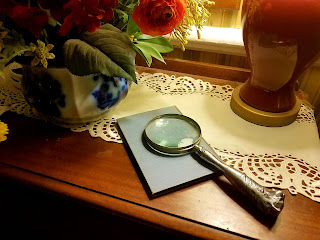
Photos: "Dream Detective" and "Yoruba Gelede Mask" by RM


Sunday, March 29, 2020

Do Not Let Your Mind Fall: On the Practice of Anamnesis

“The whole of world history often seems to be nothing more than a picture book which portrays humanity’s most powerful and senseless desire – the desire to forget.”
- Herman Hesse, Journey to the East
Active Dreaming, as I teach and live it,is a practice of soul remembering: reclaiming the knowledge that belonged to us on the level of mind and spirit before we came here, and our relationship with the collective odyssey of our kind and with all that is alive and conscious in our world. When I was a boy, one of my invisible friends was a wise teacher who appeared as a radiant young man who seemed to come from the eastern side of the Mediterranean. He told me that the most important things I would ever know would come by way of anamnesis, which literally means "remembering" but has the deeper meaning mentioned above. This is perhaps the most important teaching I have ever received and I seek to live by it. Anamnesis is a way of direct experience. Growing your dream recall is excellent everyday practice in the art of soul remembering. You wake up to the fact at all times you are present in many worlds. You realize that you are never confined to the body or to linear time except by your lack of courage or imagination. Learning to journey to the place between lives - to where you were, let us say, a little before conception and a little after death - is vital practice. It will give you first-hand confirmation that consciousness survives physical death, which may enable you to see the dramas of current life as part of a divine comedy. Recalling that you may have come to this world on an assignment is an essential part of anamnesis. I was once jolted awake at 3 in the morning by a knock on the door of my house. When I went to the door, I found a smiling young man, under bright moonlight, who introduced himself by saying, "I come from my father's house." He then shocked me by asking, "What is your contract with God?" I now came out of the dream, knowing that the visitation was entirely real, and hugely important. If I had a contract with God, how could I have forgotten it? Though the question was not couched in my usual language, it set me the task of revisiting choices I made before I became Robert in this life. This reopened direct links to personalities in other times. For the Pythagoreans, anamnesis specifically involved mental communication with other members of a reincarnational lineage of initiates. The Neoplatonist Proclus, who consulted with Plutarch in the middle of the night, saw that great moralist and biographer as a previous incarnation of his own essence. As I explored my own connections with my counterparts in other times and other dimensions I came to the conclusion that from the perspective of a Greater Self, it is all going on Now. We are not simply engaged in reincarnational dramas, but members of a multidimensional families whose actions affect each other across time. Anamnesis, in the history (past and future) of our kind, requires us to master the arts of what I have called dream archaeology. We have the ability, as shamanic dreamers,to enter the living experience of our kind in other times and other circumstances, to learn from this,and even to communicate, mind to mind, with people who are connected with us in those situations. We can do this within our own lives.We can journey to a younger self to act as the mentor and cheerleader she may desperately need in a tough transition. We can journey to a possible older and hopefully wiser self to gain perspective from what she or he has lived, beyond what we know.
For humans, anamnesis involves more than remembering all that it means to be human, part of the odyssey of our species on a blue planet orbiting a medium-size star, joined in a common ancestry that starts with an ancient Eve in Africa or someone before her. It means remembering that we live in a fragile ecosphere on the skin of Gaia with responsibility for all that shares life with us on her body. It means remembering that we are made of seawater and the dust of a distant star, and that our knowledge of our full identity and purpose may depend on remembering the experience of another world. The First Peoples of the area where I live - the Onkwehonwe, or Iroquois - say that our world began when Sky Woman fell from another world, called Earth-in-the-Sky. to dance our world into being on Turtle's back. They say that we fall into the Dark Times when we forget the life and the knowledge of that other world. In Mohawk, a language I had to study because of my dreams, when you tell someone to remember you say Tosa 'sasa' nikon'ren. This literally means, "Do not let your mind fall." In other words: Remember the higher world where your life and purpose have their source. I wrote a little poem about

The Art of Memory

Dreaming, waking or in between
in any part of the multiverse
in any body, in any life
you are invited to play
a memory game.

Whatever world you are in

the trick is to remember
the other worlds you inhabit
where you are dead and more alive

and the self that is dreaming you.


Picture: Ziggurat abode of the Moon god Nanna at Ur

Monday, January 27, 2020

When we become a dreaming society

I have a dream: that we will again become a society of dreamers. In a dreaming culture, dreams are valued and celebrated. The first business of the day, for most people, is to share dreams – dreams from the night, and dreams of life - and seek to harvest their guidance. The community joins in manifesting the energy and insight of dreams in waking life. In a dreaming culture, nobody says, “It’s only a dream" or “In your dreams, mister.” It is understood that dreams are both wishes (“I have a dream”) and experiences of the soul.
     If dreams were honored throughout our society, our world would be different, and magical. Let me count the ways:

1. Dream Partners.

Personal relations will be richer, more intimate and creative. There will be less room for pretense and denial. Sharing dreams, we overcome the taboos that prevent us from expressing our real needs and feelings and open ourselves to those of others.

2. Family life and home entertainment.

“What did you dream?” is the first question asked around the table in a family of dreamers. In our dreaming culture, families everywhere will share dreams and harvest their gifts of story, mutual understanding and healing. Parents will listen to their children’s dreams and help them to confront and overcome nightmare terrors. Best of all, they will learn from their children, because kids are wonderful dreamers. This might be bad for TV ratings but it would bring back the precious arts of storytelling, helping us learn to tell our own story (a gift with almost limitless applications) and to recognize the larger story of our lives.

3. Dream Healing.

In our dreaming culture, dream groups will be a vital part of every clinic, hospital and treatment center and doctors will begin their patient interviews by asking about dreams as well as physical symptoms. Health costs will plummet, because when we listen to our dreams, we receive keys to self-healing. Dreams often alert us to possible health problems long before physical symptoms develop; by heeding those messages, we can sometimes avoid manifesting those symptoms. Dreams give us an impeccable nightly readout on our physical, emotional and spiritual health.

4. The Care of Souls.

As a dreaming culture, we will remember that the causes of disease are spiritual as well as physical. We will use dreams to facilitate soul recovery. In dreams where we encounter a younger version of ourselves, or are drawn back to a scene from childhood, we are brought to recognize a deeper kind of energy loss, that shamans call soul loss. Through trauma or abuse, through addiction or great sadness, we can lose a part of our vital soul energy. So long as it is missing, we are not whole and the gap may be filled by sickness or addiction. Dreams show us what has become of our lost children and when it is timely to call them home.

5. Dream Incubation.

In a dreaming culture, we will remember to “sleep on it,” asking dreams for creative guidance on school assignments, work projects, relationships and whatever challenges are looming in waking life. When we seek dream guidance, we must be ready for answers that go beyond our questions, because the dream source is infinitely deeper and wiser than what Yeats called the “daily trivial mind.”

6. Using Dream Radar.

Dreaming, we routinely fold time and space and scout far into the future. As a dreaming culture, we will work with dream precognition on a daily basis -- and develop strategies to revise the possible futures foreseen in dreams for the benefit of ourselves and others.

7. Building Communities.

When we share dreams with others, we recognize something of ourselves in their experiences. This helps us to move beyond prejudice and build heart-centered communities.

8. The Art of Dying.

The path of the soul after death, say the Plains Indians, is the same as the path of the soul in dreams -- except that after physical death, we won’t come back to the same body. Dreamwork is a vital tool in helping the dying to prepare for the conditions of the afterlife.

9. Walking the Path of Soul.

The greatest gift of dreaming is that it facilitates an encounter between the little self and the big Self. Active Dreaming is a vital form of soul remembering: of reclaiming knowledge that belonged to us, on the levels of soul and spirit, before we entered this life experience. So much of the harm we do to ourselves and others stems from the fact that we have forgotten who we are and what we are meant to become. Dreaming, we remember, and encounter authentic spiritual guides who will help us on our paths.

Photo: RM leading a fire ceremony at a gathering of Active Dreamers in the New York Adirondack Mountains

Saturday, July 27, 2019

The Gates of Anamnesis


Essential knowledge comes to us through soul remembering: through reclaiming the knowledge that belonged to us, on the level of mind or spirit, before we came into the body in our present life experience. This has been central to my understanding of everything since I was in my early teens, when I received instruction from an interesting mentor.
    He was one of my invisible companions. He usually appeared at my bedside in the middle of the night, when I was drifting in a twilight state of consciousness in that place between sleep and awake. He presented himself as a radiant young man from the eastern end of the Mediterranean. He came from a Greek community on the coast of the country we now call Syria.
     His name was Philemon. Many years later, I
discovered another Philemon, but this was the first time I had heard this name. This beautiful young man spoke to me in the language of the Platonists. He told me, “Everything important, everything you need to know that matters comes to you by way of anamnesis.”  The brain of my fourteen-year-old self did not previously contain that difficult word anamnesis. You can actually find anamnesis in an English language dictionary. However, it is not exactly household word. It's Greek and Philemon was using it in a very special sense.
     Anamnesis literally means “remembering”, but it's about more than remembering what you put on the grocery list or what you read in that textbook. Anamnesis in the doctrine of the Neoplatonist philosophers anamnesis is about remembering what belongs to us on the level of soul and spirit. Remembering perhaps the reasons we came here in the first place, why we took on embodiment in this life. It is as important as that. To regain such essential knowledge requires the practice of soul remembering.
    I learned later that in another Greek school of philosophy, attributed to Pythagoras, anamnesis is also about remembering your connection with a series of personalities living in other times. These may be reincarnational experiences, but there may be even more going on. Through anamnesis, you come to recognize that you are connected with personalities in other times and other dimensions and you can communicate with each other. When you do that, you bring together the knowledge of many selves. You start to see how your present life story is part of a much larger pattern. You find it possible to draw together lessons and gifts from many members of your multidimensional family.
     Heady stuff for a teenage boy in Canberra, Australia. I could do a little research, and was already reading Plutarch, but I was only able to unfold what all of this was about when I got to university and had access to a real research library. We did not have Google back in those days.
     When I read Jung’s Memories, Dreams, Reflections at seventeen or eighteen, I discovered that Jung had a guide he called Philemon.  Jung’s Philemon looked very different from mine. His portrait is in the Red Book. Jung saw him as an old man with a long beard, bull horns and wings of kingfisher blue.He said that his Philemon taught him "the objective reality of the psyche"; that what we see as subjective or interior phenomenon are also out there. The contents of the psyche are also objective. They are both personal and transpersonal.

Over all the years, anamnesis has remained one of the most important words in my personal vocabulary, and soul remembering is central to my teaching and practice. We came here for a reason. We may or may not love the reason when we remember it, but we are here for a reason and we come here with stories from before this life. We want to remember those stories. We come here with soul kin, with a soul family extended over space and time. We want to remember more about that and start to connect consciously with our soul family. They will know us.  They will know us. They reach to us as we reach for them. As the Irish mystic AE affirmed, Your own will come to you.


Painting by AE (George Russell)

Thursday, June 27, 2019

Dreaming humanity's path

I have a dream: that we will again become a society of dreamers. In a dreaming culture, dreams are valued and celebrated. The first business of the day, for most people, is to share dreams – dreams from the night, and dreams of life - and seek to harvest their guidance. The community joins in manifesting the energy and insight of dreams in waking life. In a dreaming culture, nobody says, “It’s only a dream" or “In your dreams, mister.” It is understood that dreams are both wishes (“I have a dream”) and experiences of the soul.

If dreams were honored throughout our society, our world would be different, and magical. Let me count the ways:

1. Dream Partners.
Personal relations will be richer, more intimate and creative. There will be less room for pretense and denial. Sharing dreams, we overcome the taboos that prevent us from expressing our real needs and feelings and open ourselves to those of others.

2. Family life and home entertainment.
“What did you dream?” is the first question asked around the table in a family of dreamers. In our dreaming culture, families everywhere will share dreams and harvest their gifts of story, mutual understanding and healing. Parents will listen to their children’s dreams and help them to confront and overcome nightmare terrors. Best of all, they will learn from their children, because kids are wonderful dreamers. This might be bad for TV ratings but it would bring back the precious arts of storytelling, helping us learn to tell our own story (a gift with almost limitless applications) and to recognize the larger story of our lives.

3. Dream Healing.
In our dreaming culture, dream groups will be a vital part of every clinic, hospital and treatment center and doctors will begin their patient interviews by asking about dreams as well as physical symptoms. Health costs will plummet, because when we listen to our dreams, we receive keys to self-healing. Dreams often alert us to possible health problems long before physical symptoms develop; by heeding those messages, we can sometimes avoid manifesting those symptoms. Dreams give us an impeccable nightly readout on our physical, emotional and spiritual health.

4. The Care of Souls.
As a dreaming culture, we will remember that the causes of disease are spiritual as well as physical. We will use dreams to facilitate soul recovery. In dreams where we encounter a younger version of ourselves, or are drawn back to a scene from childhood, we are brought to recognize a deeper kind of energy loss, that shamans call soul loss. Through trauma or abuse, through addiction or great sadness, we can lose a part of our vital soul energy. So long as it is missing, we are not whole and the gap may be filled by sickness or addiction. Dreams show us what has become of our lost children and when it is timely to call them home.

5. Dream Incubation.
In a dreaming culture, we will remember to “sleep on it,” asking dreams for creative guidance on school assignments, work projects, relationships and whatever challenges are looming in waking life. When we seek dream guidance, we must be ready for answers that go beyond our questions, because the dream source is infinitely deeper and wiser than what Yeats called the “daily trivial mind.”

6. Using Dream Radar.
Dreaming, we routinely fold time and space and scout far into the future. As a dreaming culture, we will work with dream precognition on a daily basis -- and develop strategies to revise the possible futures foreseen in dreams for the benefit of ourselves and others.

7. Building Communities.
When we share dreams with others, we recognize something of ourselves in their experiences. This helps us to move beyond prejudice and build heart-centered communities.

8. The Art of Dying.
The path of the soul after death, say the Plains Indians, is the same as the path of the soul in dreams -- except that after physical death, we won’t come back to the same body. Dreamwork is a vital tool in helping the dying to prepare for the conditions of the afterlife.

9. Walking the Path of Soul.
The greatest gift of dreaming is that it facilitates an encounter between the little self and the big Self. Active dreaming is a vital form of soul remembering: of reclaiming knowledge that belonged to us, on the levels of soul and spirit, before we entered this life experience. So much of the harm we do to ourselves and others stems from the fact that we have forgotten who we are and what we are meant to become. Dreaming, we remember, and encounter authentic spiritual guides who will help us on our paths.


Photo by RM: Dream sharing in one of the retreats I lead for Active Dreamers twice a year on a magic mountain in the New York Adirondacks. 

Sunday, January 27, 2019

The Forgetful Envoy

Life is a process of remembering and forgetting, forgetting and remembering.
    The theme of the forgotten mission is beautifully conveyed by the “Hymn of the Soul” in the gnostic Acts of Thomas. The hero is sent from the East into Egypt in search of the Pearl beyond price, which may be his own Higher Self. Drugged by the food and drink of the country where he now finds himself, he forgets who he is. From the distant land from which he has come, the king and queen and “all the princes of Parthia” send a message to awaken him to the memory of who and what he is and recall him to his forgotten mission.
    The same theme resonates, in modern dress, in Doris Lessing’s allegorical novel Shikasta. An envoy is sent to Earth from a higher civilization in a distant galaxy. To reach his destination, he must pass through a vast waiting area, a plane of mists and illusions, where souls wander between incarnations. On Earth, the envoy succumbs to the miasmal conditions; he forgets who he is and why he has come. An new envoy must be sent to remind him.
    Does the story sound familiar? It could be yours. It has certainly been mine.
    One of my favorite literary versions is Herman Hesse's novella The Journey to the East.  In a time of social collapse, when "there was a readiness to believe in things beyond reality", the narrator joins a pilgrimage to the East under the guidance of a mysterious order described only as the League. He journeys far in search of his spiritual home and regains the knowledge of essential things, such as his purpose for living. However, when he returns to his former environment, he loses his journals and souvenirs and begins to doubt whether his experiences were real. People around him don't believe his accounts. Soon he succumbs to their skepticism. He wonders whether the League itself is only a figment of his imagination.
    But the League has not forgotten him. He is one of its own. He is invited to read his personal file in the League archives. He discovers that four centuries earlier, in another lifetime, he also belonged to the League. He is ashamed. How could he possibly have forgotten this? In a secret alcove, he is permitted to draw back a veil and makes his most extraordinary discovery. It is a small statue that proves to be two figures in one, joined back to back. One of the figures is the traveler himself. In the other, he recognizes the features of the guide who led him on his journey to the East.
    As he studies the twinned figures, amazed, the statue comes to life. His own image melts and flows into that of the guide. It seems that, when fusion is complete, his ordinary self will be absorbed into the larger identity of the guide, the form of a Higher Self.
    Like Hesse's League, our true spiritual teachers do not forget. When we open ourselves to the possibility of remembering who we are and what we might become, they communicate clearly. To receive their knowledge — and recover the knowledge that belonged to us before we came through the tunnel of the birth canal — we must be in a corresponding state of consciousness. As Anaïs Nin remarked, “We do not see things as they are; we see them as we are.”
    Ordinary consciousness is a candle bobbing on a dark river, casting an inconstant circle of light across the water, in which an occasional creature from the deep can be glimpsed indistinctly. The river is vast, flowing into a boundless ocean. This is the sea of the greater Self. We cannot see it by the light of our daily trivial mind, which scarcely combs back the darkness.
    When I was a lonely adolescent in Australia, an inner guide who appeared to me in the form of a radiant young man from the eastern end of the Mediterranean reminded me that the knowledge that matters comes to us through anamnesis. The word literally means "remembering", the antithesis of amnesia. For Plato and the neo-Platonists, it means remembering the knowledge of mind and spirit that belongs to us on a higher plane, knowledge to which we had access before we came into our present bodies.
    Humans are forgetful animals. We forget and remember, remember and forget. Yet our true spiritual teachers stalk us in dreams and speak to us in liminal states of consciousness when we turn off our routine soundtrack and can hear a deeper voice.


Image: Library of the Clementinum, Prague

Wednesday, August 22, 2018

Soul remembering in Yoruba tradition

The Yoruba say that the individual soul, or ori, goes before the high god Olodumare before it joins a physical body. The ori kneels down before Olodumare to receive its destiny. It comes into the world to fulfill this destiny:

What the ori comes to fulfill
It cannot but fulfill it.

This personal destiny is known as iponri, which means “the ori’s portion or lot.” The more fortunate and evolved souls choose their own destiny at the feet of the high god. Most souls accept their fate, with only limited ability to negotiate the details. A third category have their destinies “laid on their backs” and come into the world reluctantly.
     In the Yoruba version, when a soul has received its destiny from Olodumare, it embarks on its journey toward physical birth. When the soul arrives at one of the gates between the worlds, it must answer the question of the Gatekeeper, the oni’bode.

Gatekeeper: Where are you going?
Journeyer: I am going into the world.
Gatekeeper: What are you going to do?
Journeyer: I will be born to a woman named X and a man named Y, in the town of Z.
I will be an only son….At the age of…I will…and will die in…and will be mourned by
all and given proper burial.
Gatekeeper: To. It is sealed. [1]

    The destiny is doubly sealed — at the feet of the high god and at the gates between the worlds.
    When souls come into this world, most forget their contract with the high god: the destiny that has been assigned to them.
    Can the destiny be changed? It can sometimes be changed for the better by divine intercession, especially with the help of Orunmila, the austere lord of divination who cannot be bribed. It can be changed for the worse through the interference of forces of evil. A destiny can be aborted through human weakness and impatience.
    One of the two most important insights, in the Yoruba version, is that “an unhappy destiny can be rectified if it can be ascertained what it is.” There is a story of a father who traveled to Ajiran — a town reputed to be a gate between the worlds — to discover why his children died young. In what was clearly a soul journey, he previewed the probable death of his surviving son from snakebite and was able to use his foreknowledge to prevent this from coming to pass.
    The other vital Yoruba insight is that we have an ally in heaven who is in no way alien to ourselves. This ally can help us remember our destiny — and coach us on how to fulfill it or modify it. The ori has a “double in heaven,” a personal daimon. When the Yoruba offer you the blessing “May ori go with you,” they are actually saying something like, “May you walk with your guardian angel, your own Higher Self.”
    Soul-remembering, in some of the Yoruba stories, is the key to weathering life’s ups and downs with grace and tenacity. There is a tale in the odu — the verse recitations that accompany Ifa divination — of a celebrated royal drummer who decided to commit suicide at the peak of manhood after suffering many misfortunes. He fainted during his suicide attempt.
    The drummer’s soul now comes face-to-face with a Gatekeeper who demands, “Why do you appear unbidden at the gate?”
    He recounts his troubles. The Gatekeeper shuts him up in a room and tells him to listen carefully.
    He hears footfalls as the people who are going to be born in the world come before the Gatekeeper. He listens as they recount their destinies.
   “Have you been listening?” the Gatekeeper demands. “This shows how one’s life is ordered.”
    The would-be suicide is reminded that what happened to him on earth happened in accord with his destiny.
    The Gatekeeper shows dim a house full of goods and a pen full of cattle that were to be his in the next year of his life, according to his destiny.
    The Gatekeeper shows him a house full of goods and a pen full of cattle that were to be his in the next year of his life, according to his destiny. “But through your impatience, you have forfeited everything.”
    The drummer wept and protested so strongly that at last Olodumare granted him an extension — ten more years in which to enjoy his predestined riches.[2]


1. E.Balaji Odowu, Olodumare: God in Yoruba Belief (New York: Wazobia, 1994
2. ibid, 180


Text adapted from Dreamgates: Exploring theWorlds of Soul, Imagination and Life beyond Death by Robert Moss. Published by New World Library

Image above: Ifa divination board. Ifa divination, under the patronage of Orunmila, may assist in remembering the soul's assignments,  opening the possibility that an unhappy destiny can be rectified if it can be ascertained what it is.

Thursday, March 8, 2018

A breathing towards the First World


A short poem by Rilke addresses the theme of what becomes of the dreams of childhood and the child self that is the dreamer. It is titled "Imaginary Career" (Imaginärer Lebenslauf) .Stephen Mitchell's translation goes as follows:


At first a childhood, limitless and free
of any goals. Ah sweet unconsciousness.
Then sudden terror, schoolrooms, slavery.
the plunge into temptation and deep loss.

Defiance. The child bent becomes the bender,
inflicts on others what he once went through.
Loved, feared, rescuer, wrestler, victor,
he takes his vengeance, blow by blow.

And now in vast, cold, empty space, alone.
Yet hidden deep within the grown-up heart
a longing for the first world, the ancient one...

Then from his place of ambush, God leapt out.


Mitchell's version does not quite satisfy me. Lust, which he translates as unconsciousness, means so much more. Edward Snow does better, in his version in the bilingual edition of the Uncollected Poems, when he calls it "unthinking joy".

Snow also has a better and more literal translation of a key phrase in the third stanza, about what is hidden in the grown-up heart (literally, the "constructed form", der errichteten Gestalt):

    a breathing towards the First, the Ancient

 The German original for this line is 

    ein Atemholen nach dem Ersten, Alten...

And here we have the sense of soul, of the possibility of anamnesis, of remembering what the soul knows. And of bringing home the magical child who remembers his home star. A "breathing towards", ein Atemholen...

As I linger on these words, I feel someone deep in me, a boy with freckles and a wooden sword, a love of tigers and brown rivers, breathing towards a blue star. 

Art: "Boy with a Wooden Sword" by Edmund Rode

Wednesday, April 26, 2017

Amnesia and Anamnesis: The Journey of the Forgetful Envoy


Life is a process of remembering and forgetting, forgetting and remembering.
    The theme of the forgotten mission is beautifully conveyed by the “Hymn of the Soul” in the gnostic Acts of Thomas. The hero is sent from the East into Egypt in search of the Pearl beyond price, which may be his own Higher Self. Drugged by the food and drink of the country where he now finds himself, he forgets who he is. From the distant land from which he has come, the king and queen and “all the princes of Parthia” send a message to awaken him to the memory of who and what he is and recall him to his forgotten mission.
    The same theme resonates, in modern dress, in Doris Lessing’s allegorical novel Shikasta. An envoy is sent to Earth from a higher civilization in a distant galaxy. To reach his destination, he must pass through a vast waiting area, a plane of mists and illusions, where souls wander between incarnations. On Earth, the envoy succumbs to the miasmal conditions; he forgets who he is and why he has come. An new envoy must be sent to remind him.
    Does the story sound familiar? It could be yours. It has certainly been mine.
    One of my favorite literary versions is Herman Hesse's novella The Journey to the East.  In a time of social collapse, when "there was a readiness to believe in things beyond reality", the narrator joins a pilgrimage to the East under the guidance of a mysterious order described only as the League. He journeys far in search of his spiritual home and regains the knowledge of essential things, such as his purpose for living. However, when he returns to his former environment, he loses his journals and souvenirs and begins to doubt whether his experiences were real. People around him don't believe his accounts. Soon he succumbs to their skepticism. He wonders whether the League itself is only a figment of his imagination.
    But the League has not forgotten him. He is one of its own. He is invited to read his personal file in the League archives. He discovers that four centuries earlier, in another lifetime, he also belonged to the League. He is ashamed. How could he possibly have forgotten this? In a secret alcove, he is permitted to draw back a veil and makes his most extraordinary discovery. It is a small statue that proves to be two figures in one, joined back to back. One of the figures is the traveler himself. In the other, he recognizes the features of the guide who led him on his journey to the East.
    As he studies the twinned figures, amazed, the statue comes to life. His own image melts and flows into that of the guide. It seems that, when fusion is complete, his ordinary self will be absorbed into the larger identity of the guide, the form of a Higher Self.
    Like Hesse's League, our true spiritual teachers do not forget. When we open ourselves to the possibility of remembering who we are and what we might become, they communicate clearly. To receive their knowledge — and recover the knowledge that belonged to us before we came through the tunnel of the birth canal — we must be in a corresponding state of consciousness. As Anaïs Nin remarked, “We do not see things as they are; we see them as we are.”
    Ordinary consciousness is a candle bobbing on a dark river, casting an inconstant circle of light across the water, in which an occasional creature from the deep can be glimpsed indistinctly. The river is vast, flowing into a boundless ocean. This is the sea of the greater Self. We cannot see it by the light of our daily trivial mind, which scarcely combs back the darkness.
    When I was a lonely adolescent in Australia, an inner guide who appeared to me in the form of a radiant young man from the eastern end of the Mediterranean reminded me that the knowledge that matters comes to us through anamnesis. The word literally means "remembering", the antithesis of amnesia. For Plato and the neo-Platonists, it means remembering the knowledge of mind and spirit that belongs to us on a higher plane, knowledge to which we had access before we came into our present bodies.
    Humans are forgetful animals. We forget and remember, remember and forget. Yet our true spiritual teachers stalk us in dreams and speak to us in liminal states of consciousness when we turn off our routine soundtrack and can hear a deeper voice. 


Part of this text is adapted from chapter 14, "Soul Remembering" in Dreamgates: Exploring the Worlds of Soul, Imagination and Life beyond Death by Robert Moss. Published by New World Library.


Art: "Song of Shambhala" by Nicholas Roerich

Sunday, March 26, 2017

Here on this Earth to make a report on it


I am savoring these lines from a poem titled “Consciousness” by the Nobel laureate Czeslaw Milosz:

I think that I am here, on this earth,
To present a report on it, but to whom I don’t know.
As if I were sent so that whatever takes place
Has meaning because it changes into memory.

These words go deep into the soul. Say them aloud, and see what stirs in you. Perhaps you will sense, however obscurely, a soul assignment older than your entry into your present life experience. This is the beginning of soul remembering: reclaiming the knowledge that belonged to you, in spirit, before you came into your present body.
     With poetic clarity, Milosz also evokes our responsibility, as conscious humans, to be the authors of meaning in our own lives. This requires us to construct stories, and then share them.
      Some must take on this task for whole peoples. In my travels in the Baltic, I became vividly aware of the enormity and vital importance of this task among populations that suffered three savage occupations – by the Soviets, the Nazis and then the Soviets again – during World War II and remained under the iron boot of a totalitarian system that deformed memory and sought to crush the spirit for another 50 years. The Baltic republics are again under the shadow of a huge and threatening neighbor.
      From my travels in Latvia, I brought home a searingly brave and beautiful book, With Dance Shoes in Siberian Snows. The author is Sandra Kalniete, a Latvian art historian who became her country’s foreign minister after independence. She reports on her efforts to construct the true story of her family’s tragic experiences as deportees to the slave labor camps of the Soviet Gulag, where she was born. As the reader trudges, starved, with her mother and grandmother through the Siberian snows, a tiny flame flickers.

…whatever takes place
Has meaning because it changes into memory.

Image: Milosz's refugee certificate from the French Government in the Beinecke Library at Yale.


Friday, March 18, 2016

The Fairy of the Copper Beech Keeps the Lost Girl Safe


A tall, elegant woman from Vienna traveled to Prague to take part in one of my workshops. Her name was Elisabeth. She said she had come because she wanted to find and follow the paths of her soul. I introduced a series of shamanic journeys, and she embarked on all of them with courage and high enthusiasm. She learned how dreams reveal the paths of soul, and how we can use a dream we remember as a portal to realms of soul healing and soul remembering. She traveled with the group on joint expeditions to very special places in nonordinary reality. These included the Magic Library.
     The Magic Library is a real place in another order of reality, one I often call the Imaginal Realm. It is a realm of true imagination. Palaces and temples and schools and pleasure gardens are constructed here through creative interaction, and they may be visited by prepared and invited travelers over centuries or millennia of human time.
     In the Magic Library, access to any form of knowledge is possible. So is contact with master teachers in any field. In introductory workshops, I often invite participants to use their life memories to open the portal. Think of a favorite library or bookshop, museum or gallery where your imagination came alive in the presence of fresh images and ideas. Picture yourself at the threshold. When the drumming begins, step through the door. You'll find yourself in a deepening space. Its contents and possibilities go far beyond the memories you used to come here. Information may be stored here in many forms.
     Elisabeth picked a used bookstore that she loves, in her native city . When she went inside the bookshop (as she told me) she found that a wall of books "peeled back", revealing a garden behind.
     She stepped out, with delight, into the garden, and then into the wood behind it. She paused at a certain tree because someone up in its branches was throwing sticks down at her. When she examined the sticks, she recognized Celtic designs that had been carved on them. Maybe they were Ogham sticks.
     She looked up, and saw a druid perched in the tree.
     She remembered one of the assignments I had suggested for this group journey. She told him, "I am looking for the story I am now living. Can you help me?"
    "Your story is about a Lost Girl," he responded. "When you were young, a tree  fairy took part of your spirit because your world was not safe and it lacked joy. Ever since then, the tree  fairy has kept that girl safe, inside a tree you know." The druid proceeded to identify the tree, and the park where it stands in her native city. Elisabeth remembered the tree, and the park, very clearly from childhood. The tree was a copper beech.
    "You must go to that tree and find your Lost Girl," the druid instructed.
     She promised she would do that, as soon as possible after she goes home. We discussed how, in Celtic folklore, people often sing to bring a soul back home, sometimes from a tree where it has been sheltered and is nesting like a bird. She agreed she would find the right song to sing for her Lost Girl, under the copper beech, to entertain the tree fairy and prove that she was ready to be a lively companion for her child self.
    Elisabeth did what she had promised.  She decided to visit the copper beech on her birthday, a month after the workshop in Prague. In preparation, she journeyed again to the wood behind the Magic Library, with the aid of my shamanic drumming CD, to talk to the druid some more.  She found him waiting for her. He gave her his name. He told her that to meet the tree fairy she must bathe and then smudge herself thoroughly and dress beautifully – taking special care to put on elegant high-heeled shoes. “Go to the tree with innocence and expect nothing. Take some small presents. Carry the song you will find in your heart.”
     She did not yet have her song. She felt it would be sad and wistful. After her return journey to the druid, she dreamed in the night that she was running from her childhood home to the park. She was carrying many carved wooden sticks, like the one the druid had thrown at her.  She came to a playground with a big heap of sand. She remembered playing here as a child, and that there was a kind of cave under the sand. She jumped in the sand and was disappointed to find the cave was not there anymore. She dove deeper, hollowing out a new space with her hands. A little boy appeared, but did not seem to be able to see her. He checked out her cave, and announced it was stable.  Elisabeth felt the presence of another companion, a child friend invisible to her. She knew, in the dream, that it was vitally important to “stabilize” the cave, so she could play with her friend – perhaps her Lost Girl – inside. To accomplish this, she needed “the soul of a tree”.
     She still lacked her song. But a sleep dream the following night gave her a clue. She found herself walking and talking with a charming, creative man. She was surprised to find they were on a train together. Waking, she realized the artist reminded her of George Harrison. She proceeded to take a Beatles song she loved ("Something in the way she moved") and had used for meditation as the tune for the song she would carry to the copper beech, fitting fresh words of her own to the music.
    On the eve of her birthday, she stayed at a family house  near the park. She followed the druid’s instructions. She took a hot bath with lavender oil and smudged her body with Palo Santo wood. She wrote the text of her song on pink paper, decorated it with drawings and folded it as a gift. She rehearsed the song.  Shortly before midnight – which she thought would be a good time for fairy encounters – she dressed in a glamorous sexy dress with high heels.
     It was a very cold night and she found herself alone in the park, except for the jackdaws wheeling and screaming over the nearby monastery. She remembered how the bells of the church had seemed cruelly oppressive to her when she shared her first kiss, aged fourteen, under the copper beech. She placed the little gifts she had brought near the roots of the copper beech. She sat down under the tree, leaning her back against the trunk, and reflected on her purpose: to find a lost part of her soul the now thought might be the scared teen who had kissed her first boyfriend in this place. She started singing her song, over and over. Sadness welled up in her . She sat in the cold for a long time, waiting for something to happen. She heard odd clicking sounds in the tree branches and hen a loud hissing sound behind her left shoulder. She asked the tree fairy to contact her in her dreams and walked back to the house.
     She returned to the tree before dawn. She did not have a new dream but immediately she had a new sign. As the sun rose, she noted the initial E and H inside a heart carved in the bark of the tree. H was the first initial of her boyfriend’s first name. She circled the tree three times, singing her song, feeling rising confidence.
     She went back to the house for a nap and returned to the park in the afternoon. The park was now alive with families and children, running and playing. She remembered what the druid had told her: Come with innocence and expect nothing.
    It was her birthday and she needed to celebrate. She went to her favorite pastry shop and ordered a pot of coffee and angel’s kisses. She made new  friends and walked on the bank of the Danube with them before she returned to the park, singing and inventing new rhymes spontaneously, snapping pictures with her camera, feeling good.
     At sunset, the squalling of the jackdaws was with her again. But the part was still crowded with children. Their laughter reverberated from the playground, and she remembered her dream of the cave under the sand. She sat down on a bench opposite the copper beech, relaxed and in good spirits.
     She closed her eyes. Immediately she was back inside the dream where she learned that she needed the soul of a tree to make a safe space to be with her younger self. The happy noise of the kids in the playground was having the same effect as shamanic drumming, powering her deepening journey into another world. Here is Elisabeth’s account of what followed:

I enter the cave under the hill of sand, which is kept hollow by the soul of a tree. I find the path to another cave under the roots of the copper beech. There I see a beautiful young girl sitting with blond, shoulder-length hair, a miniskirt, silk stockings and black high heeled shoes. She seems to be tied to the tree roots. Then I recognize the real situation. The fine, pink wings of a fairy are wrapped around this girl. I feel good. I embrace the girl. I feel a surge of hope for a freer life, for the power to follow my heart’s desires.
     I ask the girl whether she wants to come with me. She tells me she would like to go dancing with me and that she would love to sing along with me when I play the guitar. And she wants to go to the bakery with me and eat those cookies.
    The fairy is standing very close to the girl. When I greet her, the fairy says that I can take the young Elisabeth with me for dancing and music and visits to the bakery. However, she says firmly, young Elisabeth will be best protected if she continues to live with her. That way, she can keep her power intact and believe in herself fully. The problem seems to be that there are still disturbances and confusion in my life.
     The fairy assures me that I will be welcome whenever I come to visit their hill and their cave. She tells me my own roots are here, under the copper beech, and that this is more my home than the family place where I stayed overnight. Here, under the tree, is where my soul can always  and recover. I chose this tree in this park as my refuge and soul shelter when I was a child. Here I will always find home.
     The fairy tells me to find a beautiful red leather book and write the stories of my life in it, starting with this one. In German, “red book” (rotes Buch) is basically the same as “copper beech” (Rotebuche).
     Then I danced with her and the young Elisabeth. As we moved together, the fairy draped magical garments around us. We rose up into the air, dancing. The wind carried us higher and higher. We floated and wheeled over the park, the forest, the city, the river. I enjoyed the cold winter wind streaming over my skin, lifting my hair, as we fluttered like butterflies in widening circles.
     Rain started to fall, and the drops helped bring us down again, to the fairy hill and the cave beneath the tree roots. We embraced and said farewell, for now..
     Finding myself back in my body on the bench, I kissed the bark of the copper beech, gently, where the initials were carved inside a heart. I walked from the park humming the song I had made for the fairy. I went back to the bakery and bought a lot of angel kisses, for the Lost Girl who is now found, and for me.