Showing posts with label Odin. Show all posts

Wednesday, August 20, 2025

Yggdrasil, a Place to Stand


The red fox stands beside the tree gate.
I’m never at ease when he shows himself,
but he is flanked by the black dog,
ever watchful and reliable, a true guardian,
and there seems to be no conflict between them.
This is new. I could take the open door
down through the roots of the world tree
but I am distracted by the frisky moves
of a squirrel that is running down the trunk.

He is as big as an elephant, perfectly in scale
with the tree that rises into the clouds
and could contain cities. His presence confirms
I am at the place where a shaman-god
hung for nine days and nine nights,
sacrificing himself to himself.

Rattling his nuts, the squirrel of mischief
plunges into the Lower World ahead of me.
He is playing his old game, Wake the Dragon.
Fire and stink rise from the roots of the tree.
Earth shudders. The squirrel snickers in glee.
Ratatosk, Ratatosk, Ratatosk.
Here he comes back again.
He scurries up the tree, all the way to the top,
telling tall tales to anger the heaven bird
that keeps watch over all the worlds.

Dragon rises. Branches of the world tree
creak and groan as the eagle shakes out its wings
and comes down, talons eager for battle.
Between them, on a ledge in the tree world,
I see a man in a grey robe, with a broad-brimmed
grey wizard’s hat. There are birds on his shoulders
and a great company of birds all around him.
Lightning is with him. His eyes flash, his hands
spark white fire from the air. His form is never still.
He is the ancient of days, he is the magic man,
he is the young deer prince, antlered and horny.

As the dragon rises to join battle with the heaven bird,
he catches it by the throat with his left hand. His body
twists and buckles as he struggles to hold this power
and raise it. It is pulling him down, tearing him apart,
till he lifts his right hand, palm downward, and the eagle
lands on his wrist as the falcon returns to the falconer.


The balance is  made. The powers of above and below
are joined and turning together, evenly matched.
This is how the game of the world goes on.
The man with lightning eyes is calling me.
Come. Stand where I stand. See what I see.

I am drawn to him as the sparks fly upwards.
On his edge between the worlds,
my body stretches beyond itself,
my mind cracks open like the squirrel’s nuts.
Ratatosk, Ratatosk. There is a role for mischief.
And I have found the right place to stand.

-          October 17, 2014


From a vision while leading a group shamanic journey through the Tree Gate at the Hameau de l’Etoile, near Montpellier. We danced on the mythic edge all week, and my dreams and visions - like those of many in our gifted circle - often turned on Greek themes. But on a certain day, I was hurled deep into an indelible scene that seemed to come from the Nordic imagination.

Art "L'arbre et la brume" (c) Annick Bougerolle

Wednesday, February 12, 2025

Wyrd and weirder


Read the Eddas (literally the “great-grandmothers”) and the Icelandic sagas with care, and you will find not only Viking battle stories, but some profound insights into the human condition and the interconnectedness of things.

The key word here is Wyrd, from which “weird” derives. Wyrd is often translated as “fate” or “destiny” but it is related to weohrtan, which means “to become”. Wyrd is best understood as a web of connection, joining everything that happens in this world to movements in other worlds. 

Events that may appear to be separate in time or space are connected by threads that are fine, supple and strong. Any movement in any part of the web may be felt anywhere else. Omens point to patterns, they are not just about something that is going to happen in the future. If you know the ways of Wyrd, you use them to read the patterns of connection. If you are a master of these things, you may be able to pull on the threads to change the patterns.

Wyrd is beyond the gods. The web precedes gods and men and lives after them. We call it a pattern, but like the Tao, as it plays through the Book of Changes, it is in constant motion. A lively guide to these matters is Brian Bates’ “documentary novel” The Way of Wyrd, where an Anglo-Saxon sorcerer instructs that “Wyrd itself is constant change, yet because it is created at every moment it is unchanging, like the still center of a whirlpool. All we can see are the ripples dancing on top of the water.” [1] Yet by studying the ripples you can detect what is moving at the bottom of the water, or far away across its expanse. 

Because we are part of Wyrd, we can never see the whole. So we look for ways to see enough to help us navigate. Carving and casting runes is a way. So are dreams, and those special moments when you awaken to the workings of the deeper pattern. “Man is touched by wyrd when he becomes involved in matters whose nature and origins extend beyond existence on earth,” Germanic scholar Paul Bauschatz explains. “There are times…when apparently ordinary activities acquire special significance, and it seems likely that at these times daily life is touched and colored with elements beyond our limited perceptions.” [2] There is room to re-weave the threads of Wyrd. 

Jenny Blain, who has participated in the revival of ancient Norse seiðr, or shamanic rituals, observes that “this concept of Wyrd is one that is being developed within the community. Though often translated as 'fate' and sometimes equated to 'karma', it has a more dynamic sense. People are active agents in the creation of their own personal wyrd, or ørlög. Their deeds and vows, strands of ørlög, become part of the fabric of Wyrd.” Those who work the seiðr  rituals feel they are “'reading' Wyrd, seeing along the threads of the fabric to possible outcomes. Others within the community consider that seiðr in the past involved active interception of the fabric, 'tugging' at the threads,"[3] 

In English, the word “weird” derives from Wyrd. It declined from common usage in England until Shakespeare revived it, with a sinister twist, with the Weird Sisters in Macbeth. It retained some of its original meaning a little longer in Scotland, where if you called someone “weirdless” you were saying that he was unlucky. 

In more recent times, to call something “weird” is to say that it is strange, uncanny, hard to explain and maybe spooky. A “weirdo” is someone who is very strange. Yet thanks to a campaign that started in Austin, Texas, “weird” has been making a comeback. Austin is the first North American city to sprout a poster campaign to keep the city weird. Keep Austin Weird. Other cities followed suit.

One of my favorite books on Northern European traditions is The Well of Remembrance by Ralph Metzner, who embarked on a quest to reclaim the mythic wisdom of his ancestors from the Nazi curse. He was drawn to Odin, not as a war god but as the poet-shaman wandering between the worlds, facilitating direct and personal revelation. In the course of his quest, he writes, “Often I felt as though I was seized, or inspired. I would think of Odin and get insights or answers to my questions, including questions about the meanings of certain myths. Or I would suddenly find pertinent myths that I had not known before. Strange though it may sound, I would have to say that much of what I am relating in this book has been directly given to me by Odin.” [4]    

I have had similar experiences since Tolkien told me in a dream, many years ago, “You must study Scandinavian mythology.” I was at first reluctant to follow that advice, partly because of the long shadow of the Nazi attempt to hijack the gods and symbols of the North.  As I began to walk this ancestral path (I have Scandinavian blood on both sides of my family) in my reading and travel and in my dreams, I was rewarded by special moments of encounter and discovery that left me in no doubt that forces beyond the veil of the world were in play. During a trip to Europe, I had a personal vision of Yggdrasil, the World Tree, from which I wrote a poem.

Since then I have had spontaneous encounters, usually in the fertile space between sleep and awake, with Odin and Freiyja, with Idunn and Loki, and with a powerful völva, or seeress, of the old ways.

The ancestors are calling, calling. And they can use the worldwide web as well as the web of the worlds. It is amusing to note that “wired” is an anagram for “weird”. A woman named Kim shared the following story. “Sprit likes the wires. The Web, in particular. The deities who work fate, don’t they spin and snip threads? My Mom's picture popped up on a dating app my ex-husband is on. He sent a screen shot. I'd just asked my Mom that morning for a sign that she was there. He had been on that app over a year, and he showed me how faces appeared as you scrolled through and how you could indicate interest or not. My Mom was never on a dating site, and certainly wouldn't be suitable to his selected age range. I think that via the Web, we can have communication with the Other Side.”


References

 1. Brian Bates The Way of Wyrd: Tales of an Anglo-Saxon Sorcerer (London: Century, 1987) 75

2. Paul C. Bauschatz, The Well and the Tree: World and Time in Early Germanic Culture (Amherst, MA: University of Massachusetts Press, 1982), 28

3.   3. Jenny Blain, Nine Worlds of Seid-Magic: Ecstasy and Neo-Shamanism in Northern European Paganism (London: Routledge, 2002), 15

      4. Ralph Metzner, The Well of Remembrance: Rediscovering the Earth Wisdom Myths of Northern Europe (Boston: Shambhala, 1994) 10


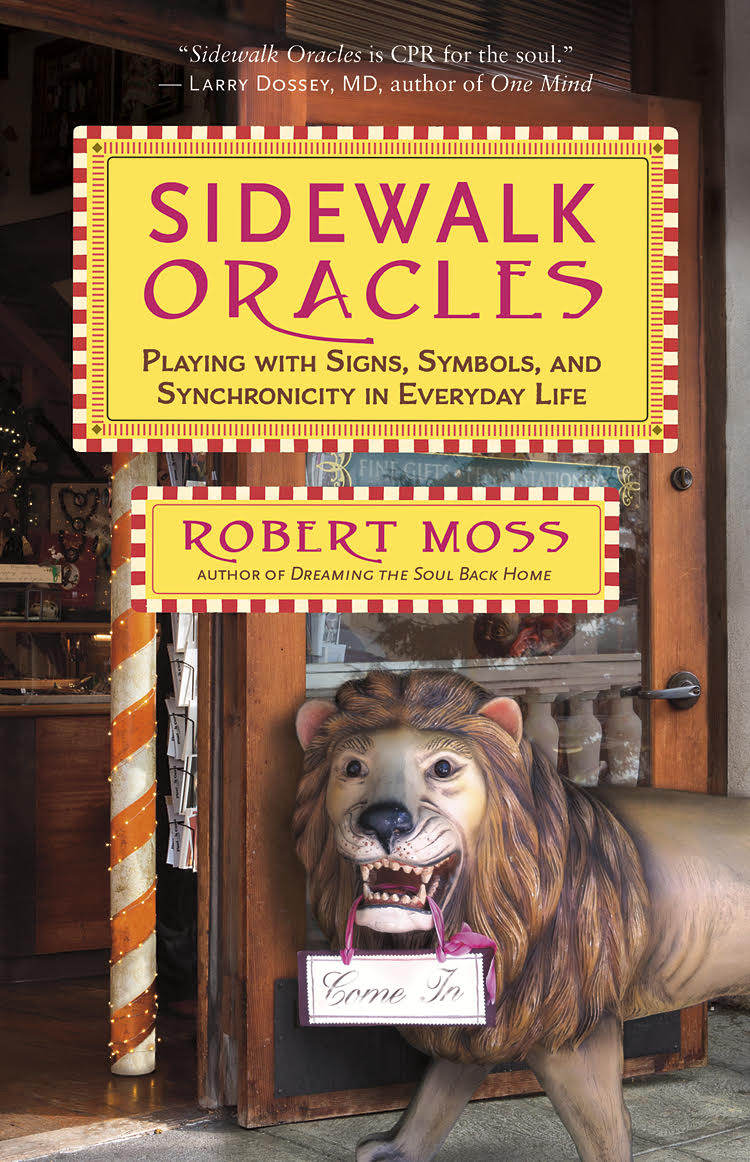
Text adapted from Sidewalk Oracles: Playing withSigns, Symbols and Synchronicity in Everyday Life by Robert Moss. Published by New World Library.

Sunday, September 10, 2023

Raven Eye


In myth and legend, the raven is many things: trickster and creator, messenger and seer, personification of ravening greed, harbinger of death, companion or form of the Goddess. Here I want to speak about raven as an oracle bird, one that can lend us his or her sight. 

Odin sees far with the help of twin ravens, named Huginn and Muninn, Thought and Memory. They fly all over this Middle World, returning with information. In the Prose Edda, Odin is called "raven god" because of his close association with these birds. 

The raven has an equal role in the legends of Celtic seership. The raven is also the seeing-bird of Apollo, the owner of the most famous oracle of the ancient world, at Delphi. In the Greek story the raven was white until it brought the god the news of the infidelity of his mate Coronis (the Crow-Woman); his fury blasted it until it was black. 

In dreams and journeys over many years, I have found the raven an impeccable ally when there is a need to see into dark places or see into the future. It has served as an ally in shamanic healing, plucking out the cells of disease. When I look into the raven's eye, I see a screen like a television monitor on which images of things I need to know appear; sometimes I can also travel through the screen, to explore a scene beyond it. 

In seership trainings in my Active Dreaming workshops, I suggest to participants - after they have done some foundation work - that they can borrow the keen sight of twin ravens named Thought and Memory to go scouting the possible future. They don't have to rely on their own intuition or intelligence; they are to let the birds do the work. The quality of the information gathered by raven trackers in these exercises is often remarkable, even when the scouts have had no prior experience of doing anything remotely like this. 

Despite their literary reputation, ravens aren't solitary birds, unless forced to be; they mate for life.  

Here's a poem I wrote to honor some of Raven's gifts:


Sun Stealer  

They say you stole the sun. 
This is inexact. 
You hid the light in darkness 
where the light-killers could not find it 
so the sun could shine brighter than before. 

They say you are black
because you are evil and unkind.
They do not say you swallowed
your own shadow and mastered it
at the price of wearing its colors.

Shivering, they call you death-knell,
Death-eater, bad omen, flying banshee
because you feed on death that feeds on men.
You strip what rots from what remains. 
You give us the purity of the bones. 

Trickster, they call you. 
Oh yes, you'll do your wickedest
to ensure our way is never routine 
and we are forced to improvise and transform. 
You won't let us swap our souls for a plan. 

At least they don't accuse you of minor crimes.
I praise and claim your gifts 
of putting on darkness to come and go safely 
in the darkest places, jesting with Death.


Illustration: "Two Ravens" by Robert Moss


Thursday, March 3, 2022

The Greatest Spell


The Poetic Edda contains the narrative of a young man, Svipdag, who raises his mother from her burial mound to help him on an impossible quest to find the beloved of his soul, his "fated bride". Groa was and is a völva, or seeress. Before she died, with her knowledge of things to come, she told him to call her back when he needed help.
Groa weaves nine spells of protection over him, to preserve him from flood and fire and to change the hearts of enemies so they cannot reach for their swords. The great spell is probably the ninth. If Svipdag finds himself in a "war of words", his own will not fail him.
Wit nor words be wanting you
At behest of the heart

- Grógaldr (The Spell of Groa) in Lee Hollander (trans) The Poetic Edda

The story of Svipdag and Groa has many counterparts in Norse tradition. In the Völuspá, the greatest of the poems in the Poetic Edda, a seeress summoned from the Underworld by the high god Odin tells the story of the creation of the world and its coming destruction and rebirth.

In tale in the Flateyjarbók, a poet is made by dreaming on the burial mound of a dead poet.

Dream Poetry from the Mound

An Icelandic shepherd lay down to sleep on the burial mound of a poet, hoping for inspiration to compose a poem in the style of the bard he admired, though he had no skill with words. While the sheep browsed and dozed, the dead poet appeared to the shepherd in a dream. “I will give you a rare verse. If you learn the verse by heart and can recite it without flaw when you wake, you will become a great poet.”

- Flateyjarbók I: 174 quoted in H. Ellis Davidson, Myths and Symbols in Pagan Europe.

The Norse stories have counterparts in other traditions. A story from Ireland weaves together the theme of calling on wise ancestors and the power of poetic speech.

Raising a Bard to Lift the Fog of Forgetfulness
There is a legend that the great Irish epic, the Táin Bó Cúailnge, or Cattle Raid of Cooley, was brought back from the fogs of forgetfulness when the foremost poets of Ireland gathered at night on the burial mound of Fergus, the ancient druid of dreams and battles. They called on Fergus to awaken. They praised him with drink and gallant words, and above all with fresh poetry.
When one of them delivered a fine enough poem, a deeper mist rose from the tomb, and from the mist came Fergus with his shining hair, to sing again the lost epic of gods and heroes and warrior queens. And the poets caught the words and carried them to the written page.

Illustration: "Old Birch at the Sogneford" by Thomas Fearnley (1839)

Friday, April 2, 2021

Risen God, Goddess Rising


I give thanks for the risen god
The one whose blood became poppies
The one torn apart by the boar
The one who hung himself in the world tree
   sacrificing himself to himself
The one dismembered by his women
    in the ecstasy of their love
The wild bull called to the goddess
    who faces his killer in the arena
The ones who die when the seed corn
     goes into Earth, to sprout again
The deer king who is willing sacrifice
The one whose dark twin boxed him in
     and scattered his parts
     and rose under beating wings
The beautiful shepherd sent down
     to the Underworld by his consort
     to learn all that women endure    
The one who rose from the dark cave
     in a shining body but still wears
     a crown of thorns because of all
    the wrongs that are done in his name


I give thanks for the goddess rising
The one who chose to go down
    to the Great Below to meet her dark sister
The one who was ripped from the daylight world
    to bring treasures out of darkness as
    Queen of the Underworld and of herself
The one who fell through a hole
    in the Earth in the Sky and danced
    a new world into being on turtle’s back
The one who is always three
    maiden, mother, crone
    endlessly recreating herself
The ones who raise their lovers as sons
   and heal the wounded warrior in man
The one who raises the dead to give birth
    to the golden child
The Great Mother of a thousand faces
   whose bounty streams like milk
The Lady of Beasts
The deep mind of Earth
The bright intelligence of stars
The Divine Feminine we need
    to repair our world
    and redeem our kind


I give thanks for the power to die
    and come back on any day.


Drawing "Willing Sacrifice" by RM


Thursday, February 25, 2021

In the Beginning was the Scream of the Hawk


In the Norse creation stories, there are elements we recognize from other mythologies. The world is born from primal chaos. We are inside the body of a cosmic being, macrocosm to our microcosms. The being may have been torn apart in a primordial sacrifice, the origin of human sacrifice to the gods. The Norse version, unsurprisingly given the bloody reputation of the Vikings, at first seems more brutal than the rest. 

We read in the Gylfaginning in Snorri’s Edda that the giant Ymir is born out of a yawning void through the contention of fire and ice. Suckled by a primordial cow, Auðhumla, he is eventually slain and dismembered by the gods that are the progeny of a male being the great cow raised with her tongue from a salt-lick. Ymir's blood and sweat become the ocean, his skull the vault of the sky, his hair the trees and so on. Our sources on this are limited, contradictory and mysterious  The least colored by Christianity is in the Vǫluspá in the Poetic Edda, where an undead sorceress tells Odin – the god forever in quest of knowledge – how the world began and how it will end.

Word sleuthing may take us into deeper levels of the myth in the Nordic mind-sea. Norse scholar Henning Kure states that “ masculine name formation Ymir is mentioned in one of the þulur, the name lists, of Snorri’s Edda as a heiti, a synonymous name, for ‘hawk’. As such we are in no doubt that the name is derived from ymja ‘to scream’ and may refer to the bird’s shriek. The very closeness to the similarly derived noun ymr ‘scream, noise’ makes it hard to miss the association and must have been evident to any Old Norse audience.” * In contexts ymr could be the scream of a birthing mother, the groan of a tree or the clang of weapons. When the first being stitrs from primal chaos it is as the Scream of the Hawk.

 Ymir emerges from Ginnungagap, variously described as a yawning gap or as chaos or the void. The prefix ginn- denotes something more than we can grasp, indescribably deep, potent yet formless, prima materia that the Creator – or creators – will shape and fix into definite forms. How do they accomplish this? According to the Vǫluspá, they yppa the world. Come again? The verb yppa can mean to lift, raise, bring up, come into being, announce, reveal. Henning Kure uses etymology as his miner’s lamp to plumb the secrets of creation in the Eddas:

When the sons of Burr [Odin and his brothers] did yppa the world, they made it come into being from the parts of Ymir. Yppa may mean 'announce' and this, I am convinced, is what the gods did. They announced Ymir's flesh to be earth, his bones to be mountains, his sweat to be sea, etc. They created the world by naming it, by putting it into words, and thus defining it in a comprehensible way. The gods announced the world by transforming Ymir – the scream – into words. The scream is the raw material of words. Words are shaping the world.

In the beginning was the scream – the inarticulate and 'much too awesome'. The world was yet to be formulated and contained on a human scale. The process of creation is dependent on the nature of the raw material. In the case of the scream, it must be turned into words and language. Everything exists by being named, designated by a word. *

The gods turn primal Scream into words of power.

Australian Aborigines say that the Ancestors walked this world naming things, and that as they were named, life forms appeared– the crocodile and the river, the gum tree and the goanna. When Odin and his brothers declared that some part of Ymir’s anatomy would become mountains or ocean, that his eyebrows would become a shield wall between giants and humans, metaphor became manifestation. In the beginning was the word, in the Eddas as in Genesis.


*Henning Kure, “In the beginning was the Scream Conceptual thought in the Old Norse myth of creation” in Rudolf Simek & Judith Meurer (eds.): Scandinavia and Christian Europe in the Middle Ages. Papers of The 12th International Saga Conference, Bonn: University of Bonn, 2003) pp. 311-319

 Image; Ginnungagap. Creator not yet identified!

Thursday, January 28, 2021

RAVEN EYE: Sun Stealer


RAVEN EYE: Sun Stealer


They say you stole the sun.
This is inexact.
You hid the light in darkness
where the light-killers could not find it
so the sun could shine brighter than before.


They say you are black
because you are evil and unkind.
They do not say you swallowed
your own shadow and mastered it
at the price of wearing its colors.


Shivering, they call you death-knell,
Death-eater, bad omen, flying banshee
because you feed on death that feeds on men.
You strip what rots from what remains.
You give us the purity of the bones.


Trickster, they call you.
Oh yes, you'll do your wickedest
to ensure our way is never routine
and we are forced to improvise and transform.
You won't let us swap our souls for a plan.


At least they don't accuse you
of minor crimes.
I praise and claim your gifts
of putting on darkness to come and go safely
in the darkest places, joking with Death.


COMMENT: The kindness of ravens. Our collective noun for a group of crows is "murder". The word for a group of ravens is even crueler; those who know it speak of an "unkindness" of ravens. Yet I have found the raven to be an impeccable ally in seeing into dark places, and in training frequent flyers in the arts of the dream seer, I often call in the ravenous eye. Be it noted that in working with Raven this way, it is vastly desirable to call in a pair, as Odin knew when he sent off his twin ravens, Thought and Memory, to scout for him. I wrote this poem for Raven at the end of a marvelous adventure in group shamanic journeying, when many of us were able to see true with the help of raven eyes.


Drawing by RM. Acknowledgments to Bernd Heinrich who showed me how to depict a raven fluffing out its feathers in a display in his marvelous book Ravens in Winter.


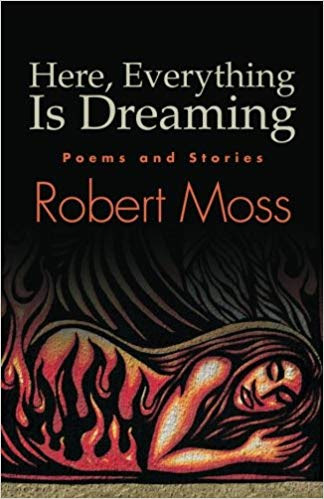
This tribute to Raven is included in my collection of poems and stories, Here, Everything Is Dreaming, published by Exclesior Editions, an imprint of State University of New York Press.

Thursday, December 31, 2020

The Wand Woman and the Odin Squirt

 I do much of my best reading and research in the middle of the night, between naps. Last night I decided to take a break from my recent four hour sessions with Jung's Black Books (which make the Red Book look like beach reading) and return to my studies of Viking era history, mystery and magical practices.


My particular focus last night was the staff or wand of the völva, or seeress. The word völva means "staff-carrier" or wand woman and the staff was her principal power tool, used for summoning spirits, for projecting harm or healing, for astral riding, for opening portals between worlds, for blasting enemies and probably for sex magic. It could be as large as a medieval pole-weapon or as slim and elegant as a wand acquired in Diagon Alley in the Harry Potter stories.

I read the description of a decorated völr (staff) in the Saga of Erik the Red. I examined scores of photos of staffs unearthed in the gravesites of Scandinavian women of power in Neil Price's monumental book The Viking Way. Most of the ones that have survived are metal but surely many more - long since decomposed - were of wood. One of the surviving wooden staffs, found in a bog at Hemdrup in Jyllund, Denmark, has a remarkable set of carvings suggesting an association with soul travel. A female figure in a feathered robe appears to be flying through the air, with her dogs nearby amd a triquetra as a magical seal.

I went online seeking more images and discovered that Etsy has dozens of pages offering reconstructions. Then I found this wonderful painting (above) of a völva striding forth with her staff by Arkel Eli Petersen, one of a series reproduced as postage stamps in the Faroe Islands, a self-governing province of Denmark.

I reread the Völuspá in the Poetic Edda, in which Odin journeys to a (deceased) völva to clarify the meaning of a dream and see into the future. Even the All-Father, no slouch at magic himself, turns to a völva when he wants reliable divination.

After five hours with my Norse books, I took a break by cooking one of the few dishes of which I am proud: a super-spicy hot chili loaded with fresh jalapenos and many cloves of garlic. Crushing garlic, I managed to squirt myself and was temporarily blinded in one eye. This has happened before, with lemon juice, as memorable punctiation to an interactive adventure in realms of soul healing and the care and relocation of draugr (Old Norse for the restless dead) I may tell elsewhere. Dabbing garlic juice from my eye,I again recalled how Odin paid with an eye at the well of Mimir for the power to see into the Otherworld.


Note to self: be careful what you squeeze after squeezing in a full helping of Norse mythology and magic.


The Völva as Cat Woman

I have long recgonized that my nocturnal habits are catlike and as I pursue my Norse studies - in dreams and visions as well as in books and conversation with friends who have walked these paths - I am struck by how important cats seem to be in Scandinavian myth and magic. The latest confirmation:


She comes in this silver body from a trove of jewelry unearthed at the former estate of a Viking magnate on Lake Tissø in western Zealand. Since the settlement was named for the god Tyr some scholars speculate that she was part of a blót, a sacrifice to the god. She has the face of a cat, or a shapeshifter in the midst of transformation.
Some think she is Freyja, the great goddess of the Vanir and mistress of magic who rides through the sky in a wagon pulled by cats. I suspect she is a völva, a seeress who may have painted her face like this in seidr and other rituals. Face paint was found inside a little cat-shaped box that was also a belt buckle. In other Viking tombs we find the remains of völva outfits including catskin gloves and hoods lined with catskins.
This cat woman resides for now in the National Museum of Denmark in Copenhagen, at least when the lights are on.


Sunday, April 12, 2020

Risen God, Goddess Rising


Today I give thanks for the risen god
The one whose blood became poppies
The one torn apart by the boar
The one who hung himself in the world tree
   sacrificing himself to himself
The one dismembered by his women
    in the ecstasy of their love
The wild bull called to the goddess
    who faces his killer in the arena
The ones who die when the seed corn
     goes into Earth, to sprout again
The deer king who is willing sacrifice
The one whose dark twin boxed him in
     and scattered his parts
     and rose under beating wings
The beautiful shepherd sent down
     to the Underworld by his consort
     to learn all that women endure    
The one who rose from the dark cave
     in a shining body but still wears
     a crown of thorns because of all
    the wrongs that are done in his name

Today I give thanks for the goddess rising
The one who chose to go down
    to the Great Below to meet her dark sister
The one who was ripped from the daylight world
    to bring treasures out of darkness as
    Queen of the Underworld and of herself
The one who fell through a hole
    in the Earth in the Sky and danced
    a new world into being on turtle’s back
The one who is always three
    maiden, mother, crone
    endlessly recreating herself
The ones who raise their lovers as sons
   and heal the wounded warrior in man
The one who raises the dead to give birth
    to the golden child
The Great Mother of a thousand faces
   whose bounty streams like milk
The Lady of Beasts
The deep mind of Earth
The bright intelligence of stars
The Divine Feminine we need
    to repair our world
    and redeem our kind

I give thanks for the power to die
    and come back on any day,
    Especially on this day.


- Easter Sunday 2020


Drawings by Robert Moss


Monday, February 11, 2013

Sun Stealer


RAVEN EYE: Sun Stealer


They say you stole the sun.
This is inexact.
You hid the light in darkness
where the light-killers could not find it
so the sun could shine brighter than before.


They say you are black
because you are evil and unkind.
They do not say you swallowed
your own shadow and mastered it
at the price of wearing its colors.


Shivering, they call you death-knell,
Death-eater, bad omen, flying banshee
because you feed on death that feeds on men.
You strip what rots from what remains.
You give us the purity of the bones.


Trickster, they call you.
Oh yes, you'll do your wickedest
to ensure our way is never routine
and we are forced to improvise and transform.
You won't let us swap our souls for a plan.


At least they don't accuse you
of minor crimes.
I praise and claim your gifts
of putting on darkness to come and go safely
in the darkest places, joking with Death.


COMMENT: The kindness of ravens. Our collective noun for a group of crows is "murder". The word for a group of ravens is even crueler; those who know it speak of an "unkindness" of ravens. Yet I have found the raven to be an impeccable ally in seeing into dark places, and in training frequent flyers in the arts of the dream seer, I often call in the ravenous eye. Be it noted that in working with Raven this way, it is vastly desirable to call in a pair, as Odin knew when he sent off his twin ravens, Thought and Memory, to scout for him. I wrote this poem for Raven at the end of a marvelous adventure in group dreaming, when many of us were able to see true with the help of that raven eye. I am posting it today because of further excellent adventures in tracking with the help of the Two Ravens in my recent workshop in Frankfurt.


This tribute to Raven is included in my new collection of poems and stories, Here,
Everything Is Dreaming, published by Exclesior Editions, an imprint of State University of New York Press.


Raven shaman: drawing by Robert Moss

Sunday, February 10, 2013

Frankfurt journal: Every angel is terrifying


Frankfurt-am-Main, Germany

I can't think of any financial district in the world that announces its dedication to money more flagrantly than in Frankfurt, where a huge neon Euro sign glows in front of the bank towers. One of the dreamers in my Frankfurt workshop shared a dream in which she watched from the roof of her seven-story apartment building, several kilometers a way, as the Deutsche Bank tower imploded and crumbled to dust, followed by all the high-rise towers of high finance around it. "I was safe and my building was untouched," she reported. "I felt my role was to be like a guardian angel and watch over people as they tried to cope with the collapse of their values and their normal structures." Speaking of those values, Frankfurt's downtown business district is cheek-to-cheek with its red light district. Maybe that's because they share the same moral codes.


Side by side on huge plasma screens in the lobby of the hotel where I am leading my workshop (the hotel that promises "Starry Dreams Every Time"): amazing images of (1) a dramatization of an inspection of Adolf Hitler's brain and (2) a documentary about the possible migration of extra-terrestrial life forms on ancient asteroids. Whoa. A nonordinary multidimensional history tutorial, running during the break in our group shamanic adventures in the multiverse.

No, that's not a smartphone. It's a shamanic headphone, one of the pair of ravens I helped members of my workshop for the Frankfurter Ring to invoke to help them track for each other, bringing back life guidance, glimpses of the future, and keys to healing. Odin, who was a shaman before he became a god, relied on a pair of ravens named Thought and Memory to bring him information, sending them out to travel wherever was required. Sometimes they flew so far that he became worried about their safe return. It is said that he was always more anxious to recover Memory than Thought. Another god who relied on ravens was Apollo; interesting that a god of light had black birds at home in dark places as his winged familiars. An ancient Hellenic shaman names Aristeas of Proconessus used to take flight from his mouth in the shape of a raven and was capable of showing up in two places, and two different times, in the same moment. I have dreamed of him too.

Jeder Engel ist schrecklich. That's what I wrote on a card I contributed to our Coincidence Deck in the game we played in the closing session. It's from Rilke, and I  translated this as "Every angel is terrifying." A more literal translation would be "terrible" in the sense in which C.S.Lewis wrote of Aslan: "he is terrible, but he is good". I took a little poetic license - and perhaps Rilke would approve - to make the point that on first contact non-Hallmark angels terrify, by driving us to wake up and step outside our comfort zone and the picket fences of daily ordinary mind.     The workshop member who drew my message from Rilke was originally from Turkey. She found it highly relevant to her intention, which was to find joy in her work and her current life. The deeper powers that are hunting us, seeking to help us recognize and life our life calling, require us to brave up. You'll find the rules of my Coincidence Card Game, and other games for getting life guidance through synchronicity, in my book The Three "Only" Things, published in German as Fingerzeige des Schicksals.

I took a German course as an undergraduate in order to read Rilke and Goethe in the original, but I was lazy about grammar, and regret that my spoken German is so limited. It may grow now that Active Dreaming is growing in Germany, and I have been invited back, and back. I did have the pleasure of learning how to offer my dreamer's wish in German, and of writing it on the flyleaf or title page of many copies of Traum-Heiler, the German edition of Dreaming the Soul Back Home.

 Mögen deine besten Träume Wirklichkeit werden!

"May your best dreams come true" (and may you remember them!)

Friday, June 11, 2010

Symbol Magnets:: Odin, Mercury and the Fox Girl


Symbols come alive for us through coincidence, which they help to generate. A symbol, in the original meaning of the Greek (symbolon) is that which is "thrown together" or "cast together". This is very close to the root meaning of "coincidence", which refers to things that "fall together". In a previous essay, I floated the term symbol magnets in an effort to describe the connecting and manifesting power that is involved here. It is a two- way process. When our minds are charged with a living symbol, we sometimes seem to attract related events. And because a true symbol has autonomous power, in the realm of the collective psyche, a symbol may burst into our ordinary reality.

Earlier peoples spoke of these things in a simpler language, as the interplay between humans and gods, spirits and elemental powers of nature. I confess to having sympathy for the older way of understanding, as did Jung, who invented the terms "archetype" and "psychoid" and "collective unconscious" in an effort to define these phenomena in a vocabulary acceptable to the modern scientific mind, yet loved to quote the old Latin tag omnia plena diis esse ("all things are full of gods").

A case in point: three incidents, played out over three weeks early in 2005, that I just unearthed in my journals:

1
I was called to work with a Danish man who had been physically crippled by a complex of diseases he developed after severe mercury poisoning. The collapse of his health contributed to the collapse of his marriage. Cynical, misogynist, reclusive - and fixedly atheist, denying the existence of the soul - he eventually sought to end his pain with a bottle of sleeping pills.

He needed a soul guide, and I made it my intention to call in a guide that he could perceive and trust and believe in.

Instantly Odin appeared, in a wide-brimmed hat and a flying garment, with his ravens flapping about him, swinging a staff. The figure of Odin was vividly real and unconsidered. His back was turned to me, because all his attention was on the suicide. The Dane had no hesitation in accepting Odin as his guide. Odin took him, not to any of the realms of the Aesir, but deep into the body of a primal goddess, under the waves. I was deeply moved to see this man's healing and rehab begin, in the deeps of the Divine Feminine, through a gate opened by one-eyed Odin.

Interesting - on the mythic plane - that his problems flowed from a toxic relationship with Mercury. The Romans identified Odin with Mercury. "Above all gods they worship Mercury, and count it no sin to win his favor on certain days by human sacrifice,” wrote Tacitus. It seemed the man who had suffered from mercury poisoning had healed his relationship with Mercury.


2
A week later, I met an editor for dinner at a seafood restaurant. During the meal he stabbed a lemon slice with a fork to season his fish - and shot a jet of lemon juice into my left eye, temporarily blinding me. He did not notice what happened.

I said, dabbing my eye with a napkin, "I wonder what it means when a supposedly friendly editor blinds you in the left eye?"

After a quick apology, he shot back without losing a beat, "It's the price Odin paid to Mimir for his wisdom".

I was impressed that his mind had gone straight to the myth of how Odin gave up an eye in order to drink from the well of prophecy and remembrance. After a mouthful of fish, the editor told me that some larger force must definitely have been at work with the lemon squirt, since he was trained to manage such things in a way that few of us are. “I know how to use a fork. I was trained as a sous-chef in Paris to get this kind of thing exactly right. I could not have shot you in the eye unless some powerful force was orchestrating this, a force such as Odin."


3


A week after the Odin squirt, I was on a plane bound to Minneapolis on the first leg of a trans-continental journey. The flight attendant seemed to have stepped out of the Otherworld. She was milk-white with reddish hair and moved like a fleet little woodland animal. I decided she might be an arctic fox - or the altered astral form of a fox, a fox's attempt to project a human double. When she served drinks I noticed that her left eye was brown while her right eye was blue. I told her she had magical eyes and looked like she had just come from Faeryland.

It's said that if your eyes are of different colors it can mean that they see into different worlds. This is a milder version of the Odin motif, where the seer loses one of his physical eyes - part of his ordinary vision - as the price of vision into the deeper world.

THE ODIN RUNE

I was wondering whether to post this sequence here, and played with writing a draft to see how it would come out. When I went to press the "Save Now" button, I hit "Publish Post" by mistake. I corrected this within a few minutes.

Not fast enough, however, to avoid being spotted in a way that suggests the movement of forces beyond the obvious - of Greater Trumps in play. When I next opened my email (still undecided about posting this essay) I found this message from my artist friend Steve Niner, in England: "Did you post a piece that involved Odin on your blog this morning or did I dream it? What ever way it was just what I needed."

I responded that it amazed me that he managed to catch a draft version of this piece during the three or four minutes it was visible.

Steve replied: "Shivery stuff, I have just started working with the runes. I stuck my hand in my rune bag and pulled out Ansuz which is Odin's rune I read the interpretation in the book I am working with ,it was highly pertinent. I then went to my computer looked at the blog reader and there is your Odin post. Had time to read that bit before my daughter kicked me off it to play. Did a drum journey later looking for a teacher to teach me magic guess who shows up. I am reading Dreamgates at the moment."

There's the Odin-Mercury connection again. Ansuz is also called the Messenger Rune, associated with all forms of communication.