Showing posts with label J.B.Priestley. Show all posts

Thursday, March 10, 2022

Time as Dream or Devil in J.B.Priestley


I have been rereading J.B.Priestley and watching movie versions of his “time plays”. These include a quite wonderful 1985 television film of “An Inspector Calls” with David Thewlis starring as the mysterious inspector who interviews a wealthy family after a young woman’s suicide – and then, when the story seems to be over, turns up to start the action all over again. There is also a 1985 film adaptation of "Time and the Conways", my focus in this piece. 

The first and last act of Priestley’s play “Time and the Conways” are set in 1919, the second act in 1937, all in the same room of a spacious Victorian house in north England. In the first act Mrs.Conway and her six children have gathered for the 21st birthday of her daughter Kay, and they are dressing up for charades. We see the varying ambitions of the adult children – Robin, just demobbed from the RAF, thinks he’ll make money and lead a dashing life by selling cars. Kay wants to be a novelist though she has just burned the draft of her first novel as “putrid”. Beautiful Hazel expects to marry someone one rich and tall and handsome. Madge, a severe school teacher, wants a Socialist utopia. Carol has quieter ambitions. Alan, void of any sense of style or self-importance, is content to live with his mother and work as an unnoticed clerk in local government. Moving in and out are visitors including Joan – who rebuffs Alan’s attentions, drawn to Robin’s bad boy glamour, and a ferrety lower-class little fellow named Beevers who’s been sniffing after Hazel and is brought in by the family solicitor. Hazel snubs him. 

Towards the end of Act 1 Kate and Alan talk about time. Kate says it’s a devil. Alan says it’s a dream. They have the power to see all of their lives from beginning to end. At any given moment they are looking only at a “cross-section”. Seeing the whole story will give them the sense that despite everything, all is well. He quotes lines from William Blake to that effect. And says he will give her a book about time (certainly Dunne) to read on the train. 

In Act II we shift from the aftermath of one world war to the eve of another and see how life has worked out for everyone. Carol died very young, perhaps from cancer. Robin is a drunk who married Joan who now wants a divorce. Kate is successful as a journalist but never published a novel. Madge is bitter and cynical, hoping to get a job as a headmistress. Beevers has made lots of money and married Hazel, who lives in fear of his sadistic abuse. Alan is quiet and philosophical as ever. Mrs. Conway is in desperate financial straits and may have to sell her house for a lot less than it used to be worth. Kate has a vague recollection of some lines from Blake. Slowly, they come to her.


Joy and woe are woven fine
a clothing for the soul divine
and when this….we rightly know
safely through the world we go

 In Act III we pick up from where we left Act I before, in the cheerful mess left from the dress-up games. Beevers is still being slighted. Mrs. Conway and some of her children, playing psychics, deliver happy predictions about how life will turn out for everyone. Mrs. Conway reports that she was offered an amazing sum for her house and a big profit for her shares but of course has no reason to accept… 

So this is not about time travel but rather foreknowledge. It dramatizes the idea of the “long body”: that past, present and future all exist simultaneously and that in life we travel through “cross sections” of a reality that is already complete. The play delivers two cross-sections of the life of the Conways, with the hint that with greater awareness the actors could learn to remember the future and see the larger pattern. The script doesn’t take us to the idea that if you can see the future, you might be able to change it for the better. The benefit, if any, might be that you are better prepared to accept your fate. 

Priestley had been impressed by J.W.Dunne’s theories of time and introduced the author to the original cast of “Time and the Conways”. Priestley later quipped that the actors gave the best performance of their lives when they pretended to understand Dunne's concept of Serialism.

Though the play is entertaining in its period drawing-room style, the implied philosophy is rather dismal and deterministic, and I am glad that Priestley didn’t stick to it. In other works, notably his huge and splendid nonfiction book Man and Time, he explored the possibility of an order of time he called “Time 3” in which it is possible to make adjustments and choose between alternate event tracks. He did not have the Many Worlds hypothesis that is increasingly popular in modern physics – which holds that our universe is constantly splitting into parallel versions where any outcome is possible.  

However, he did his darnedest to get our minds out of the coffin of a theory of the fourth dimension that maintains that we only see the future because it has already happened and can’t be altered. Like Dunne, he noticed that dreaming is our best way to travel across time and staged an experiment to demonstrate the reality of precognition by collecting first-hand, verifiable reports of foreknowledge through dreams. Outside the Conways’ drawing room, Priestley is one of those who encourage us to make time a dream rather than a devil.


Thursday, January 13, 2022

Dreaming, we are time travelers


We are time travelers in our dreams and one thing that goes on, probably every night, is that the dream self travels into the possible future, scouting out challenges and opportunities that lie ahead. Depending on whether we remember such dream scouts, and can read the information correctly, and can then decide on appropriate action, we can move away from undesirable future events and towards ones that are more attractive.

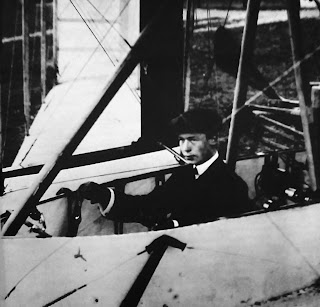
J. W. Dunne (1875-1949) was a pioneer researcher in this field. He was in every way a product of Britain in the Edwardian era. He was not a mystic, a shaman or an occultist. He was a soldier, an aeronautical engineer, a fly fisherman and a crack shot. He came out of the Anglo-Irish military caste. He designed and built the first British military aircraft, and his prototype was soon adopted and manufactured in the United States.  In all things, he was a determined scientist and rationalist who looked for the logic in life’s anomalies. 

What distinguished him from other members of his upper class military type was that he dreamed and remembered and recorded his dreams. He noticed something remarkable. The incidents he dreamed were often located in the future rather than the past. And their content often involved things he knew nothing about before the dreams.

The data that shifted Dunne’s conception of reality – first when he was a sub-lieutenant of the Imperial Yeomanry, fighting the Boers, then when he was convalescing in Italy, and many times later – were dreams in which he saw, with remarkable accuracy, events that lay in the future. Sometimes his dreams anticipated news of world events that he had not yet received. His dreams gave him “news flashes” of an earthquake in Madagascar and of troop movements in Sudan long before the newspapers arrived with printed reports of those events.

Dunne started keeping a detailed journal of his dreams, and found that he dreamed of the future – on average – as often as the past. This led him to realize that in dreams, time works differently than in our usual experience of waking life. He drew friends and family members into an ongoing “Experiment with Time” and collected a great deal of data on “time displacement” as observed in dreams. 

He extended his experiments into waking precognition – for example, by trying to guess what he would find in a book he would later pick up at random in his club. He quickly concluded that precognition can be achieved in waking states as well as in dreams, but requires “a steadying of attention” and practice in controlling the imagination that are not easily attained. 

He published his findings in 1927  in a book titled An Experiment with Time that had wide influence in the interval between the two world wars; it was read and eagerly discussed by many leading scientists, writers and politicians. An expanded and revised edition was published in 1934. This is the version I use, and return to frequently.

Dunne evolved a complex mathematical model he called Serialism in his effort to account for the fact that time does not move in a linear fashion in dreams – and perhaps in the larger universe. In his last book,  Intrusions?,  published posthumously, he makes the bold statement that his precognitive dreams were "caused by something which I was going to experience in waking life later on”.

This is a most interesting theory: that future events not only cast a shadow before them, but cause us to dream of them – and perhaps, in dreaming, to help bring a certain event track into our physical experience, out of an immense range of alternative possible futures.

In Intrusions?, he  provided further details of the precognitive dreams recounted in An Experiment with Time that he suppressed in the earlier book, apparently for fear of not sounding scientific and respectable. The strongest  dream "intrusions" containing glimpses of the future were often accompanied by inner voices, sometimes a tremendous chorus of voices crying "Look, look, look!" He describes this phenomenon as the "rousing of attention".

Dunne moved towards the understanding that our experience of  linear time  is an illusion of the limited ordinary mind. Viewed from the fourth dimension,  past, present and future are in fact simultaneous and only experienced sequentially because of our mental perception of them. In the dream state the mind is not shackled in this way and is able to perceive events in the past and future with equal facility. The dream self, as "Observer 2" may be able to view past, present and future at the same time. Beyond this 4D view, however, there may be larger perspectives, of an "Observer 3" who watches the watcher observing the actor, and then "observers" on successively higher levels of reality and consciousness. 

When he expounds his Serialist theory, Dunne becomes very hard to follow and he fails to take us into one of the most interesting aspects of this inquiry: the possibility that we are consciously choosing, usually unwittingly. between parallel timelines leading to alternate futures.  His great contribution is the example of his pragmatic, fact-based approach to gathering and appraising examples of precognition from everyday (and every night) experience. 
Dunne's experiment provided impressive evidence that precognition or prevision is quite normal in dreams. Many people are unaware of it because they don't remember their dreams or don't look for correspondences with later events in ordinary life. However, there is nothing weird or special about the "temporal freedom" of the dreaming self. Know it or not - like it or not - we may all be time travelers in our dreams.
As J.B.Priestley summed it up in Man and Time Dunne's experiment demonstrated that the ability to transcend time in dreams "is not a privilege enjoyed by a few very strange and special people. It is part of our common human lot. We are not - even though we might prefer to be - the slaves of chronological time. We are, in this respect, more elaborate, more powerful, perhaps nobler creatures than we have lately taken ourselves to be."

Keep a dream journal over time and watch for subsequent physical events that may resemble a dream and you will soon confirm the reality of dream precognition. You are now on track to do the really interesting stuff. If you can see the future, you may be able to change it for the better. If you can't see whether you are going, you are likely to end up where you are headed.

Make some time in your life to record the time travels of your dreaming self and you may find, with practice, that you can do more. You can enter the perspective of the witness self who can see a whole timeline. You may even, on a high rooftop of the mind, enter the vista of a higher observer who sees the forking paths of the multiverse and the weave of connections between different lives, across time and space, in a spacious Now.

Photo: The young J.W.Dunne, designer of Britain's first military aircraft, as a pilot.

Monday, November 1, 2021

The Flashlight and the Mail Drop: Two Modes of Dream Precognition


I make a practice of asking of any dream, Could any part of this be played out in the future, literally or symbolically? I am then alert for any follow up to the dream in ordinary reality. Over decades now my journal has been, in addition to all else, a log of precognitive and premonitory dreams. The hundreds of match-ups between dreams and subsequent events that I have tagged confirming that we have the ability to visit or receive glimpses of the possible future.
 

I scanned two dream reports in the early hours this morning putting that question, Could any part of this play out in the future? 

Eastern Blessing Ritual

In the first dream I lead a procession in an Eastern country around a holy site, perhaps a cemetery. We are clad in simple white and yellow garments. I receive inner guidance that we must address our request for blessing to three revered figures, one a prophet or saint, another a statesman. We pause at a place where I kneel and touch my forehead to the ground as I solicit blessings from these ancestors. My words are chorused by the group. 

Turkish Airline Official Gets Ahead 

In the second dream I need to sort out a return flight at an airport in Turkey. The airport is oddly deserted. Only one person is ahead of me in line and I expect to get quick service. However, the airline agent leaves his post at soon as he finishes with the customer ahead of me. He turns into an outsize, bronze-colored head hanging on a wall. It seems this is how he likes to take his breaks. I wave and call. When I get his attention, he is apologetic and respectful. It takes a while to go through the details of itinerary, seat selection and documentation. 

Neither dream stirred strong emotions. I enjoyed the mystery and exotic elements in the first dream. It felt like a vividly real experience in a place otherwise unknown to me, in this world or another reality altogether. It seemed most improbable to me that I would find myself there in the future in ordinary reality, except perhaps in the pages of a book or via a screen. You are very unlikely to see me in that posture of prayer. 

After recording my dreams, I checked my email. At that moment, A new message came in from academia.edu, a site for scholarly research that sends me an unsolicited recommendation with a link to an academic article every day. The title of today’s recommendation was “The Blessing Ritual of Assam”. I would normally have deleted the message – I have to ration my reading time – but because of my dream I downloaded the pdf. 

The article, by a postgrad at the University of Delhi, describes how in the northeast state of Assam people seeking a blessing kneel, heads lowered, before their intended benefactors and place their hands on their feet. The formulas of the lead speaker are chorused by the group. I don’t recall any placing of hands on feet in my dream, and I don’t know that the location was Assam. Still, I had never received a message about a blessing ritual before, and the resemblance to my dream was strong enough for me to feel that the dream previewed the article. Did the article arrive in my dream inbox before it arrived in my email? Without the dream, would I have read the article? (Probably not) Without the dream, would the article even have arrived? 

I turned my questions to the second dream. I have traveled to Turkey several times and might possibly visit again. So I marked my second report “PC” for “precognitive” (more precisely, possibly precog) despite the anomalous part where the airline agent becomes an outsize head on a wall. This could be a visual pun for someone who wants to get ahead or is swollen headed. The transformations of the airline agent were less surprising to me than the state of the airport. Even in the midst of pandemic or revolution, it is hard for me to imagine that Istanbul airport- where I have waited in the longest lines I have ever seen - could ever be as empty as that. 

My dream catch this morning was small fish. Nothing of much importance going on here, no high emotions aroused. However, it’s fun playing games with dreams for the sake of the play, even more so when this turns into valuable data, the data of state-specific science. In writing about dream precognition in his excellent 1964 book Man and Time, J.B.Priestley observed that the difficulty in assembling evidence involves  “the trivial and the terrible”. People tend to disregard dreams they find trivial and run away from dreams they find terrible. The way forward is to decide – if the game appeals to you – that you will record all dreams in a journal and revisit your reports after the passage of time to see whether waking life caught up with the dreams. 

My little dream reports from last night may be examples of two modes of dream precognition, which we can call shining a torch and checking the mail. I am quite certain we have intuitive radar that scans our environment across space and time, reading the land and locating challenges and opportunities that lie ahead. This is part of our human survival kit. This kind of intuition comes especially alive in dreams, when we lay aside our cognitive inhibitions. 

In his pioneer study An Experiment with Time, J.W.Dunne compared dream precognition to walking along a path in a darkened landscape holding a flashlight in front of you. My Turkish airport dream may be this sort of experience, though I won’t know that until I return to air travel. I don't expect the scene to be reproduced in every detail, not only because of the bronze head but because dream memories are often mixed. Details blur as we retrieve them, we mix up bits and pieces from different scenes, and our takeaways may reflect our reactions and feelings around a future event rather than the event itself. 

It takes no effort to see that my Blessing Ritual dream fits the model of checking the mail. Our future self may send us messages back across time. I picture this as the heap of mail I used to find when the mailman pushed letters through the slot in the front door. In the dream state, we go through the mail and pick out a few items. As we surface from dreams, our half-awake editor, true to what Aldous Huxley called the "reducing valve" of the brain, selects a smaller number of items. or censors them altogether.

There are other ways of understanding dream precognition. The one I like best is the most ancient: that dreaming is traveling. On any night soul or consciousness may travel across time as well as to other dimensions. “Dreams are the news that is told to us by the souls when they come back,” a Kwakiutl shaman told Åke Hultkrantz. So we might see our dream images as postcards from a journey, which could be to another time or another world.